Shape identification Preschool 2D Shapes Worksheets
5 filtered results
-
From - To
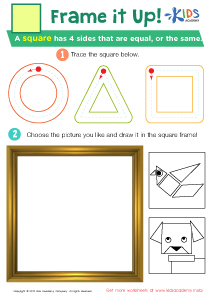
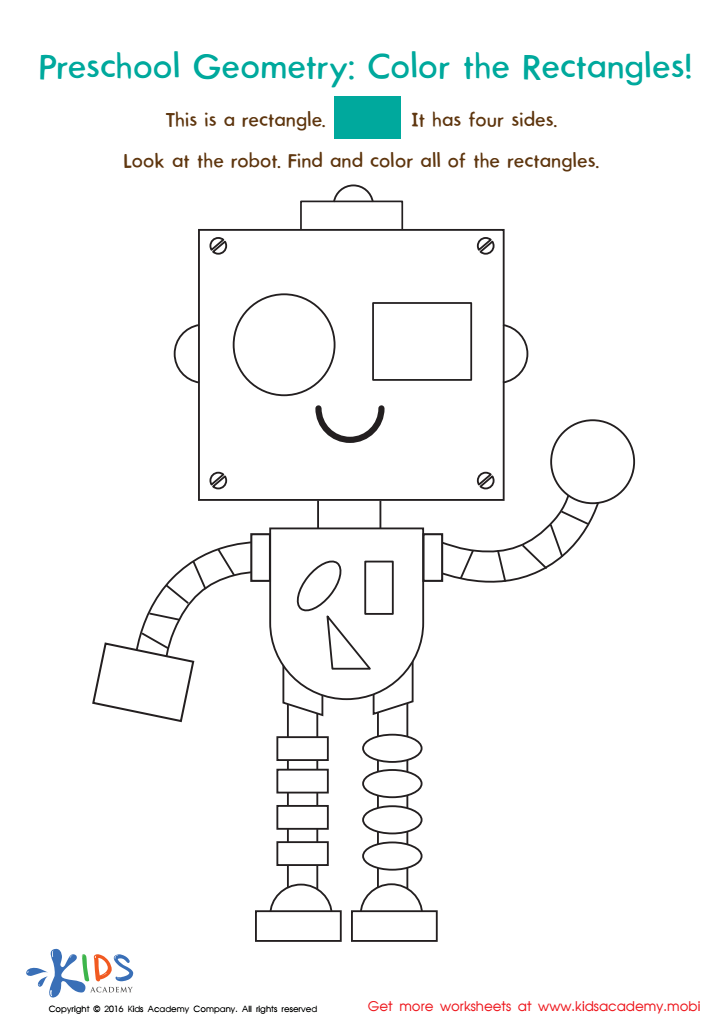
Unlock your child's potential with our Shape Identification Preschool 2D Shapes Worksheets! Designed for young learners, these engaging activities help kids recognize and name basic shapes, from circles and squares to triangles and rectangles. Perfect for both classroom and home use, our printable worksheets enhance visual discrimination skills and boost early math confidence. By incorporating fun puzzles, matching games, and tracing tasks, these exercises make learning shapes an enjoyable and rewarding experience. Empower your preschooler with essential foundational skills and get them excited about math today with Kids Academy’s expertly-crafted 2D shape resources!
Geometry Worksheet
 Assign to My Students



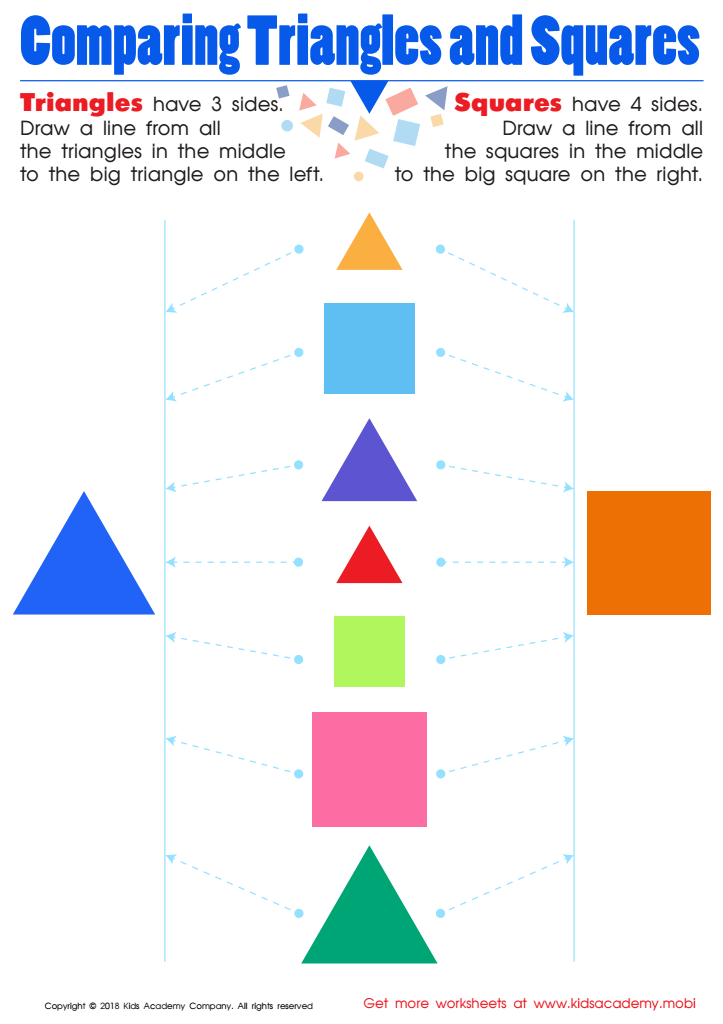
Comparing Triangles Squares Worksheet
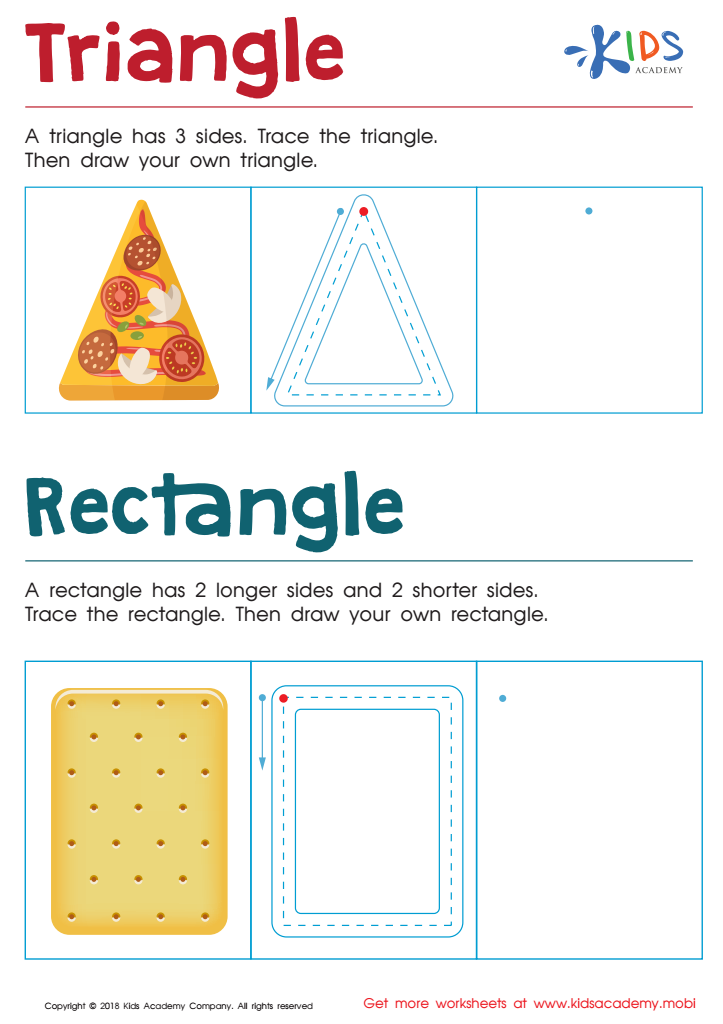
Triangle Rectangle Worksheet
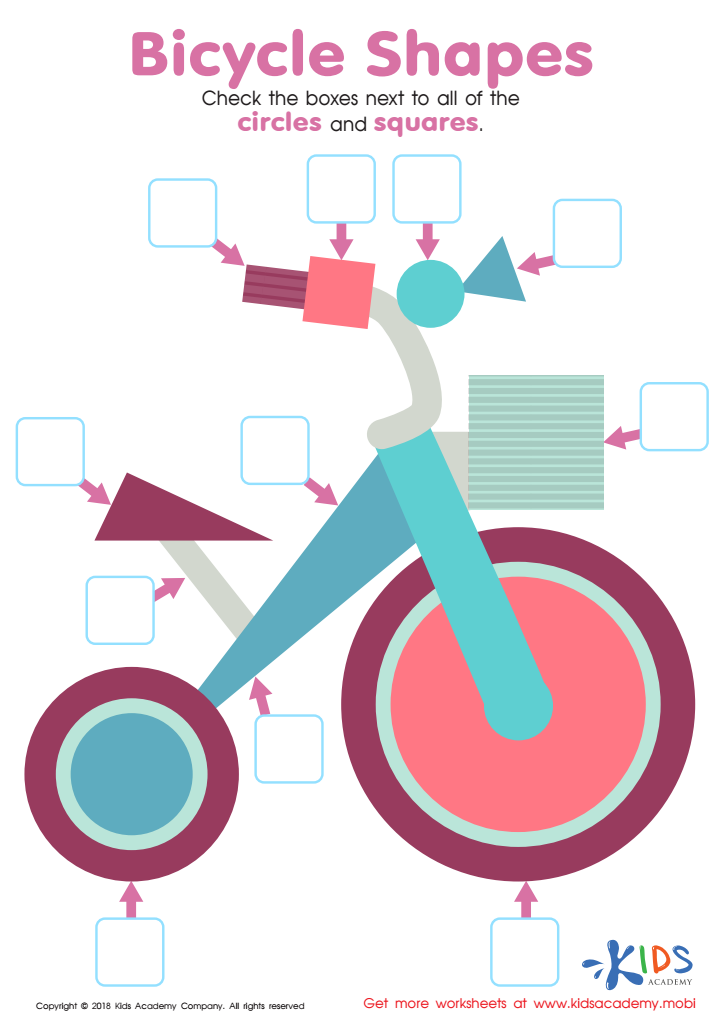
Bicycle Shapes Worksheet
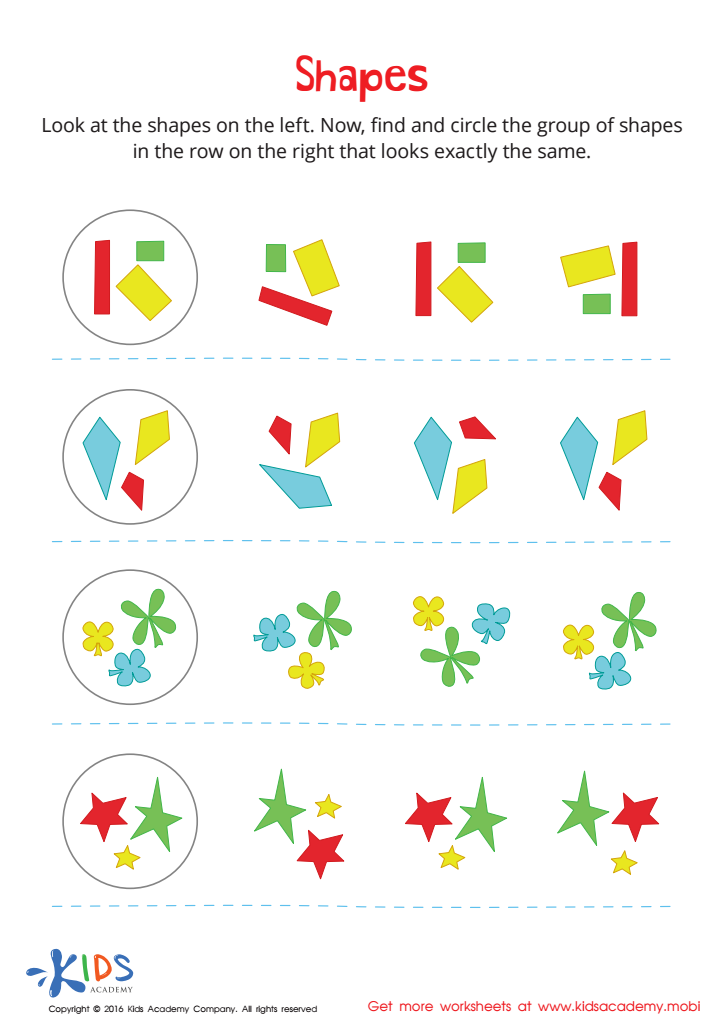
Shapes Worksheet





Parents and teachers should prioritize shape identification in preschool because it lays the foundational groundwork for numerous future learning pillars. Understanding 2D shapes helps children develop essential cognitive skills such as visual discrimination and spatial awareness. This early skill is fundamental in everyday life and crucial for mathematics and science.
For instance, recognizing shapes assists children in categorizing and interpreting the world around them. Differentiating between shapes allows children to identify letters and numbers, thus advancing their literacy and numeracy skills. Shapes are part of many letters (like O, P, Q) and partially resemble certain numbers (like 0 and 8). Early exposure aids in complex problem-solving stratagems, enhancing logical thinking essential for more advanced cognitive undertakings.
Moreover, shape activities help develop fine motor skills since kids often use hands-on materials to manipulate and draw shapes. These activities strengthen hand-eye coordination, preparatory for writing.
Additionally, learning in a playful manner, such as through shape-related games, keeps children engaged and willing to explore new concepts. The interactive sense of learning builds enthusiasm for further education.
In summary, recognition and understanding of 2D shapes are vital for intellectual, social, and physical development, acting as a stepping stone for future academic success and everyday functionalities.