Filters

95 filtered results

Clear all filters
Favorites
With answer key
Interactive

95 filtered results

Difficulty Level

Grade


Check out this FREE Preschool Trial Lesson on Adding Up to 5!

My Family

Favorites
With answer key
Interactive
  • Preschool
  • Cognitive Development
  • Adding Up to 5
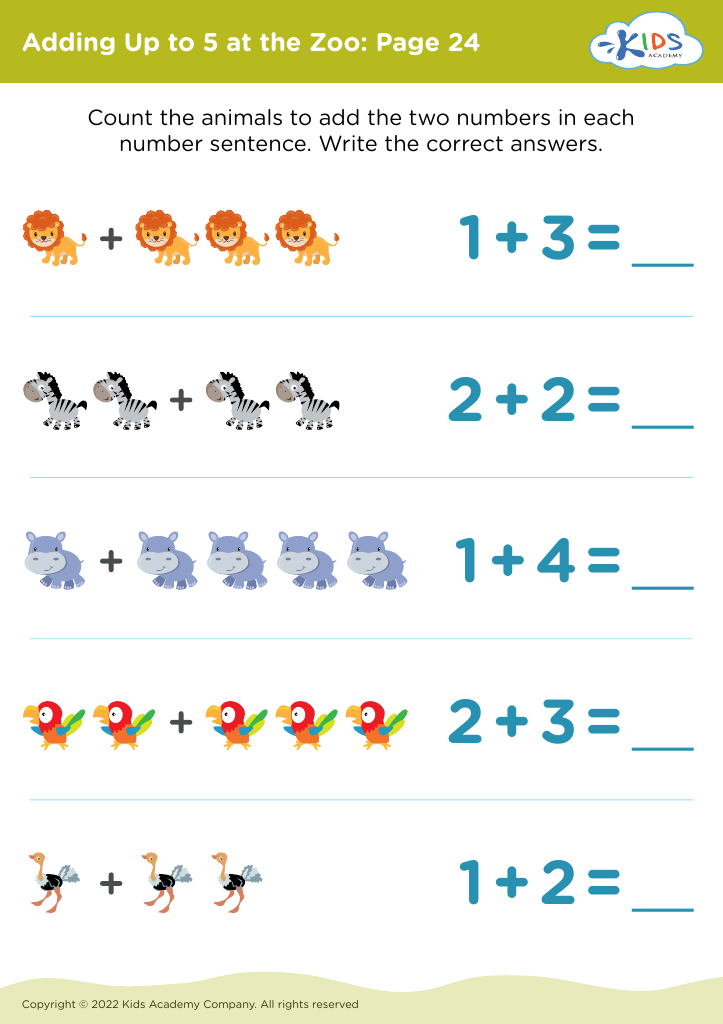
Adding Up to 5 at the Zoo: Page 24
Worksheet
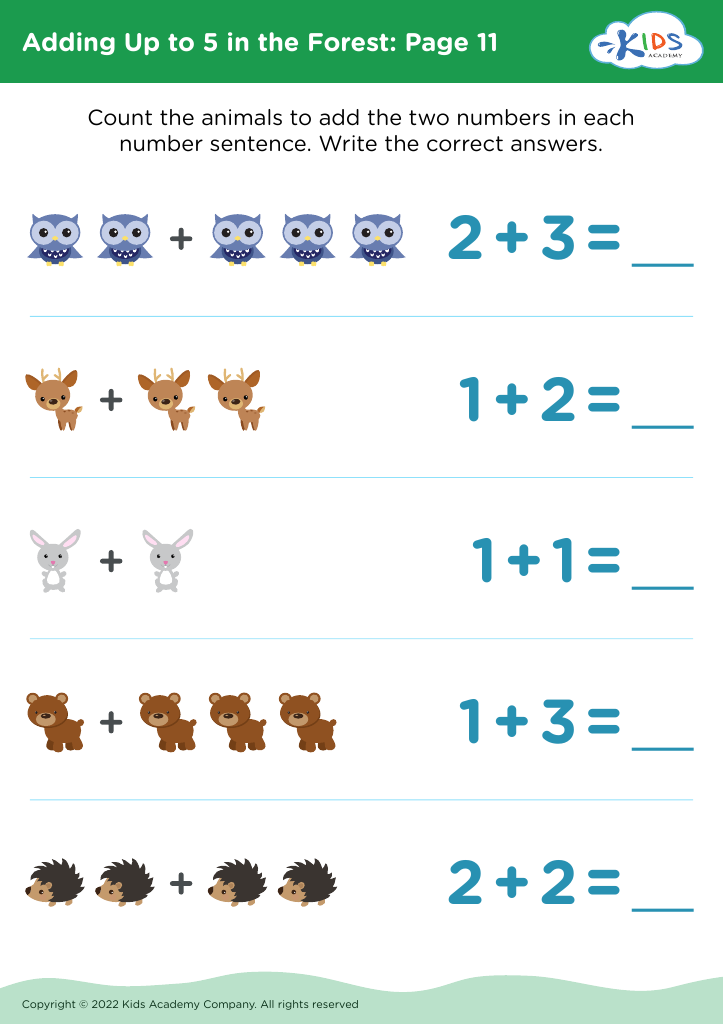
Adding Up to 5 in the Forest: Page 11
Worksheet
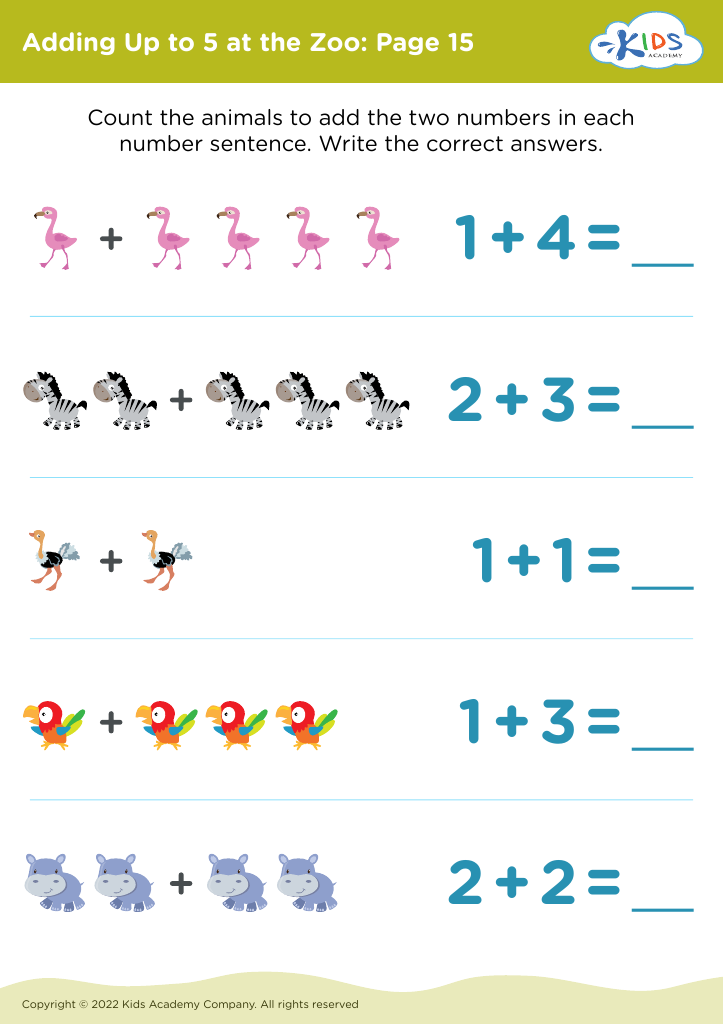
Adding Up to 5 at the Zoo: Page 15
Worksheet
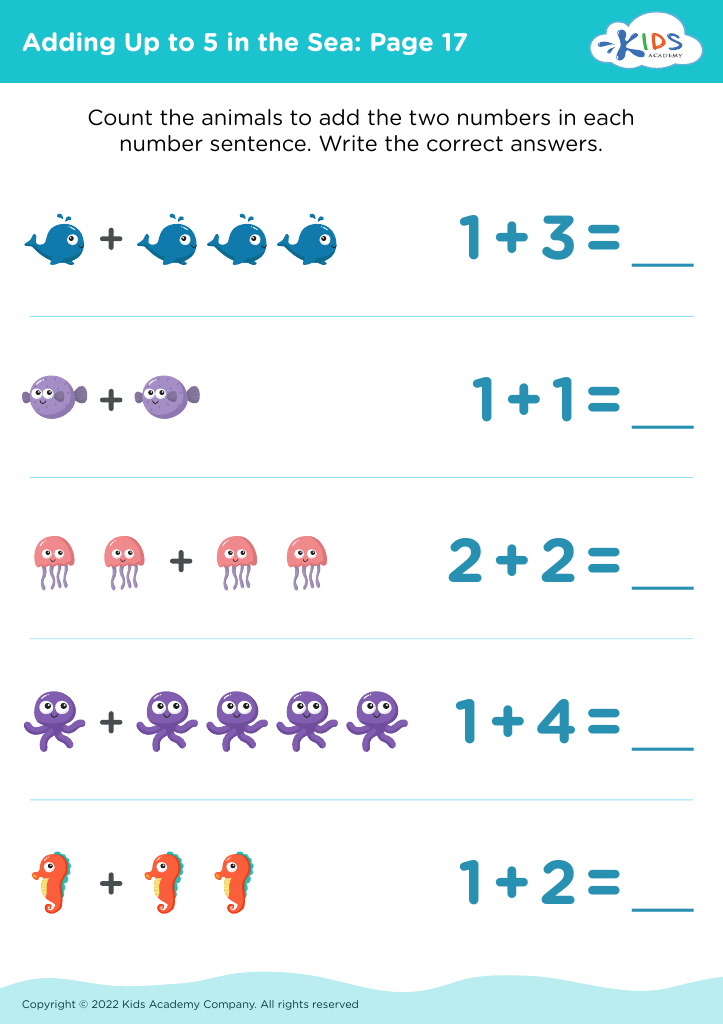
Adding Up to 5 in the Sea: Page 17
Worksheet
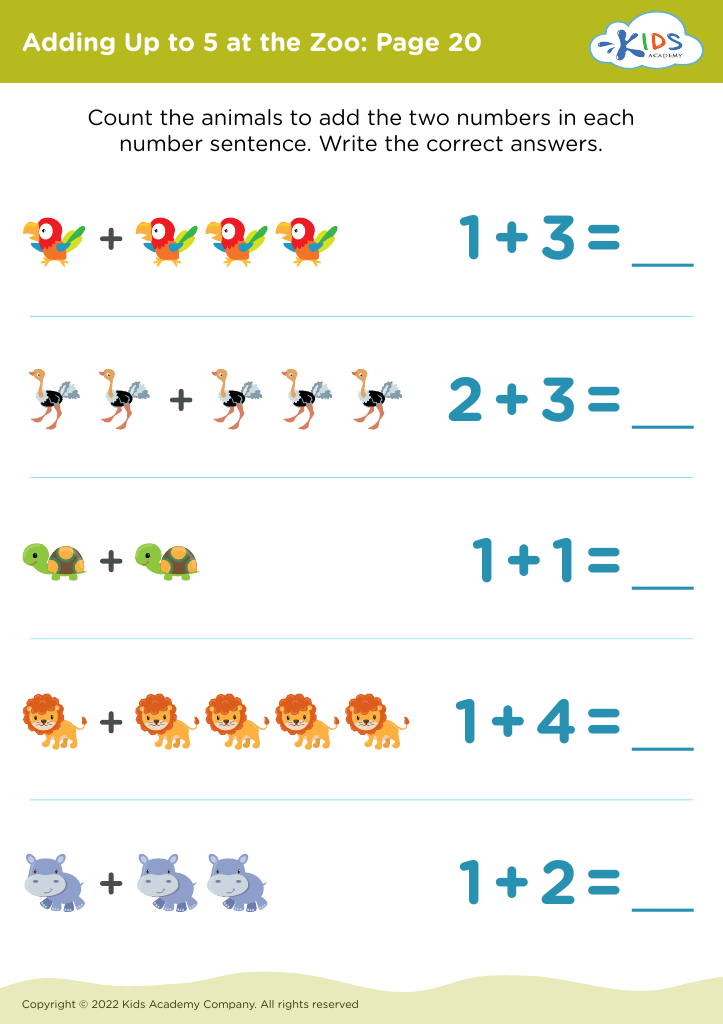
Adding Up to 5 at the Zoo: Page 20
Worksheet
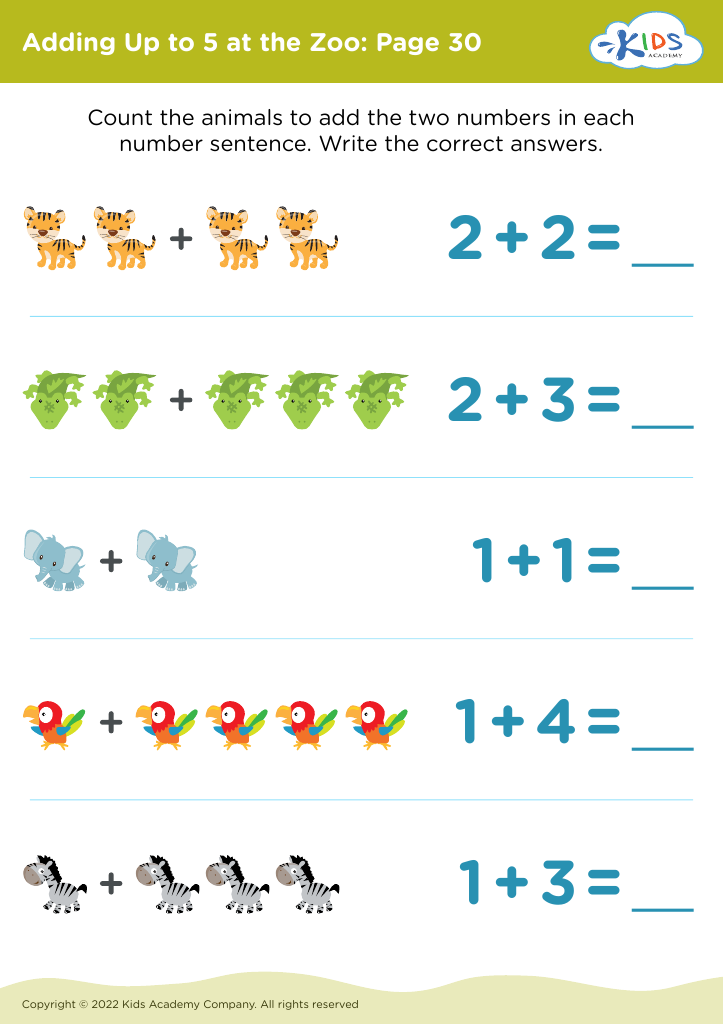
Adding Up to 5 at the Zoo: Page 30
Worksheet
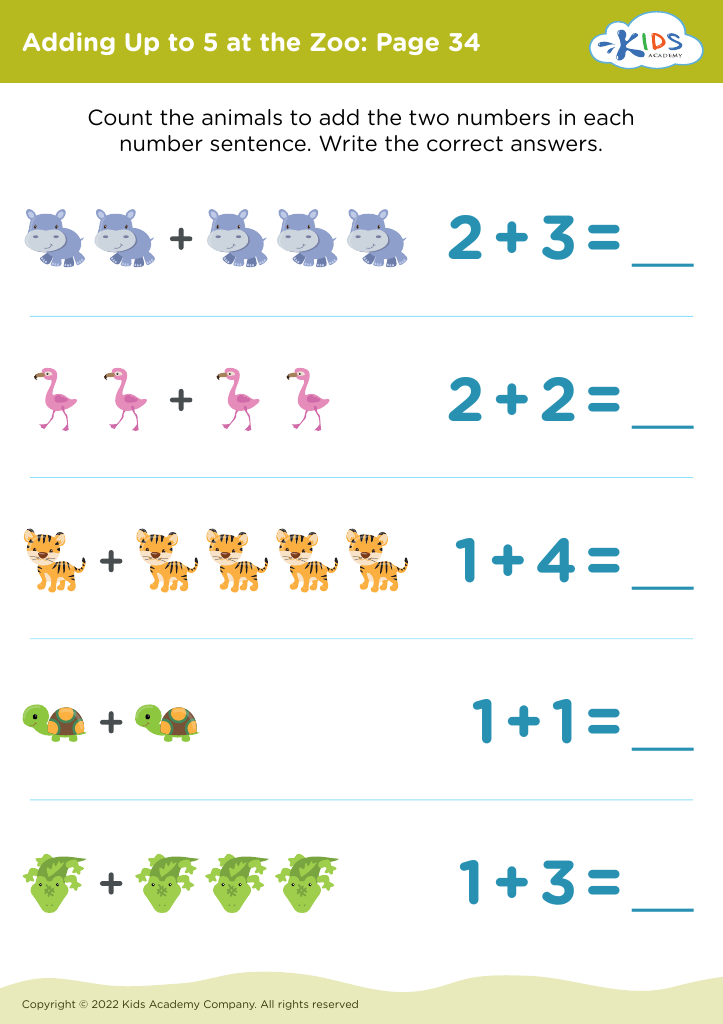
Adding Up to 5 at the Zoo: Page 34
Worksheet
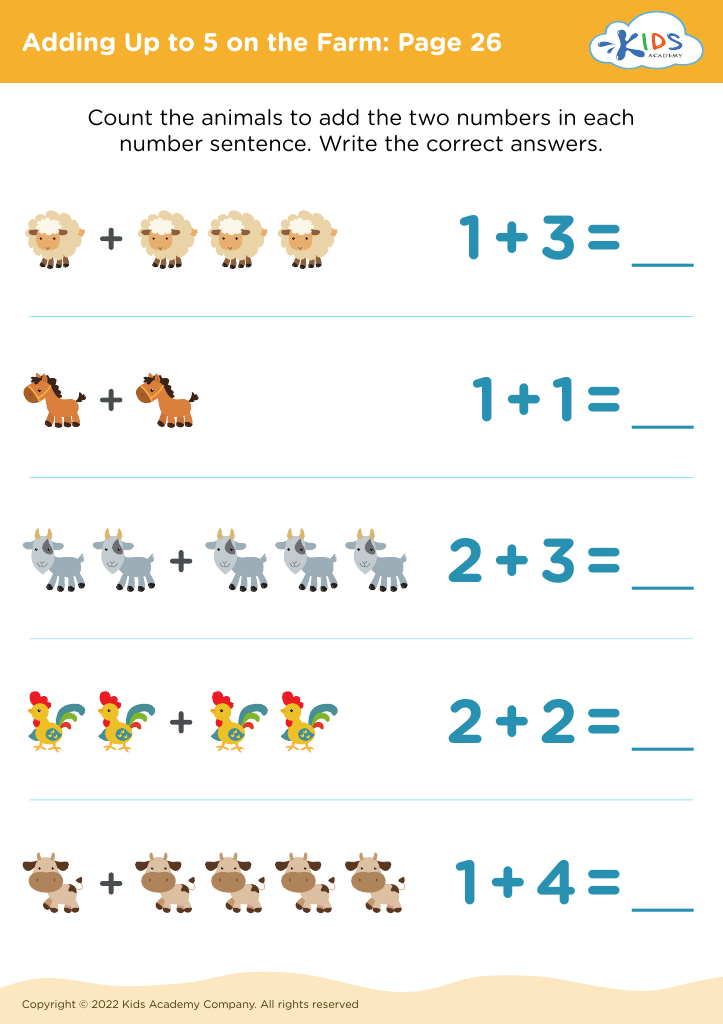
Adding Up to 5 on the Farm: Page 26
Worksheet
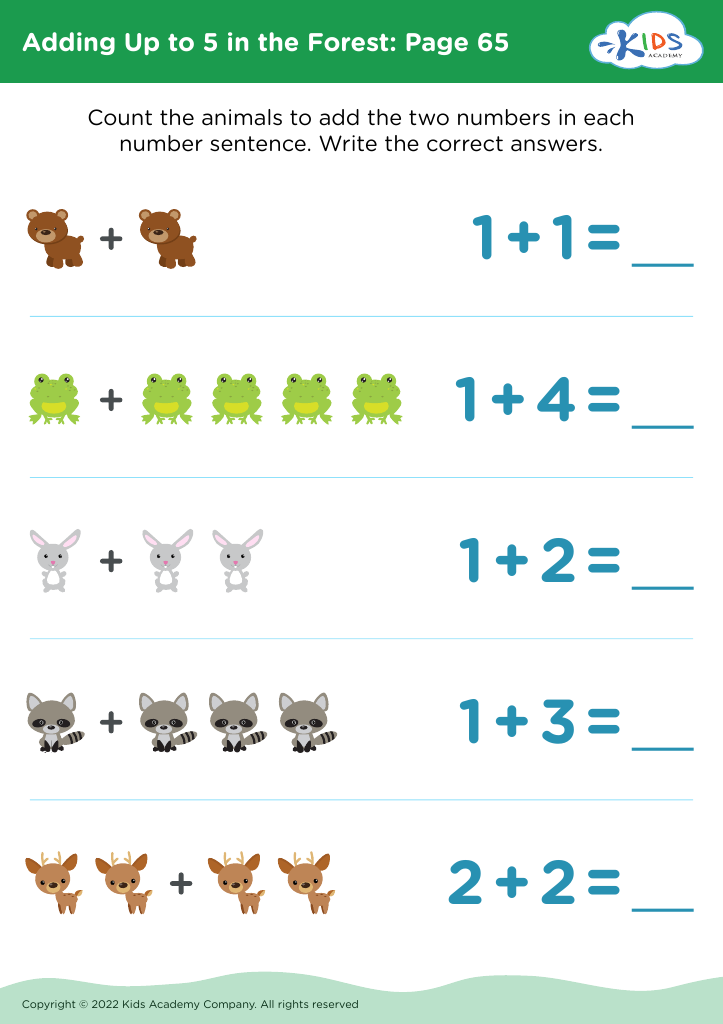
Adding Up to 5 in the Forest: Page 65
Worksheet
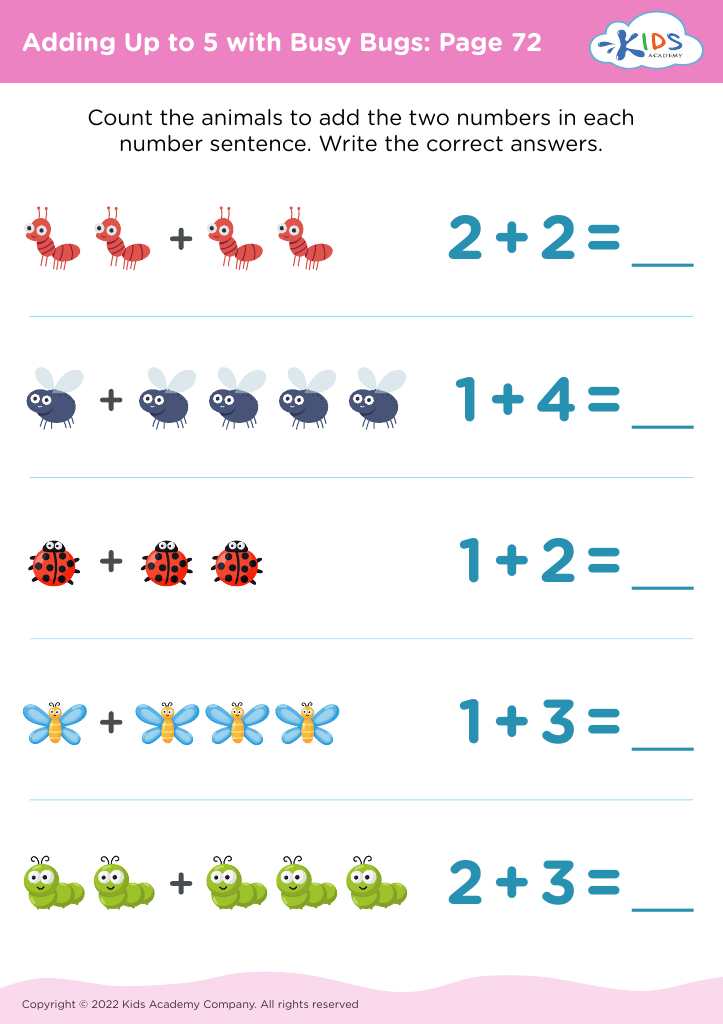
Adding Up to 5 with Busy Bugs: Page 72
Worksheet
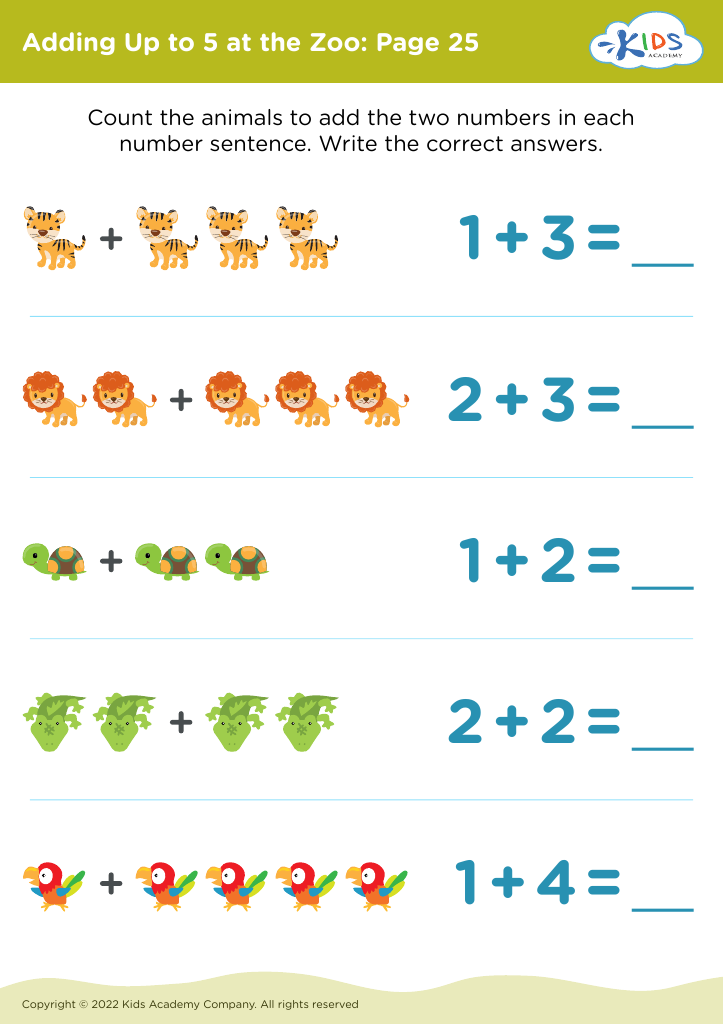
Adding Up to 5 at the Zoo: Page 25
Worksheet
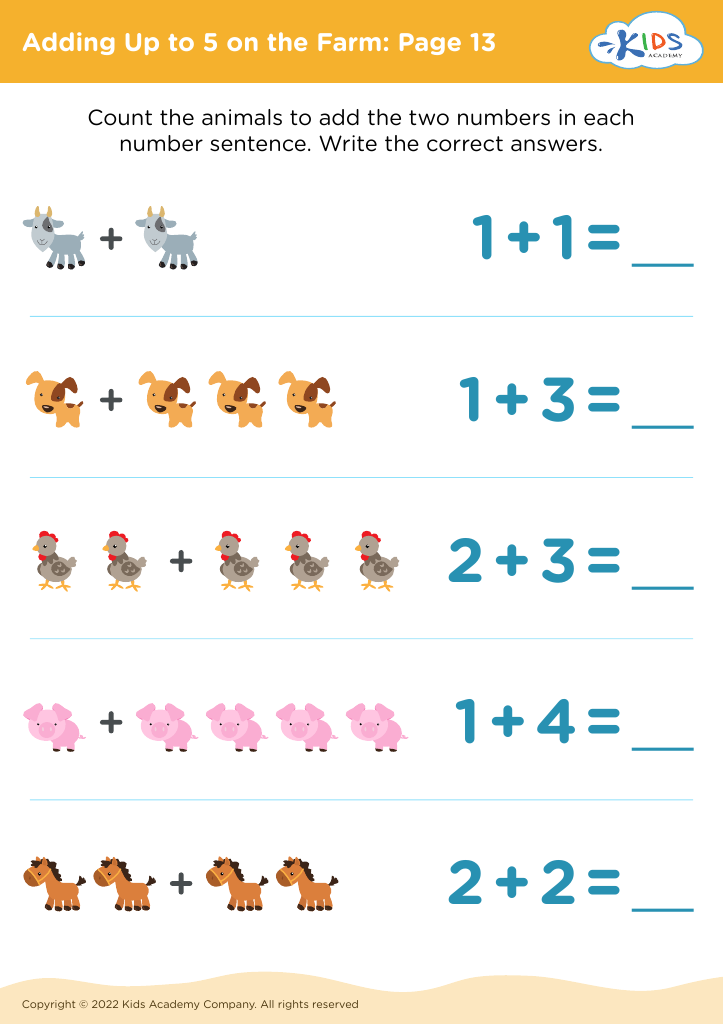
Adding Up to 5 on the Farm: Page 13
Worksheet
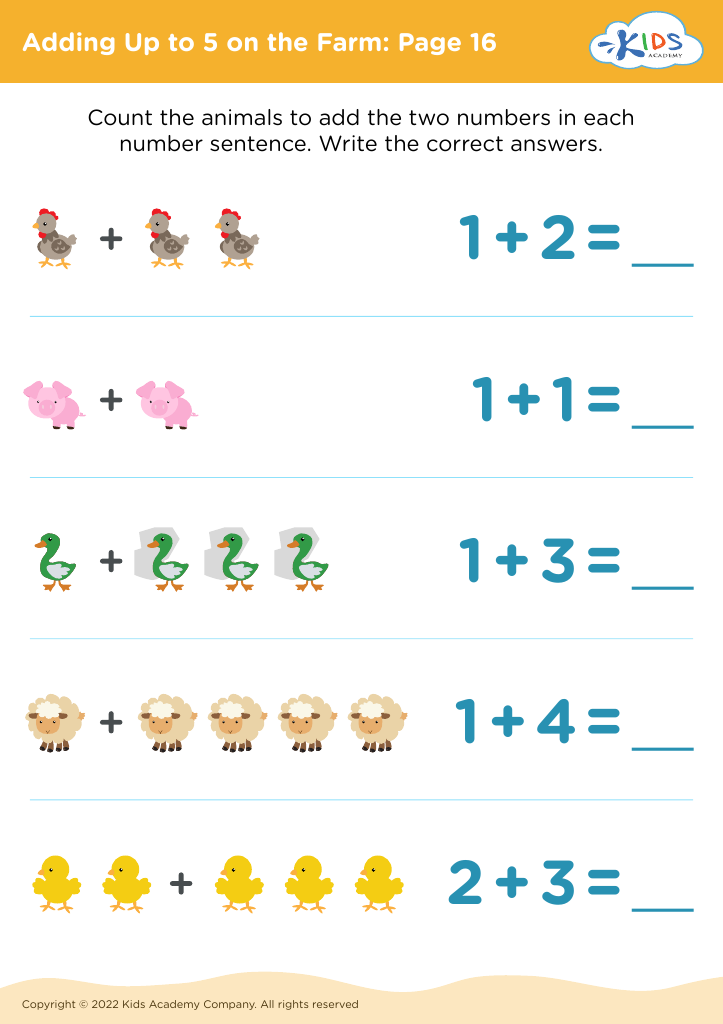
Adding Up to 5 on the Farm: Page 16
Worksheet
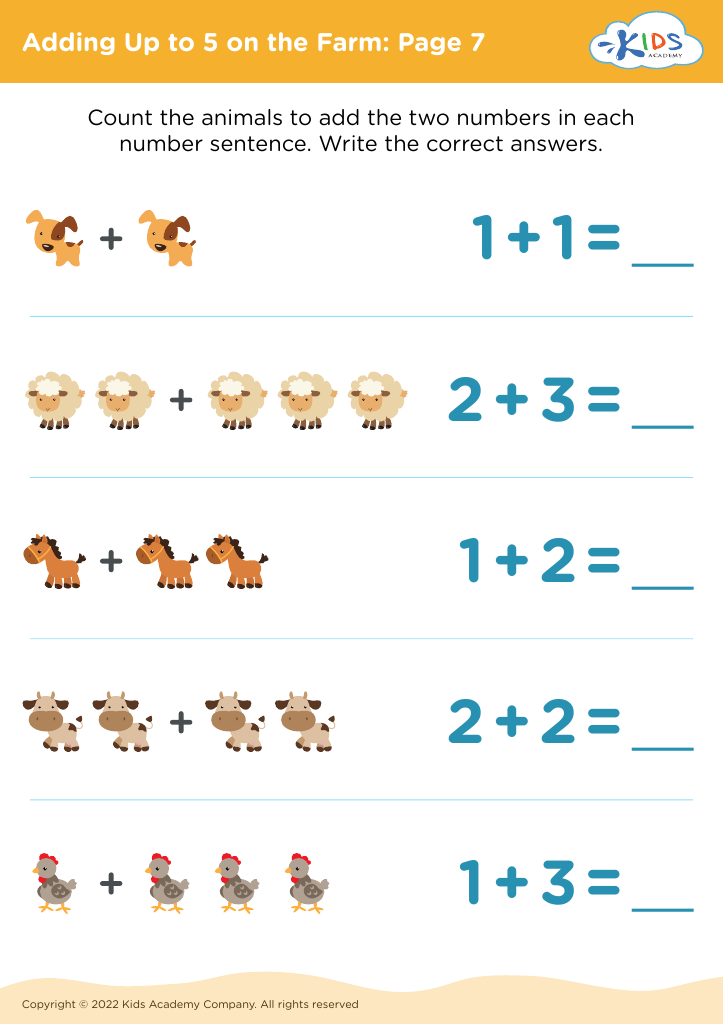
Adding Up to 5 on the Farm: Page 7
Worksheet
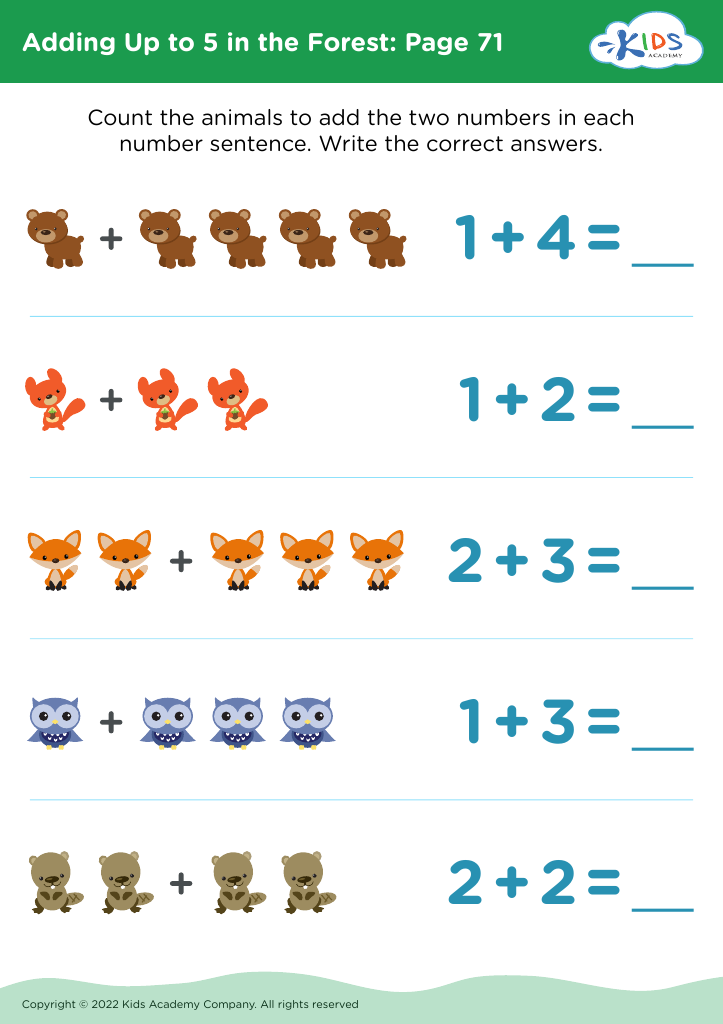
Adding Up to 5 in the Forest: Page 71
Worksheet
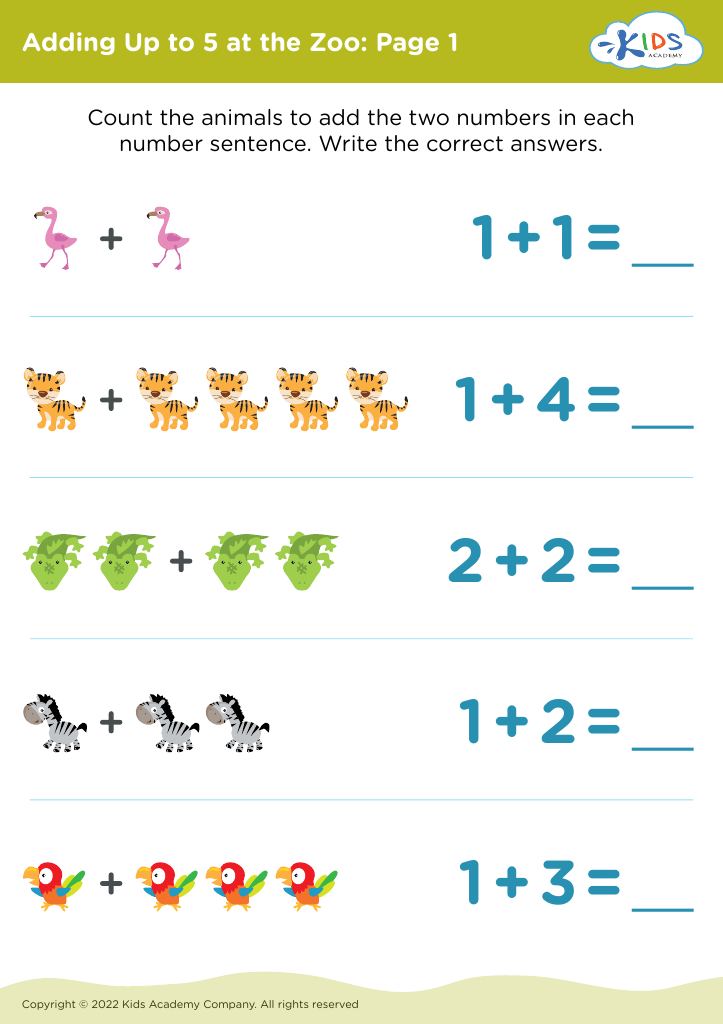
Adding Up to 5 at the Zoo: Page 1

Adding Up to 5 at the Zoo: Page 1

Adding Up to 5 at the Zoo: Page 1
Worksheet
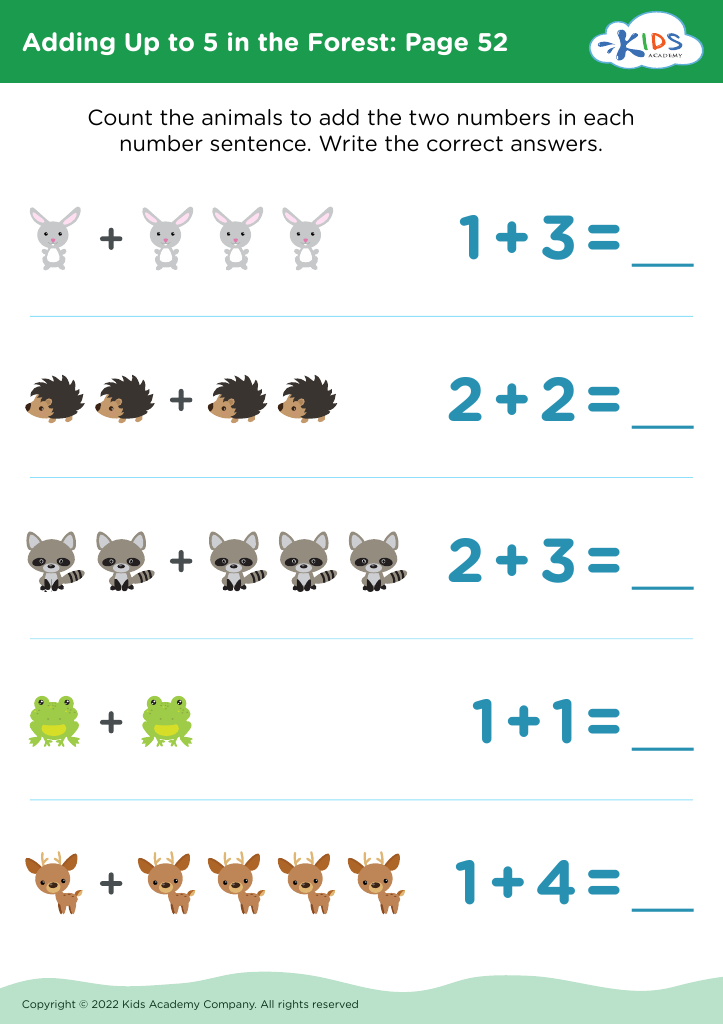
Adding Up to 5 in the Forest: Page 52
Worksheet
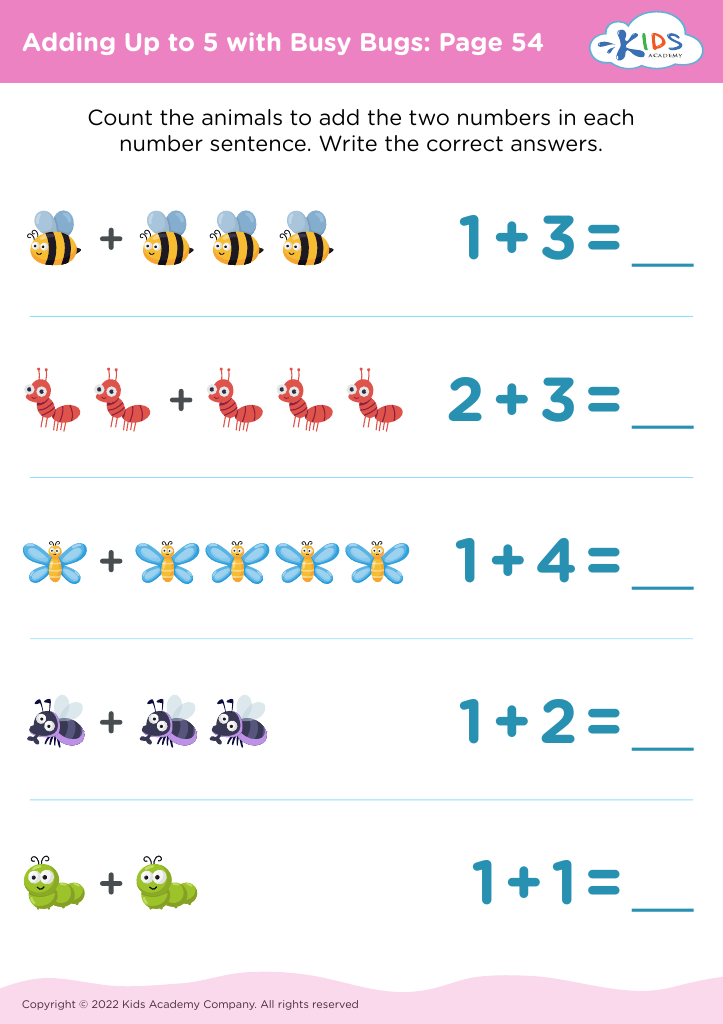
Adding Up to 5 with Busy Bugs: Page 54
Worksheet
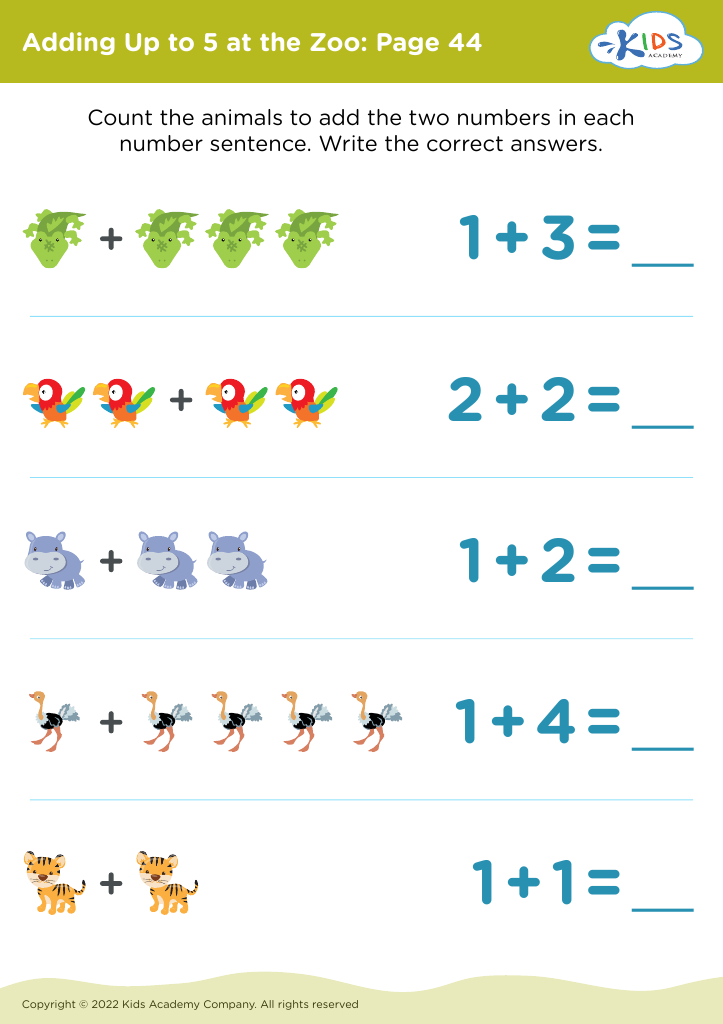
Adding Up to 5 at the Zoo: Page 44
Worksheet
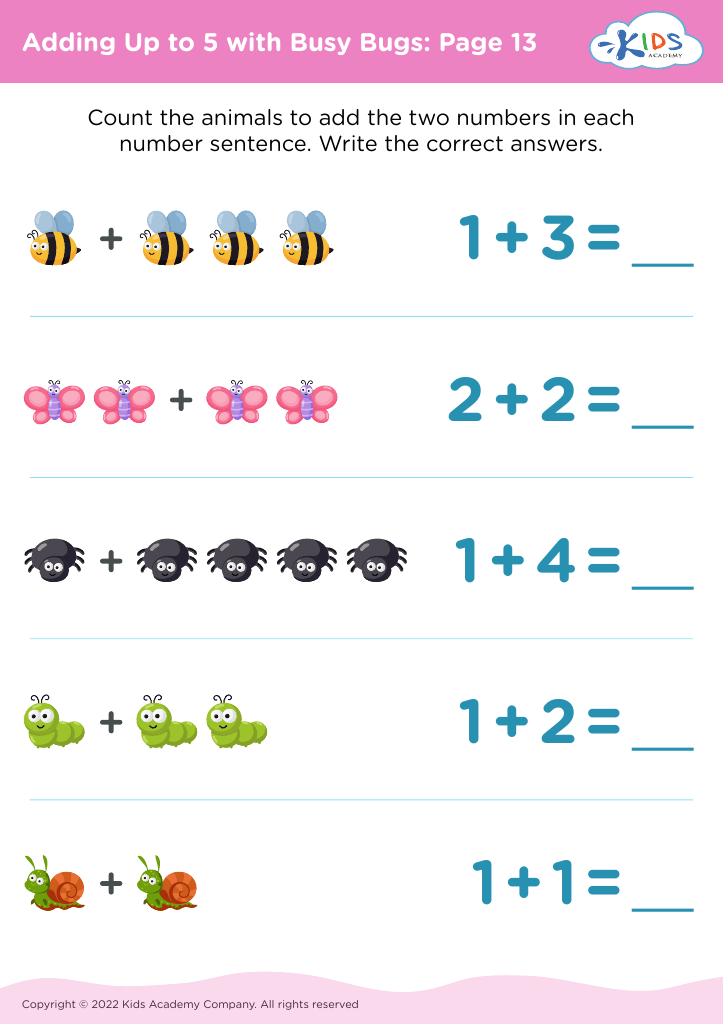
Adding Up to 5 with Busy Bugs: Page 13
Worksheet
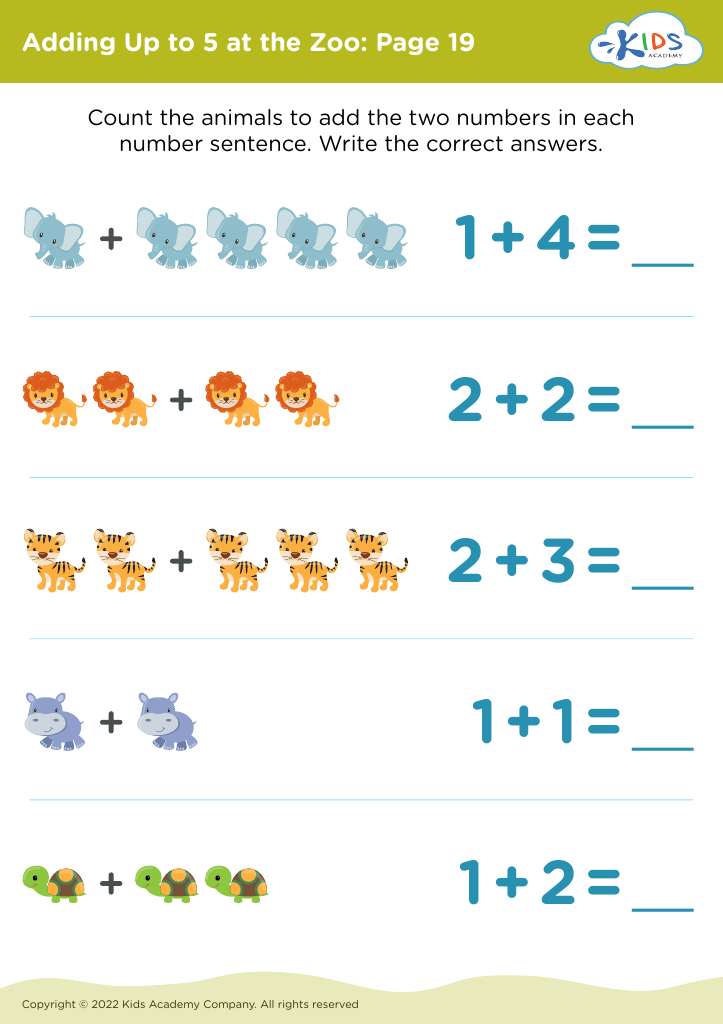
Adding Up to 5 at the Zoo: Page 19
Worksheet
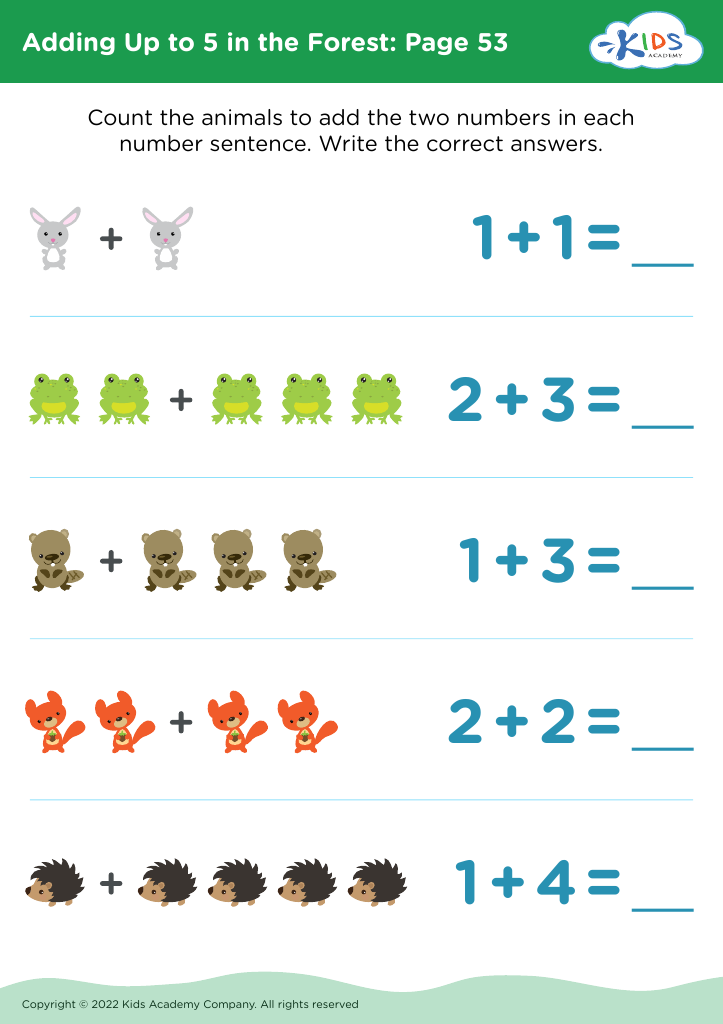
Adding Up to 5 in the Forest: Page 53
Worksheet
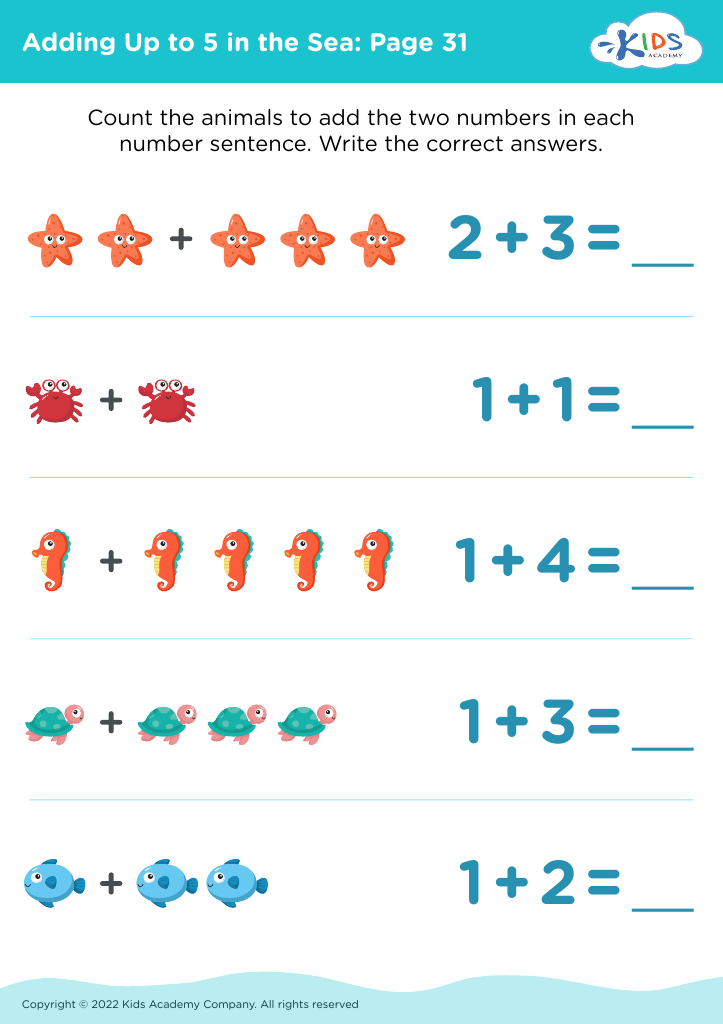
Adding Up to 5 in the Sea: Page 31
Worksheet
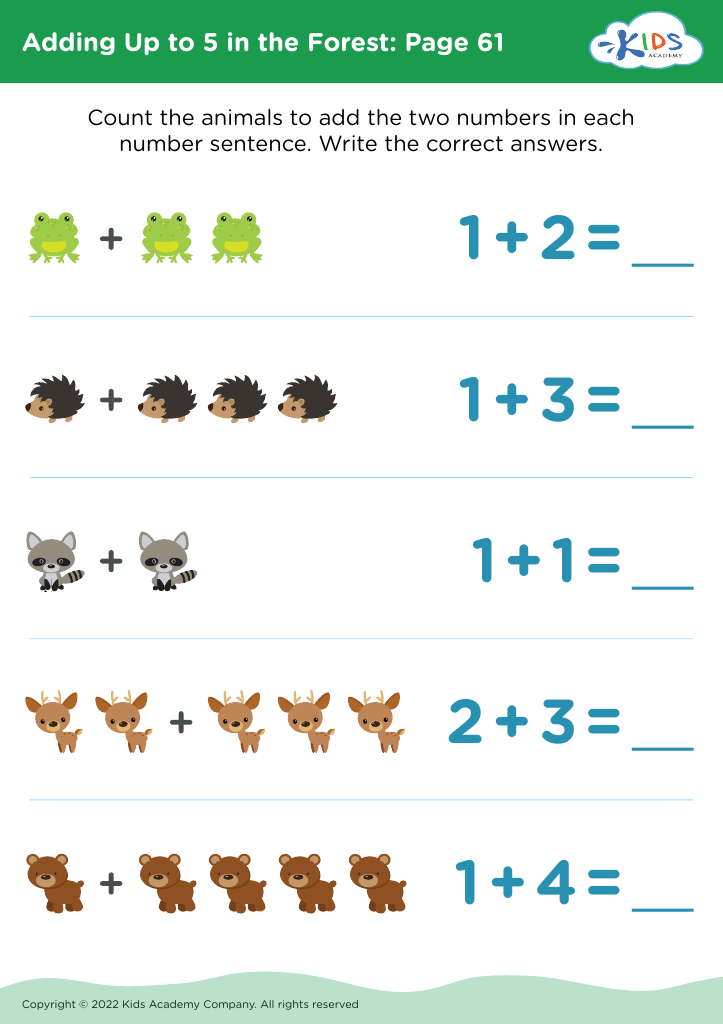
Adding Up to 5 in the Forest: Page 61
Worksheet


Cognitive development in preschool, especially in basic arithmetic skills like adding up to 5, is crucial for several reasons. At this formative age, children's brains are incredibly malleable, and early experiences can significantly shape their future learning capabilities. Engaging preschoolers in simple addition helps them grasp foundational mathematical concepts, fostering critical thinking and problem-solving skills they will use throughout their lives.

Mastering basic addition lays the groundwork for more complex mathematical learning. It introduces children to numerical relationships and encourages logical thinking. Furthermore, early success in math can build a child's confidence and curiosity, motivating them to tackle more challenging tasks in the future.

For parents and teachers, focusing on cognitive development in preschoolers means investing in the child's long-term academic success and intellectual growth. The skills acquired during this period extend beyond numbers; they contribute to improved memory, attention, and cognitive fluidity. Finally, early math skills are strong predictors of later achievement not only in mathematics but also in literacy and other cognitive domains.

By nurturing these abilities early on, parents and teachers can provide children with a strong foundation for lifelong learning, setting them on a path toward educational success and personal fulfillment.