Counting objects Preschool Adding Up to 5 Worksheets
11 filtered results
-
From - To
Explore our engaging "Counting Objects Preschool Adding Up to 5 Worksheets" designed to help young learners master basic counting skills! These interactive worksheets feature vibrant images and playful activities that encourage children to count various objects, strengthening their number recognition and one-to-one correspondence. Perfect for preschoolers, our worksheets promote hands-on learning while making math fun and accessible. With easy-to-follow instructions and a variety of exercises, kids will enjoy adding up to 5 as they develop essential foundational math skills. Start your child’s math journey today and foster a love for learning with our delightful counting worksheets!
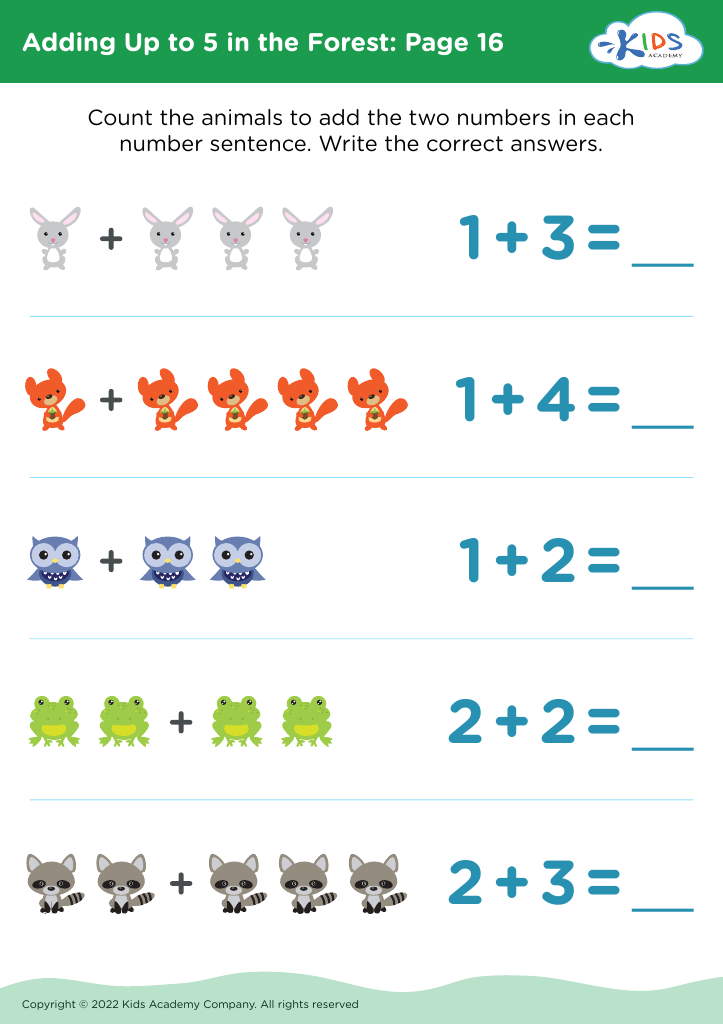
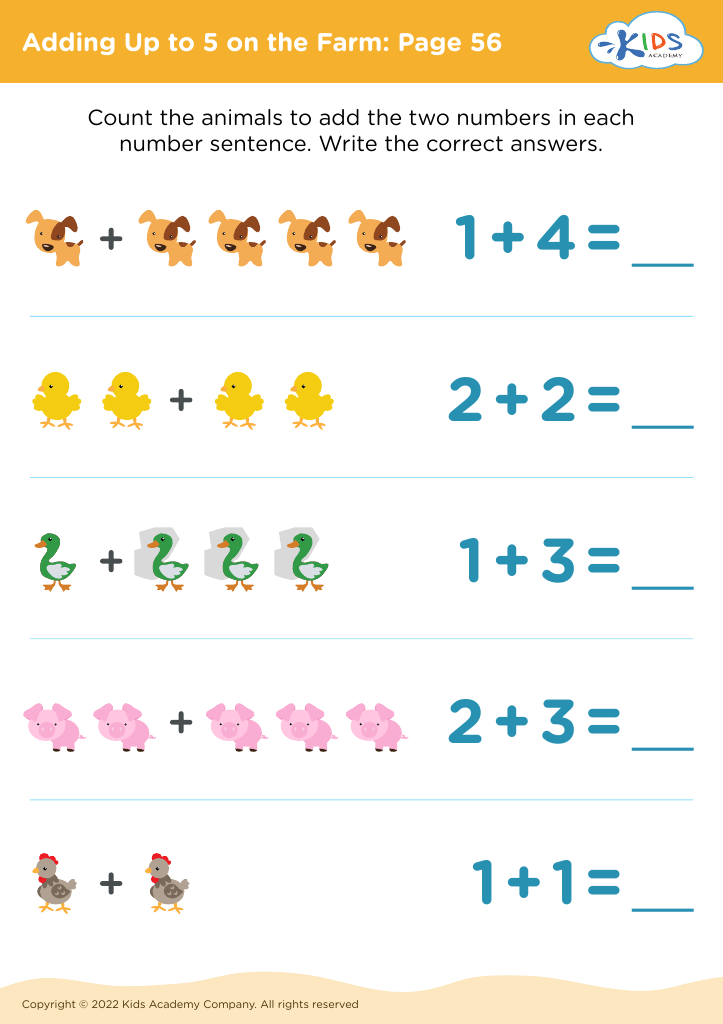
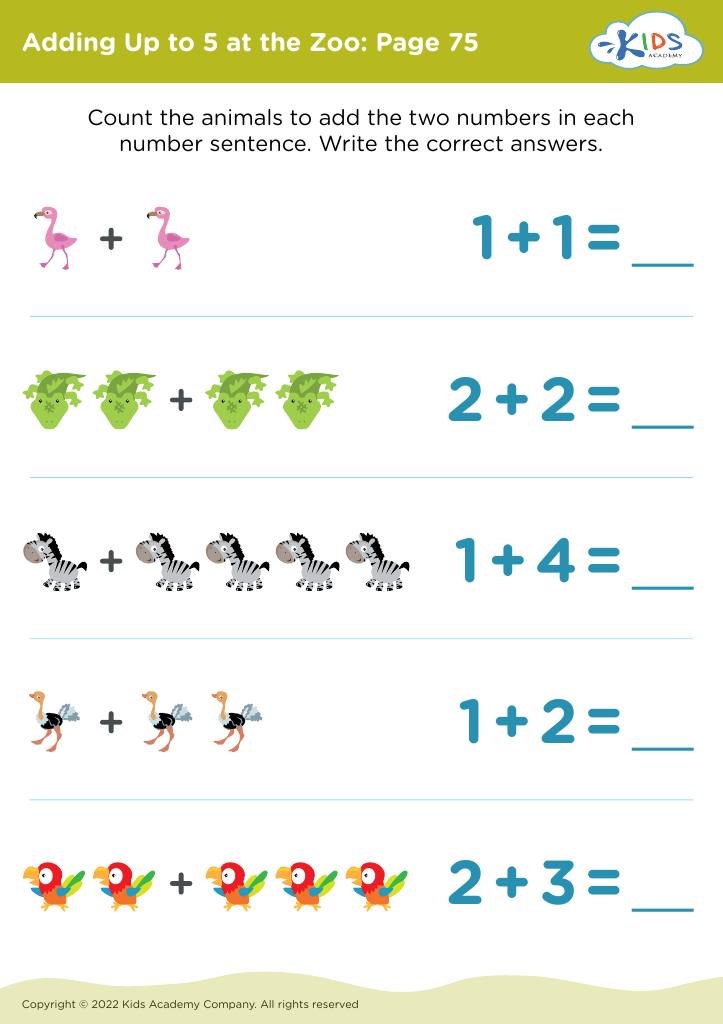
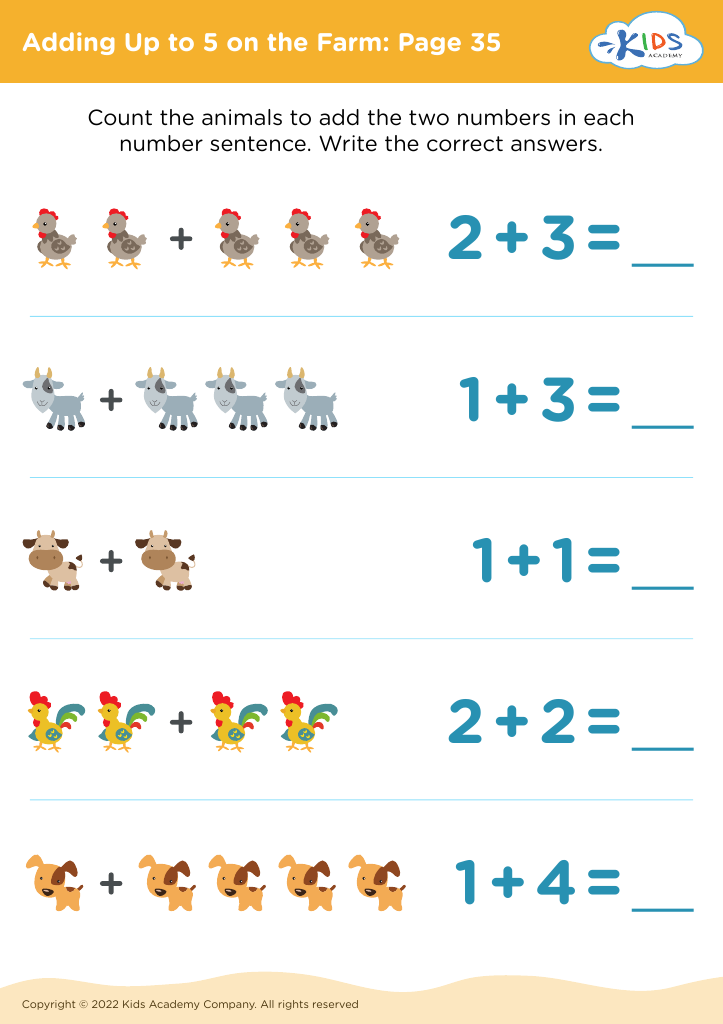
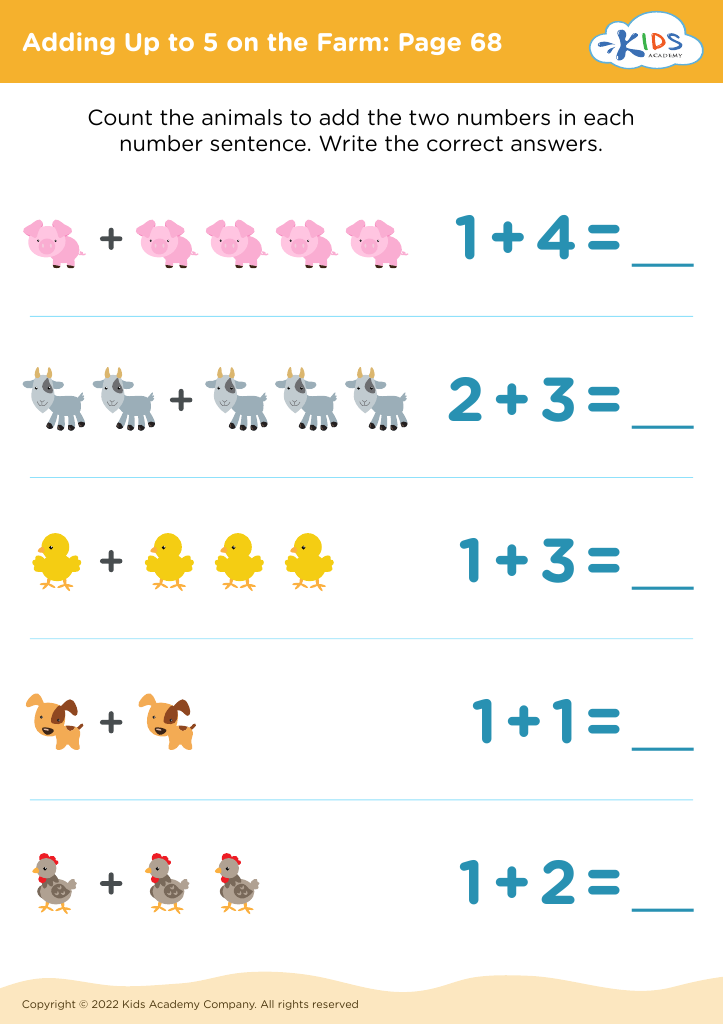
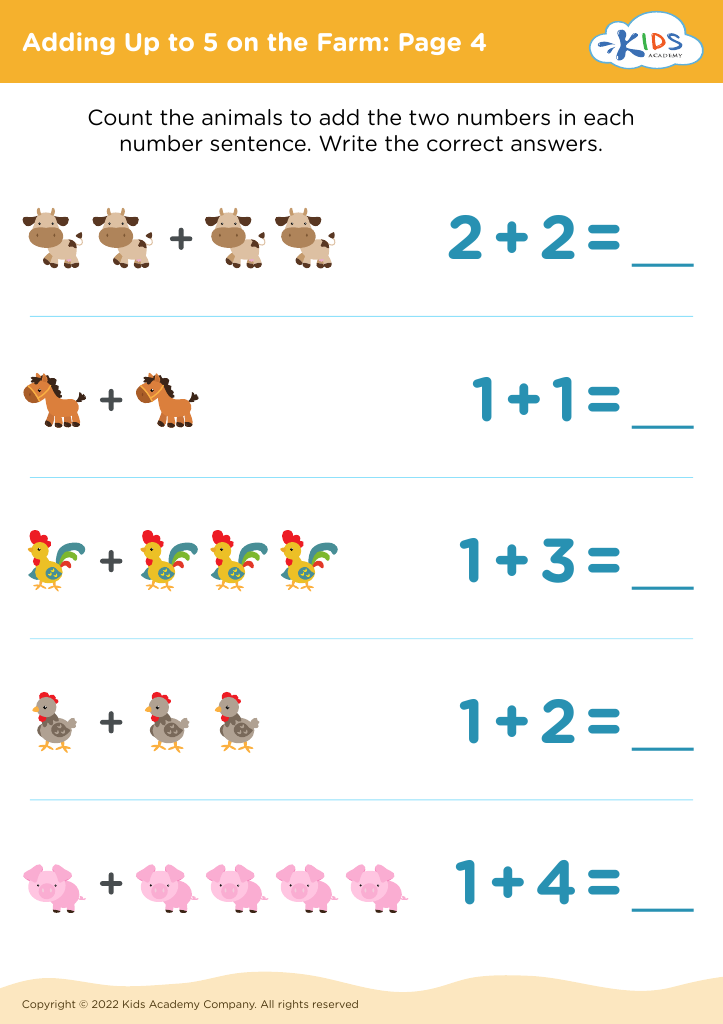
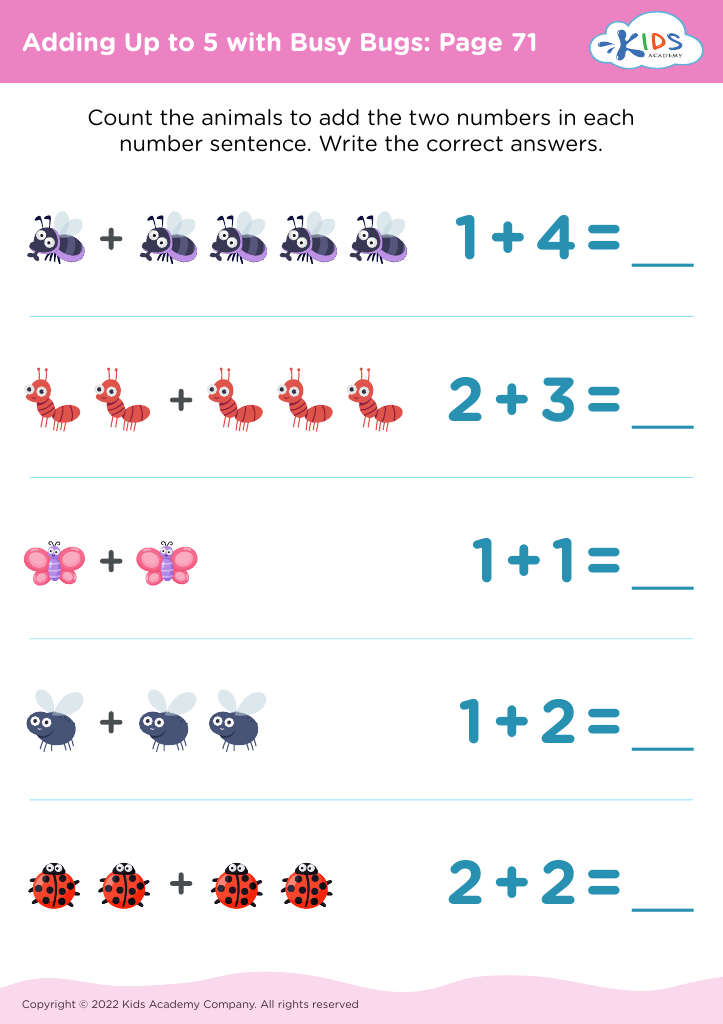
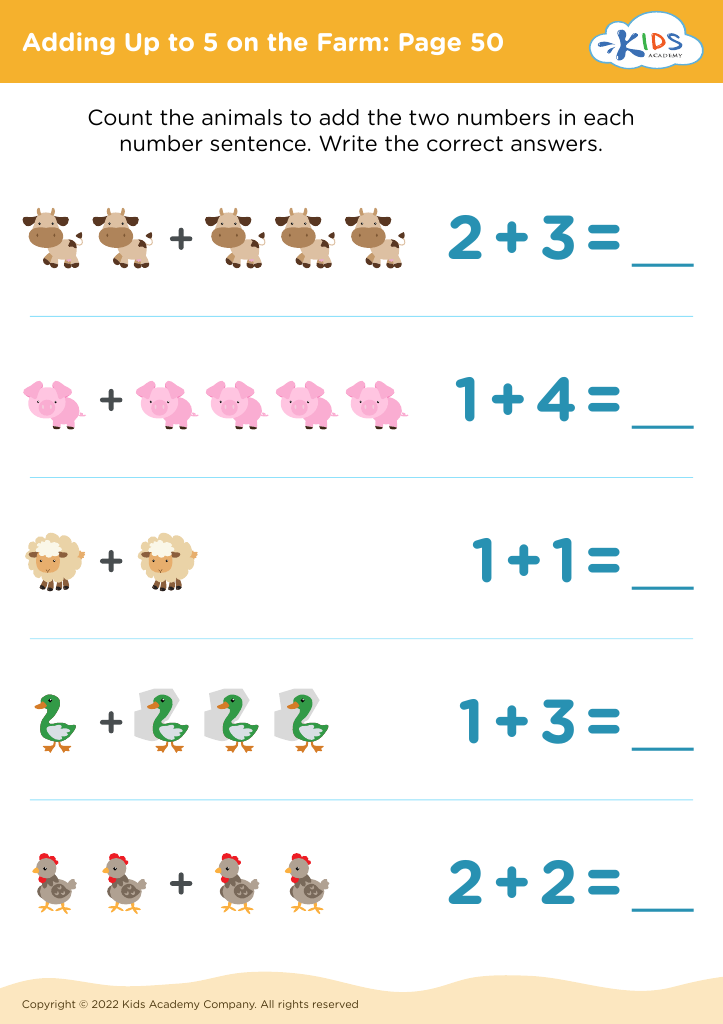
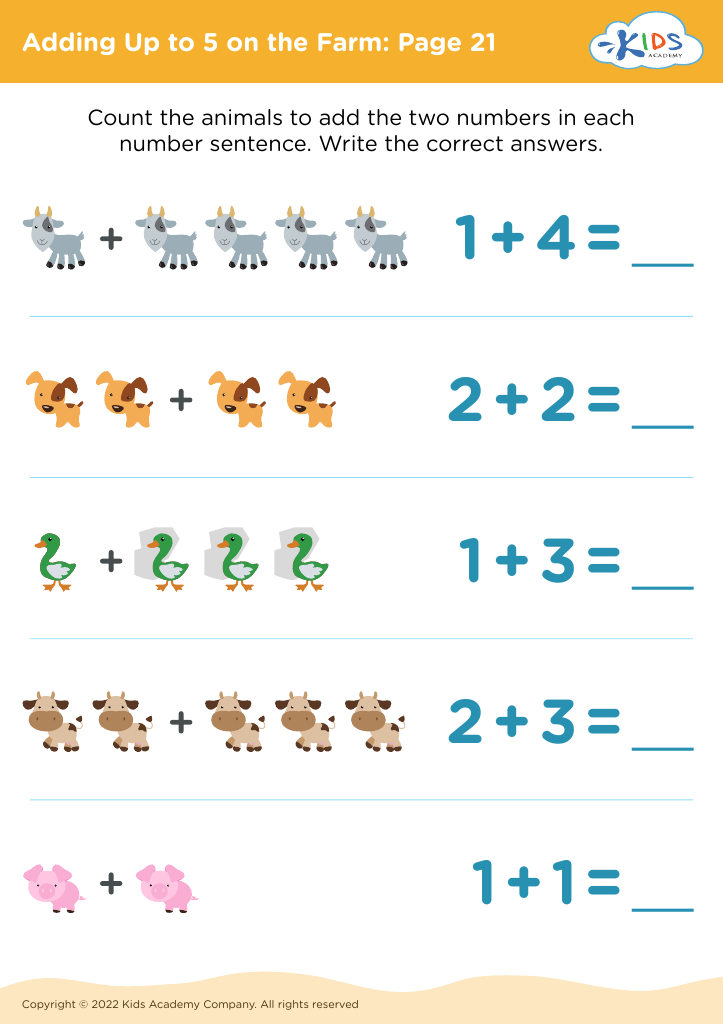
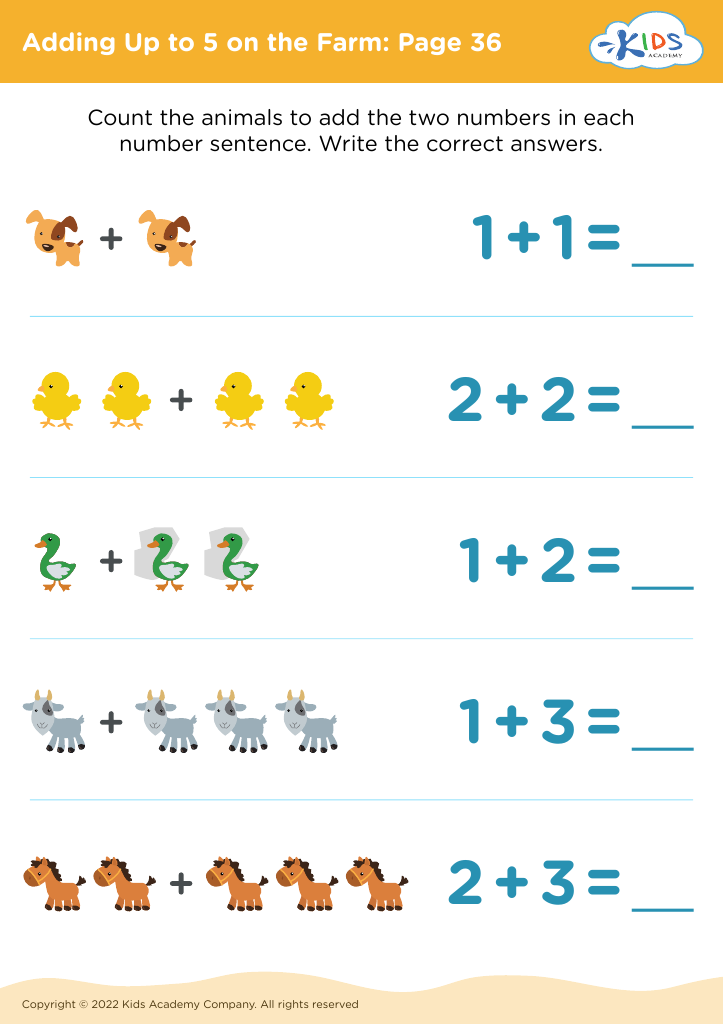
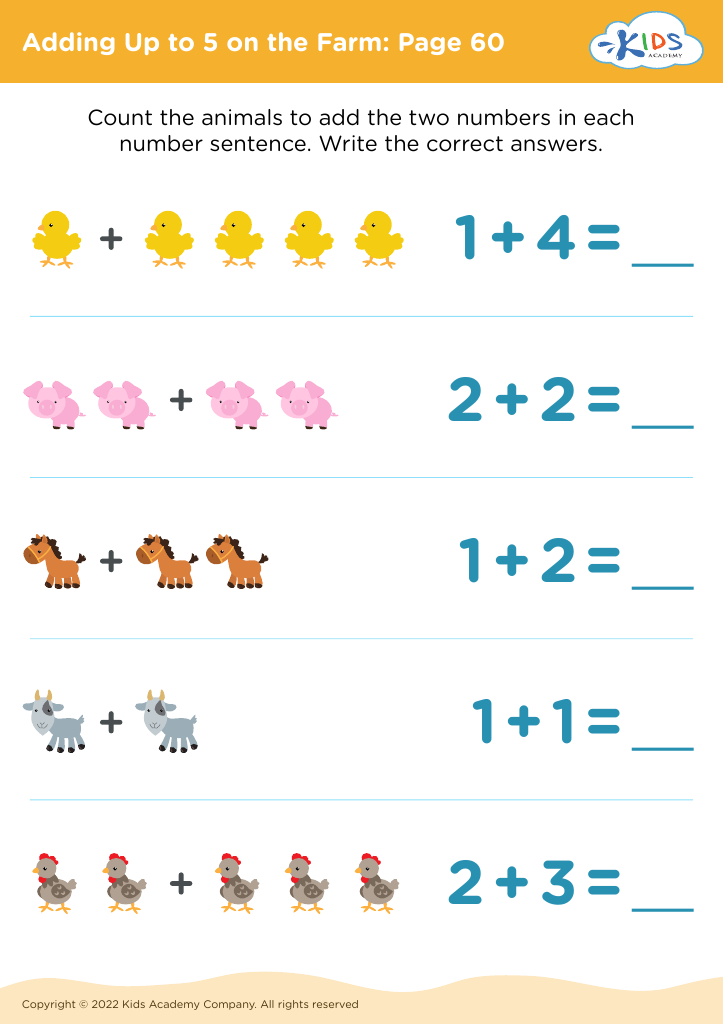


Counting objects is a foundational skill in early childhood education that sets the stage for later mathematical understanding. For preschoolers, counting up to 5 is not just about numbers; it's a multi-faceted learning experience that fosters cognitive and social development. When children engage in counting, they improve their number sense, which is crucial for grasping more complex mathematical concepts later on.
Moreover, counting encourages fine motor skills as children manipulate objects to count them. It also promotes language development; as they count aloud, they practice pronunciation and vocabulary related to numbers. This activity enhances memory as children learn to associate quantities with numerals, an early form of mathematical literacy.
Additionally, counting to 5 allows children to start developing critical thinking skills. They learn to categorize objects and make comparisons, fostering reasoning abilities that extend beyond math. For parents and teachers, counting activities to 5 can be integrated into daily routines, making learning both relevant and fun.
By prioritizing counting and engaging with children in playful, hands-on experiences, parents and teachers cultivate a positive attitude toward mathematics, laying the groundwork for lifelong learning and success in math-related areas. Therefore, it’s essential for caregivers to both understand and support this critical learning phase.