Understanding Quantities Preschool Adding Up to 5 Worksheets - Page 2
36 filtered results
-
From - To
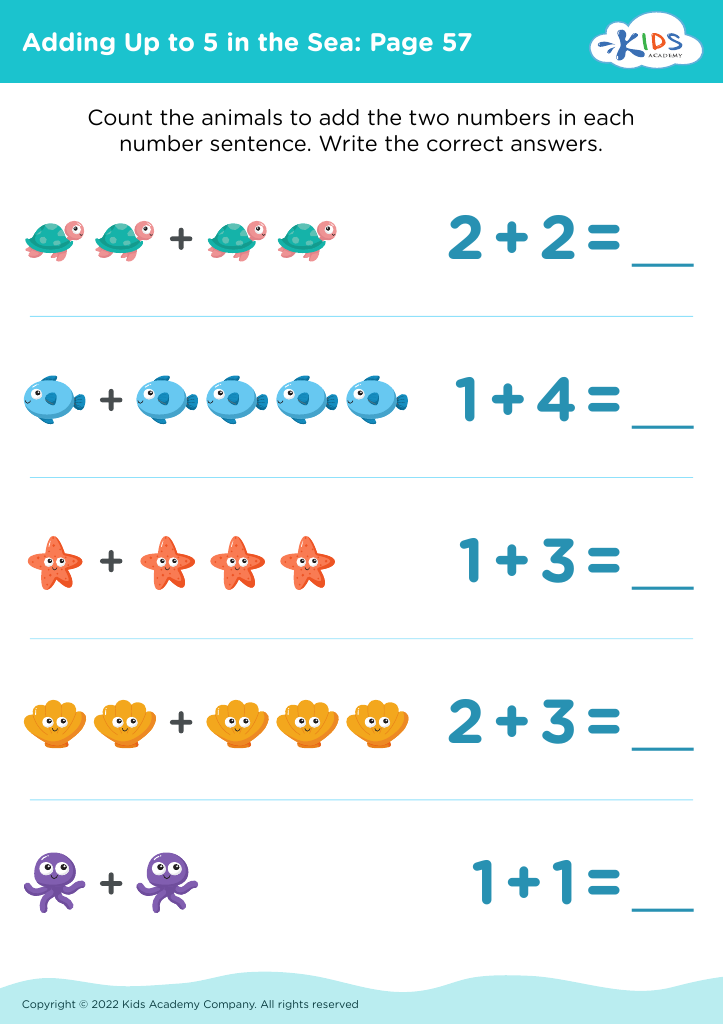
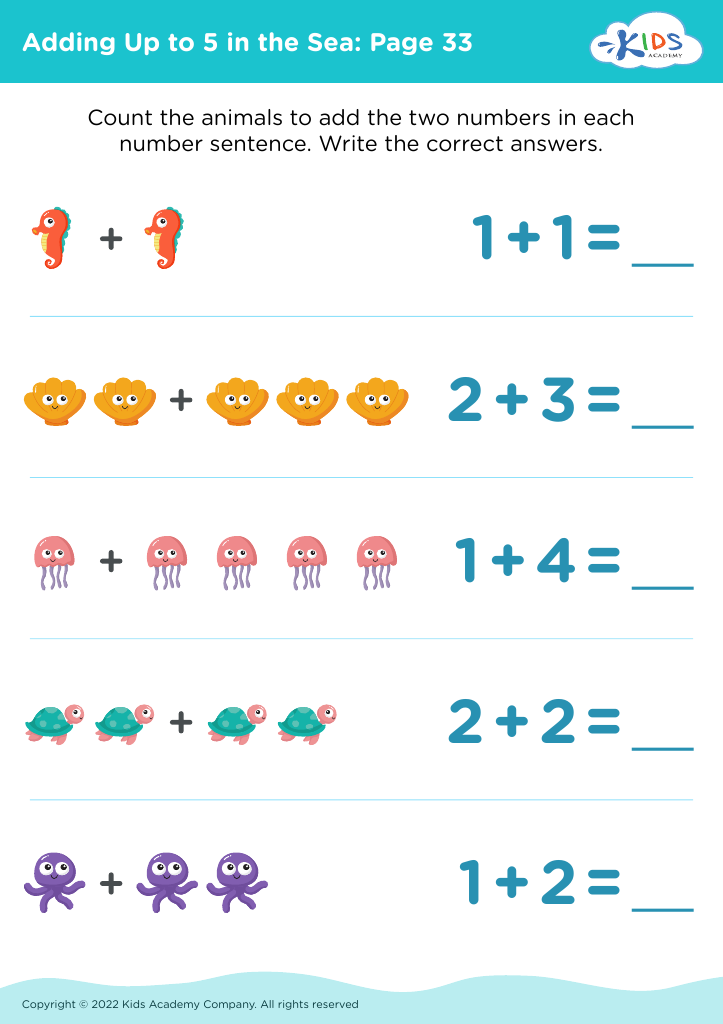
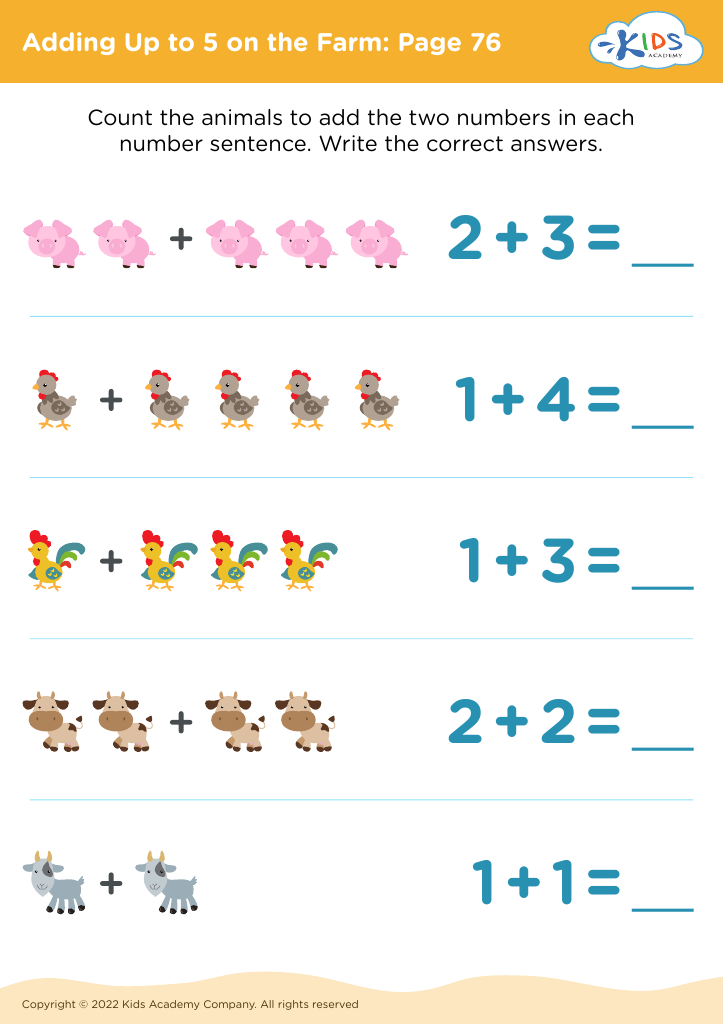
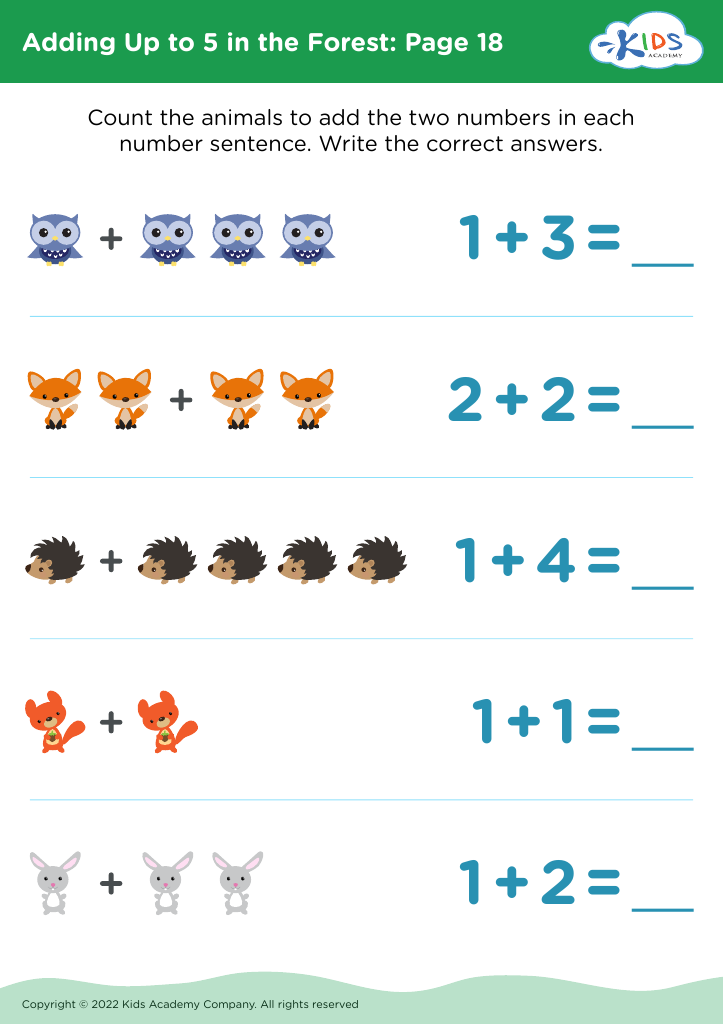
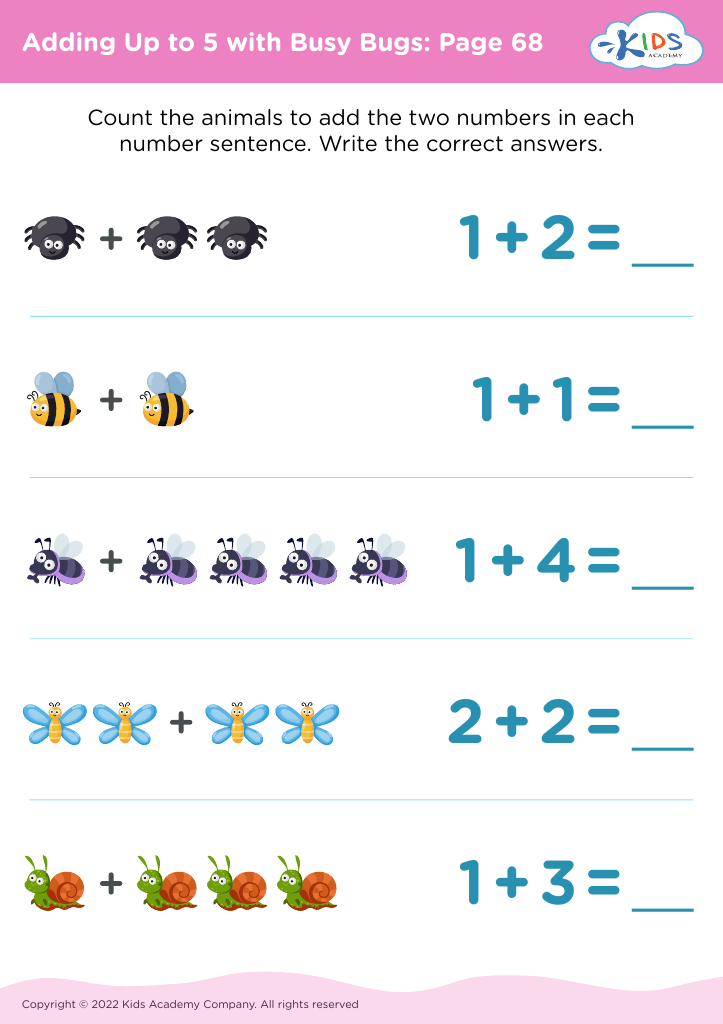
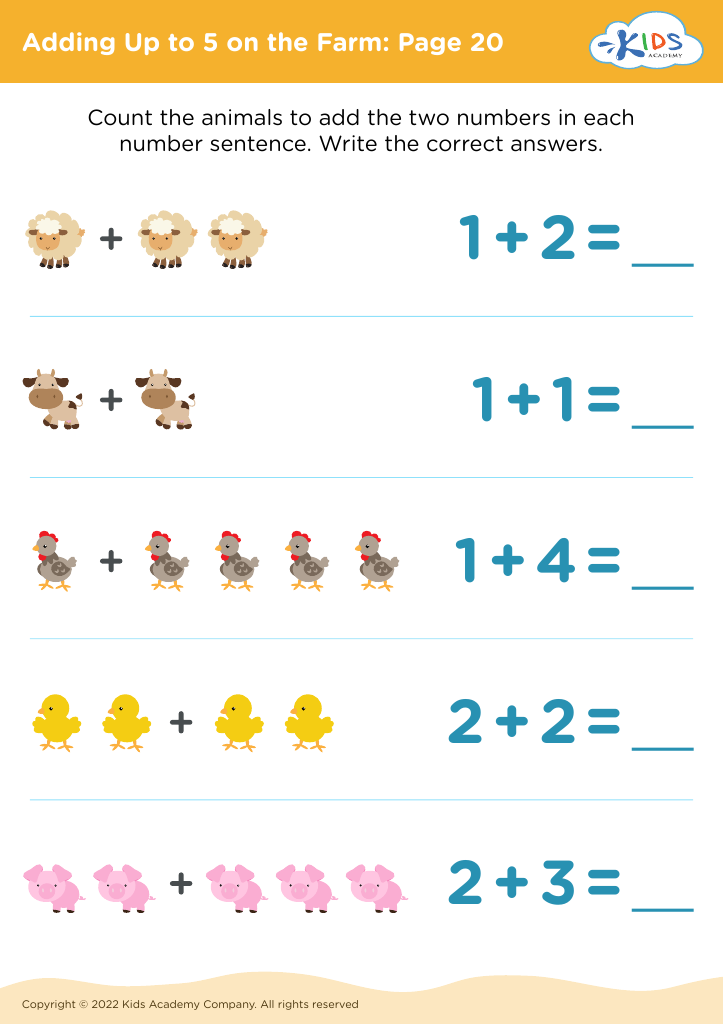
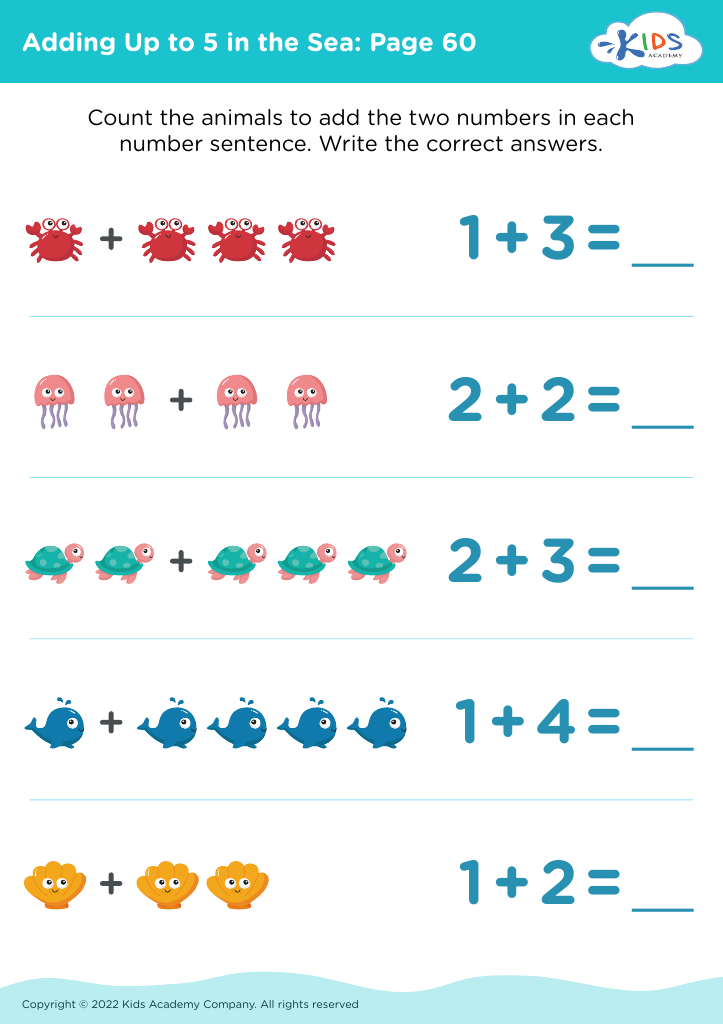
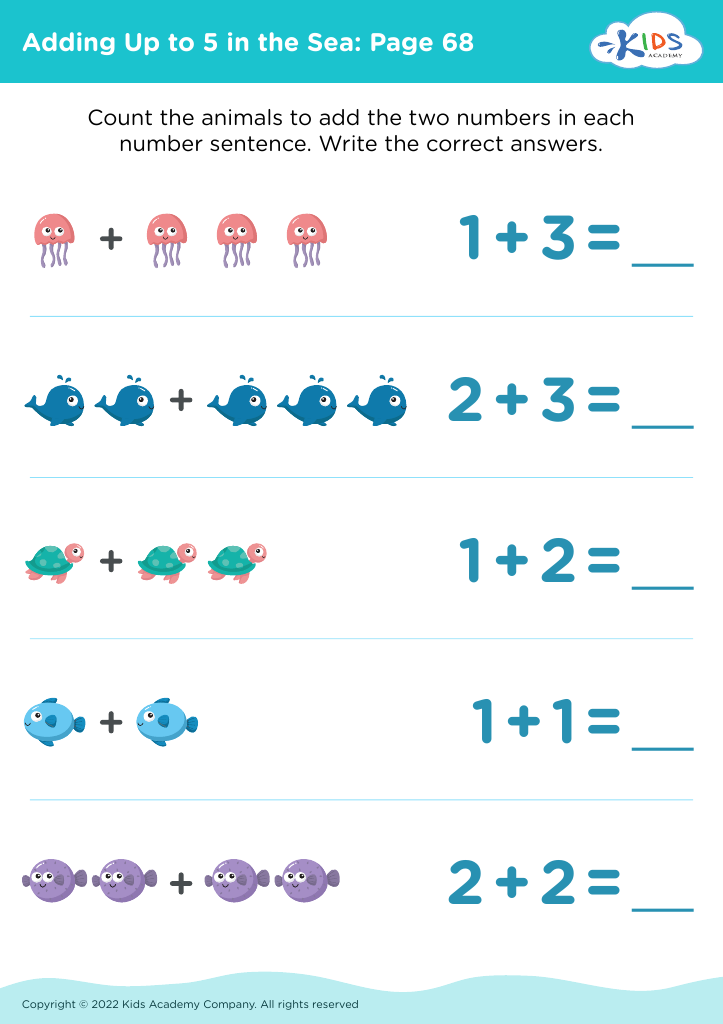
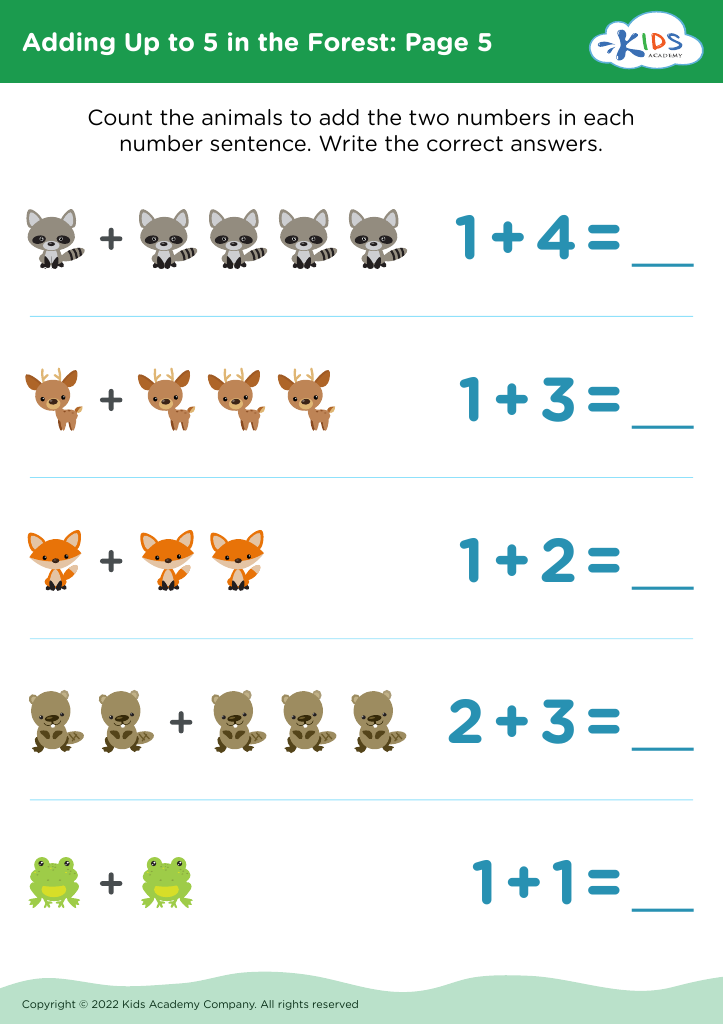
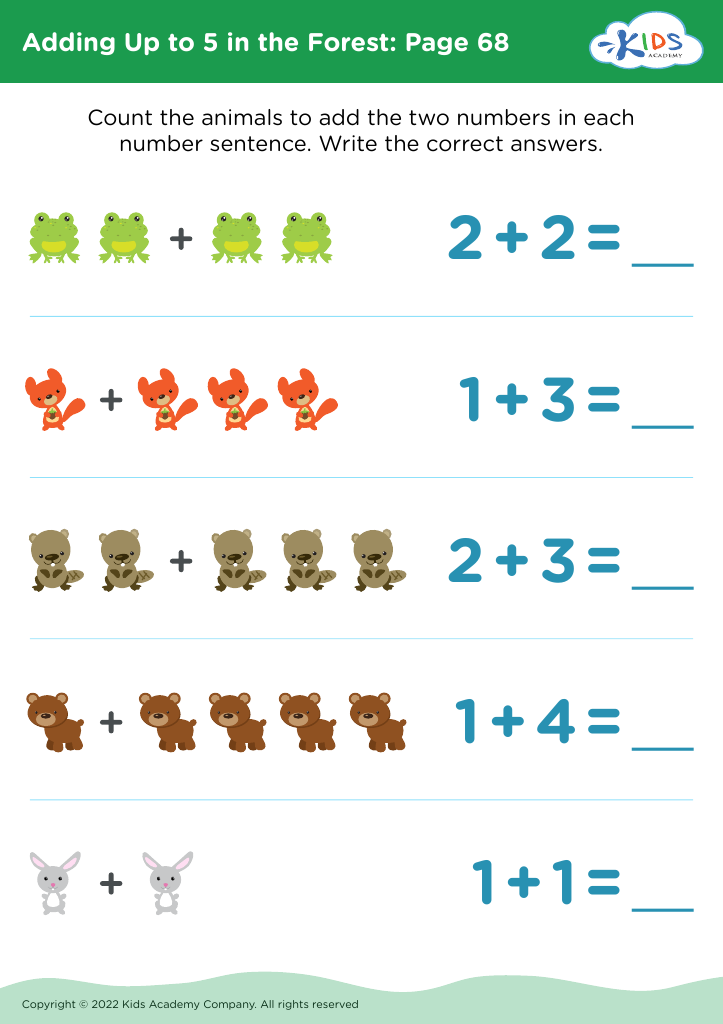
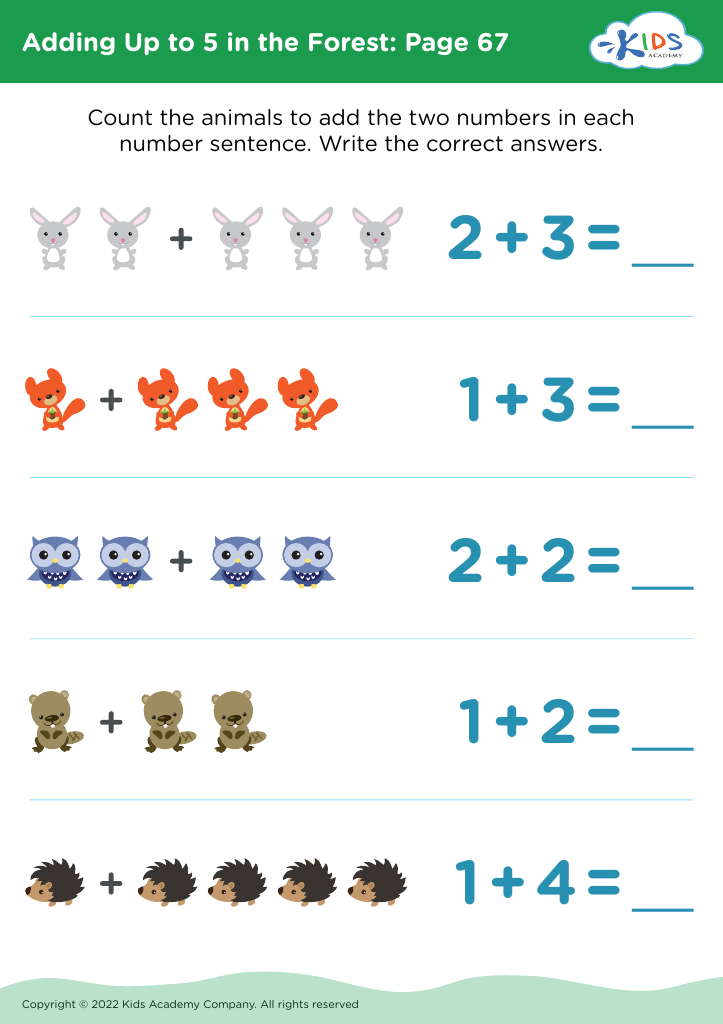
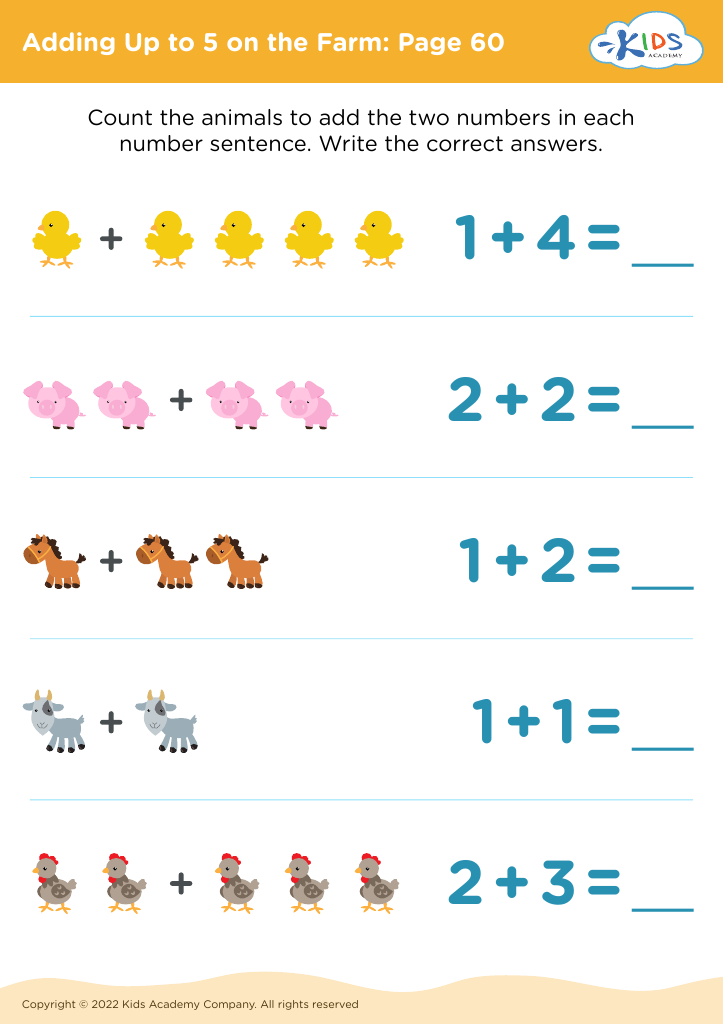



Understanding quantities and the early stages of addition, particularly adding up to 5, is crucial for preschoolers as it lays the foundation for future math skills. Parents and teachers should prioritize this concept for several reasons. First, recognizing and working with small quantities helps children develop number sense, which is essential for mathematical reasoning and problem-solving later on.
When preschoolers engage with quantities up to 5, they can easily visualize and manipulate numbers through play, using objects like blocks, beads, or counters. This tactile interaction reinforces their understanding and improves retention. Incorporating games and hands-on activities also encourages cooperative learning, fostering social skills alongside cognitive development.
Moreover, mastering basic addition provides a sense of achievement, boosting children’s confidence and motivation in learning. It enables them to participate more fully in classroom activities and provides a gateway to more complex mathematical ideas, such as addition, subtraction, and even early concepts of measurement.
Lastly, early mathematical skills are linked to later academic success. By cultivating strong foundational skills in understanding quantities, parents and teachers can set preschoolers on a path toward a lifelong appreciation of math and learning. Promoting such foundational knowledge paves the way for both immediate and long-term educational benefits.