Visual Learning Preschool Adding Up to 5 Worksheets - Page 4
84 filtered results
-
From - To
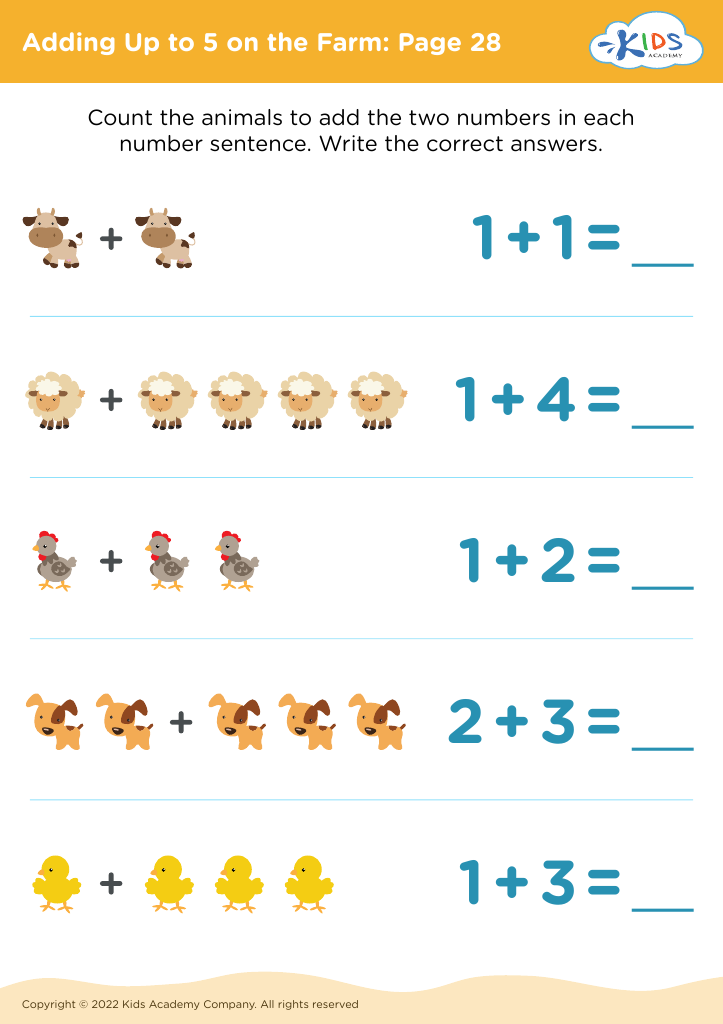
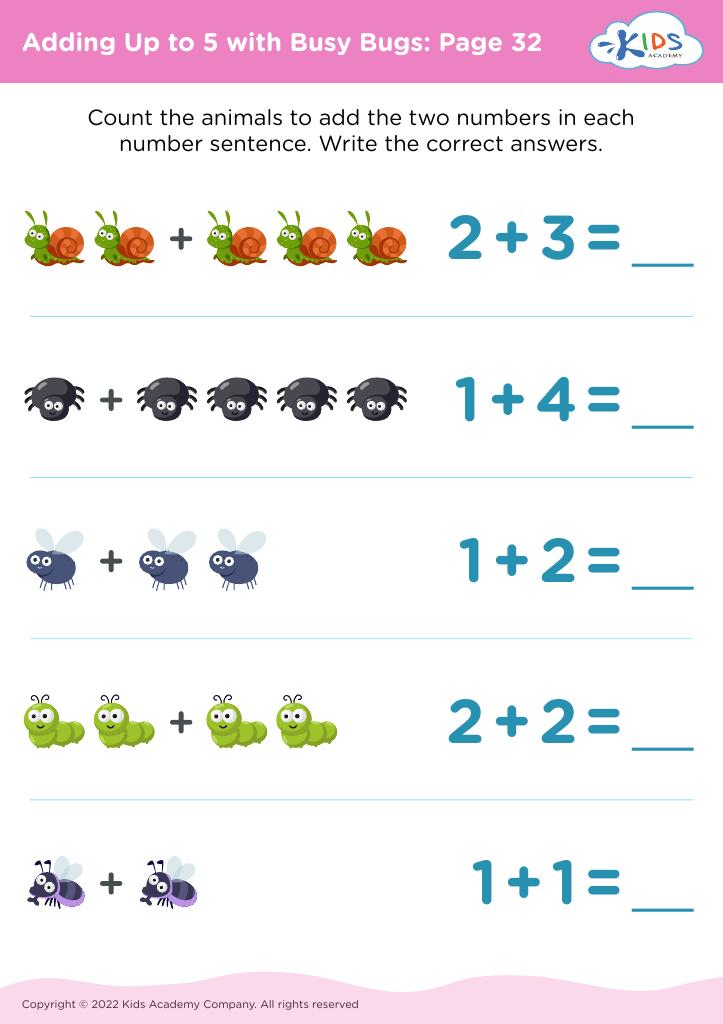
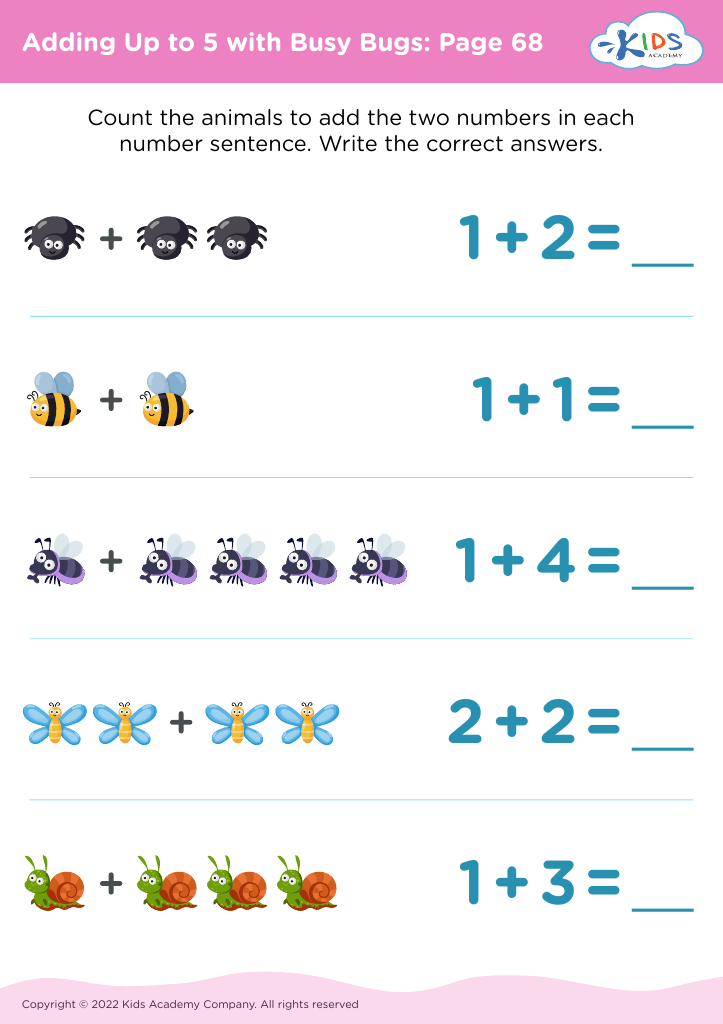
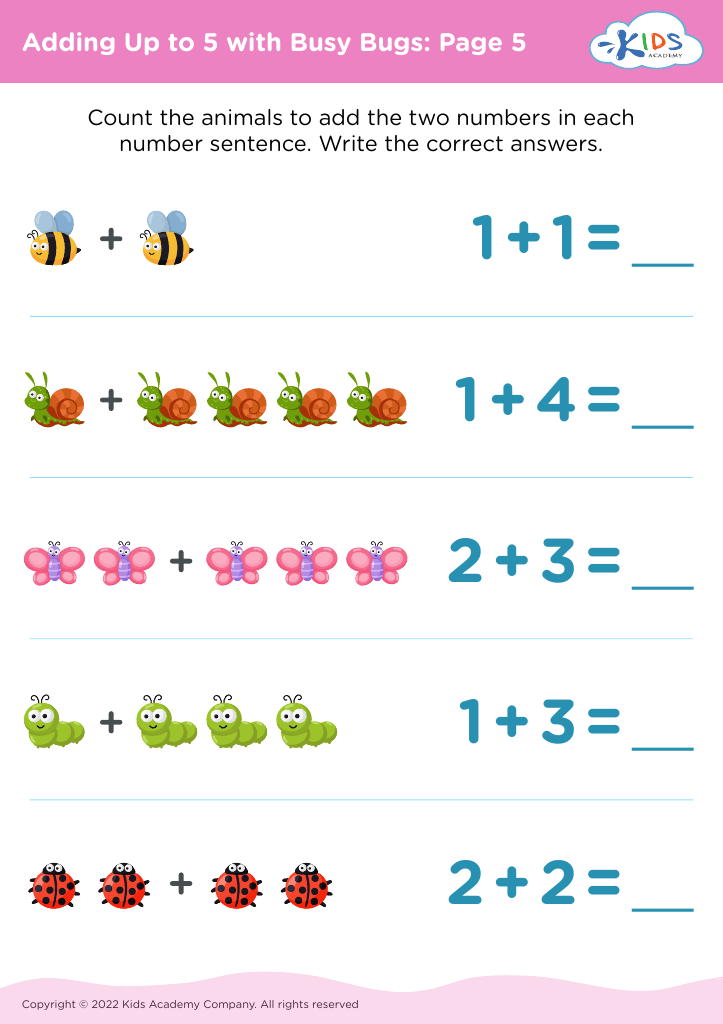
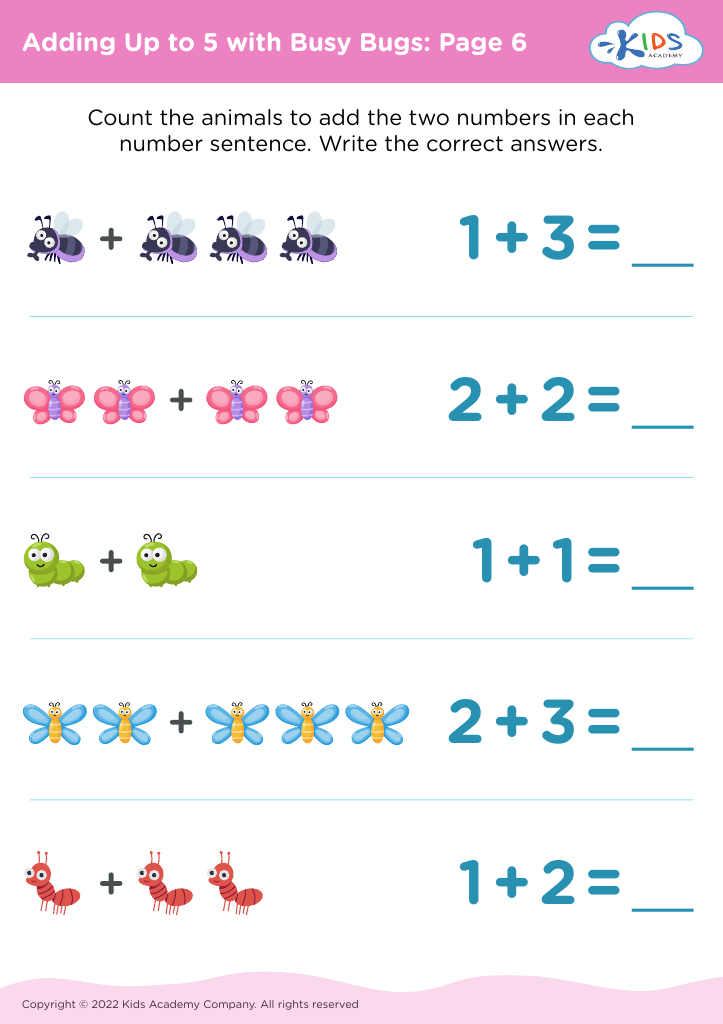
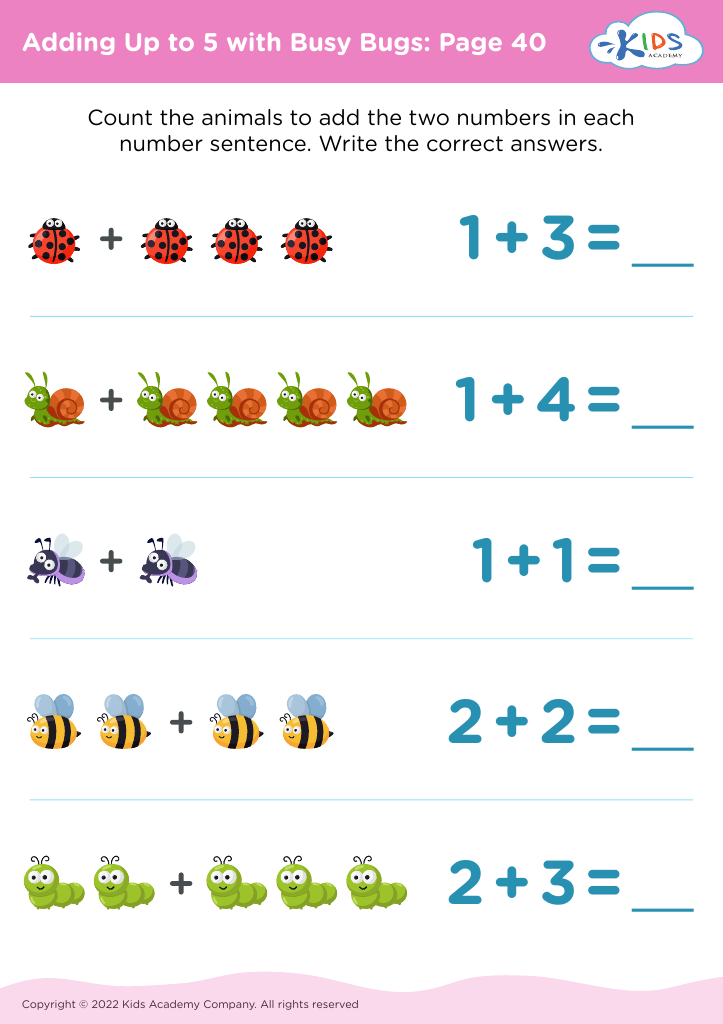
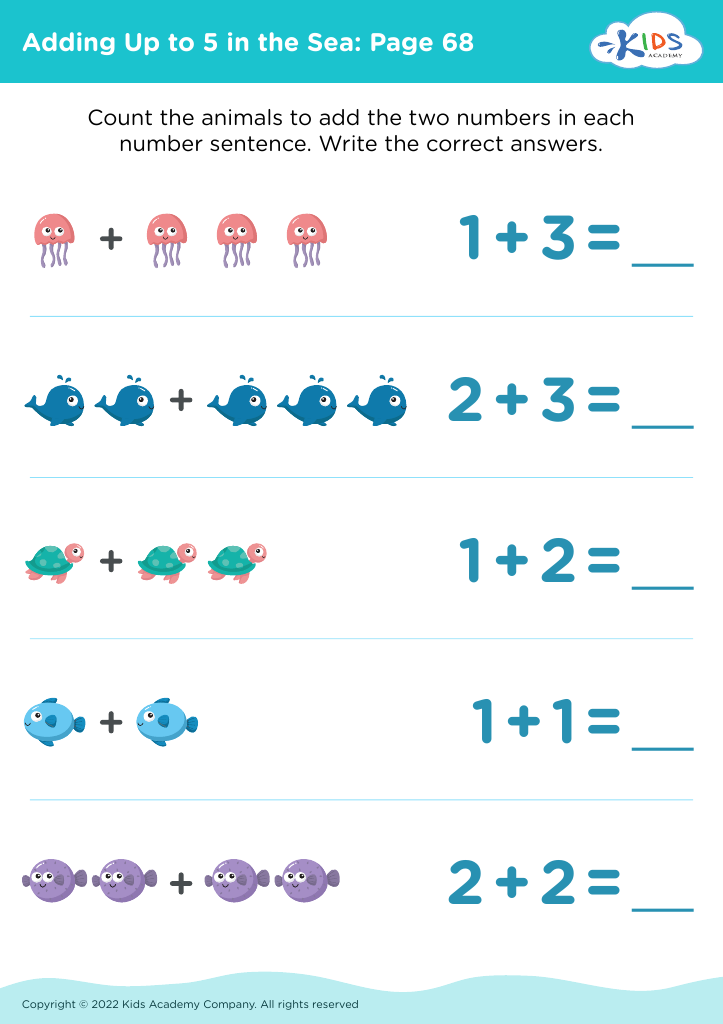
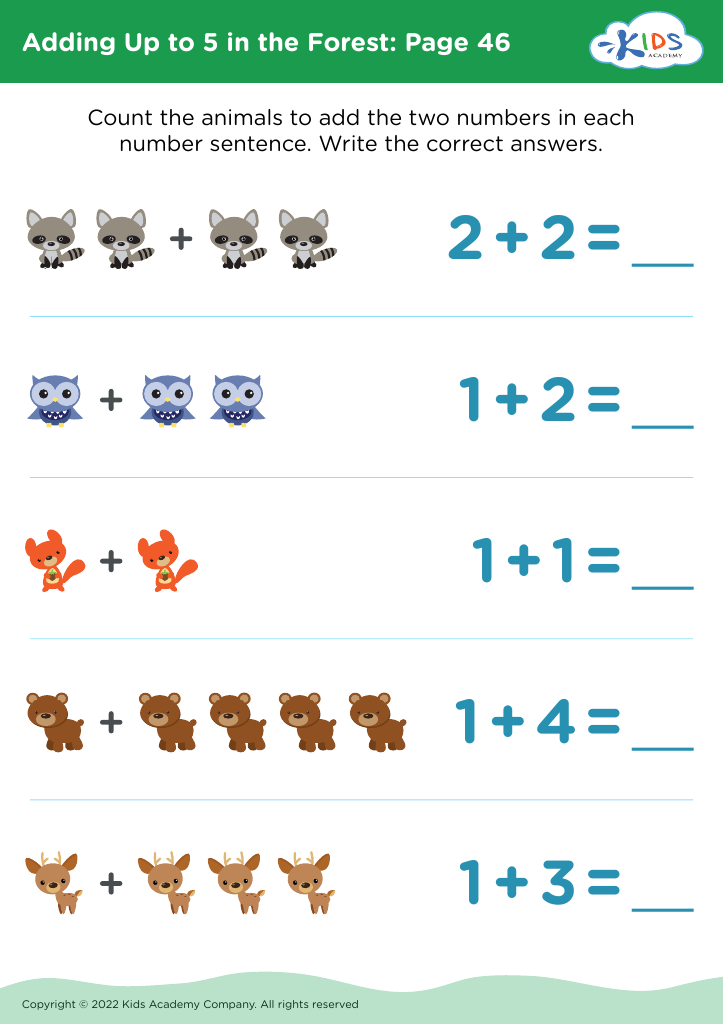
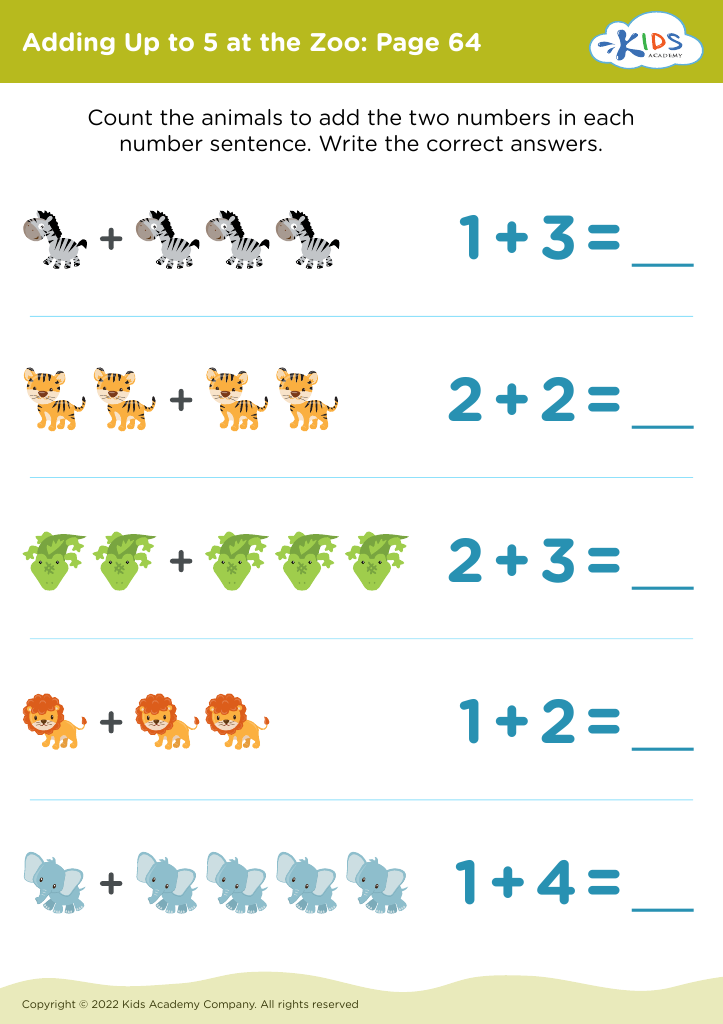
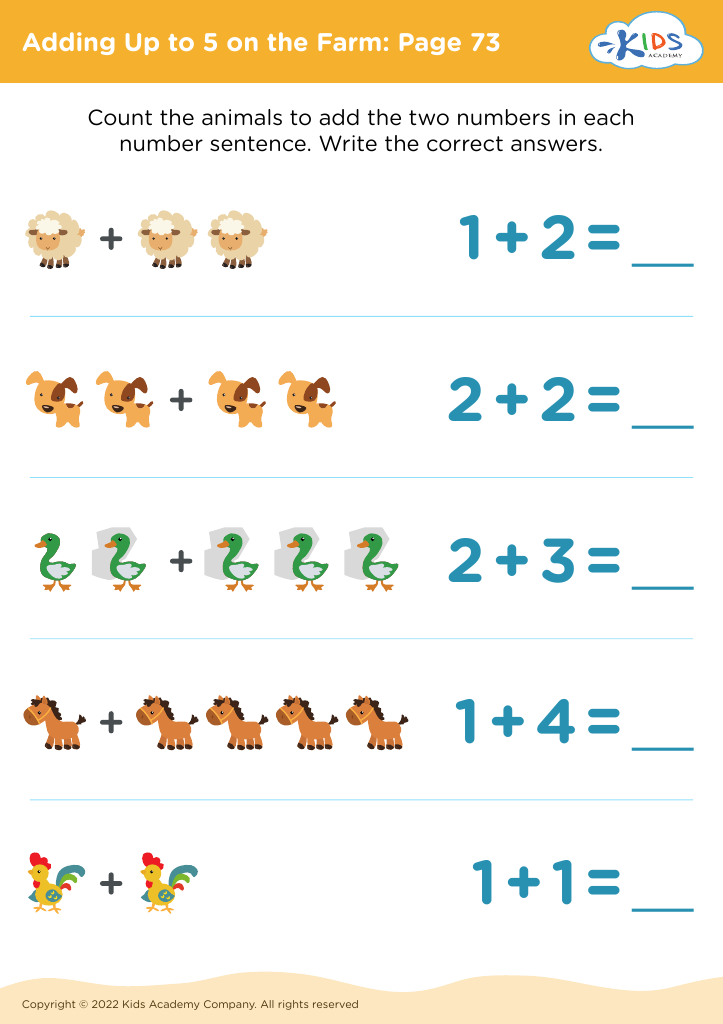
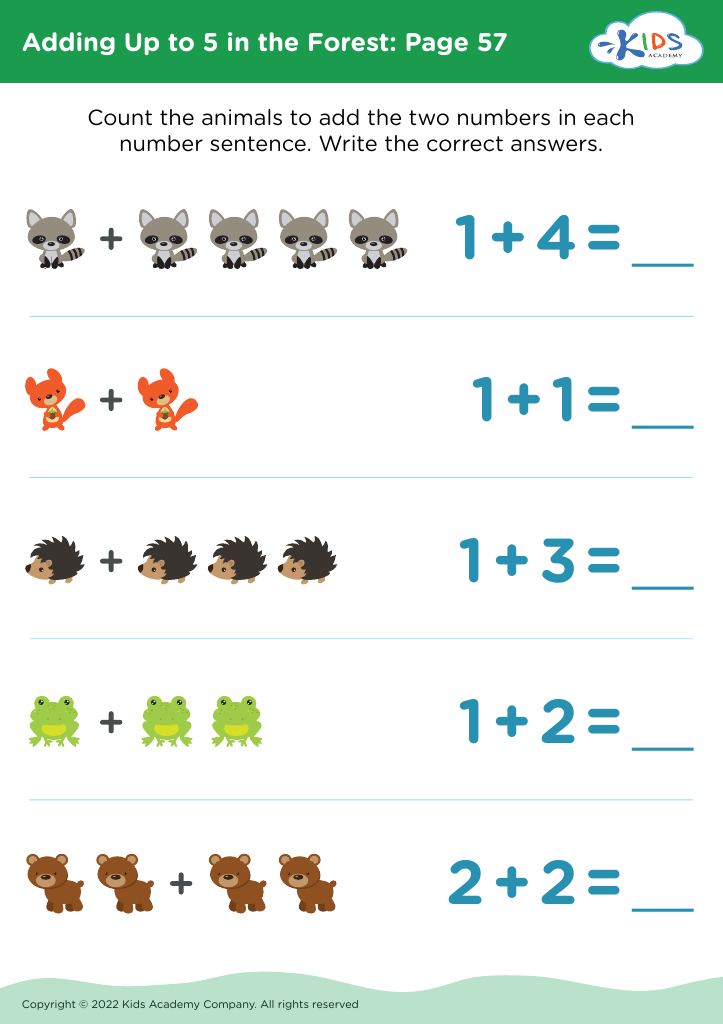
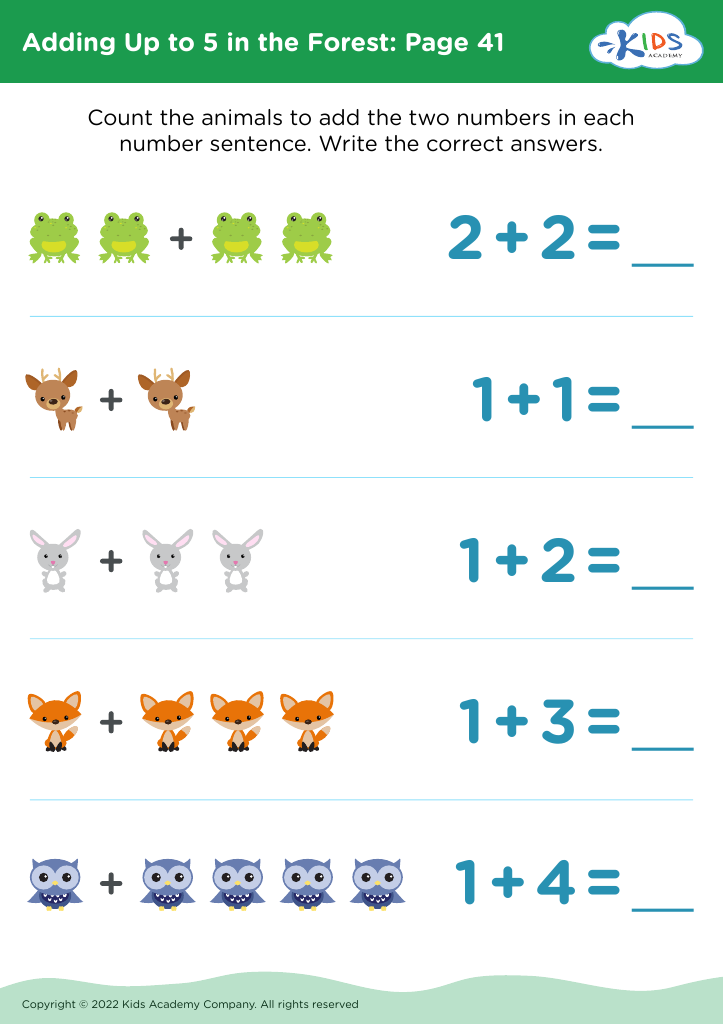



Visual learning techniques, especially for preschoolers adding up to 5, are incredibly beneficial for a child's cognitive development. At this early age, children are highly receptive to visual stimuli, which can make abstract concepts like numbers and addition more concrete and understandable. Visual aids such as counting beads, pictures, or simple diagrams engage multiple senses, helping children to better grasp mathematical concepts compared to traditional rote memorization methods.
Parents and teachers should recognize that visual learning builds a strong foundation for future math skills by fostering critical thinking and problem-solving abilities. For instance, when children physically manipulate objects to represent numbers, they are more likely to understand the relationship between quantities and numerical symbols. This hands-on experience makes learning interactive and enjoyable, which can enrich a child's enthusiasm towards math and learning in general.
Furthermore, utilizing visual learning strategies can also cater to different learning styles, accommodating children who may struggle with purely auditory or textual instruction. Early success in mastering basic math concepts can boost a child's confidence, encouraging a positive attitude toward upcoming educational challenges. Thus, by embracing visual learning practices for simple addition, parents and teachers can help build essential skills, nurturing a lifelong love for learning and mathematical thinking in young children.