Visual perception improvement Preschool Adding Up to 5 Worksheets
5 filtered results
-
From - To
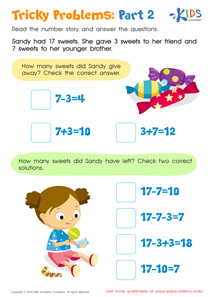
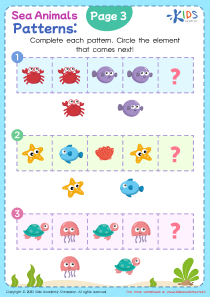
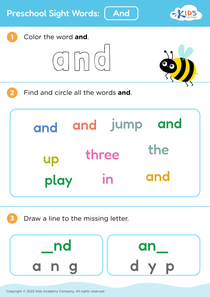
Enhance your preschooler's visual perception skills with our "Adding Up to 5 Worksheets." Designed to boost both math and cognitive abilities, these engaging worksheets help young learners recognize numbers, understand quantities, and improve their overall visual processing. Each activity combines fun imagery with hands-on tasks that promote counting and addition while sharpening their visual awareness. Ideal for early childhood educators and parents, these worksheets make learning enjoyable and effective. Prepare your child for future academic success with our dynamic resources, perfect for nurturing a strong foundation in both math and visual perception. Start today and watch your child thrive!
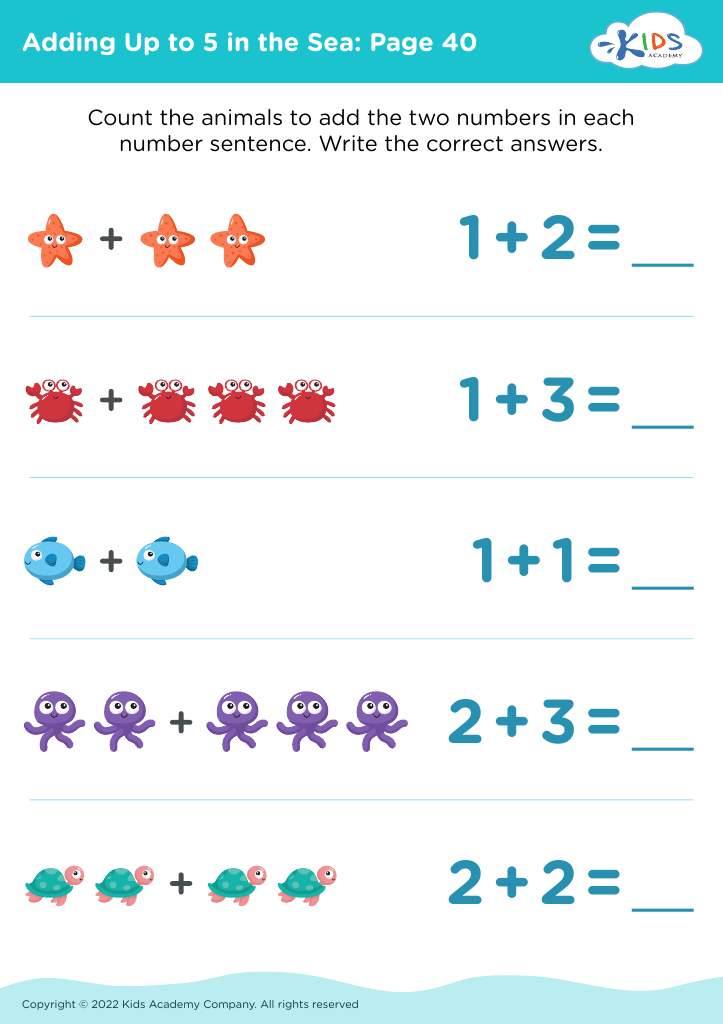
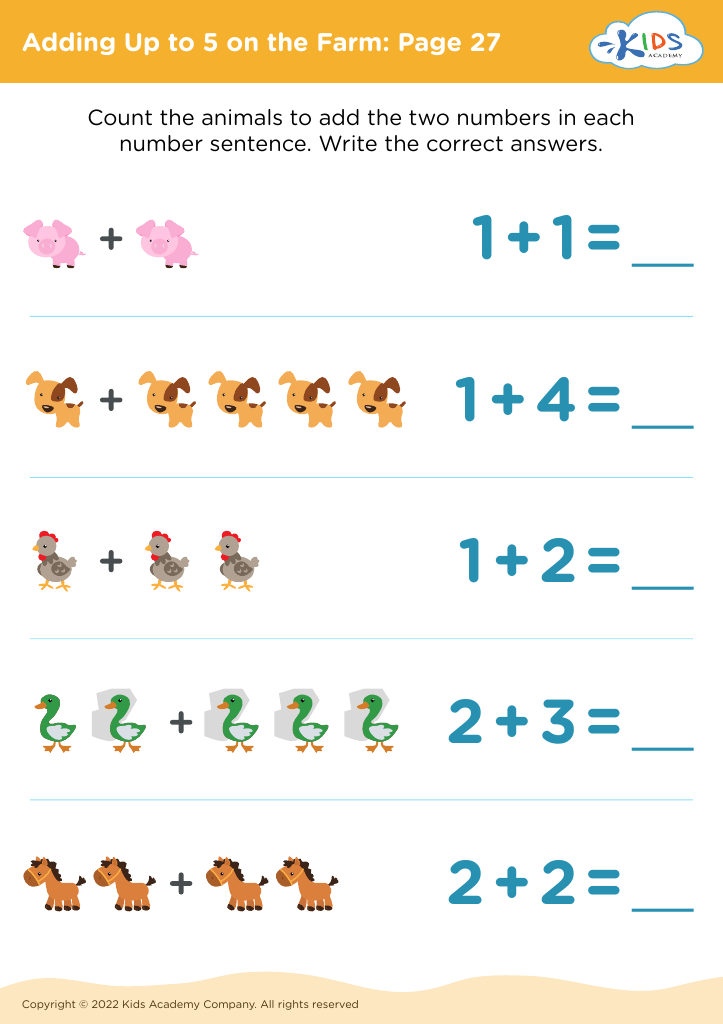
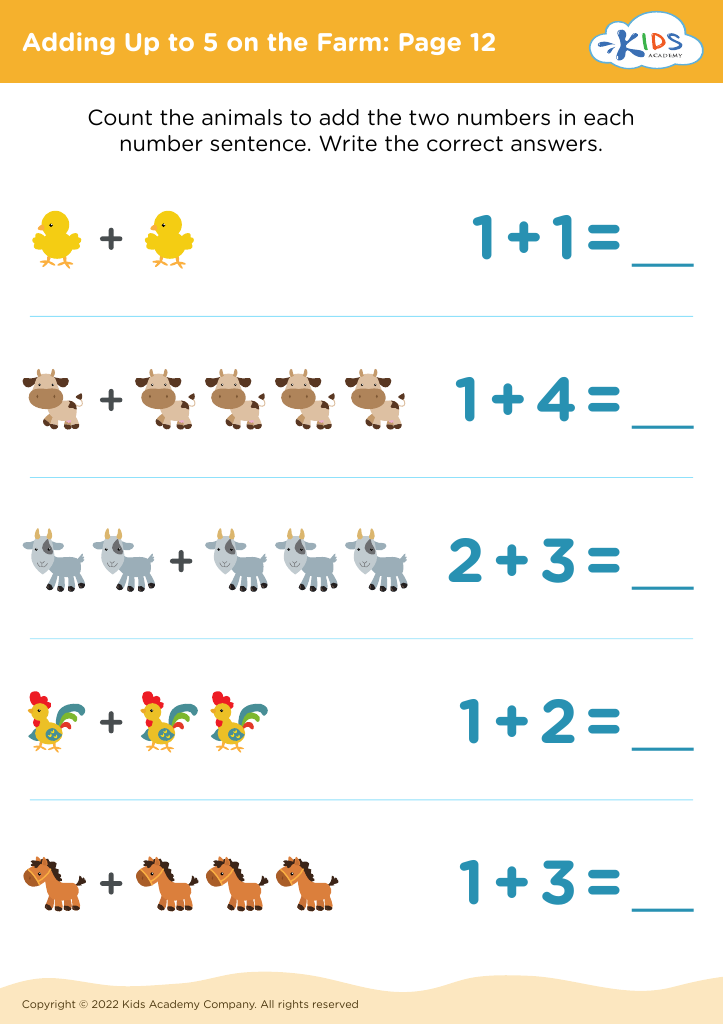
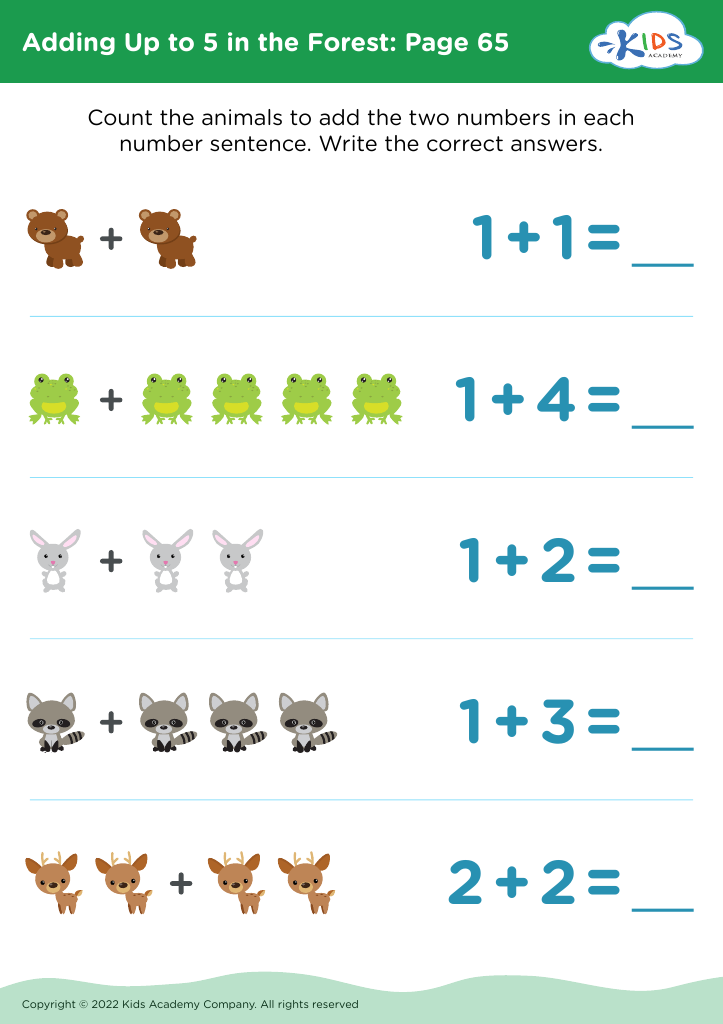
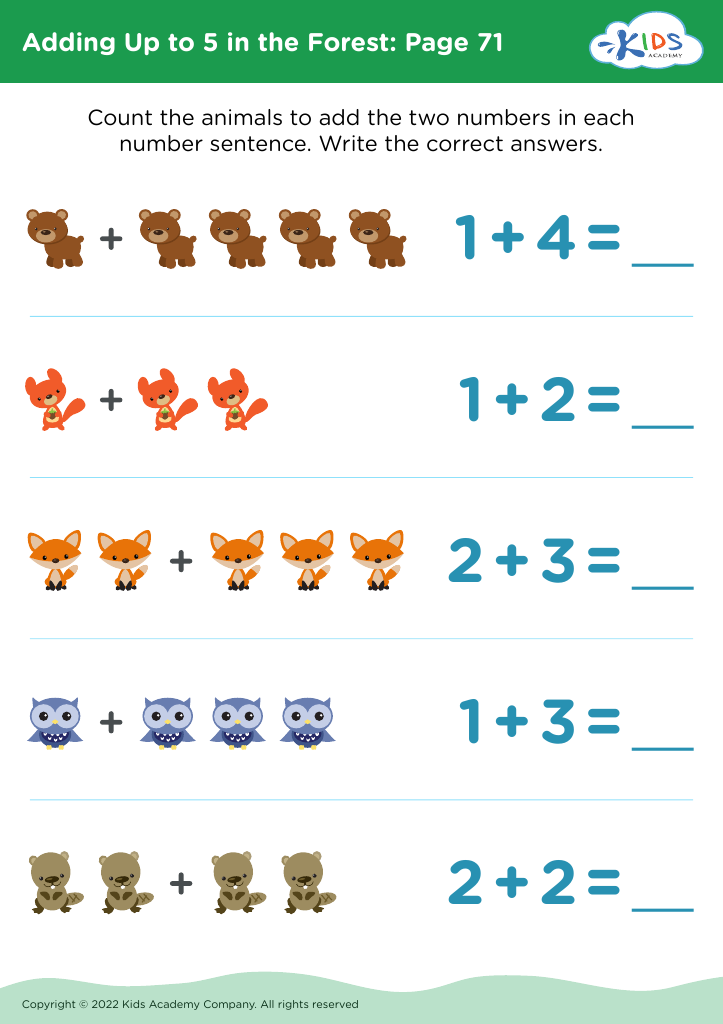


Visual perception is a critical foundation for early learning, particularly in skills related to math, reading, and overall cognitive development. By improving visual perception in preschoolers, parents and teachers are fostering a crucial skill set that enables young learners to understand and manipulate numbers, particularly when adding up to 5.
One of the key benefits of honing visual perception skills is that it aids children in recognizing patterns and shapes, which are fundamental concepts in mathematics. Recognition of spatial relationships, quantities, and configurations allows children to visualize problems efficiently, setting a strong basis for more advanced mathematical concepts.
Activities focused on visual perception—such as sorting, comparing, and counting—engage children's observational skills and enhance their ability to focus and process visual information. Furthermore, when children can easily add numbers up to 5, it boosts their confidence in tackling more complex math challenges later on.
In a world increasingly reliant on technology and data analysis, the importance of these foundational skills cannot be overstated. Consequently, engaging in exercises that foster visual perception not only aligns with educational objectives but also equips preschoolers with essential tools for lifelong learning and problem-solving. Thus, both parents and teachers should prioritize this aspect of early childhood education.