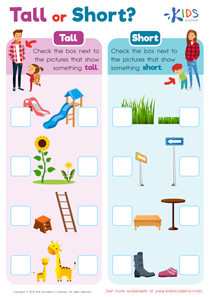
Basic arithmetic practice Preschool Addition & Subtraction Worksheets
11 filtered results
-
From - To
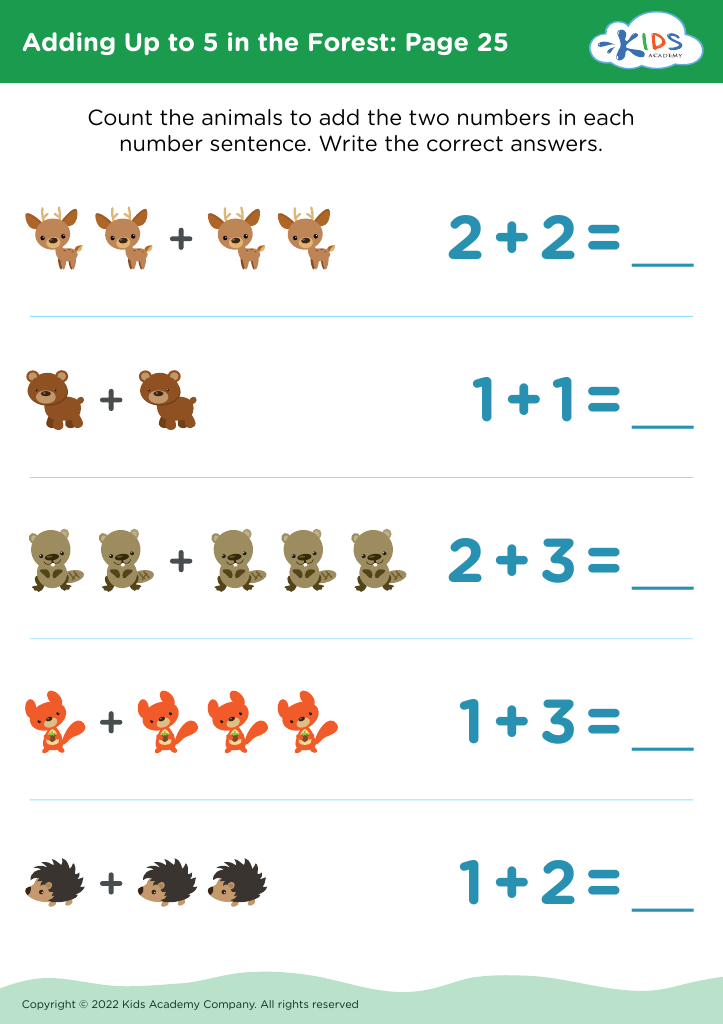
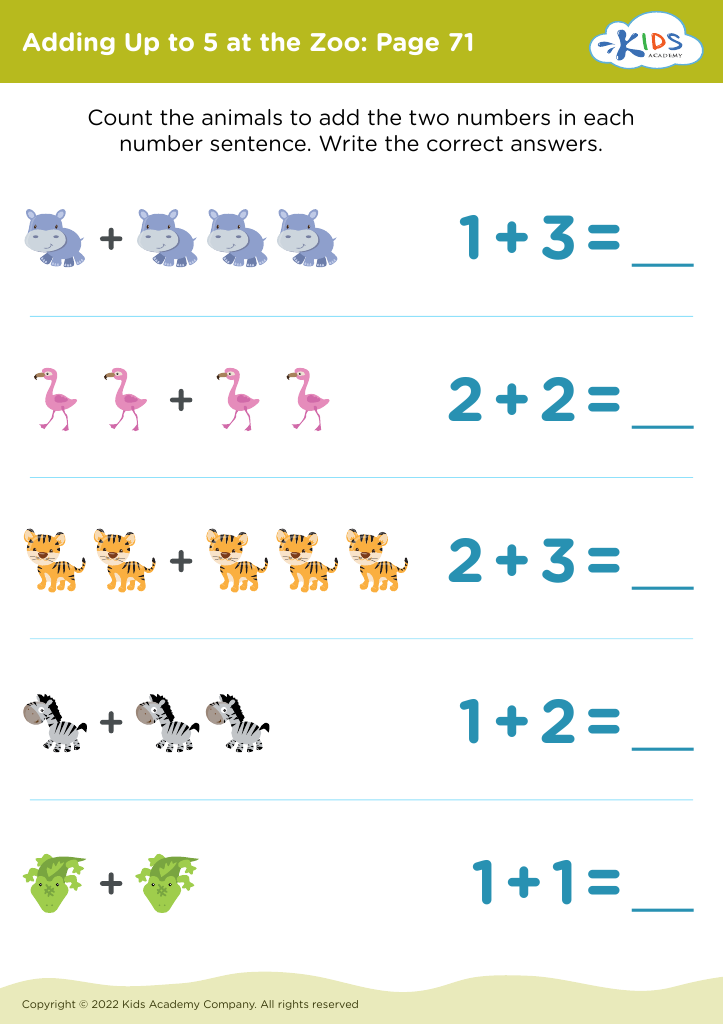
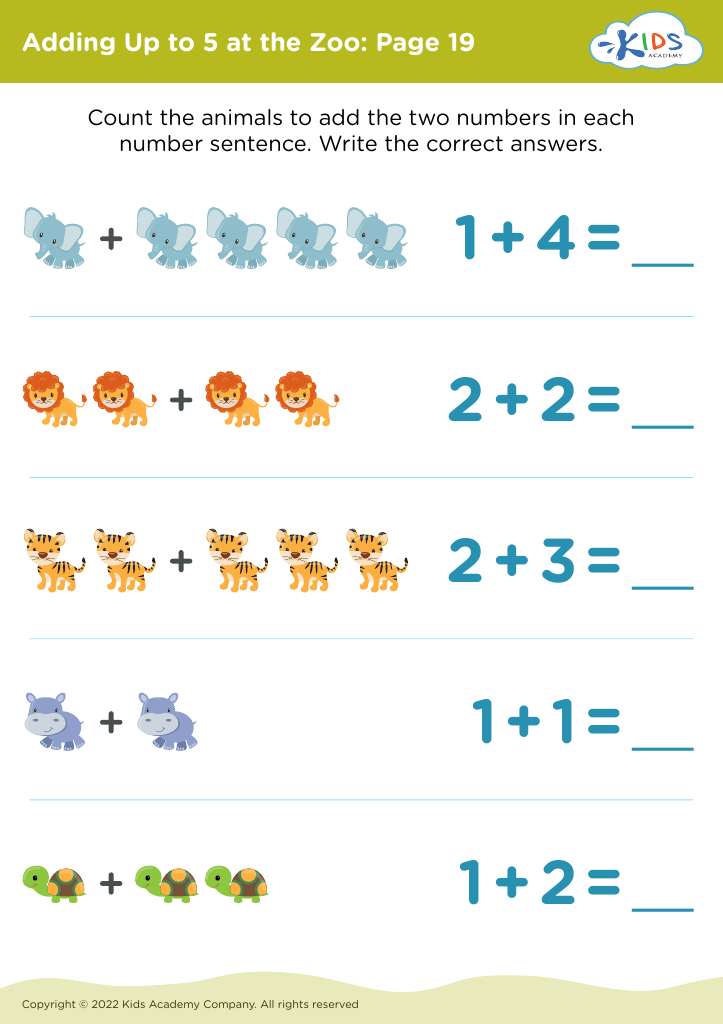
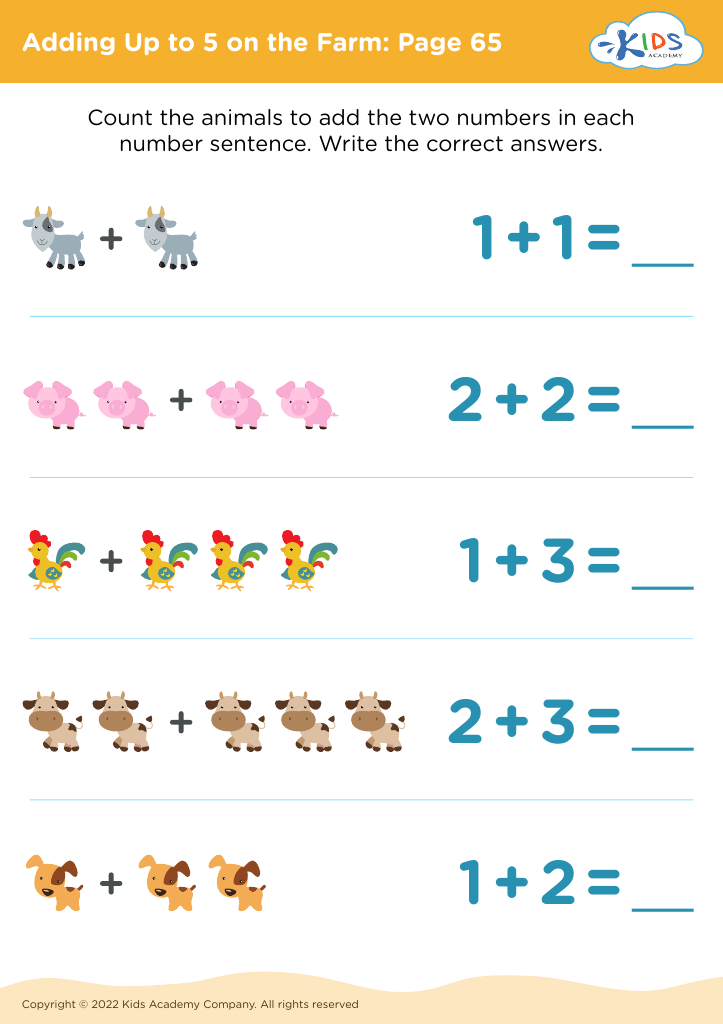
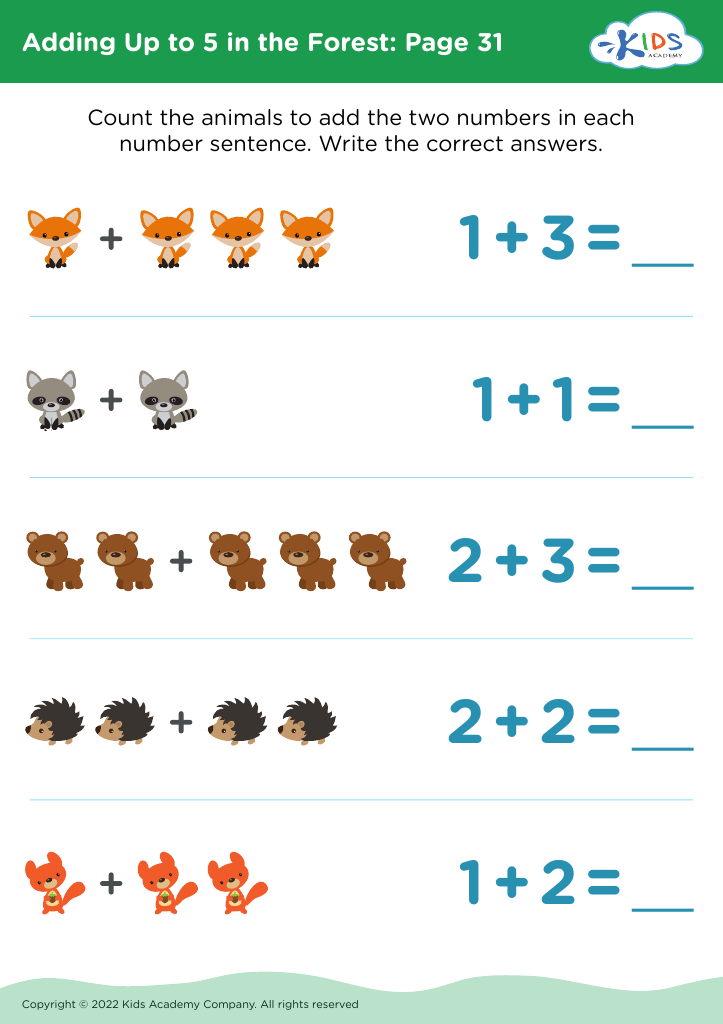
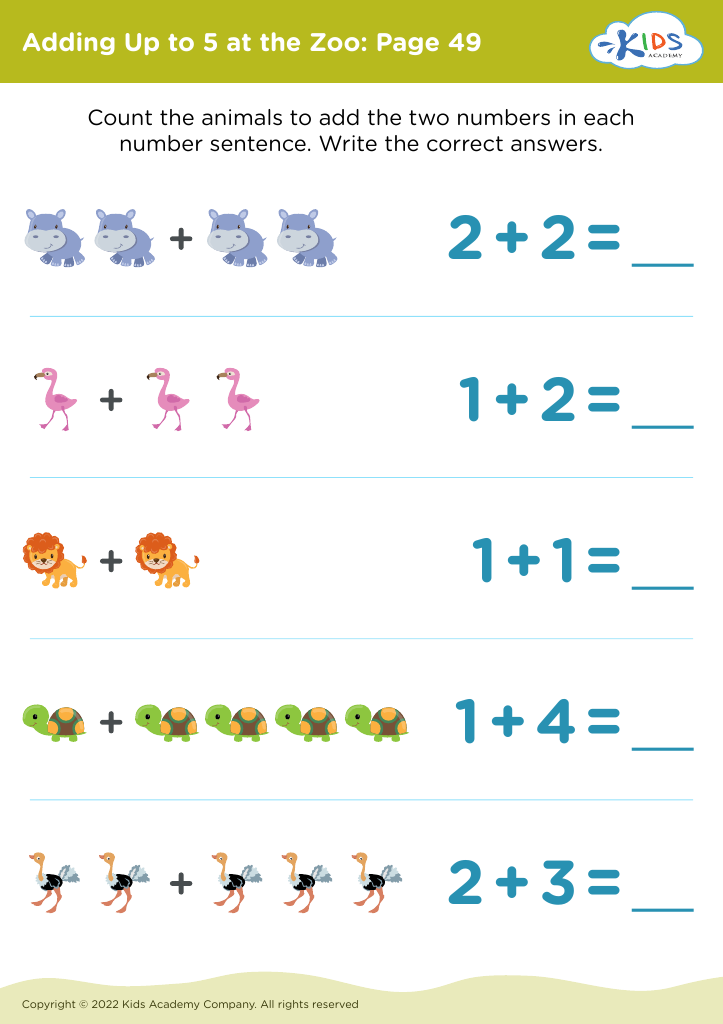
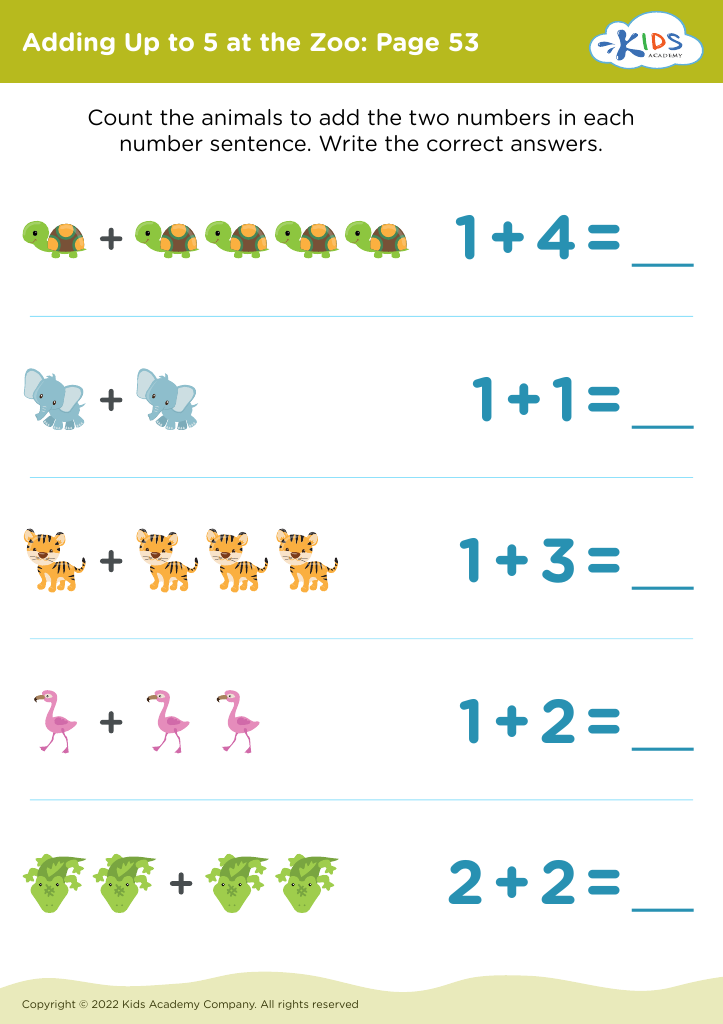
Welcome to our Basic Arithmetic Practice page, where preschoolers can explore addition and subtraction through engaging worksheets! Designed specifically for young learners, these worksheets foster foundational math skills while making learning fun. Children will enjoy colorful illustrations and interactive exercises that enhance their understanding of numbers. Each worksheet focuses on simple addition and subtraction problems, tailored to their developmental stage. Encourage your child's mathematical growth with our varied activities that promote critical thinking and problem-solving. Perfect for at-home learning or classroom practice, our Preschool Addition & Subtraction Worksheets are sure to build confidence and a love for math in your little ones!
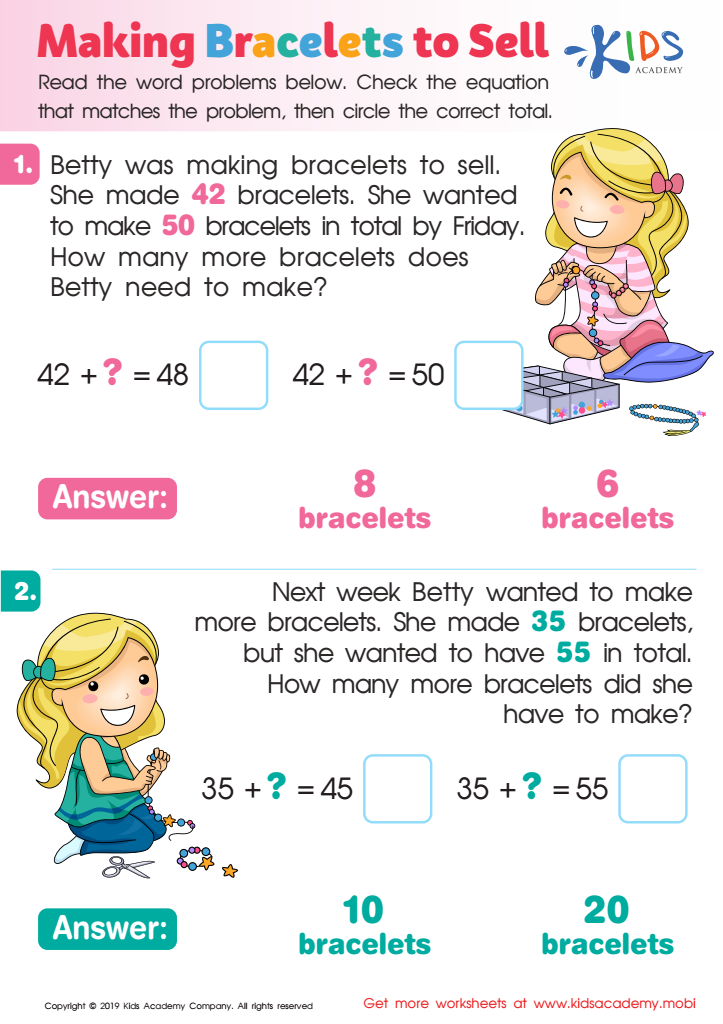
Making Bracelets to Sell Worksheet
 Assign to My Students
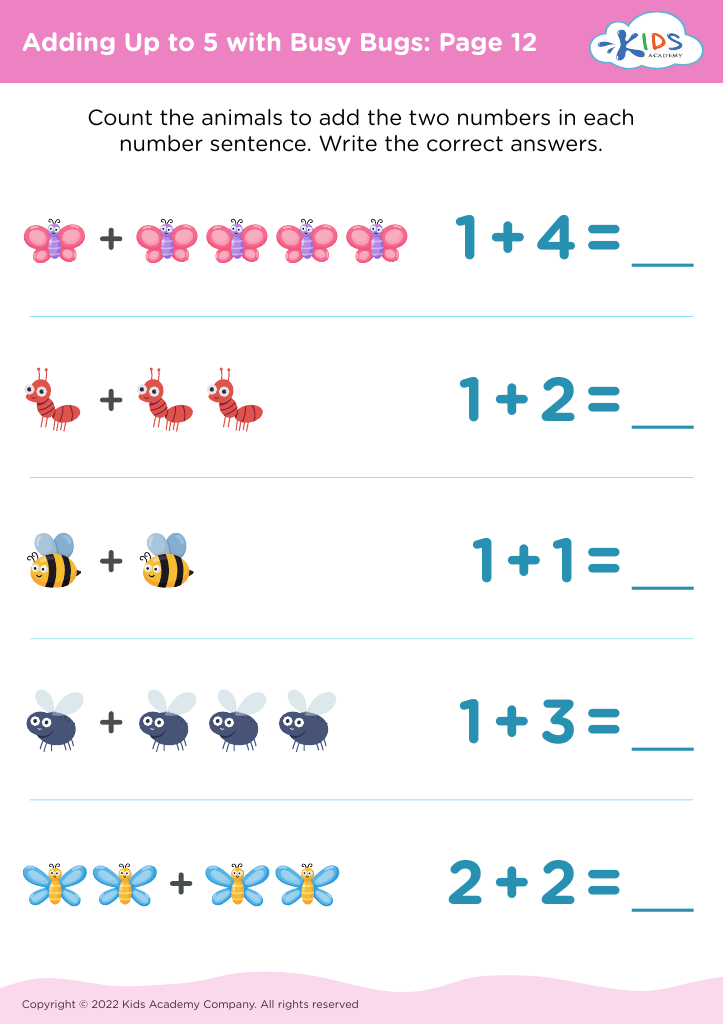
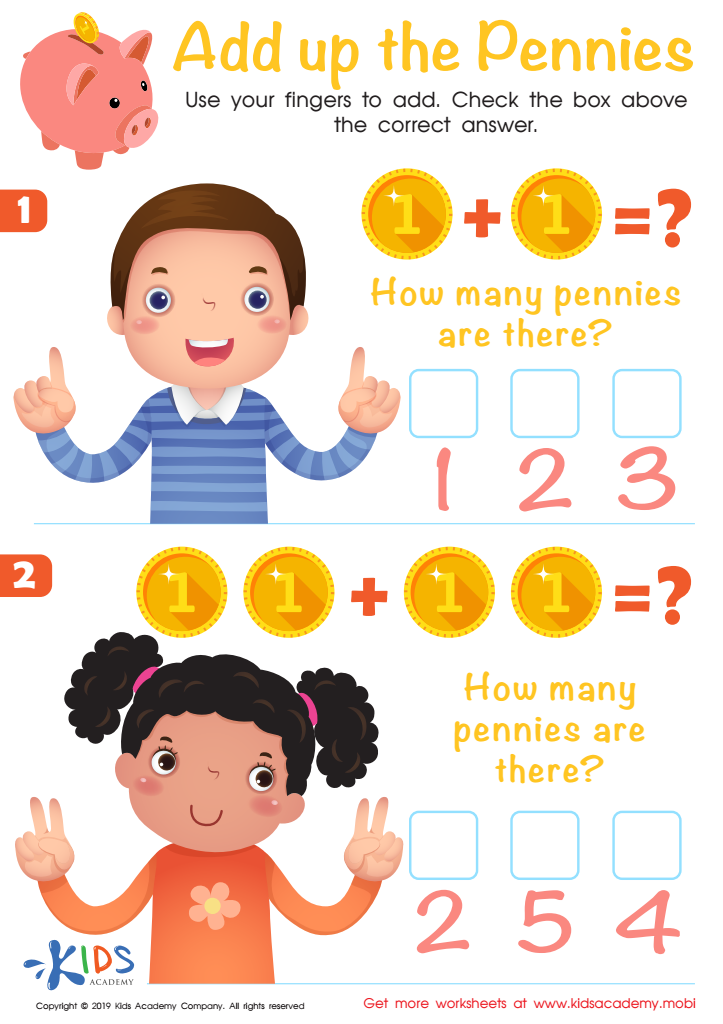
Add up the Pennies Worksheet
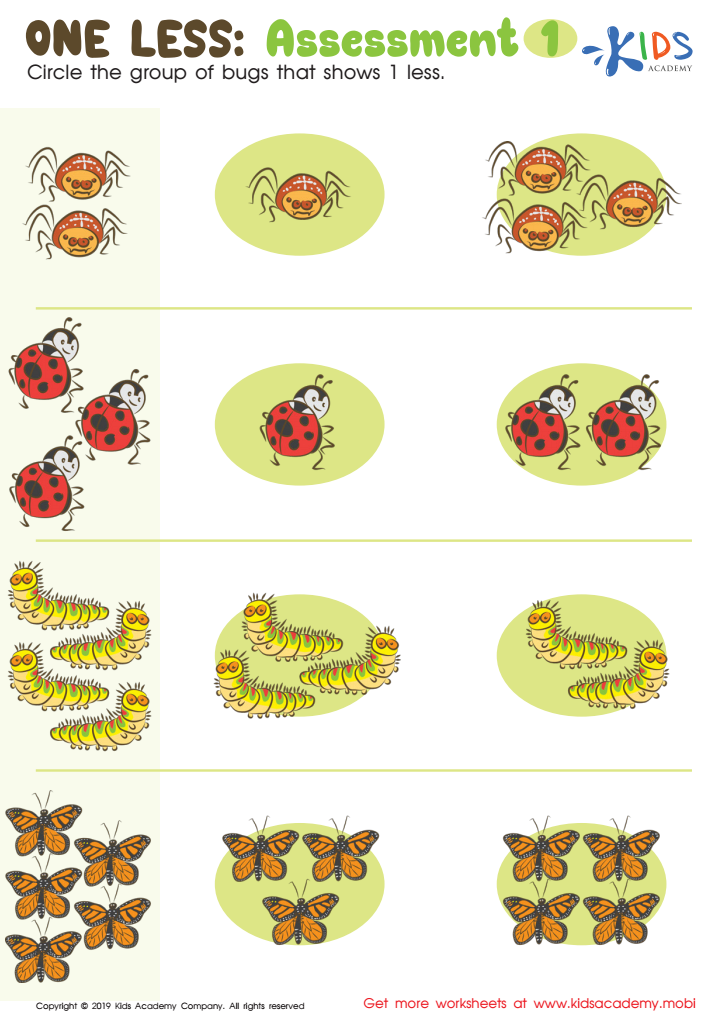
One Less: Assessment 1 Worksheet








Basic arithmetic practice in preschool, particularly in addition and subtraction, is crucial for early childhood development. It lays the foundation for later mathematical understanding, which permeates various aspects of learning and everyday life. When children engage in basic math activities, they develop critical thinking and problem-solving skills that are necessary not only in future math classes but also in subjects like science and economics.
Practicing addition and subtraction enhances cognitive skills and memory. Simple exercises help young children recognize numbers, strengthen their understanding of quantities, and establish number sense. This early mathematical fluency influences their confidence, enabling them to tackle more complex mathematical concepts in their later years without anxiety.
Moreover, basic arithmetic fosters important life skills such as logical reasoning and the ability to make decisions. Teachers and parents should recognize that math isn’t just about numbers; it's also about patterns, relationships, and the execution of basic reasoning.
Additionally, bringing arithmetic into daily activities can make learning enjoyable and relatable. Creating a positive association with math early on encourages lifelong enthusiasm for learning. Hence, the priority on basic arithmetic concepts in preschool eases the educational pathway ahead, setting the stage for success across various academic disciplines.