Filters

386 filtered results

Clear all filters
Favorites
With answer key
Interactive

386 filtered results

Difficulty Level

Grade


Check out this FREE Preschool Trial Lesson on Addition & Subtraction!

P

Favorites
With answer key
Interactive
  • Preschool
  • Number Recognition
  • Addition & Subtraction
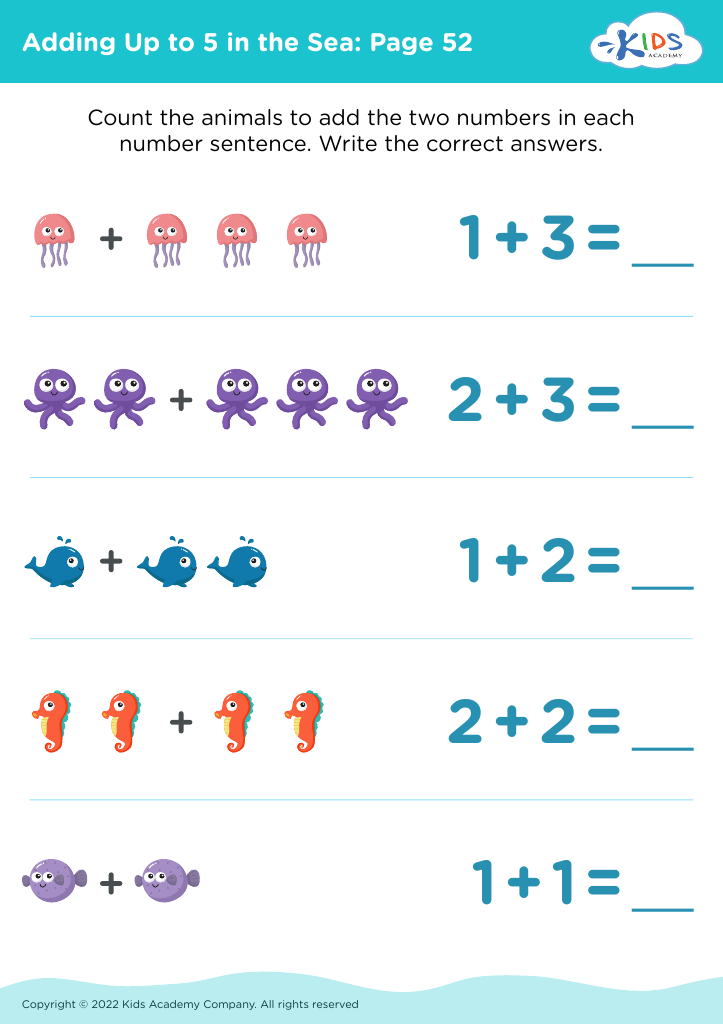
Adding Up to 5 in the Sea: Page 52
Worksheet
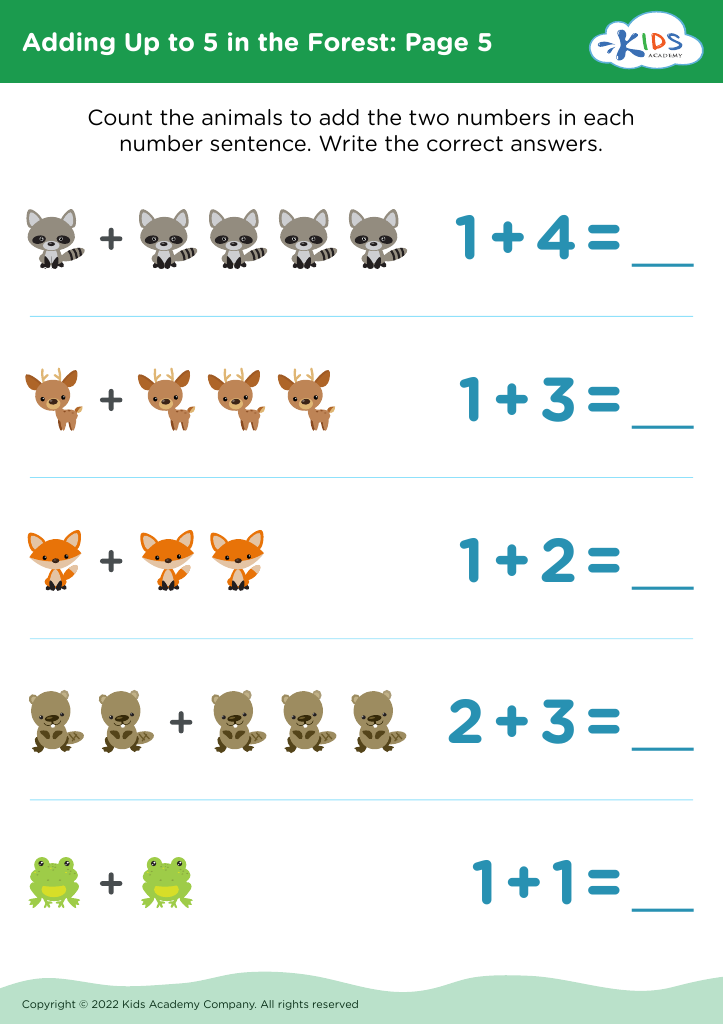
Adding Up to 5 in the Forest: Page 5
Worksheet
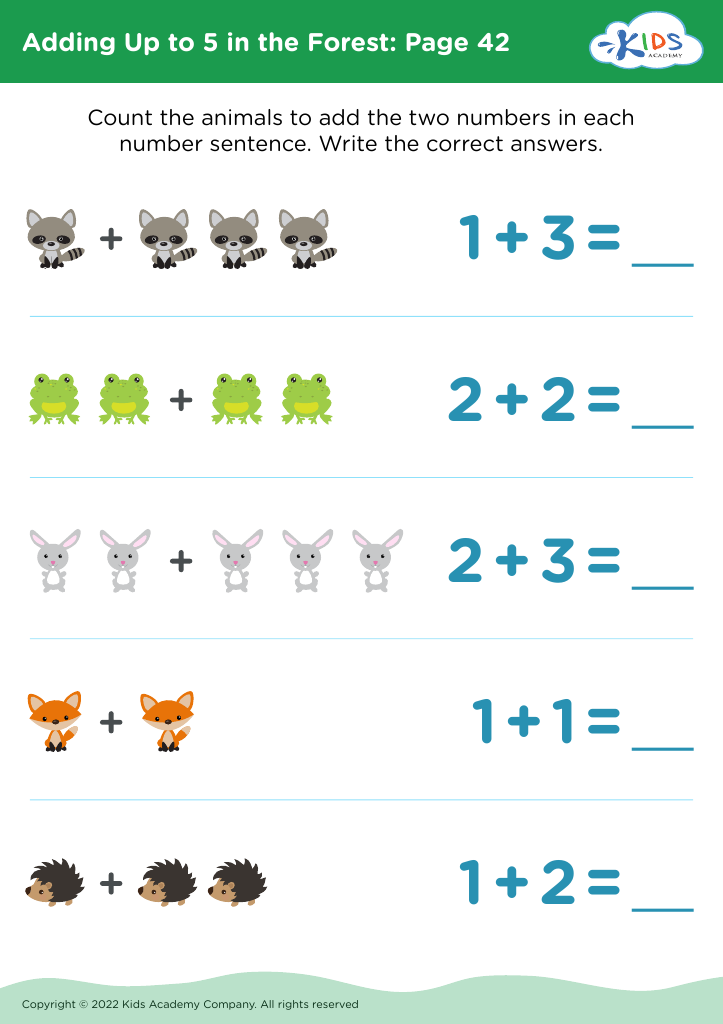
Adding Up to 5 in the Forest: Page 42
Worksheet
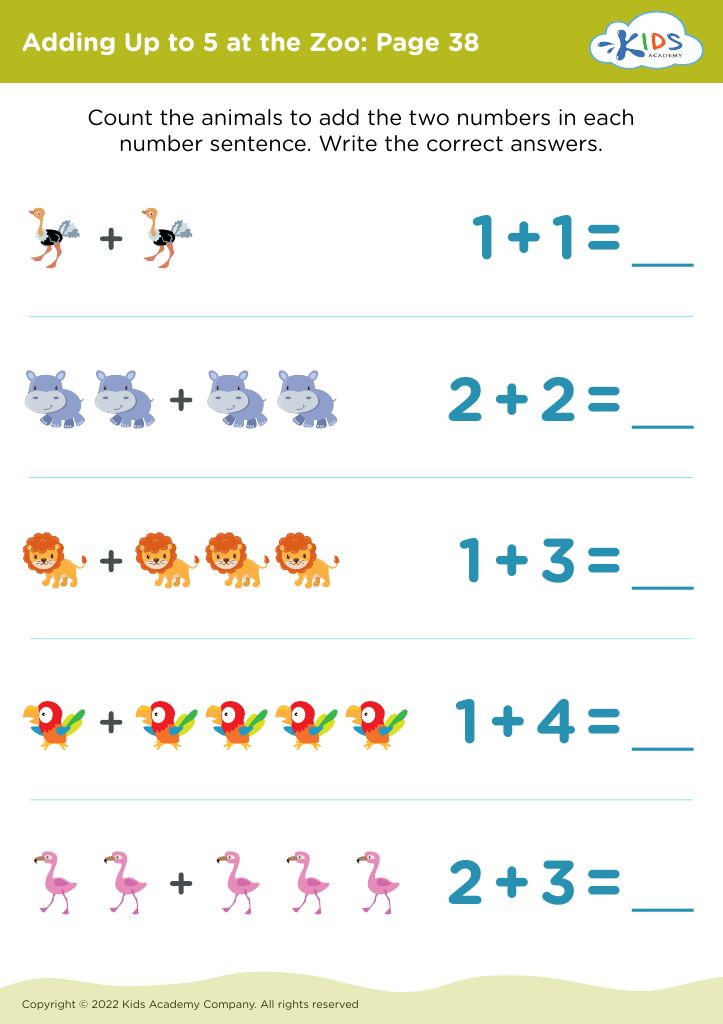
Adding Up to 5 at the Zoo: Page 38
Worksheet
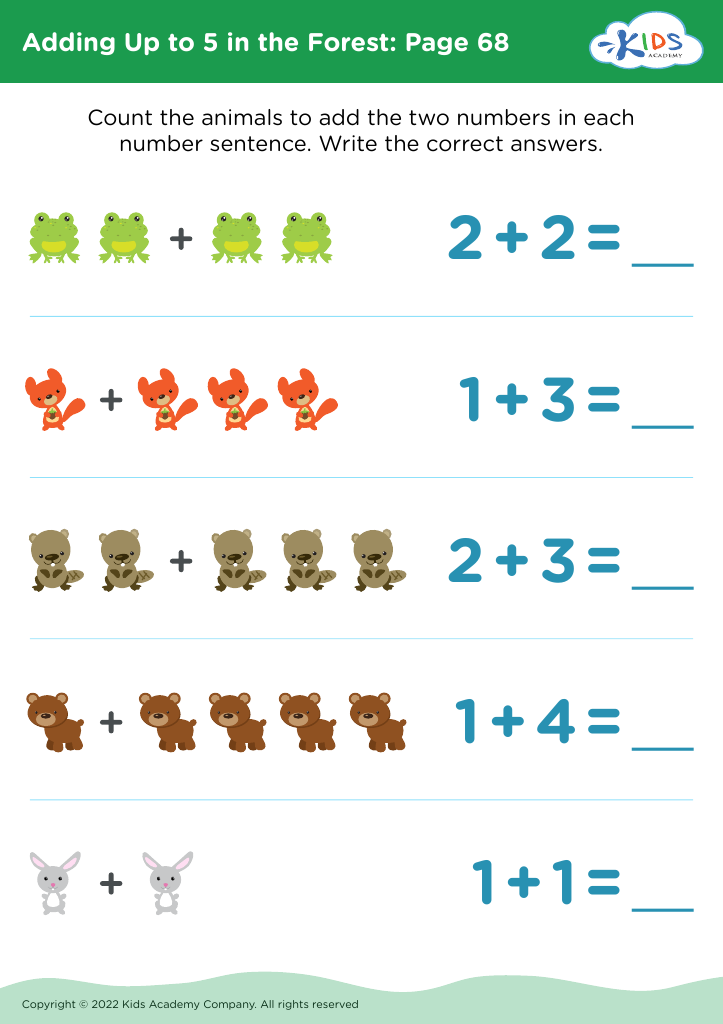
Adding Up to 5 in the Forest: Page 68
Worksheet
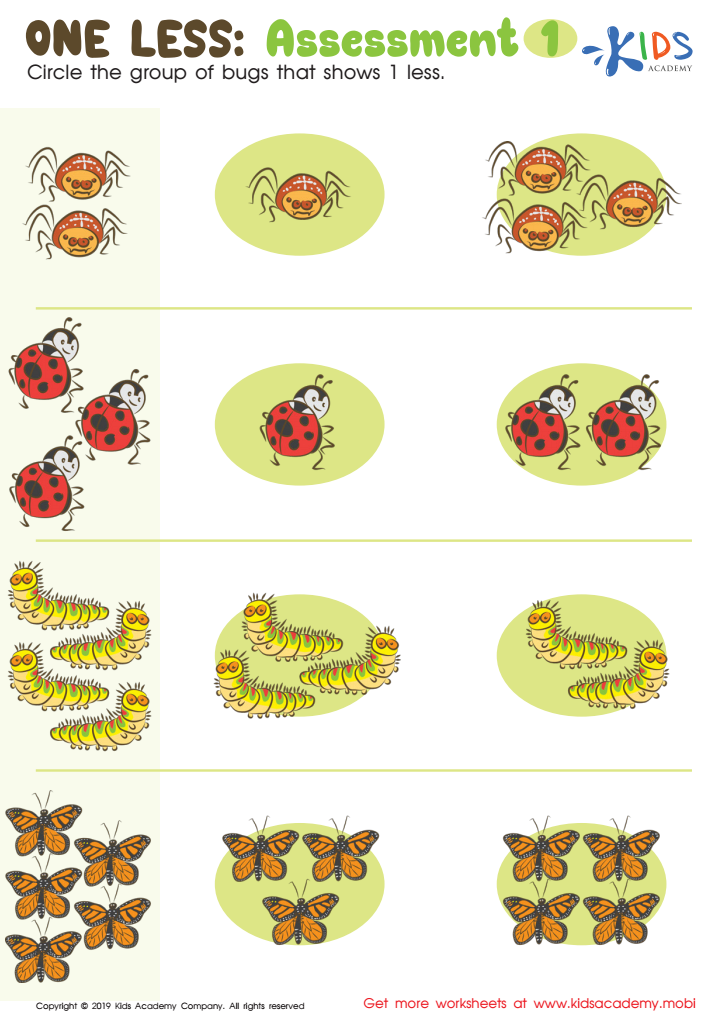
One Less: Assessment 1 Worksheet

One Less: Assessment 1 Worksheet

Help your kids with counting using this worksheet that has pictures of bugs! There are four different bugs and insects. Show them each one and ask them to count, then circle the group that has 1 less than the previous group. Don't worry if your kids don't like bugs - it's just a picture!
One Less: Assessment 1 Worksheet
Worksheet
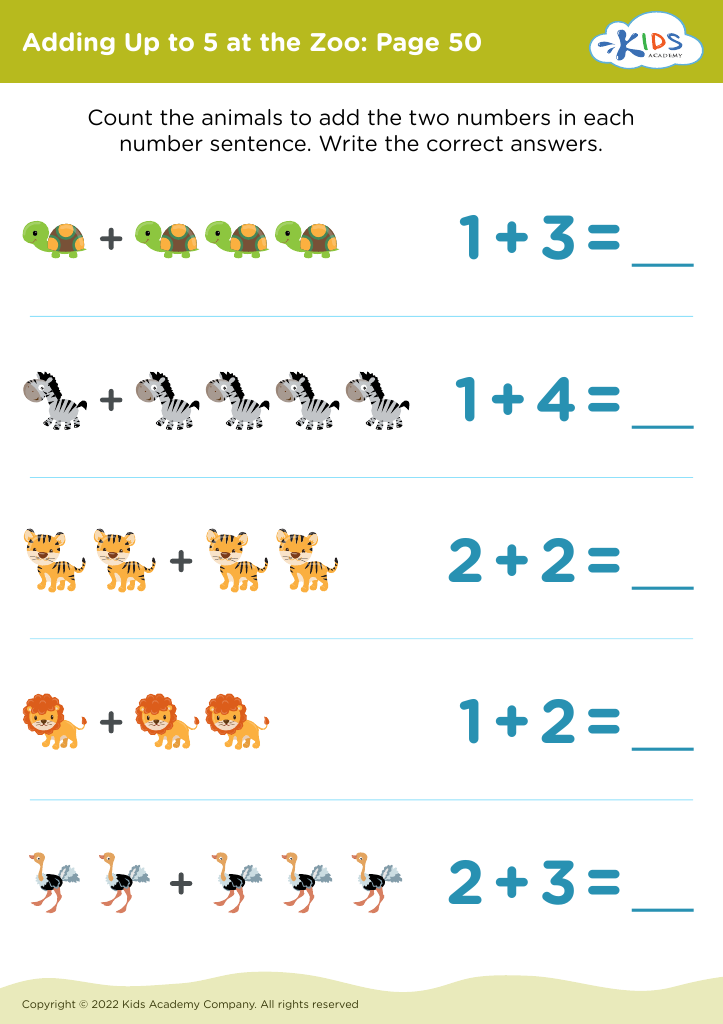
Adding Up to 5 at the Zoo: Page 50
Worksheet
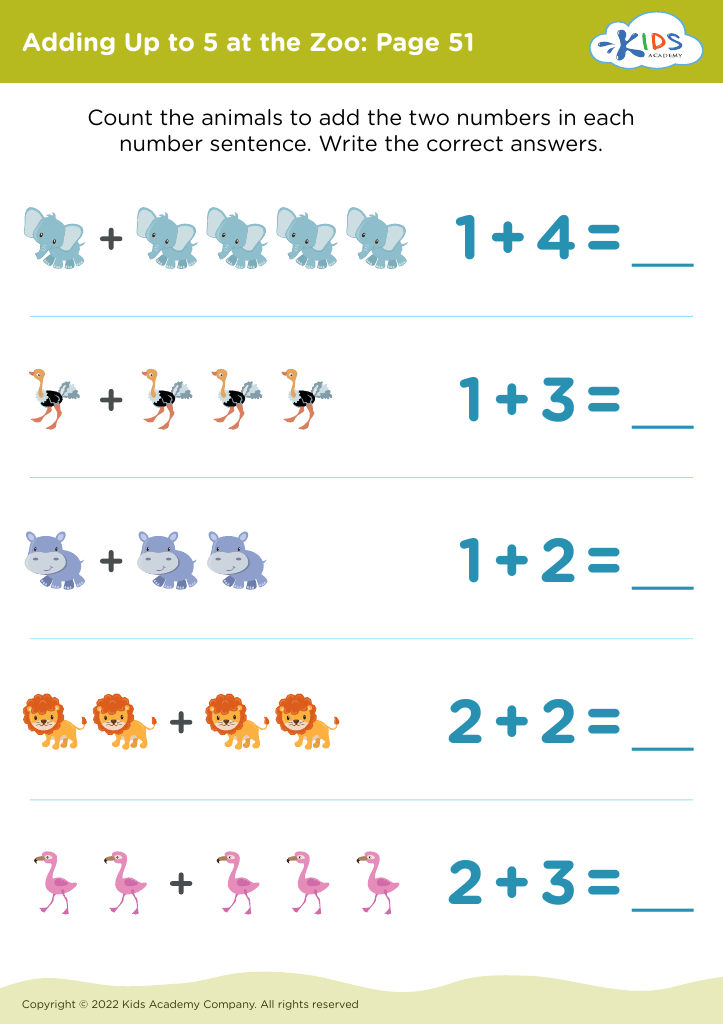
Adding Up to 5 at the Zoo: Page 51
Worksheet
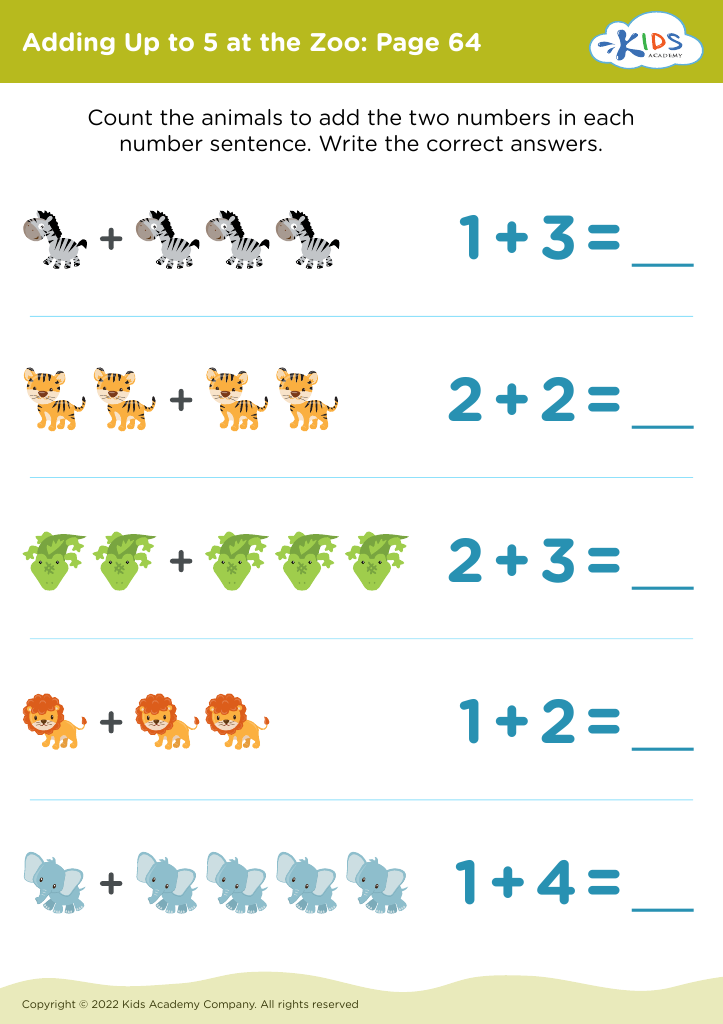
Adding Up to 5 at the Zoo: Page 64
Worksheet
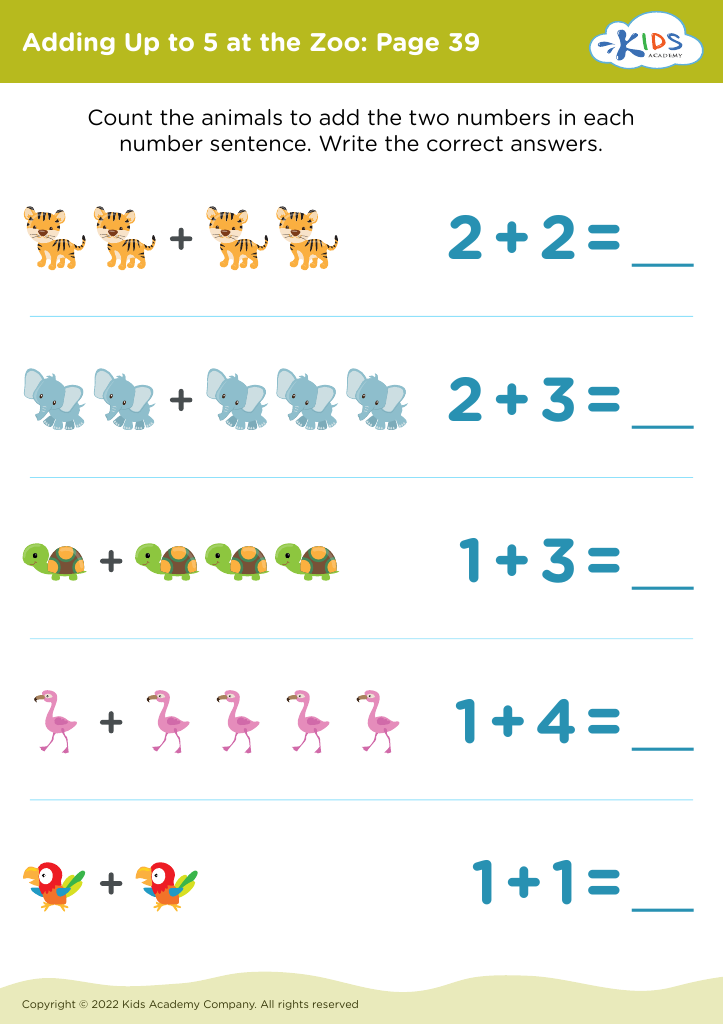
Adding Up to 5 at the Zoo: Page 39
Worksheet
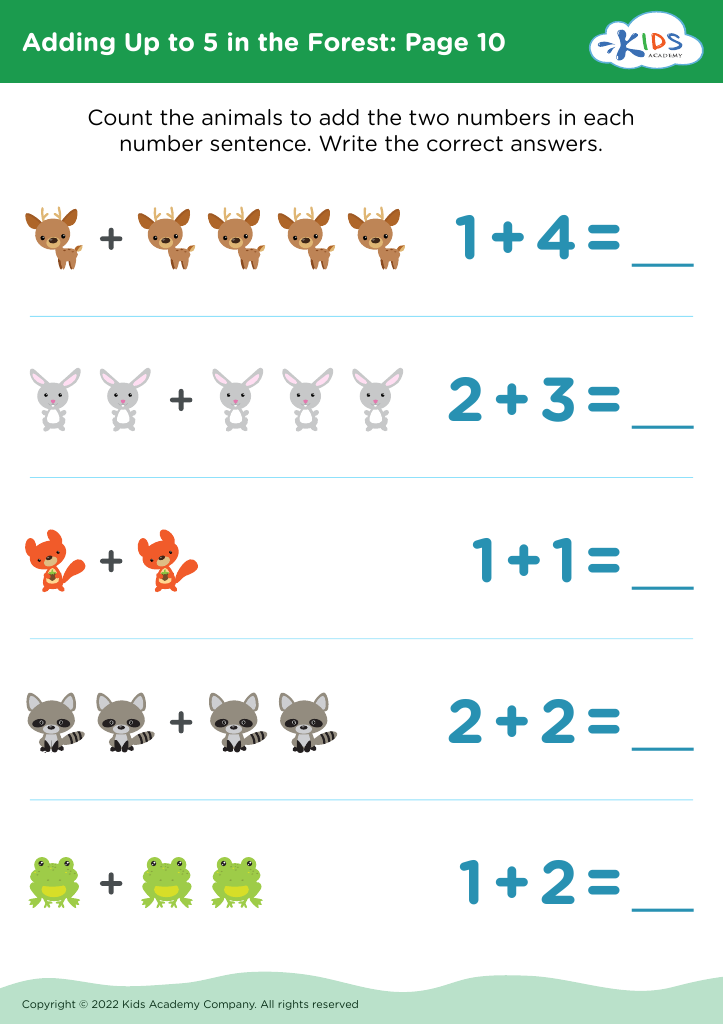
Adding Up to 5 in the Forest: Page 10
Worksheet
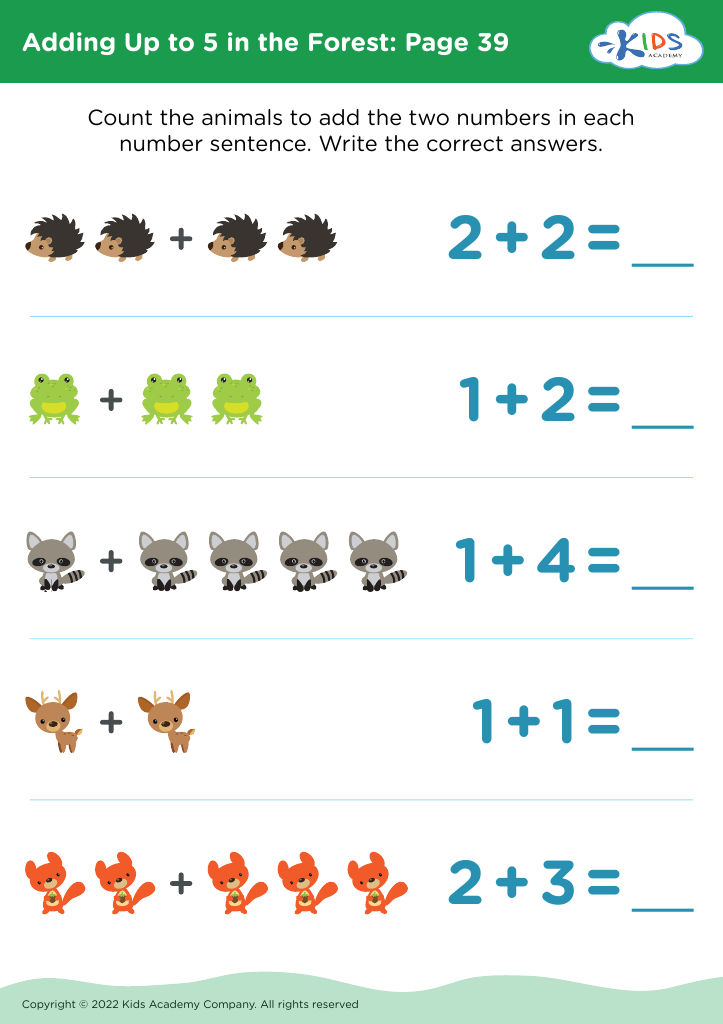
Adding Up to 5 in the Forest: Page 39
Worksheet
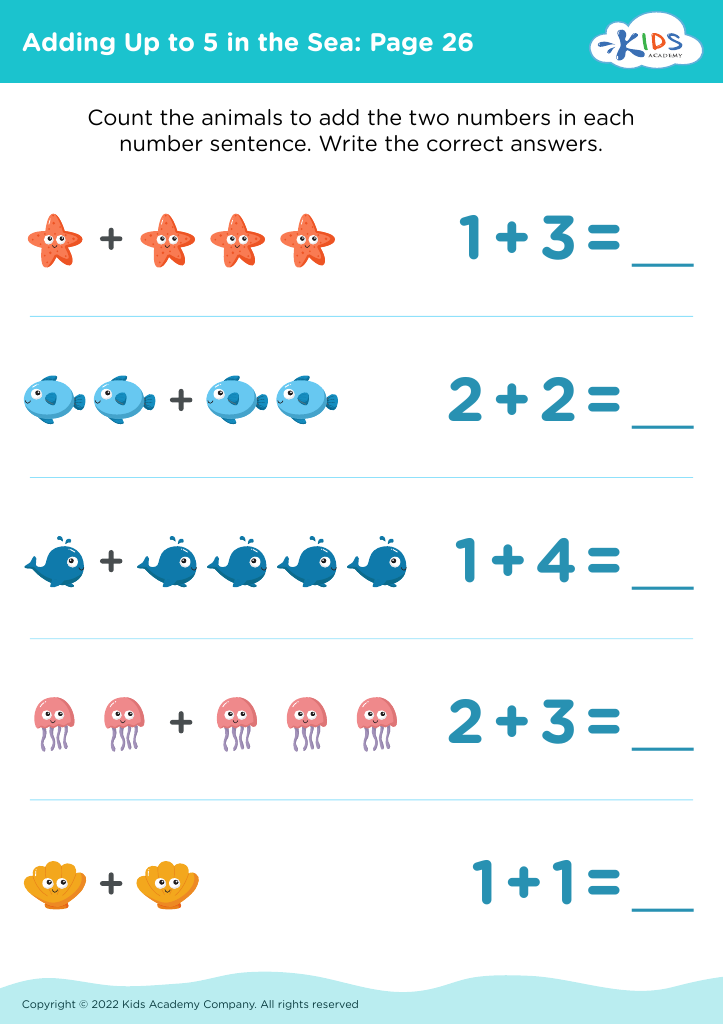
Adding Up to 5 in the Sea: Page 26
Worksheet
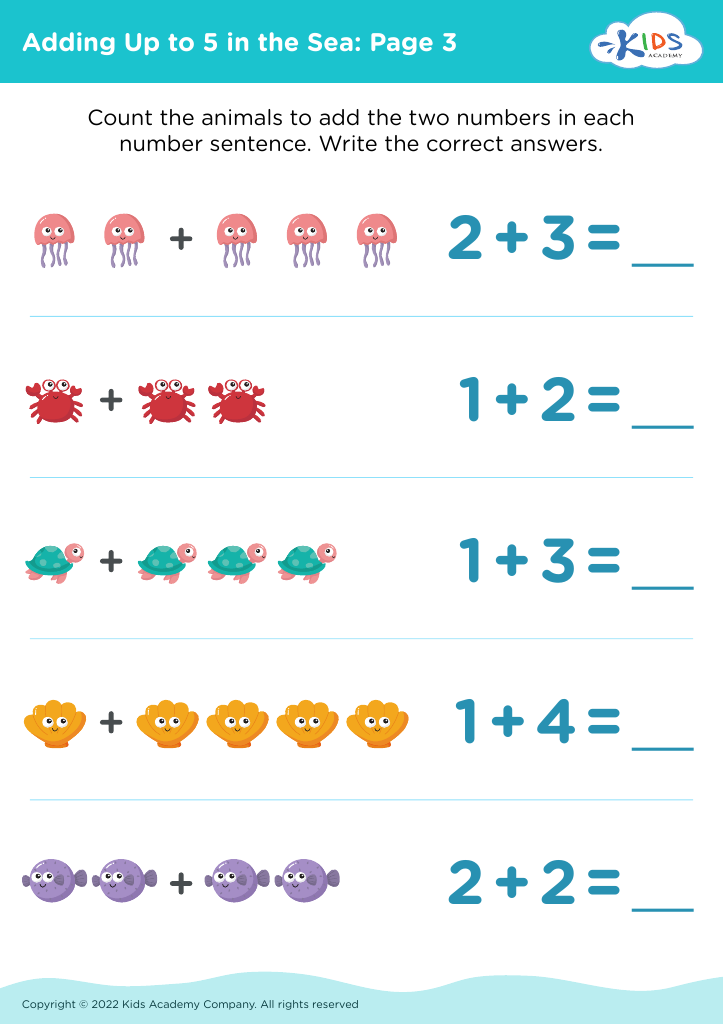
Adding Up to 5 in the Sea: Page 3

Adding Up to 5 in the Sea: Page 3

Adding Up to 5 in the Sea: Page 3
Worksheet
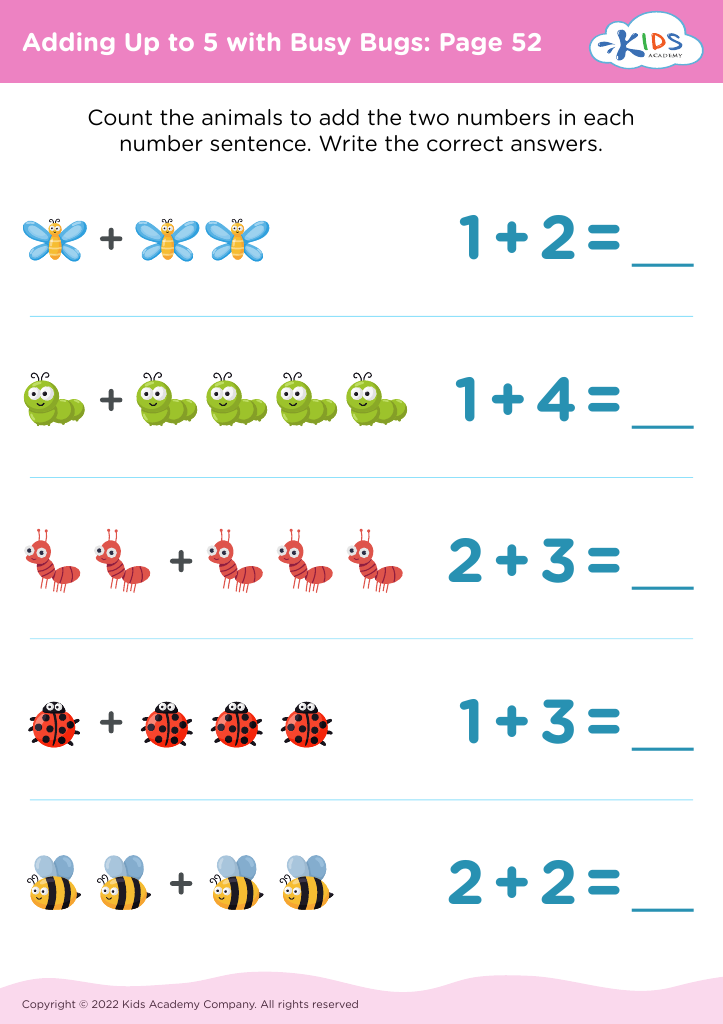
Adding Up to 5 with Busy Bugs: Page 52
Worksheet
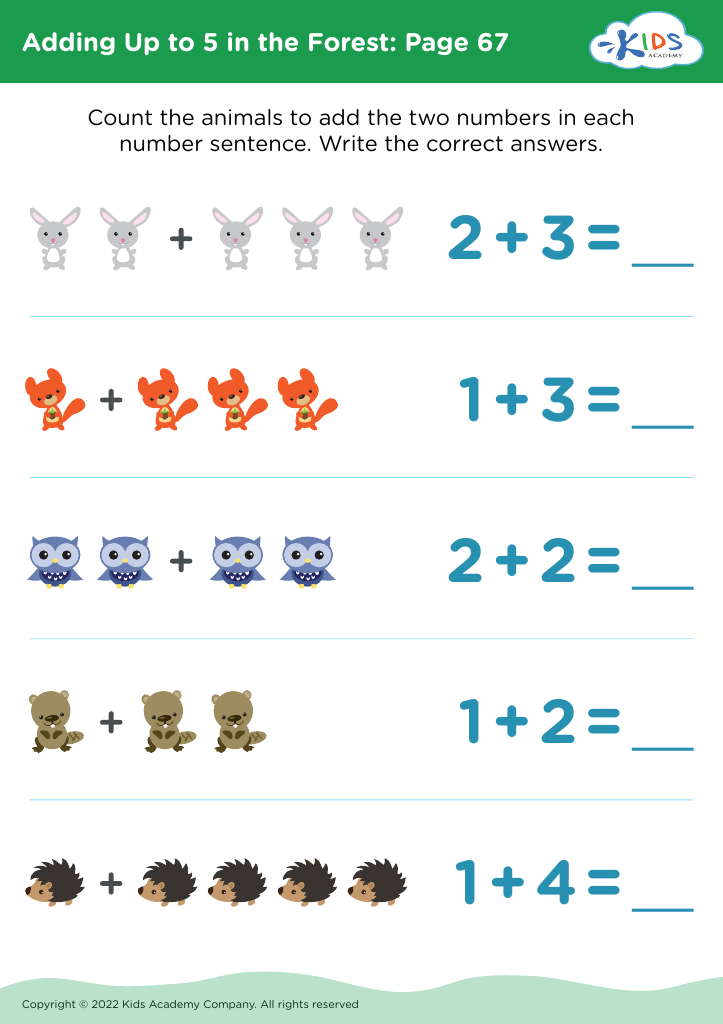
Adding Up to 5 in the Forest: Page 67
Worksheet
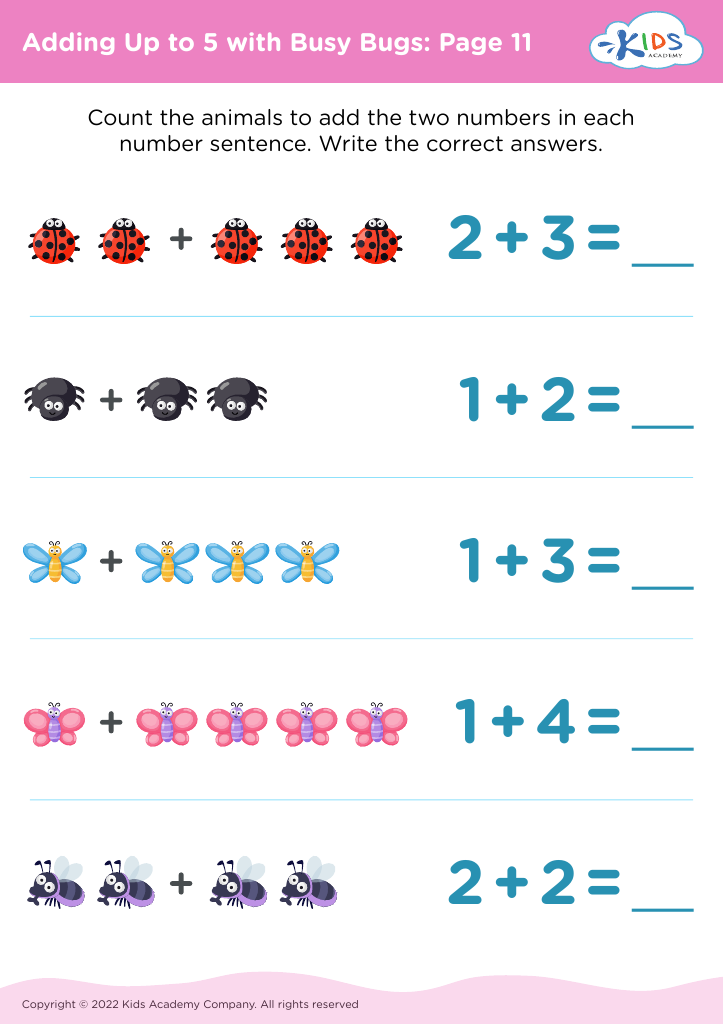
Adding Up to 5 with Busy Bugs: Page 11
Worksheet
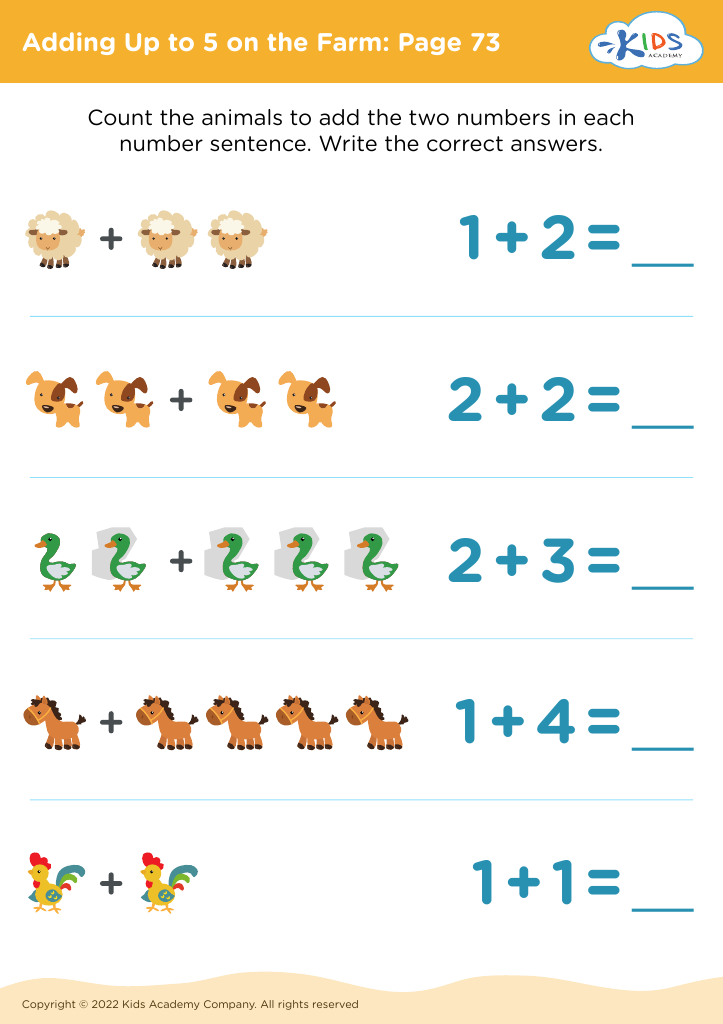
Adding Up to 5 on the Farm: Page 73
Worksheet
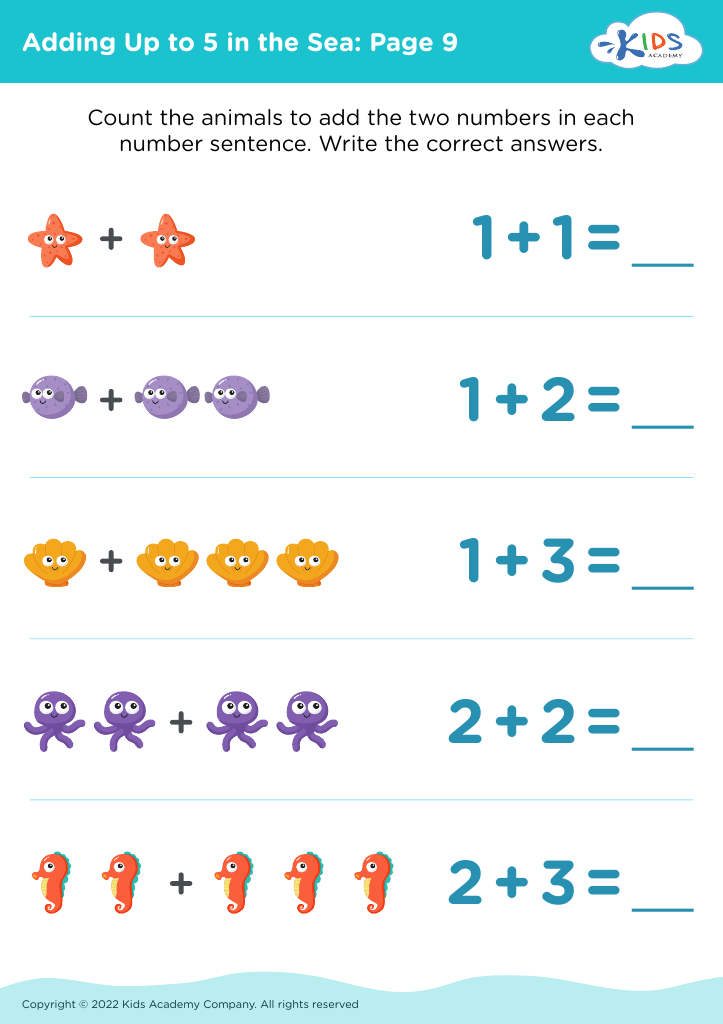
Adding Up to 5 in the Sea: Page 9

Adding Up to 5 in the Sea: Page 9

Adding Up to 5 in the Sea: Page 9
Worksheet
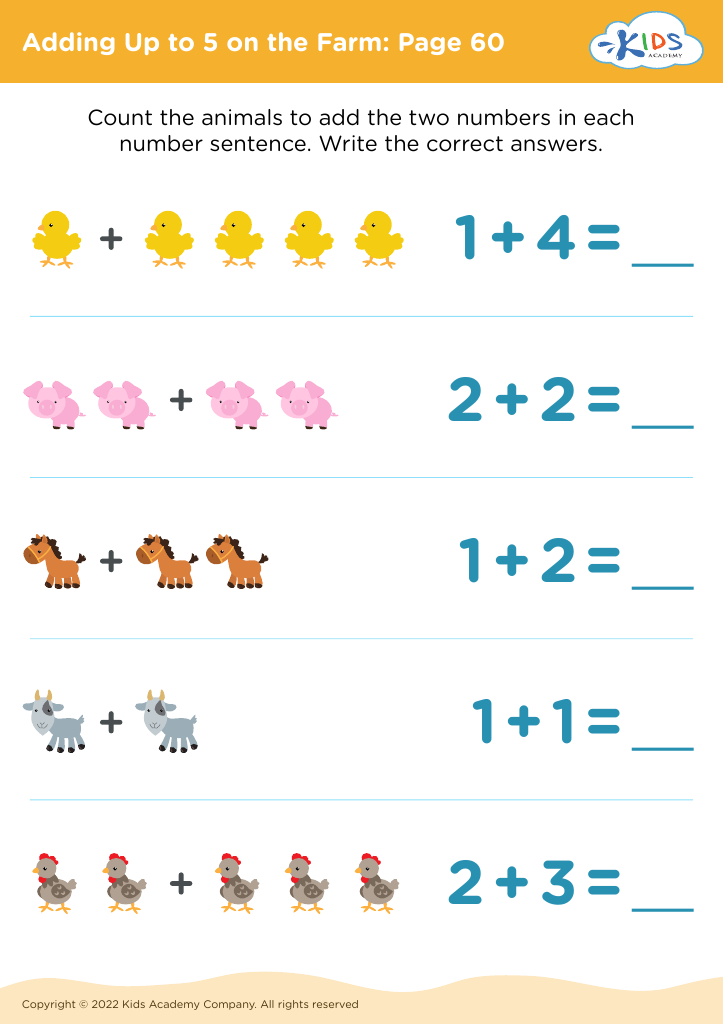
Adding Up to 5 on the Farm: Page 60
Worksheet
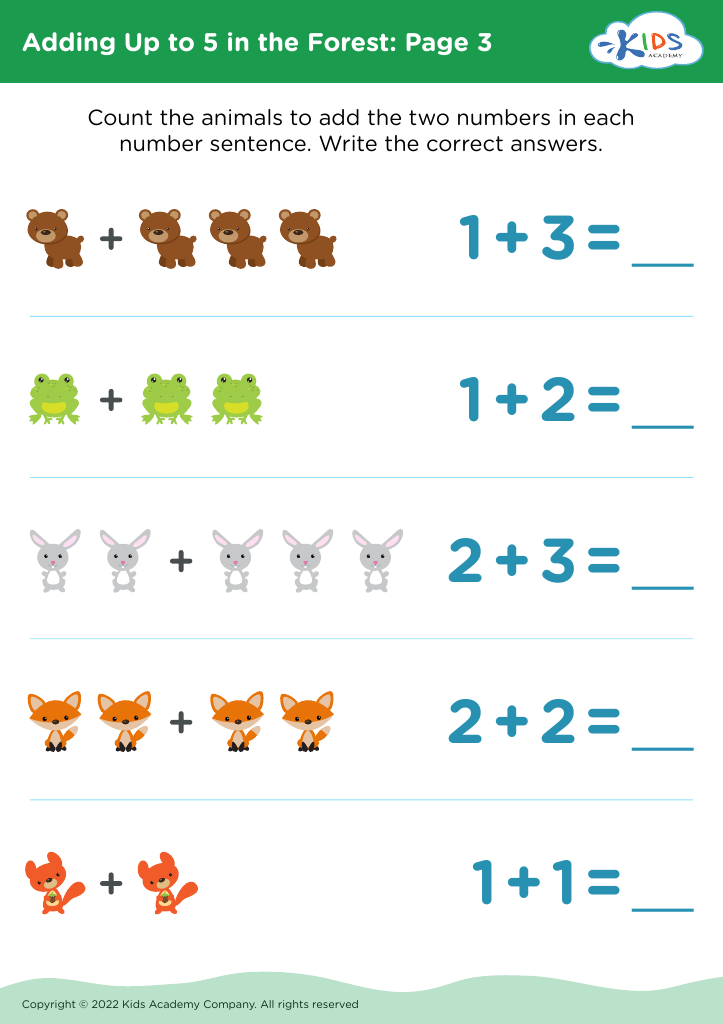
Adding Up to 5 in the Forest: Page 3
Worksheet
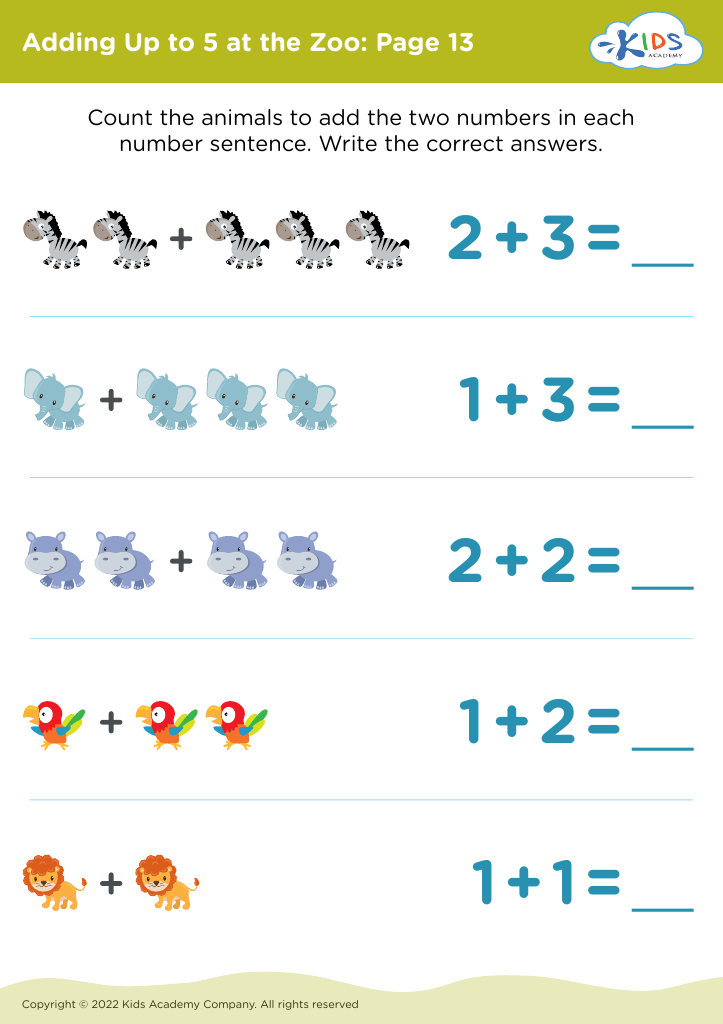
Adding Up to 5 at the Zoo: Page 13
Worksheet
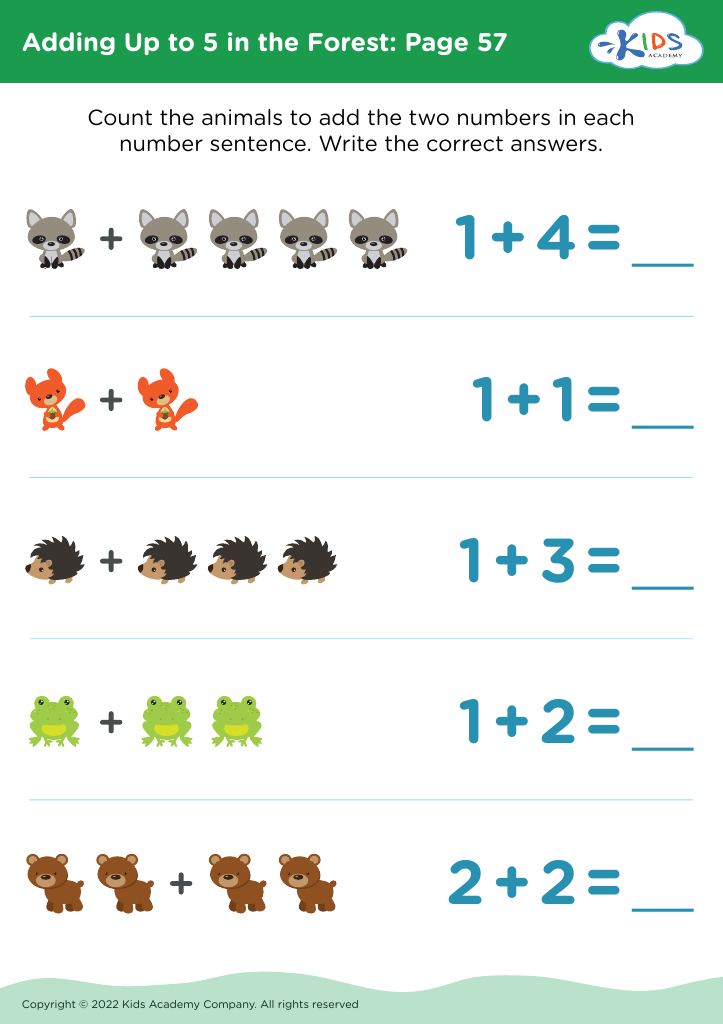
Adding Up to 5 in the Forest: Page 57
Worksheet
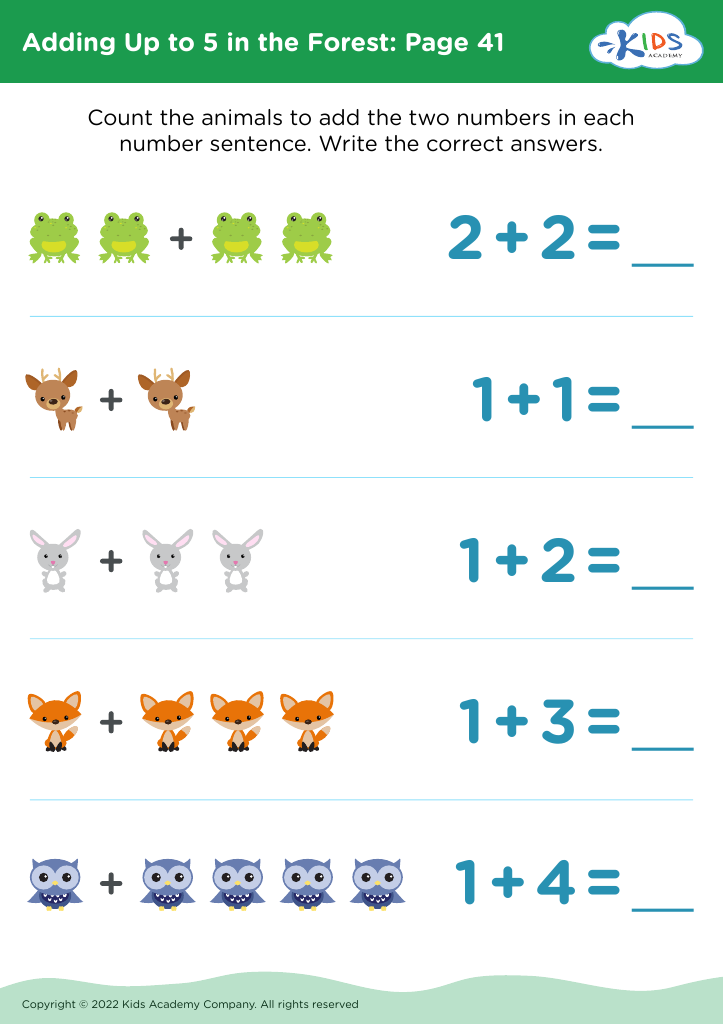
Adding Up to 5 in the Forest: Page 41
Worksheet


Number recognition, along with basic addition and subtraction skills, forms the foundation for mathematics in young children. By teaching preschoolers these concepts, parents and teachers empower them to develop critical cognitive abilities, including problem-solving and logical reasoning. Early engagement in number recognition helps children understand quantity, patterns, and relationships, fostering a lifelong appreciation for math.

Additionally, mastering these fundamental skills boosts confidence and promotes a positive attitude towards learning. When children recognize numbers and can perform simple calculations, they feel a sense of accomplishment that motivates further exploration in the subject. This early success can lessen math anxiety in future educational stages.

Furthermore, number recognition, addition, and subtraction form the building blocks for more complex mathematical concepts they will encounter later, such as multiplication, division, and fractions. By laying a strong groundwork in preschool, parents and teachers can ensure a smoother transition to elementary school math.

Encouraging interactive and engaging activities, such as games or storytelling, can make learning these concepts enjoyable, enhancing retention and understanding. Ultimately, equipping children with these skills not only aids their academic path but also provides them with essential tools for everyday life, fostering numeracy in their future endeavors.