Sea creatures identification Preschool Addition & Subtraction Worksheets
3 filtered results
-
From - To
Introduce your little learner to the wonderful world of numbers and sea life with our "Sea Creatures Identification Preschool Addition & Subtraction Worksheets." Designed for preschoolers, these engaging and educational printables combine essential math skills practice with the excitement of identifying vibrant ocean animals. Each worksheet stimulates curiosity, enhances counting abilities, and develops basic math skills, all while keeping young minds entertained with delightful sea creature illustrations. Perfect for both classroom and home use, these creative activities make learning math fun and interactive. Dive into the adventure today and watch your child's math confidence grow!
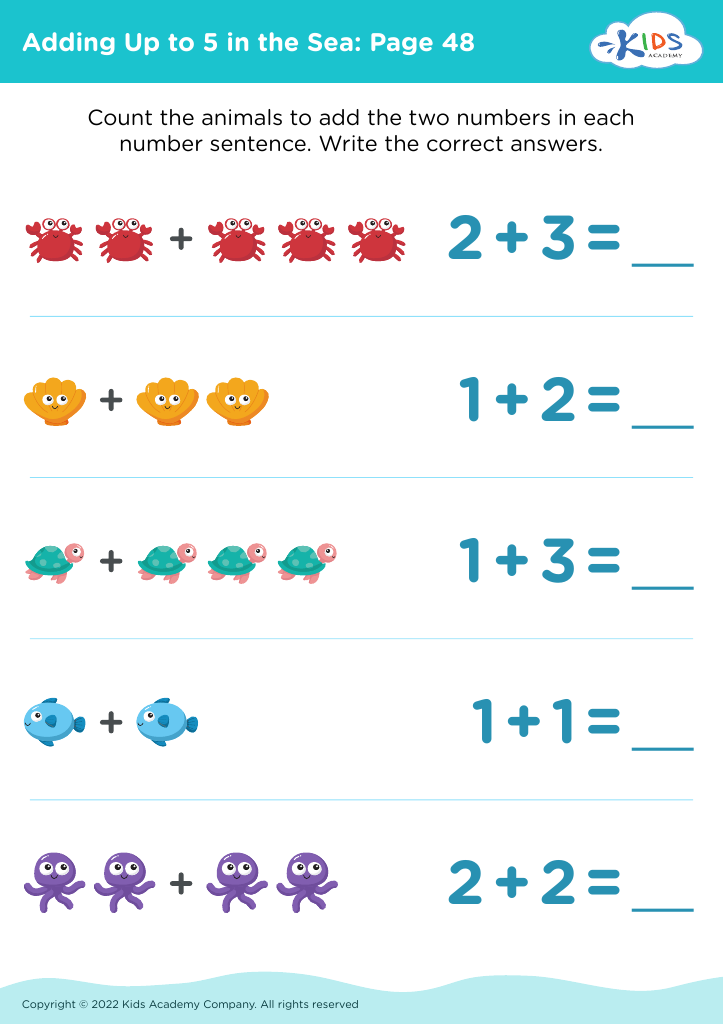
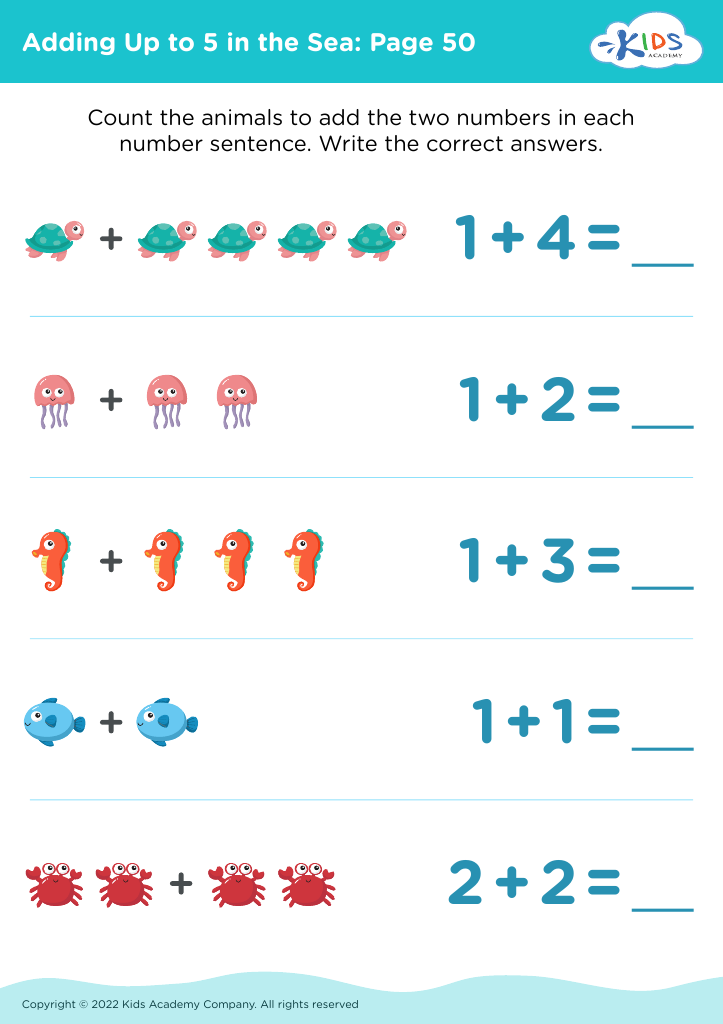
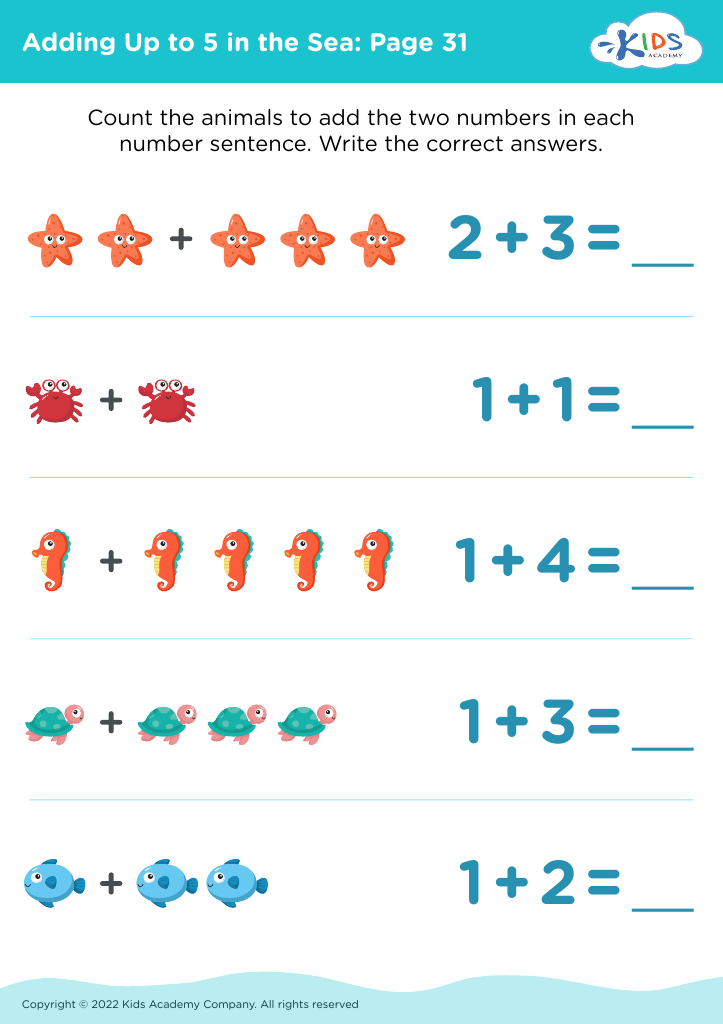








Parents and teachers should care about activities like Sea Creatures Identification combined with Preschool Addition and Subtraction because these enrich a child’s cognitive and emotional development. By merging engaging themes with fundamental math skills, children are more likely to remain interested and motivated to learn.
Firstly, integrating sea creatures into learning materials makes the process enjoyable. When children are engaged and curious, they absorb information more effectively. Identifying sea creatures supports cognitive development by encouraging observation, classification, and critical thinking skills.
Secondly, introducing basic math concepts such as addition and subtraction in preschool settings lays the groundwork for future academic achievement. When these concepts are reinforced through fun, interactive activities, children develop a positive attitude towards math, reducing anxiety and building confidence in their abilities.
Moreover, themed lessons promote holistic learning. Discussions about sea creatures can segue into broader topics like marine biology, environmental conservation, and empathy for living organisms. This broadens a child’s horizons beyond academia and fosters a well-rounded worldview.
Finally, early introduction to engaging educational activities ensures that learning becomes a fun, lifelong habit. Parents and teachers who invest in such enriched educational experiences set children on a path to inquisitiveness, resilience, and intellectual curiosity, ensuring a wholesome development that extends far beyond the classroom.