Mathematical reasoning Preschool Addition Worksheets
4 filtered results
-
From - To
Welcome to our "Mathematical Reasoning Preschool Addition Worksheets" page, designed to enhance your child's early math skills! Our engaging and colorful worksheets introduce preschoolers to basic addition concepts through fun and interactive activities. These worksheets foster mathematical reasoning by encouraging children to explore numbers and their relationships creatively. Carefully crafted for young learners, the activities promote problem-solving skills and critical thinking in a playful environment. Ideal for teachers and parents alike, our collection strikes the perfect balance between learning and enjoyment. Equip your child with a strong foundation in mathematics today and watch them thrive as confident, capable learners!
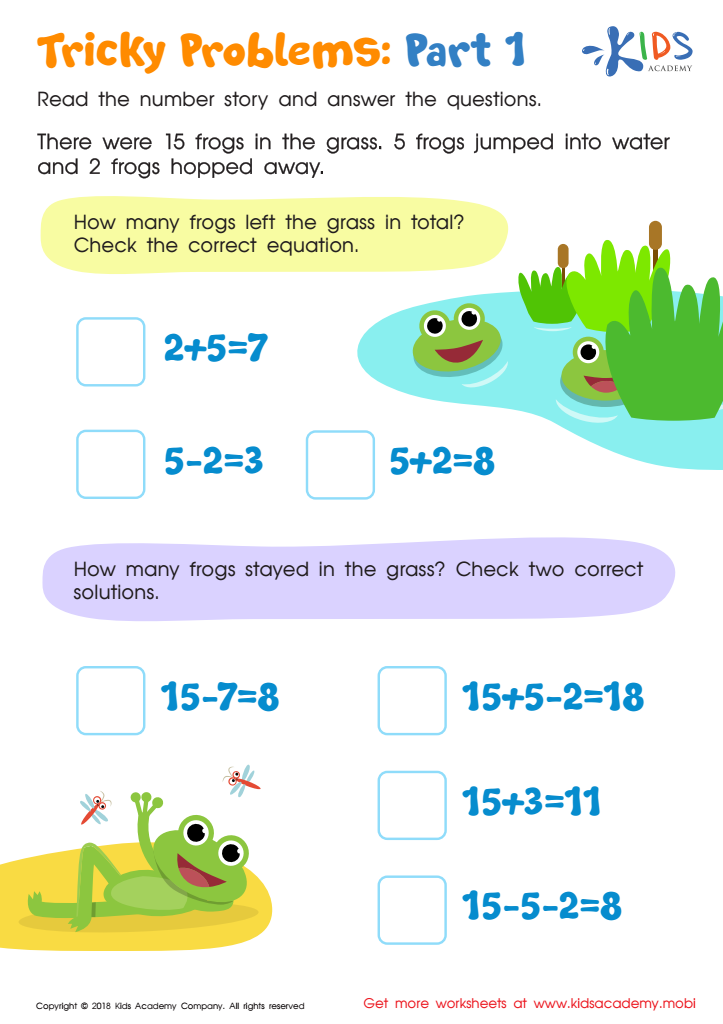
Tricky Problems Worksheet: Part 1
 Assign to My Students
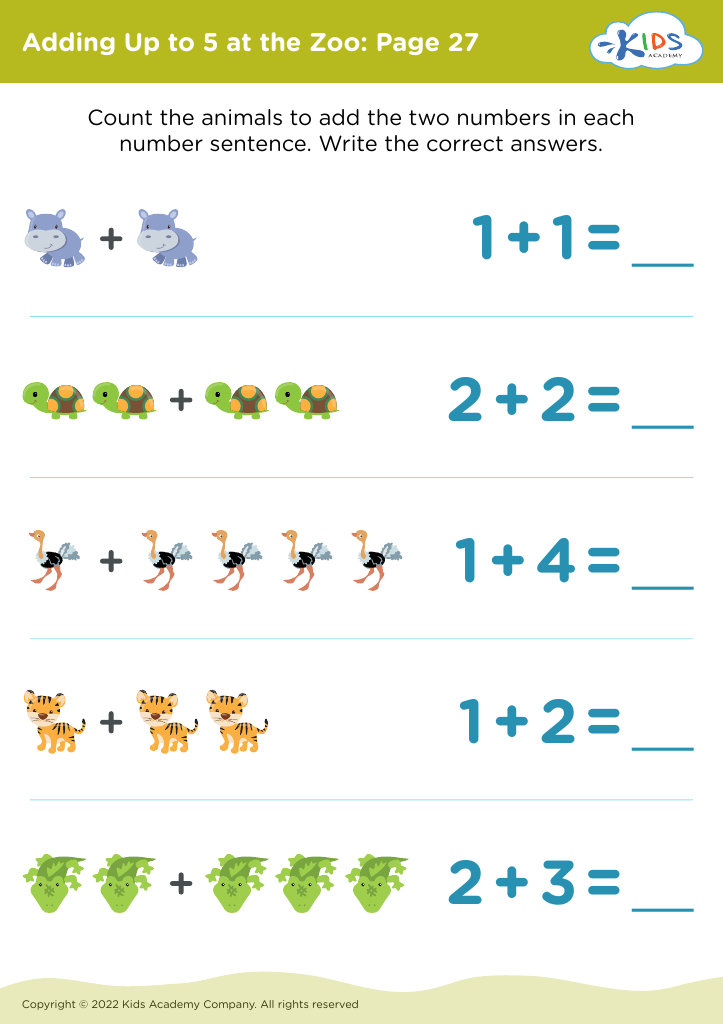
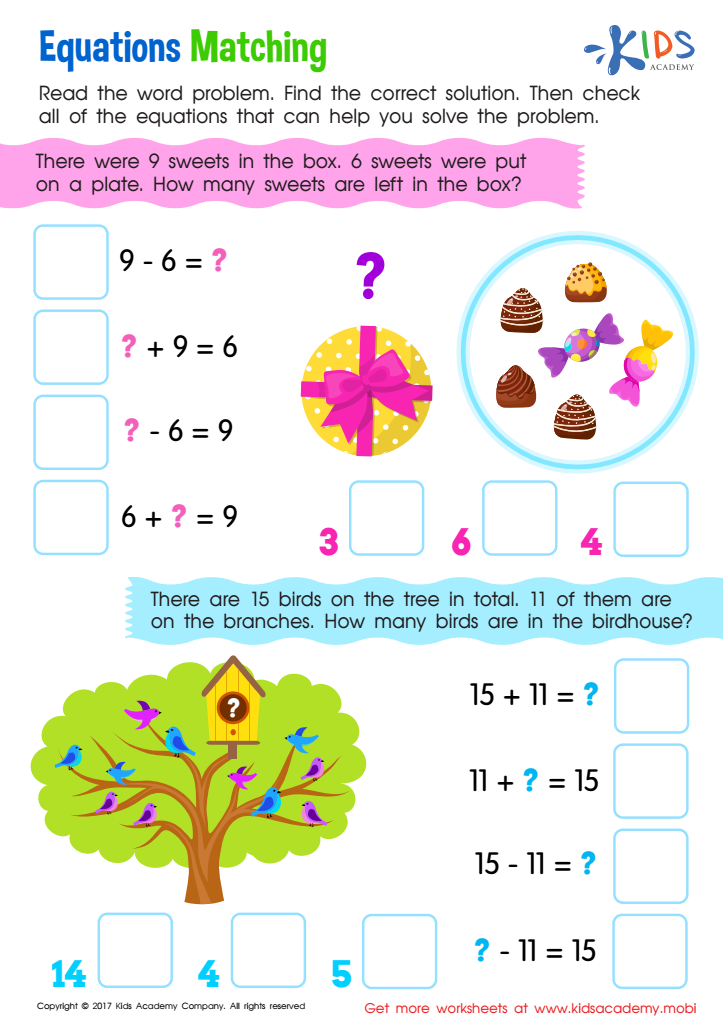
Equations Matching Word Problems Worksheet








Mathematical reasoning is essential for preschool children, especially in the context of addition. When parents and teachers prioritize this foundational skill, they empower children to develop a strong understanding of numbers and relationships, which serves as the basis for future math concepts.
Understanding addition through reasoning helps young learners make sense of quantities and fosters critical thinking skills. Instead of merely memorizing facts, children gain insights into how numbers relate to one another. This encourages them to explore various problem-solving strategies, enhancing their cognitive development.
Engaging in reasoning activities also promotes enthusiasm for math, removing the fear and anxiety that can often accompany the subject in later years. By integrating playful, hands-on experiences, such as using toys, counting snacks, or engaging in simple games, adults make math enjoyable and relatable.
Furthermore, solid mathematical reasoning in preschool lays the groundwork for later success in complex areas such as subtraction, multiplication, and division. Nurturing these skills enhances not only academic performance but also allows children to develop resilience and perseverance in problem-solving, skills that will benefit them throughout their educational journeys and beyond. Ultimately, parent and teacher involvement in nurturing mathematical reasoning is crucial for fostering lifelong learners.