Animal identification Preschool Math Worksheets - Page 2
30 filtered results
-
From - To
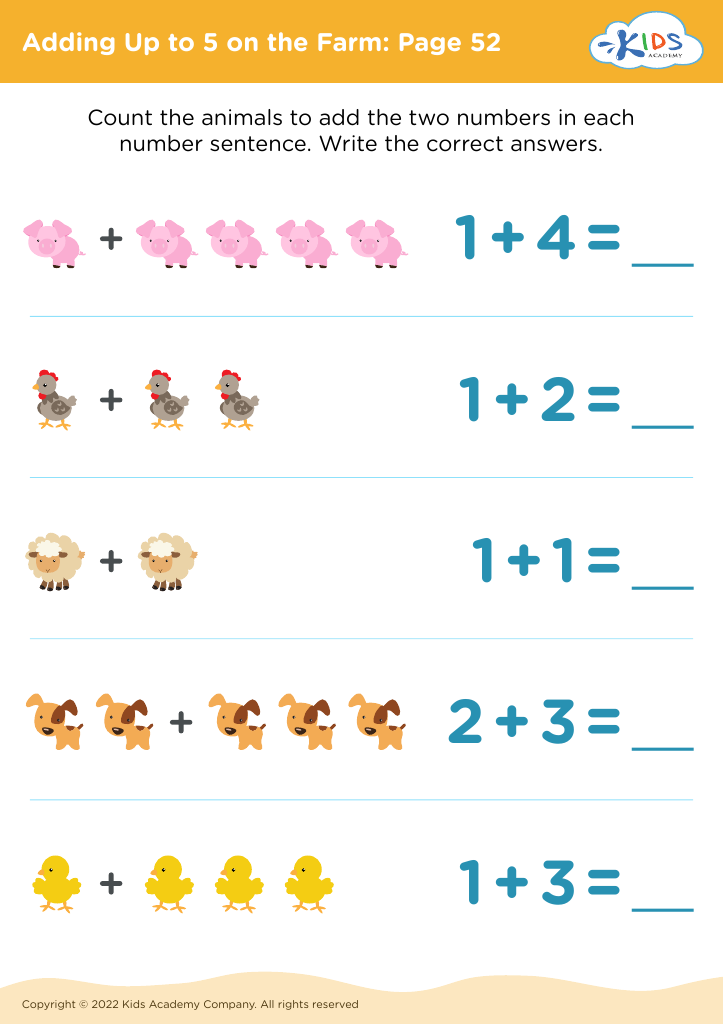
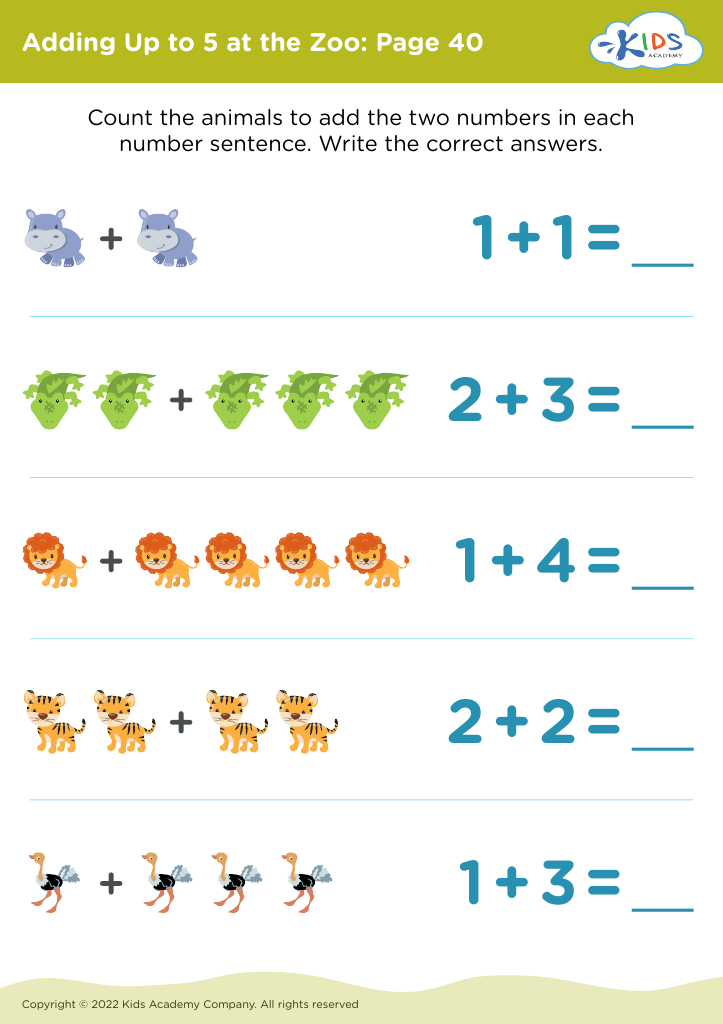
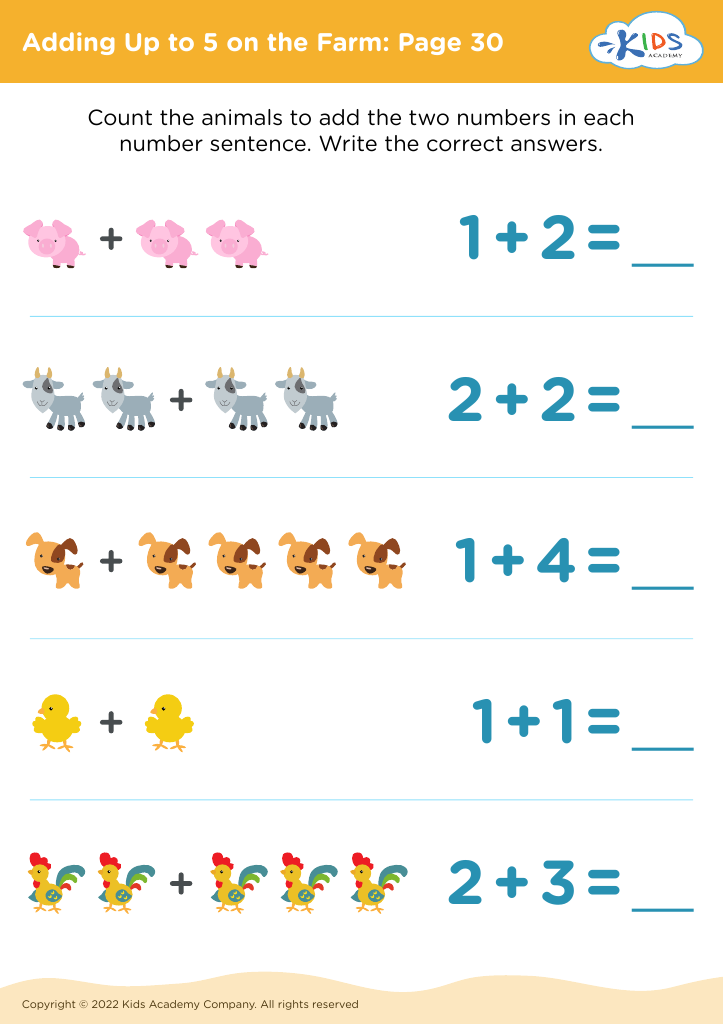
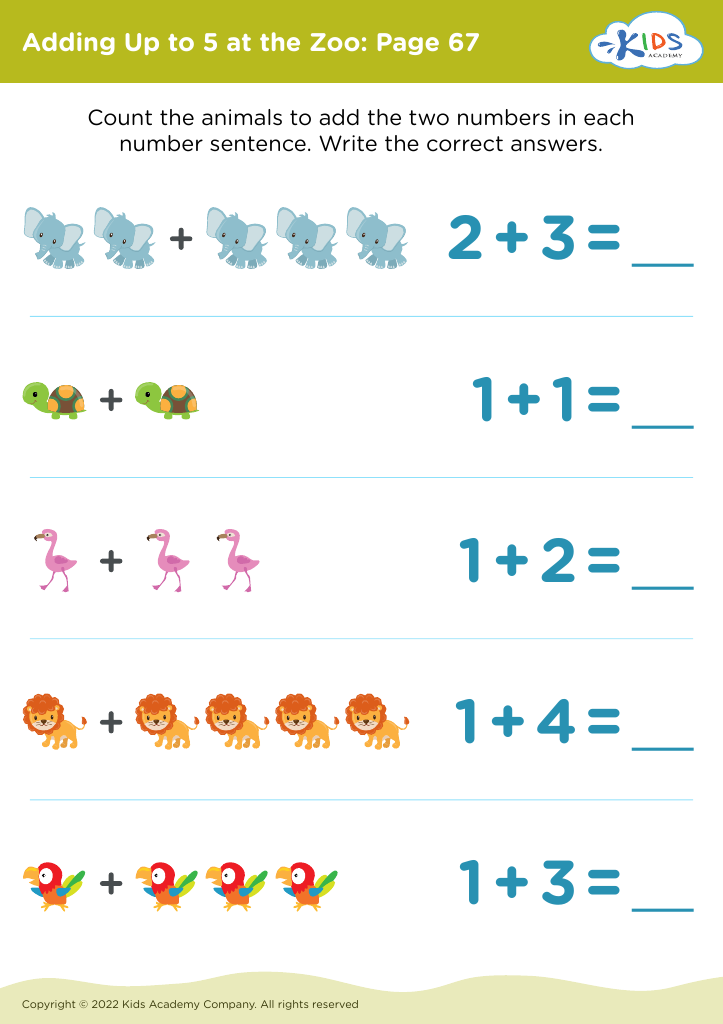
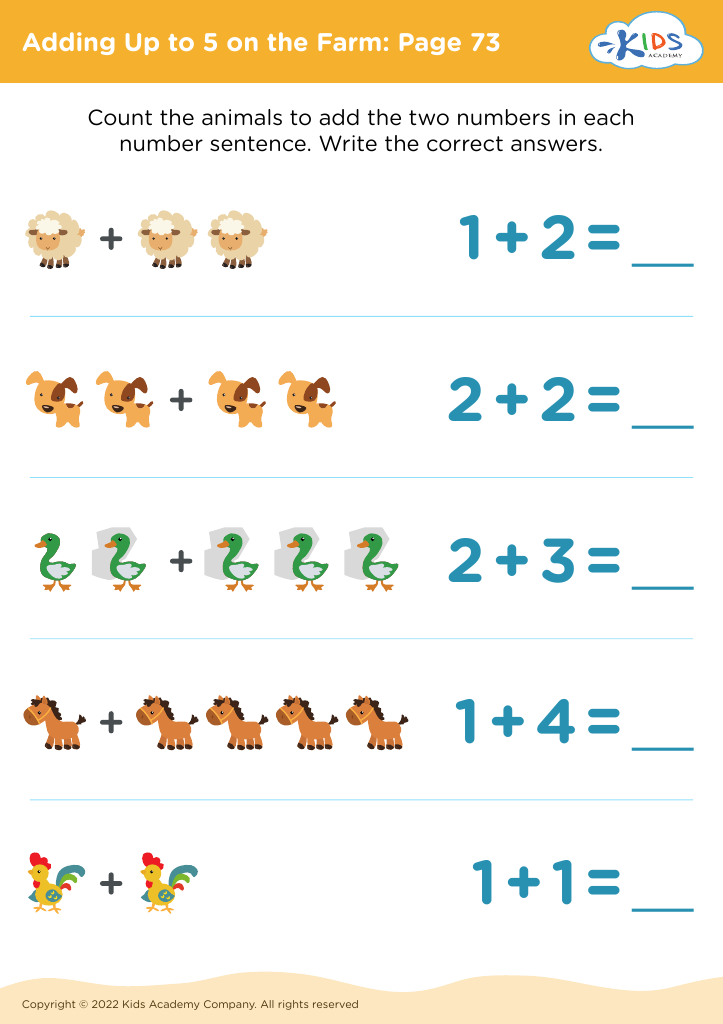
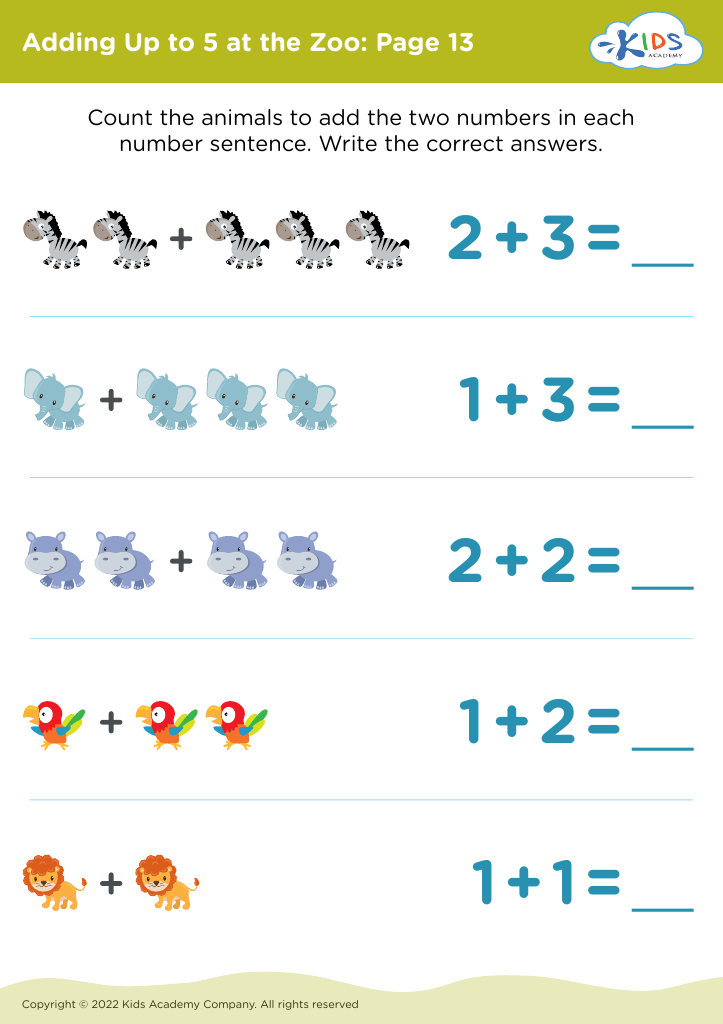








Parents and teachers should care about Animal Identification Preschool Math because it integrates foundational mathematical concepts with engaging, real-world contexts that capture young children's interests. This dual focus not only promotes numeracy but also reinforces cognitive skills like classification, comparison, and problem-solving. When children engage in activities that involve identifying, counting, and sorting animals, they are practicing essential math skills in a natural and enjoyable way.
Additionally, these types of activities support language development. Discussing different animals and their characteristics enriches children's vocabulary and builds their ability to articulate thoughts and observations. It fosters curiosity and a love for learning, helping children link math to daily life, which is crucial for their overall cognitive growth.
Animal Identification Preschool Math also addresses the holistic development of a child. It promotes fine motor skills through activities that require handling objects or drawing, and can encourage social skills when done in group settings, as children learn to share, take turns, and cooperate.
Moreover, early exposure to such integrative learning strategies can set a positive trajectory towards lifelong learning. It allows children to see math not as an abstract concept but as a meaningful, accessible, and enjoyable part of their world, thereby establishing a strong foundation for future academic success.