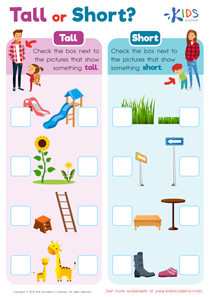
Comparison Skills Preschool Math Worksheets
3 filtered results
Difficulty Level
Grade
Age
-
From - To
Subject
Activity
Standards
Boost your preschooler's math skills with our engaging Comparison Skills Worksheets! Designed for early learners, these printable resources help children develop essential abilities to compare sizes, quantities, and other attributes effectively. Each worksheet features vibrant illustrations and age-appropriate tasks that make learning fun and interactive. Through hands-on exercises, kids will practice sorting, matching, and visual discrimination, laying a strong foundation for future math concepts. Perfect for home or classroom use, our worksheets encourage critical thinking and confidence in young learners. Unlock your child's potential and make math exciting with our Comparison Skills Preschool Math Worksheets today!
Favorites
With answer key
Interactive
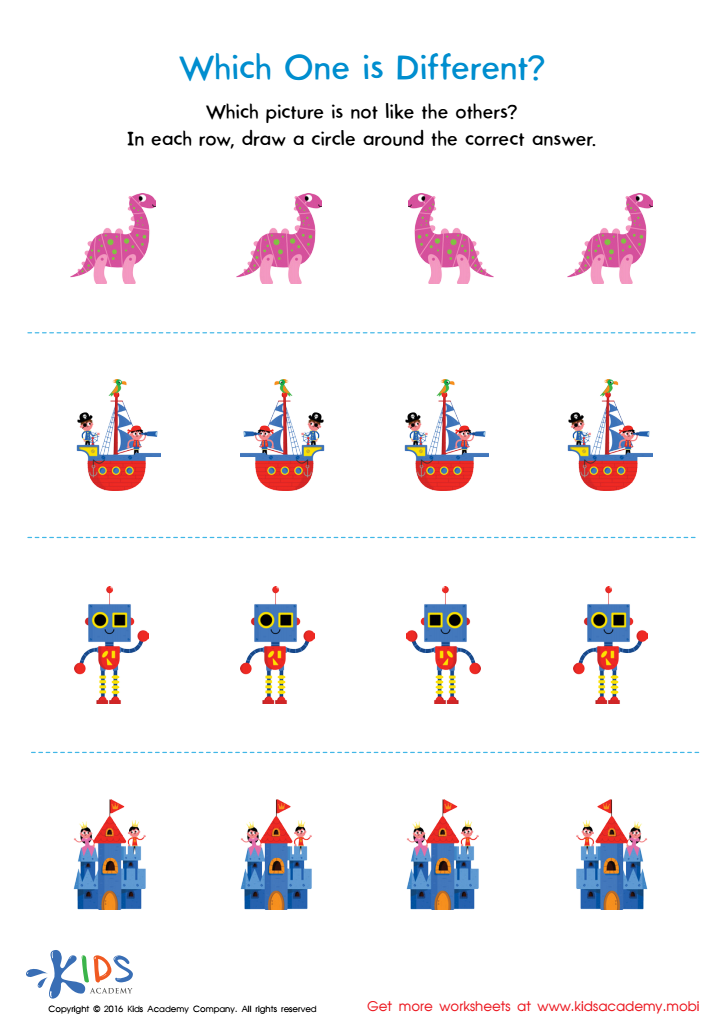
Which One Is Different Worksheet
Preschoolers can hone logical reasoning and critical analysis skills with this "Which one is Different?" worksheet. Kids must look closely and pick out unique attributes of objects and images. It's a skill that can serve them throughout their lifetime.
 Assign to My Students
Which One Is Different Worksheet
Worksheet
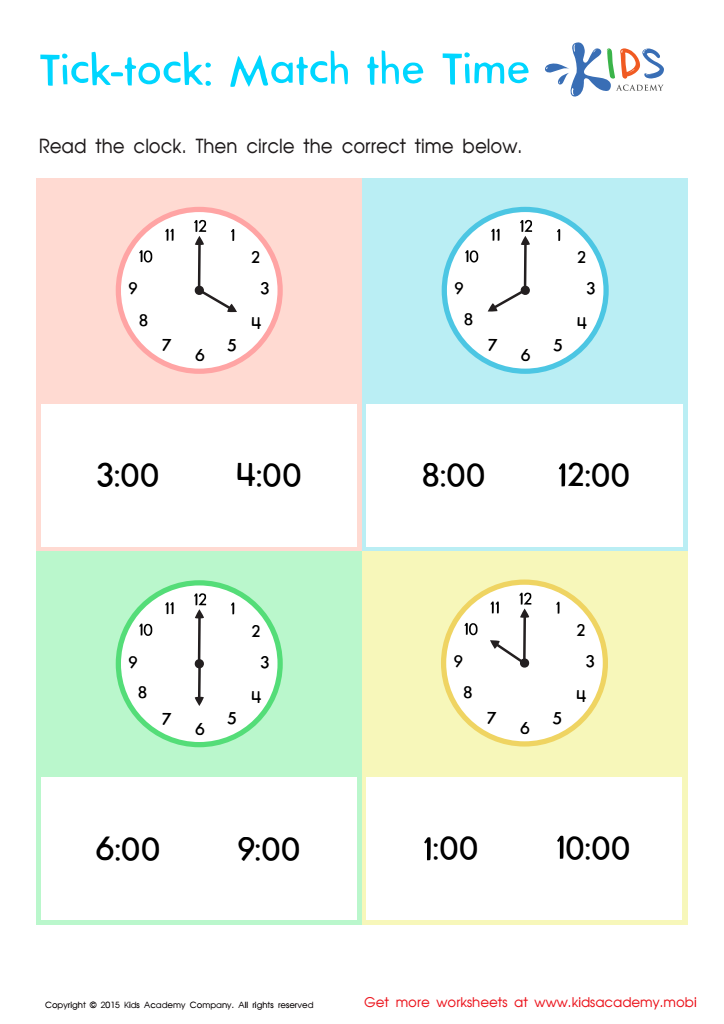
Telling The Time Worksheet: Part 4
Test your skills in telling the time! Circle the right time on 4 analog clock faces.
Telling The Time Worksheet: Part 4
Worksheet
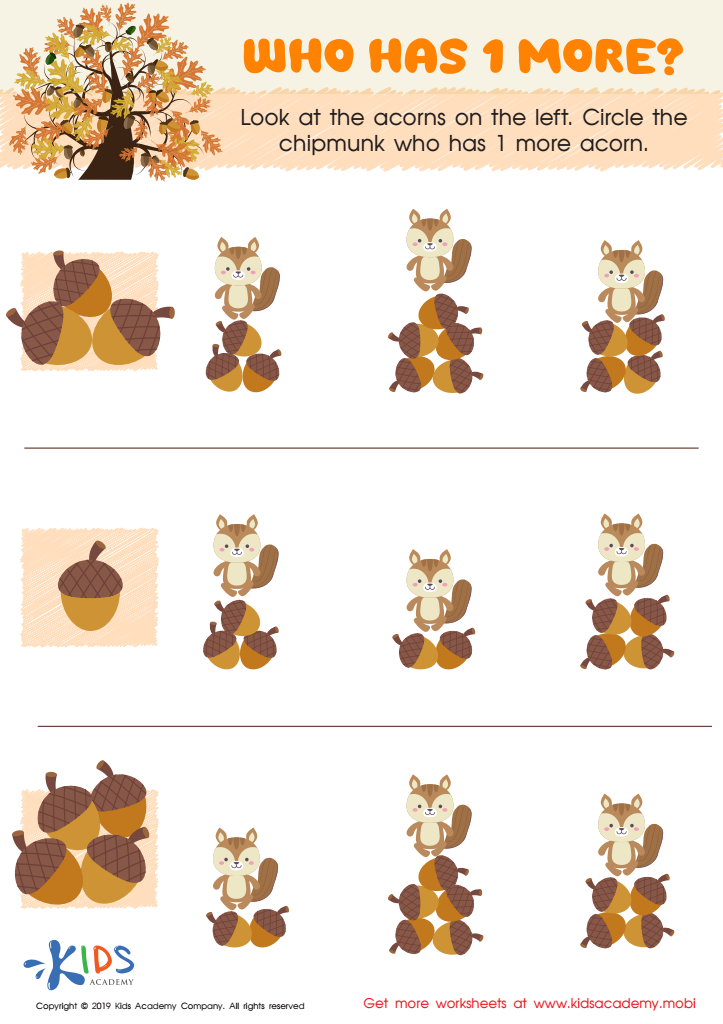
Who Has 1 More? Worksheet
Do your kids know what chipmunks are? They eat acorns, store them for bad weather, and live in trees or on the ground. Count and circle the chipmunk with one more acorn than the others on the printout.
Who Has 1 More? Worksheet
Worksheet
Join Kids Academy for Free
Who is primarily going to use this learning content?







Parents and teachers should prioritize comparison skills in preschool math because these foundational abilities significantly influence a child’s cognitive development and future academic success. Comparison skills—understanding size, quantity, and relationships between objects—help children make sense of the world around them. When children learn to compare, they enhance their critical thinking and reasoning abilities, essential for problem-solving in various contexts.
Developing comparison skills aids in number sense, as children learn to understand the concept of more and less, greater and smaller, and to quantify objects accurately. This early mathematical thinking lays the groundwork for more advanced topics in later grades, such as addition, subtraction, and even fractions.
Moreover, fostering these skills promotes language development, as children learn to describe their observations using comparative language. This communication skill is crucial for collaboration and expressing mathematical reasoning.
Additionally, engaging in activities that bolster comparison skills encourages social interaction among peers, helping children learn to share, negotiate, and collaborate effectively. In essence, comparison skills are not just about math; they cultivate a range of vital abilities that contribute to a well-rounded, curious, and engaged learner, making it a critical focus for parents and teachers alike.