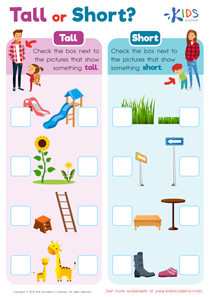
Enhancing observation skills Preschool Math Worksheets
3 filtered results
-
From - To
Enhance your preschooler's observation skills with our engaging math worksheets. Specifically designed for young learners, these printable activities blend fun and learning, helping children develop keen observation abilities while reinforcing foundational math concepts. Each worksheet encourages kids to identify patterns, count objects, and distinguish shapes and sizes, promoting critical thinking and attention to detail. Our materials are perfect for both classroom and home use, providing a valuable resource for teachers and parents alike. Empower your child with the skills they need to succeed in math and beyond. Try our worksheets today and watch them grow!
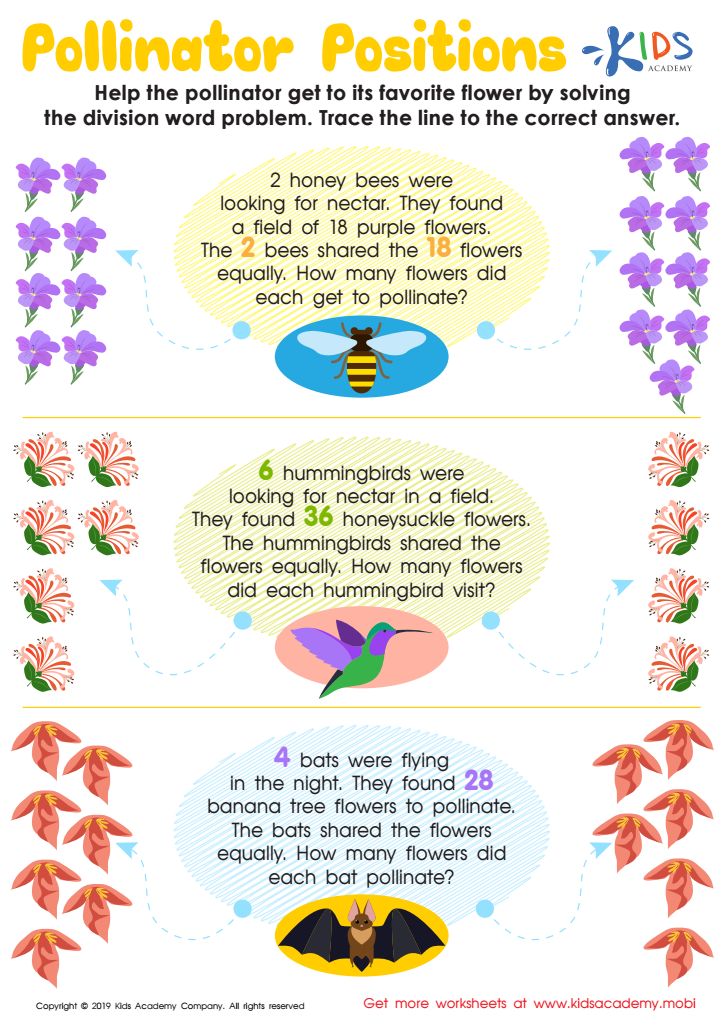
Pollinator Positions Worksheet
 Assign to My Students
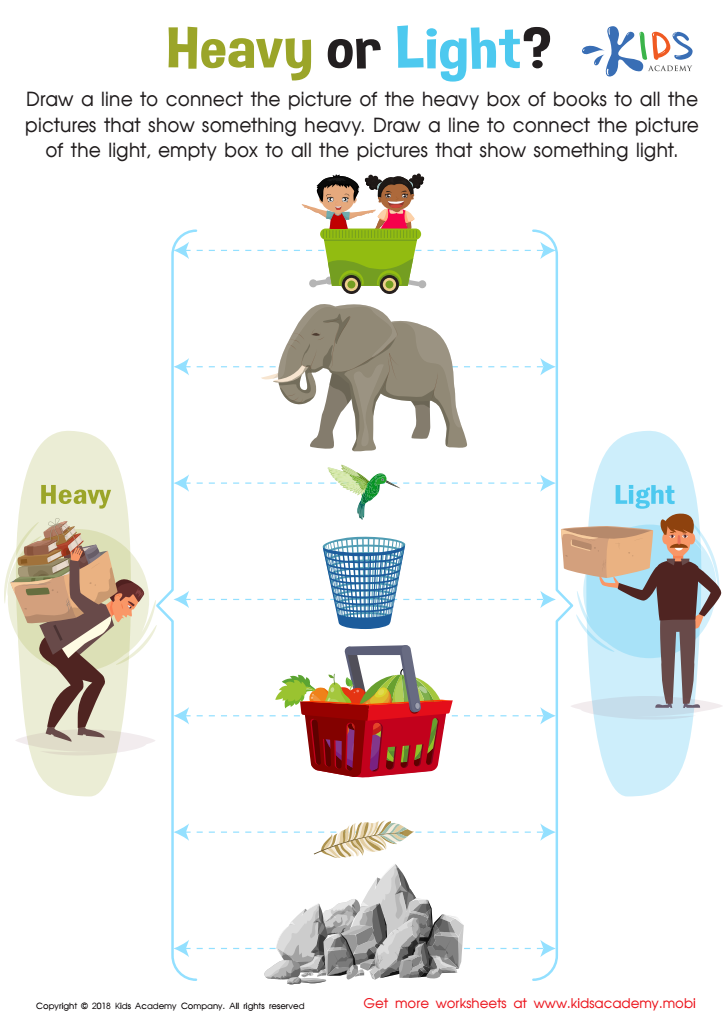
Heavy or Light? Worksheet







.jpg)
Enhanced observation skills in preschool math are foundational for young learners' cognitive development and future academic success. For parents and teachers, the importance of these skills cannot be overstated, as they lay the groundwork for critical thinking, problem-solving ability, and a solid understanding of mathematical concepts. At this developmental stage, children are naturally curious and make sense of the world through visual and tactile experiences. Encouraging them to observe patterns, shapes, and numbers in their surroundings helps build their attention to detail and nurtures a deeper understanding of how things work.
For instance, simple activities like counting leaves, identifying shapes in a picture book, or sorting colored blocks not only enhance observational skills but also integrate math into everyday life, making it relatable and less intimidating. This early exposure to mathematical thinking fosters a growth mindset, showing children that math is all around them and encouraging a positive attitude toward learning.
Additionally, as children become more adept at observation, they develop stronger analytical skills, which are crucial for subjects beyond math, such as science and reading comprehension. Parents and teachers, therefore, play a crucial role in creating an engaging learning environment that promotes these skills, setting the stage for lifelong learning and curiosity.