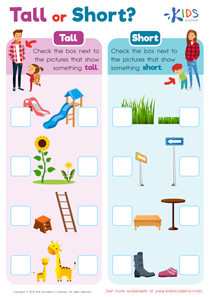
Understanding fractions Preschool Math Worksheets
3 filtered results
-
From - To
Explore our engaging "Understanding Fractions Preschool Math Worksheets" designed to introduce young learners to the fundamentals of fractions in a fun and interactive way. These worksheets are perfect for preschoolers, helping them grasp essential concepts through colorful visuals and simple exercises. Your child will enjoy identifying and comparing different fractions, cutting shapes, and filling in fun activities while developing their mathematical skills. Our resources are aligned with early childhood education standards, ensuring a playful and educational experience. Foster a solid math foundation for your little ones today with our easy-to-use worksheets that encourage a love for learning through exploration and creativity!
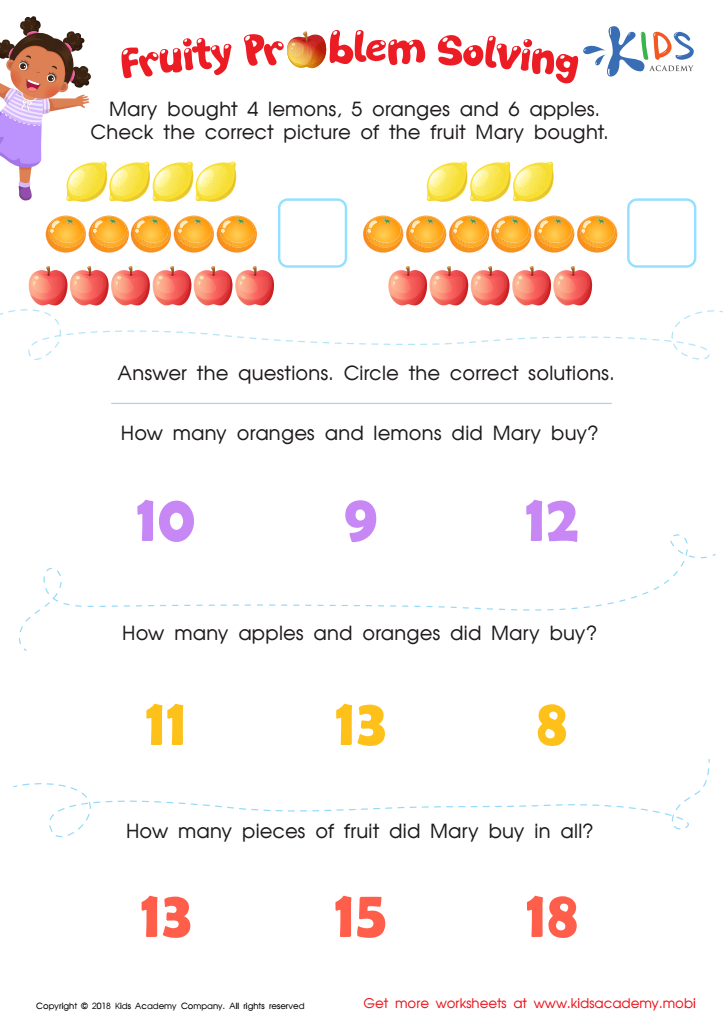
Fruity Problem Solving Worksheet
 Assign to My Students
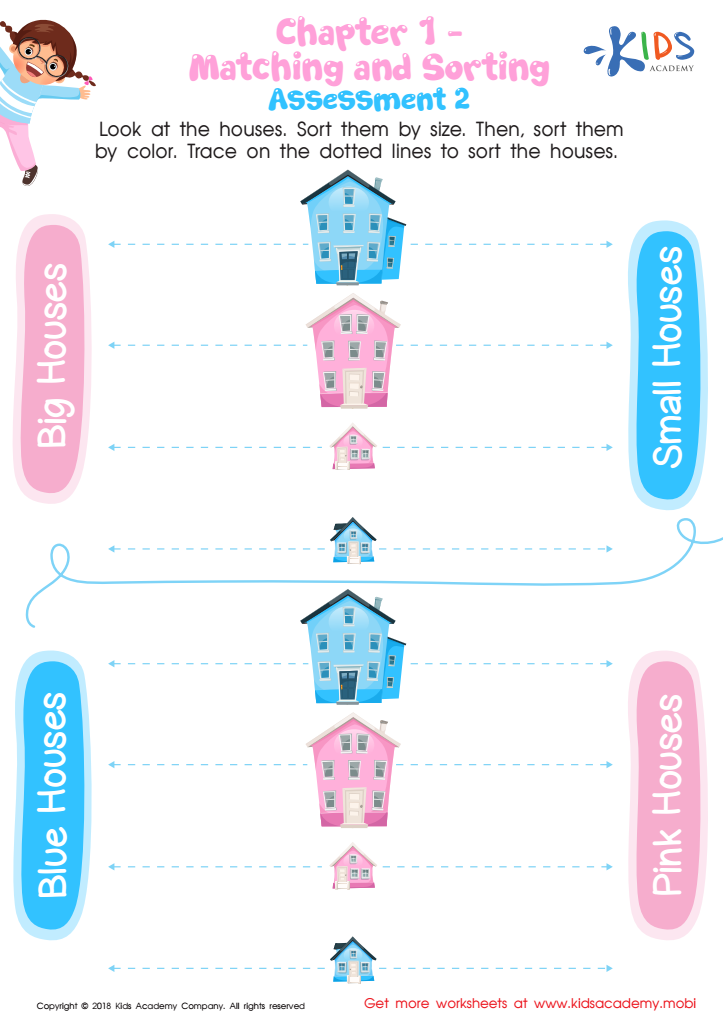
Matching and Sorting for Preschool: Assessment 2 Worksheet
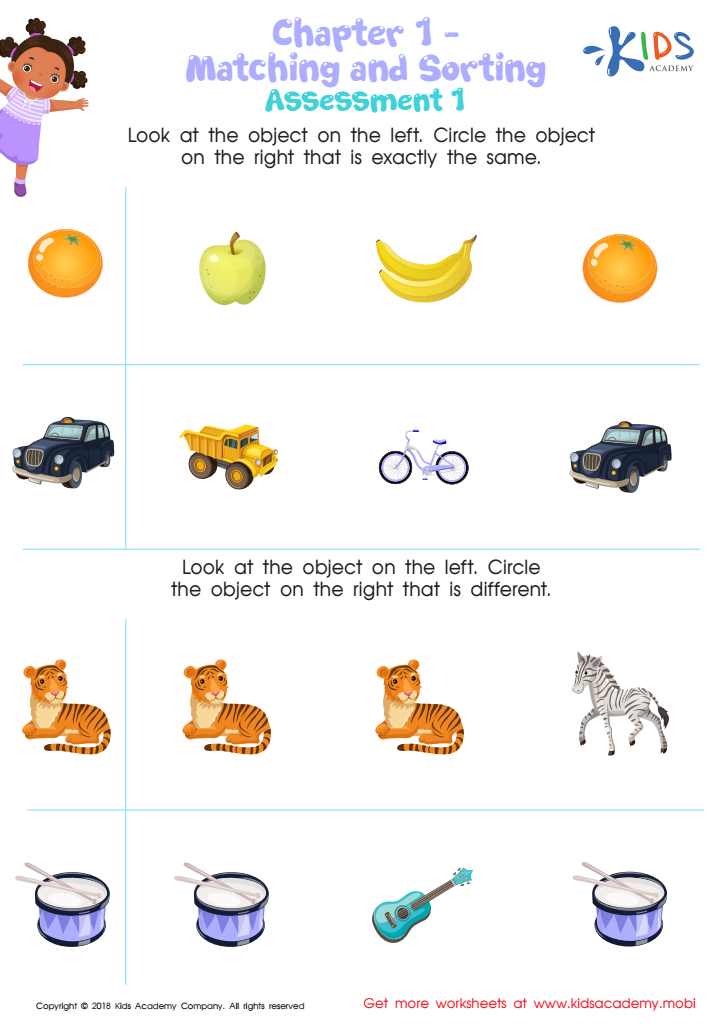
Matching and Sorting for Preschool: Assessment 1 Worksheet







Understanding fractions in preschool math lays a foundational skill set that is critical for future mathematical learning. During these formative years, children begin to grasp basic mathematical concepts, and introducing fractions can enhance their number sense and reasoning abilities. When parents and teachers emphasize this understanding, they help children develop not only mathematical skills but also critical thinking and problem-solving capabilities.
Learning about fractions encourages children to see relationships between numbers, fostering an appreciation for proportions, equality, and comparison. For example, when a child shares a snack or divides a toy into pieces, they inherently engage with the concept of fractions, connecting math to real-life situations. This contextual understanding builds confidence and promotes a positive attitude toward mathematics.
Moreover, early exposure to fractions supports literacy in math by enriching vocabulary and communication skills. By discussing fractions in everyday activities, children learn to articulate their thoughts more clearly and hear different perspectives, enhancing collaborative learning experiences. Overall, nurturing an understanding of fractions at preschool can foster curiosity, adaptability, and perseverance in young learners, preparing them for more complex mathematical concepts in the future while cultivating a lifelong love for learning.