Underwater animal identification Preschool Math Worksheets
3 filtered results
Difficulty Level
Grade
Age
-
From - To
Subject
Activity
Standards
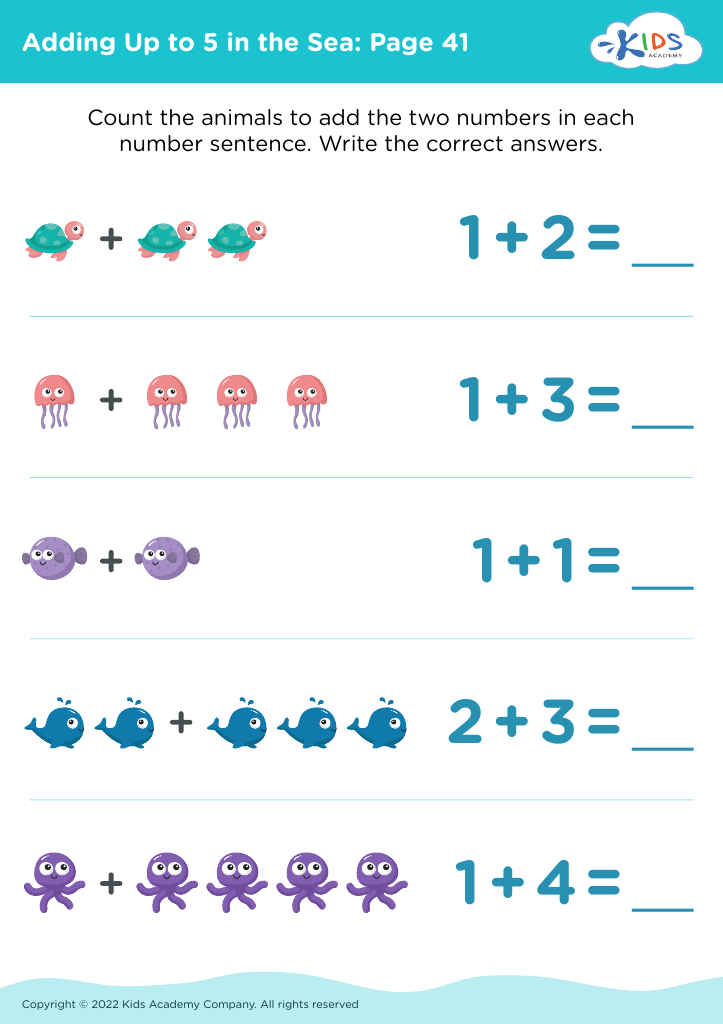
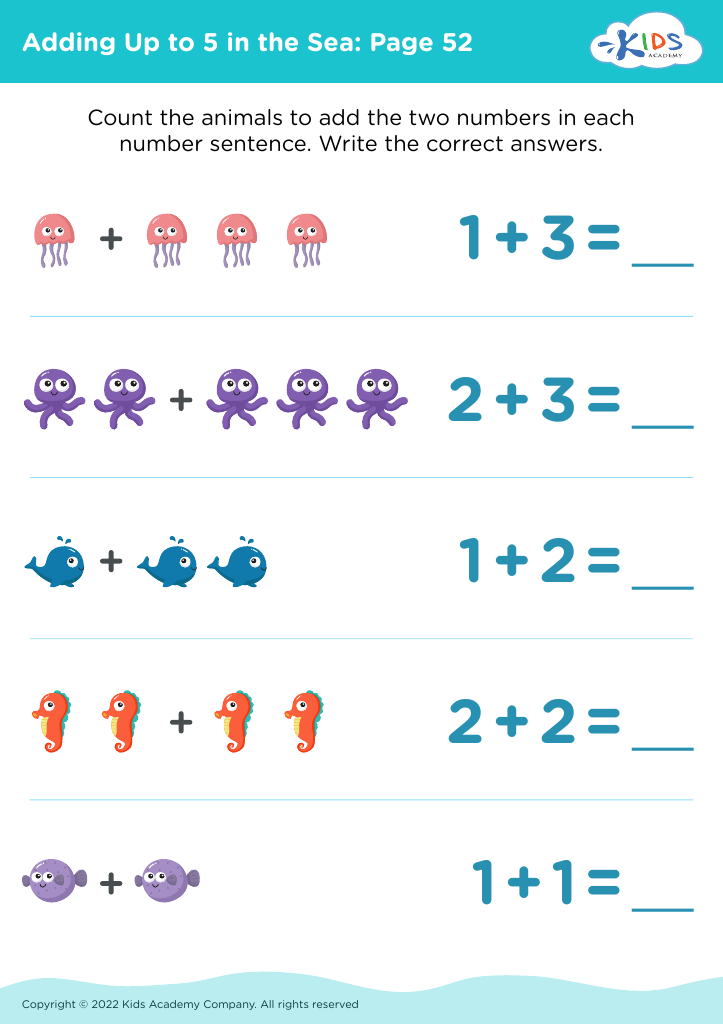
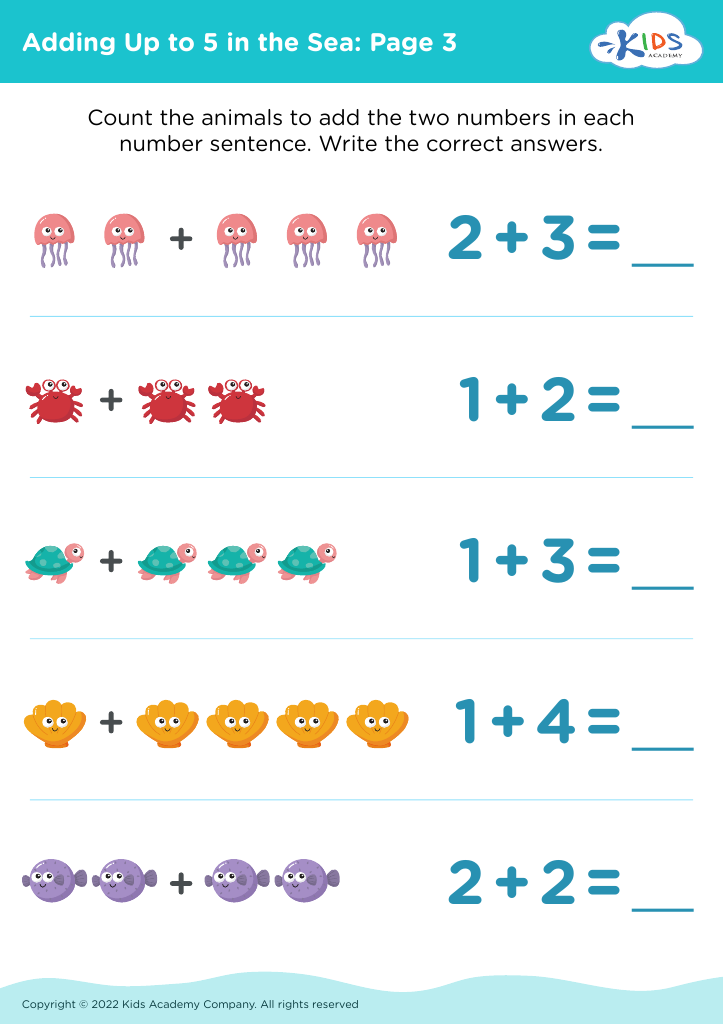
Explore the wonders of the ocean with our engaging "Underwater Animal Identification Preschool Math Worksheets"! Designed for young learners, these worksheets blend math skills with the magic of marine life. Children will recognize and identify various underwater animals while practicing counting, number recognition, and basic math operations. Each worksheet is colorful and interactive, making learning fun and stimulating. Perfect for at-home learning or classroom activities, these resources will ignite curiosity about aquatic habitats and enhance foundational math skills. Dive into a world of knowledge and creativity with our playful math worksheets, designed to nurture a love for learning in preschoolers!
Favorites
With answer key
Interactive
Join Kids Academy for Free
Who is primarily going to use this learning content?








Underwater animal identification is a delightful and engaging activity that can significantly enhance preschool math skills while fostering a love for learning. Learning about various underwater animals—like fish, whales, and sea turtles—provides young children with the opportunity to practice counting, sorting, and recognizing patterns through tangible and visual examples.
When parents or teachers introduce underwater animal identification, they're not just enriching a child's knowledge of the ocean; they are also incorporating essential math concepts into an engaging context. For instance, children can count the number of different fish, compare their sizes, or classify animals based on their characteristics—all foundational math skills that support cognitive development.
Moreover, this interdisciplinary approach encourages curiosity and stimulates critical thinking. By maintaining their interest in these captivating creatures, children can develop a broader context for what they learn, helping to connect math with the natural world.
Incorporating underwater animal themes into a math curriculum helps children become not only more competent in basic math but also fosters a lifelong interest in marine biology and environmental conservation. Encouraging this awareness can lead to responsible stewardship of our oceans in the future, making it a crucial aspect of early education.