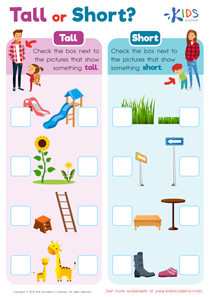
Basic math operations Preschool Word Problems Worksheets
3 filtered results
Difficulty Level
Grade
Age
-
From - To
Subject
Activity
Standards
Introduce young learners to essential math skills with our "Basic Math Operations Preschool Word Problems Worksheets." Designed for preschoolers, these engaging worksheets combine fun illustrations with simple word problems to teach addition, subtraction, and number recognition. Each activity encourages critical thinking and problem-solving in a playful manner. Perfect for both classroom use and at-home practice, our worksheets help build a strong foundation in early math concepts while making learning enjoyable. Explore our collection and give your child a head start in math proficiency today!
Favorites
With answer key
Interactive
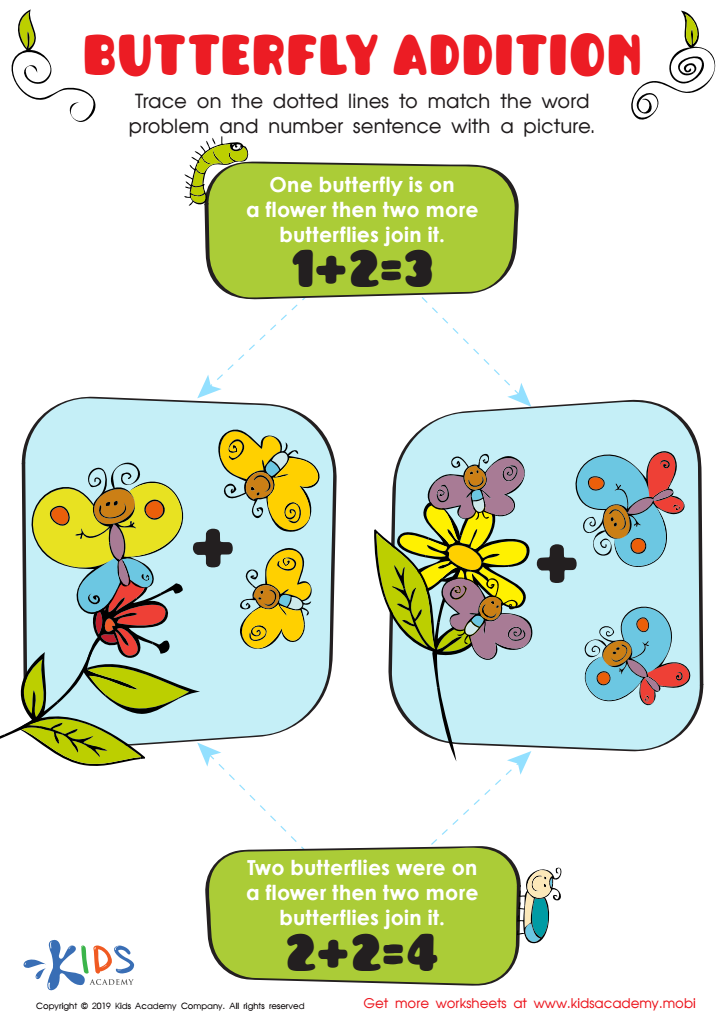
Butterfly Addition Worksheet
This tracing sheet is great for kids to work on math skills and have fun too. Read the word problems to them, then help them trace the dotted lines to match the problem and number sentence to a picture. Not only is it educational, it's beautiful too - your kids will love learning about butterflies!
 Assign to My Students
Butterfly Addition Worksheet
Worksheet
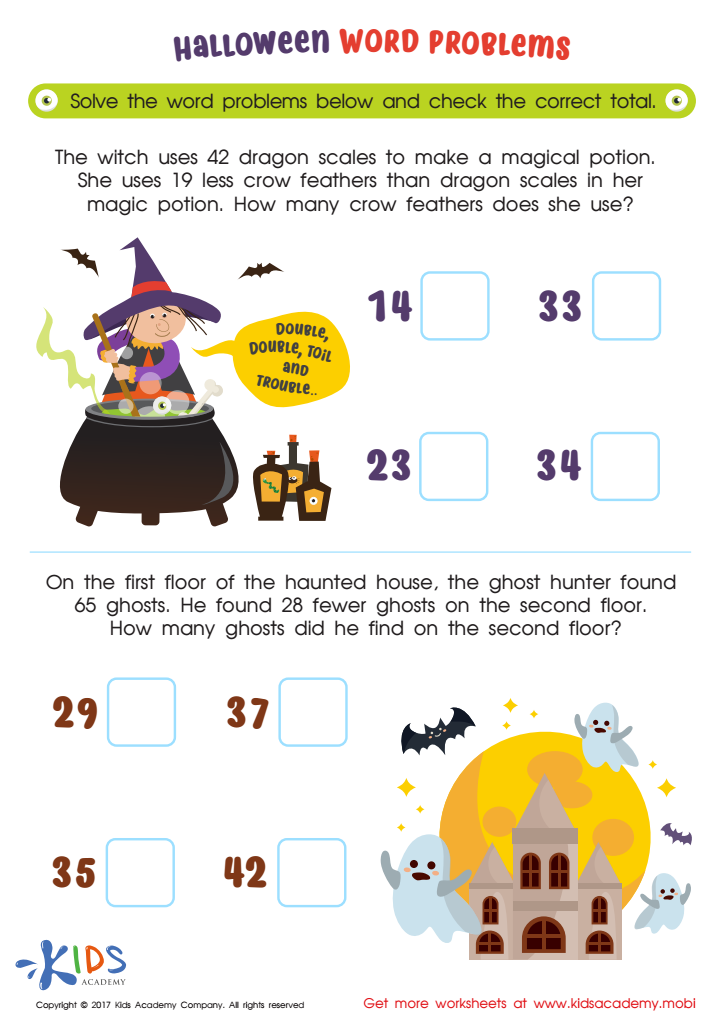
Halloween Word Problems Printable
Ghosts, witches, and other spooky characters make these problems exciting and interactive. Get ready to have some math fun!
Halloween Word Problems Printable
Worksheet
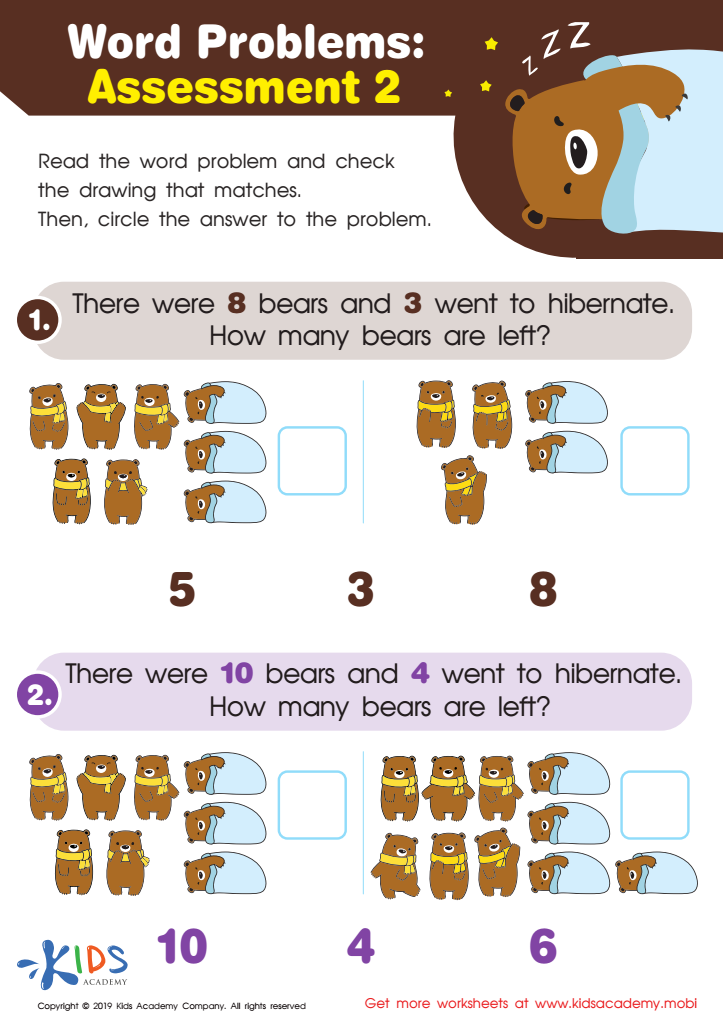
Word Problems: Assessment 2 Worksheet
This bear-themed worksheet is a great way to test subtraction skills. Have your child read the word problems and match the correct drawing with the answer. It's a fun way to quiz them without them even knowing. Enjoy counting cute snoozing bears! (80 words)
Word Problems: Assessment 2 Worksheet
Worksheet
Join Kids Academy for Free
Who is primarily going to use this learning content?








Understanding basic math operations through preschool word problems lays a fundamental framework for future mathematical learning and problem-solving skills. For young children, early exposure to these concepts helps in cognitive development by enhancing their ability to reason, analyze, and think critically. For parents and teachers, focusing on basic math operations like addition and subtraction within word problems offers several benefits.
Firstly, it provides real-world context, enabling children to see how math applies to their daily lives. This relatability increases engagement and enthusiasm while reducing math anxiety. Secondly, dealing with word problems improves children's language and reading comprehension, as they must understand the problem's context before solving it. This dual focus reinforces both literacy and numeracy skills.
Moreover, consistent practice with basic operations develops a solid foundation for more advanced math topics tackled in later grades, such as fractions or multiplication. It also fosters soft skills like persistence and patience, as children learn to tackle problems, experience occasional setbacks, and find solutions.
Early mastery of these concepts alleviates future academic struggles, enhances self-confidence, and instills a positive attitude towards learning. By placing emphasis on these fundamental skills, parents and teachers can nurture a well-rounded educational experience that supports lifelong learning and success.