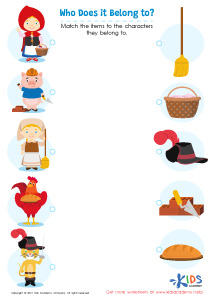
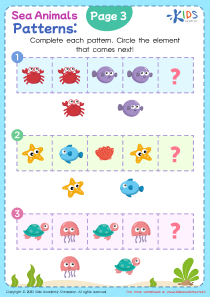
Mathematical reasoning Preschool Building Vocabulary Worksheets
3 filtered results
-
From - To
Enhance your preschooler's learning journey with our "Mathematical Reasoning Building Vocabulary Worksheets." These engaging and interactive worksheets are designed to introduce young learners to essential math terms and concepts while simultaneously expanding their vocabulary. Each activity fosters critical thinking and encourages children to explore relationships between numbers, shapes, and patterns. With vibrant illustrations and age-appropriate exercises, these worksheets make math fun and accessible. Watch as your child develops confidence and foundational skills in mathematical reasoning, setting the stage for future learning. Perfect for home or classroom, these resources are an invaluable tool for nurturing young minds in their early educational adventures.
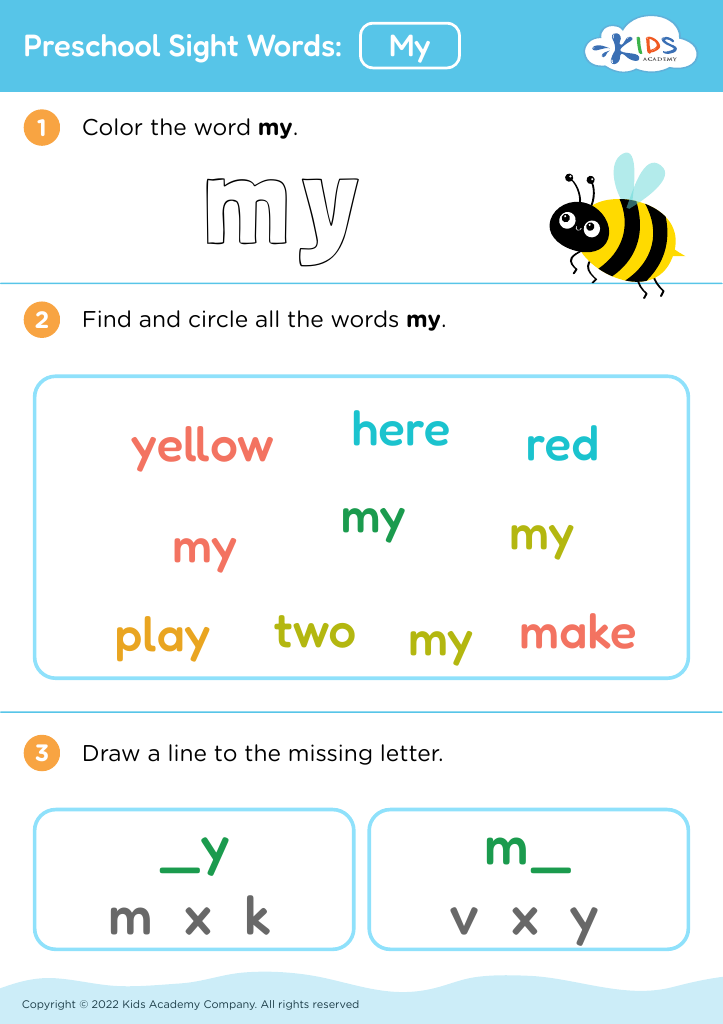
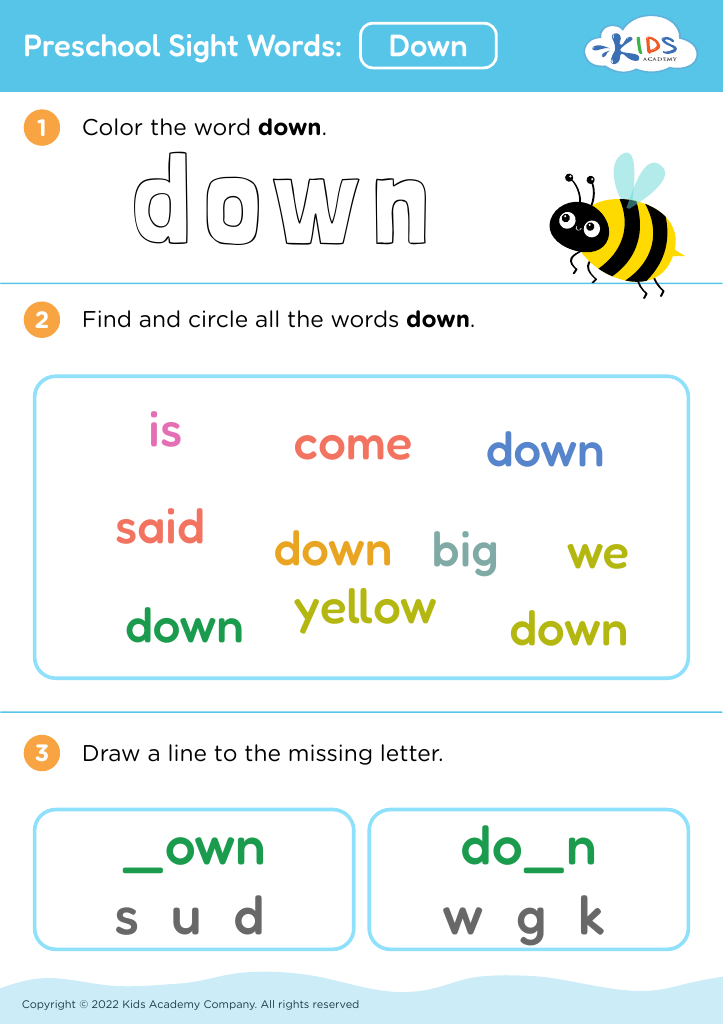
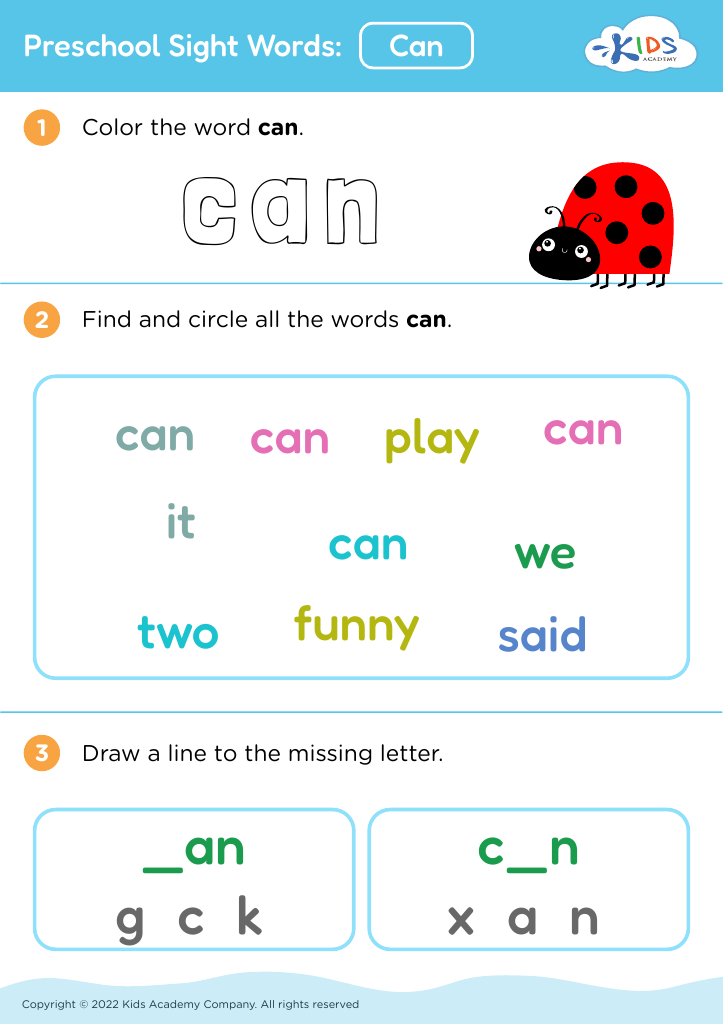







Mathematical reasoning is a pivotal component of a child's early education, especially in preschool, where foundational skills are developed. Parents and teachers should care about building vocabulary related to mathematical reasoning because it lays the groundwork for a child's future success in math and overall learning.
In preschool, children encounter various mathematical concepts, such as counting, comparing quantities, and understanding shapes. By using appropriate mathematical vocabulary, educators can help children articulate their thought processes, encouraging clearer comprehension of these concepts. Vocabulary words like "more," "less," "equal," and "shape names" empower children to describe and engage with mathematical ideas, fostering critical thinking.
Furthermore, a strong mathematical vocabulary positively affects problem-solving skills. When children learn to communicate mathematically, they can better explain their reasoning and approach challenges with confidence. This ability to articulate thought not only enhances math skills but also supports language and cognitive development.
Ultimately, investing in building a rich mathematical vocabulary enables children to approach mathematics with curiosity and resilience, which is essential for lifelong learning. Parents and teachers play an integral role in this process; by emphasizing mathematical terminology, they cultivate an environment where children can thrive analytically and creatively in their educational journey.