Fraction comparison Preschool Sight Words Worksheets
3 filtered results
-
From - To
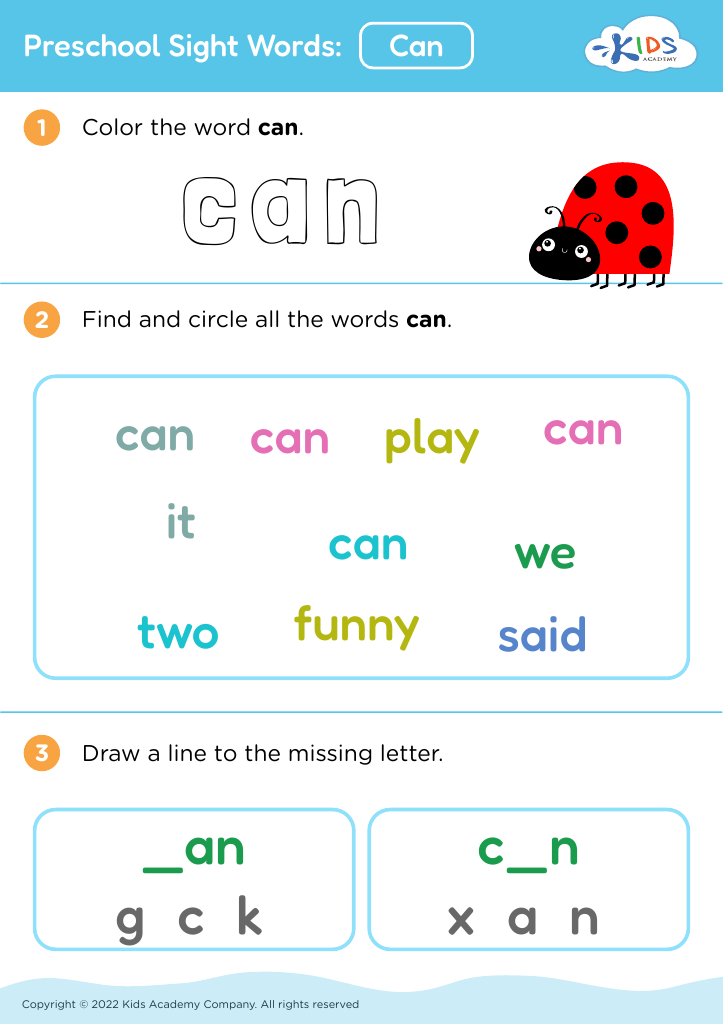
Enhance your preschooler's learning experience with our engaging Fraction Comparison Sight Words Worksheets! Designed to support early literacy and foundational math skills, these worksheets help children recognize common sight words while mastering the concept of fractions. Each activity combines visual and verbal elements, making it fun and interactive for kids. By blending reading with mathematical comparisons, kids will gain confidence as they practice identifying, comparing, and understanding fractions using simple sight words. Ideal for at-home learning or classroom activities, our worksheets ensure that children develop essential skills in a playful and effective way. Start exploring today and watch young learners thrive!







Parents and teachers should prioritize the teaching of fraction comparison and preschool sight words because both are foundational skills crucial for a child's academic development. Understanding fractions enhances a child's comprehension of mathematics, which is essential not only for future math-based subjects but also for everyday tasks, such as cooking or budgeting. When children learn to compare fractions, they develop critical thinking and problem-solving skills, as they analyze and derive meaning from numerical relationships.
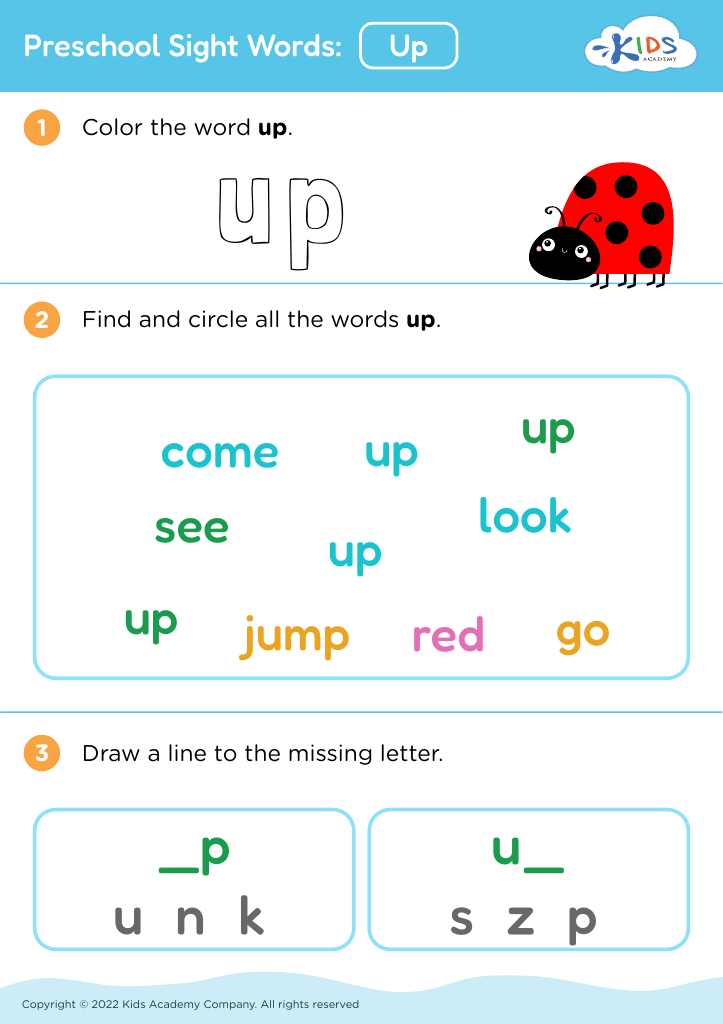
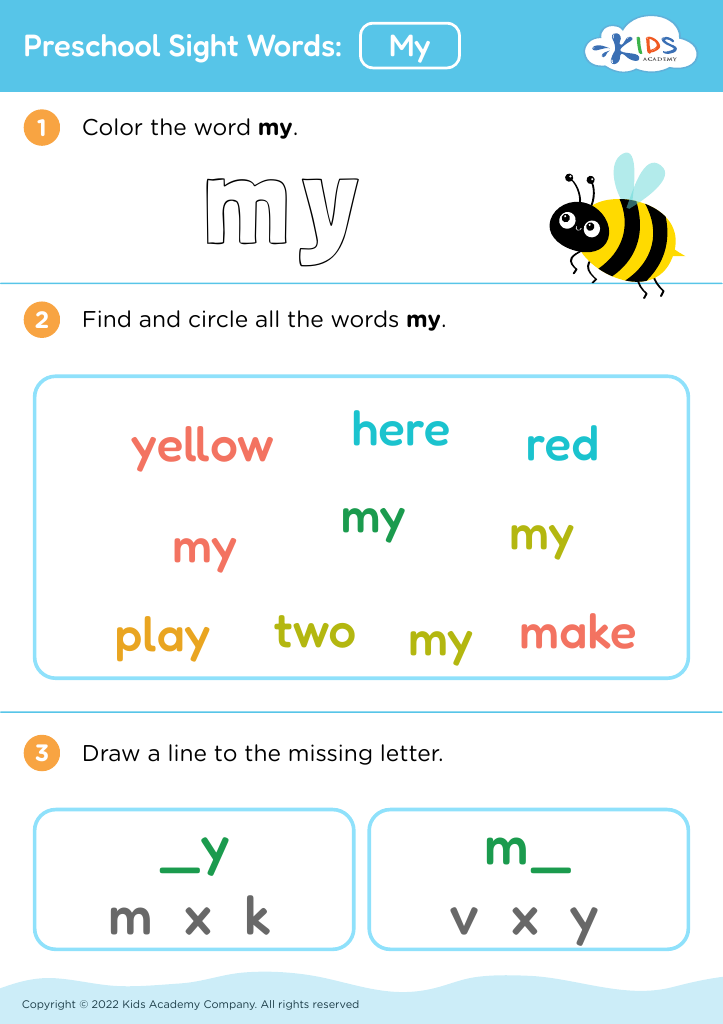
On the other hand, preschool sight words form the building blocks of reading and literacy. Recognizing sight words takes children one step closer to fluent reading, allowing them to engage with books and stories independently. This ability not only boosts confidence but also fosters a love for reading, which is vital for language acquisition and cognitive development.
Both these areas foster essential skills: mathematical reasoning for fractions and language comprehension for sight words. By focusing on these aspects during early education, parents and teachers equip children with the tools they need for lifelong learning. Together, cognitive flexibility and literacy proficiency lay a strong foundation for future academic success, ultimately enriching a child’s personal and social development as well.