Multiplication practice Preschool Sight Words Worksheets
3 filtered results
-
From - To
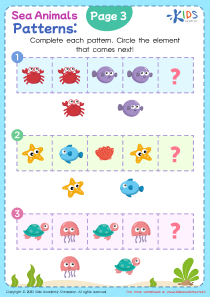
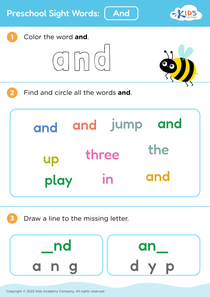
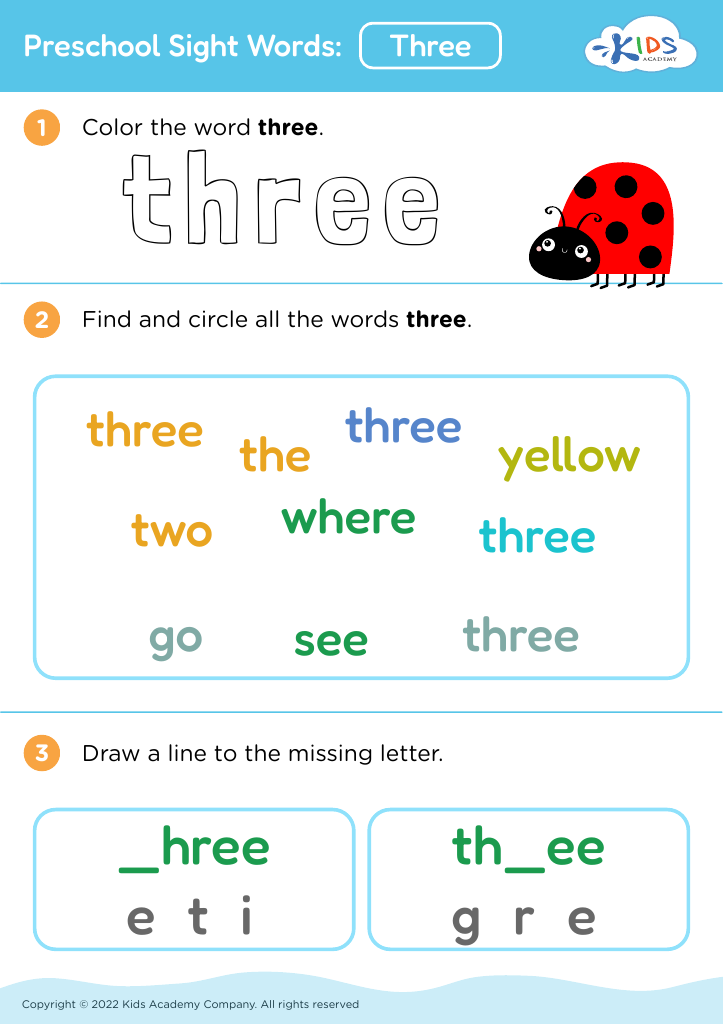
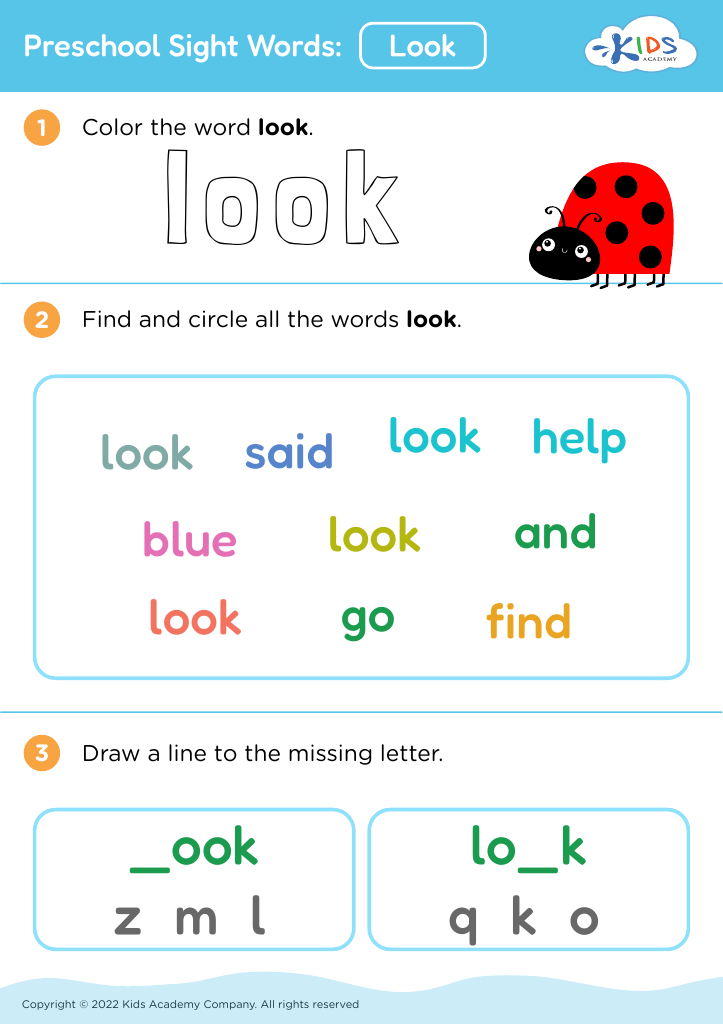
Our "Multiplication Practice Preschool Sight Words Worksheets" are designed to seamlessly integrate early math skills with essential reading skills for preschoolers. These engaging worksheets help young learners grasp the basics of multiplication through fun, hands-on activities while building their sight word vocabulary. Featuring colorful illustrations, interactive exercises, and age-appropriate challenges, our resources ensure a well-rounded approach to early education. Perfect for both classroom and home use, these worksheets support foundational learning and make mastering multiplication and sight words an enjoyable experience. Set your preschooler on the path to academic success with our expertly crafted practice sheets!
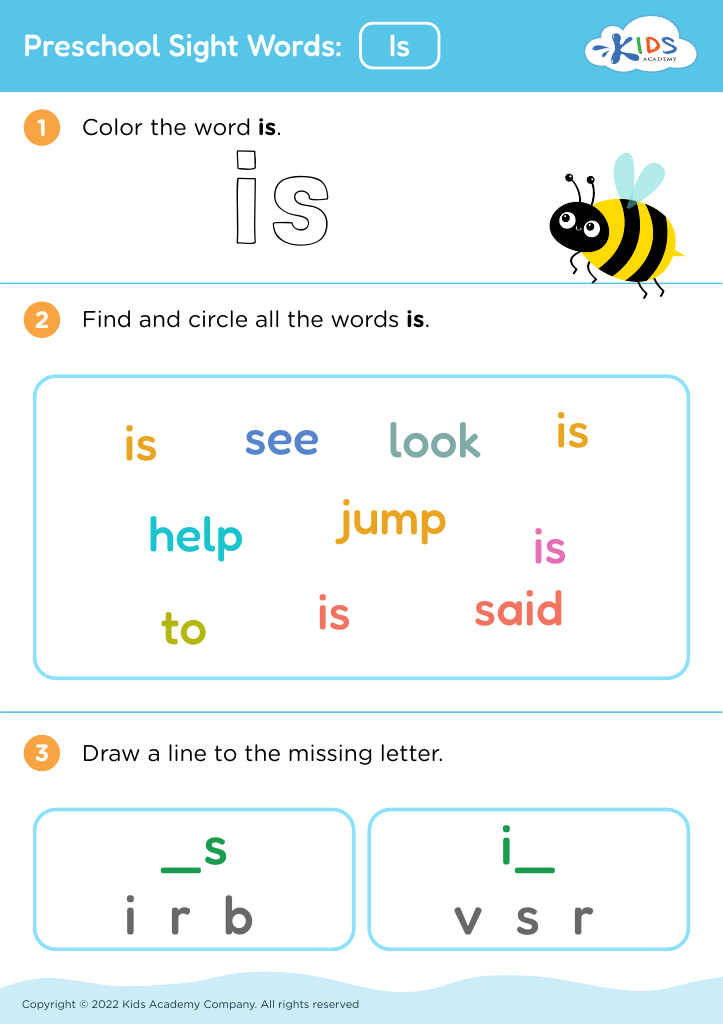








Parents and teachers should care about multiplication practice and preschool sight words for several compelling reasons. At its core, early exposure to these foundational concepts influences a child's future academic success and overall cognitive development. Multiplication forms the basis of many mathematical operations and problem-solving scenarios that students will encounter throughout their education. By practicing multiplication early on, children are not only enhancing their arithmetic skills but also developing critical thinking and pattern recognition abilities.
Meanwhile, preschool sight words are the common words that young readers need to recognize instantly without having to decode phonetically. Familiarity with sight words boosts a child's reading fluency, accuracy, and comprehension. When children can quickly recognize these high-frequency words, they can focus their cognitive resources on understanding the text's meaning, which fosters a broader love for reading and learning.
Both multiplication practice and sight words enhance a child's confidence in their abilities, reduce the possibility of academic anxiety, and create a solid foundation for more advanced learning. Investing time in these areas from an early age demonstrates to children that education is important and enjoyable, setting them on a path for lifelong learning and success. Therefore, incorporating both into early education strategy yields a multitude of long-term benefits.