Understanding patterns Preschool Sight Words Worksheets
3 filtered results
-
From - To
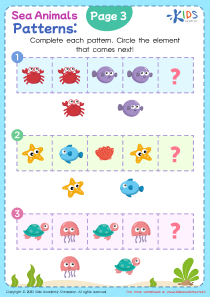
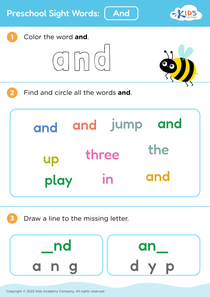
Our "Understanding Patterns" Preschool Sight Words Worksheets are designed to help young learners master essential sight words through engaging activities. These worksheets blend visual patterns with word recognition exercises to reinforce language skills in a fun and interactive way. Ideal for preschoolers, each worksheet carefully builds upon fundamental learning concepts, promoting early literacy and cognitive development. Vibrant illustrations, familiar words, and repetitive patterns ensure children stay motivated and progress confidently in their reading journey. Parents and teachers can use these printables as valuable resources to enhance vocabulary, improve reading fluency, and create a solid foundation for future academic success.
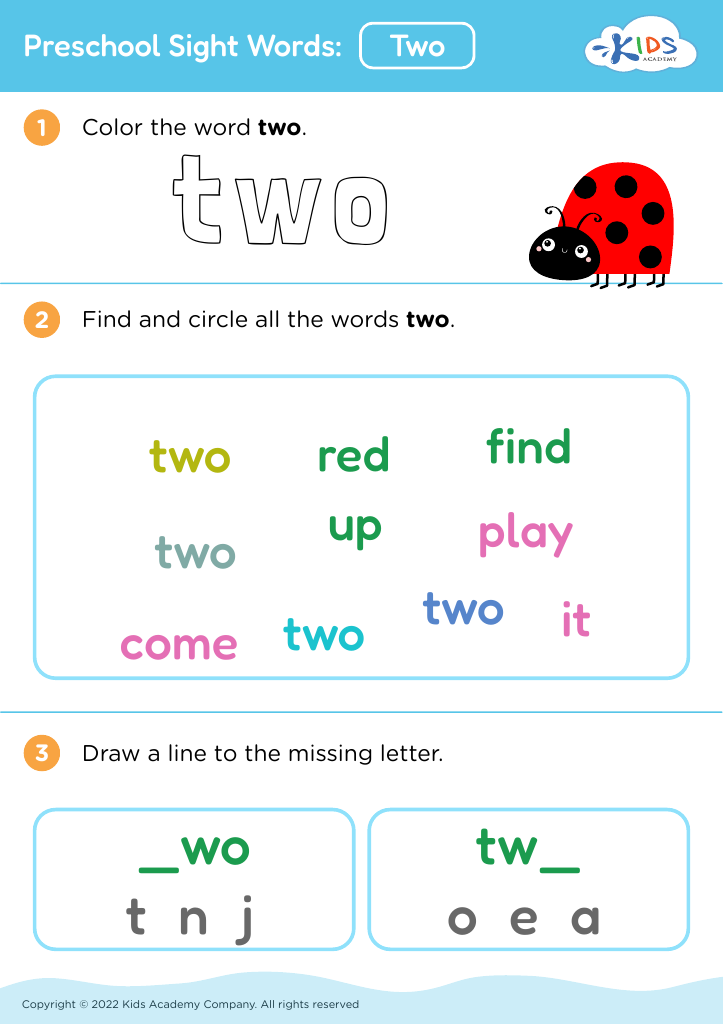
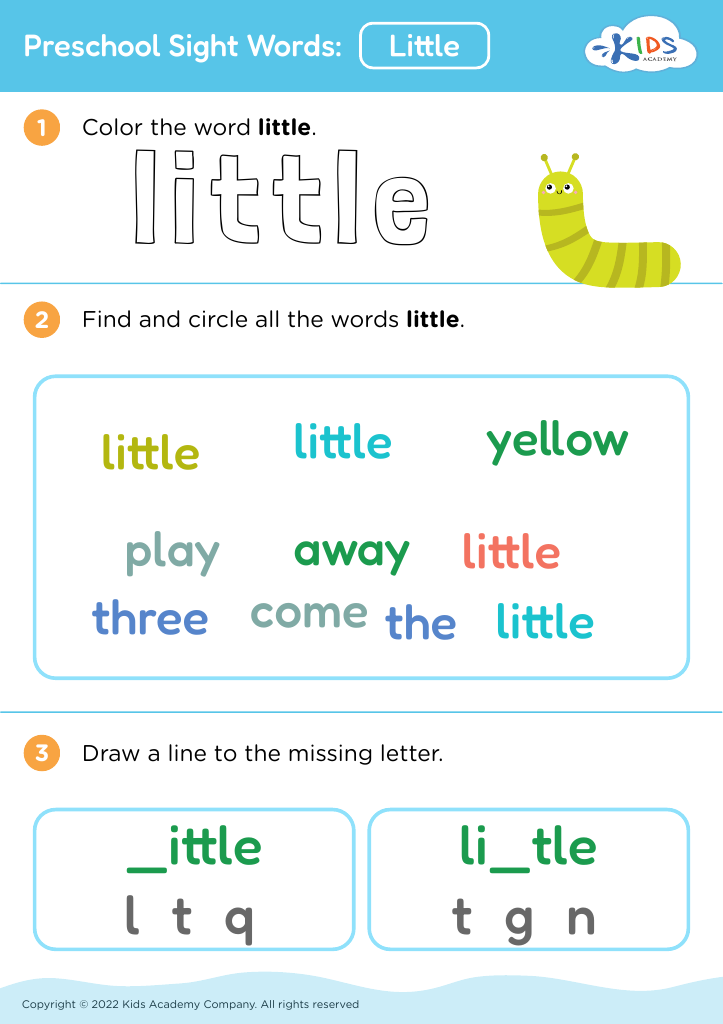
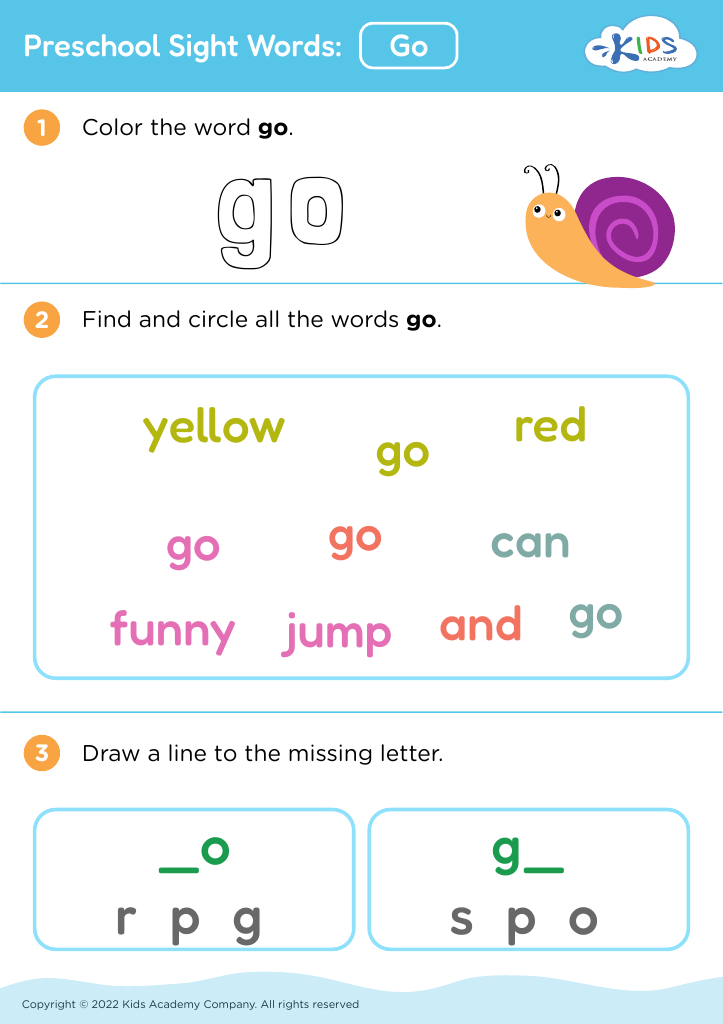








Understanding patterns and preschool sight words are foundational elements in early childhood education, forming the basis for a child's future fluency in reading and comprehension skills. Here’s why they matter:
-
Building Blocks of Literacy: Preschool sight words are high-frequency words that children encounter regularly. Recognizing these words by sight, without needing to decode them, helps children read more efficiently and with greater comprehension.
-
Foundational Patterns: Patterns are not just limited to visual and auditory sequences; they also apply to language. Recognizing patterns in word structures, sentence formations, and storytelling aids in predicting and understanding text, enhancing reading fluency.
-
Cognitive Development: Working with patterns boosts cognitive abilities such as problem-solving, logical thinking, and memory. It helps children make connections between different ideas, fostering overall cognitive development.
-
Confidence Boost: As children master more sight words and recognize patterns, their reading pace improves. This early success builds confidence and encourages a love for reading, which is critical for continual learning.
-
Communication Skills: Proficiency in curriculum fundamentals like sight words improves a child’s ability to communicate effectively. This skill is integral not only for academic purposes but for effective interaction in social settings.
Parents and teachers should prioritize understanding these basics to set a strong literacy foundation, boosting overall academic and personal development.