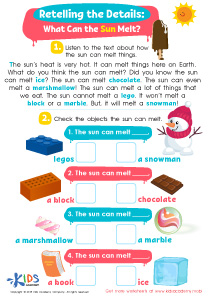
Weather Vocabulary Preschool Science Worksheets
3 filtered results
-
From - To
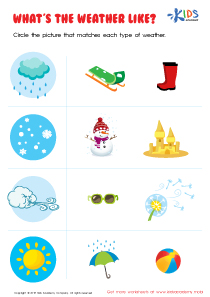
Explore our engaging Weather Vocabulary Preschool Science Worksheets, designed to introduce young learners to essential weather terms in a fun and interactive way. These worksheets help preschoolers identify different weather conditions, understand related vocabulary, and enhance their language skills. Featuring colorful visuals and age-appropriate activities, children can practice matching words with images, tracing terms, and participating in simple exercises that promote comprehension. Perfect for home or classroom use, our worksheets encourage curiosity about the natural world while fostering a love for learning. Help your child become a weather vocabulary whiz today with our beautifully crafted printable resources!
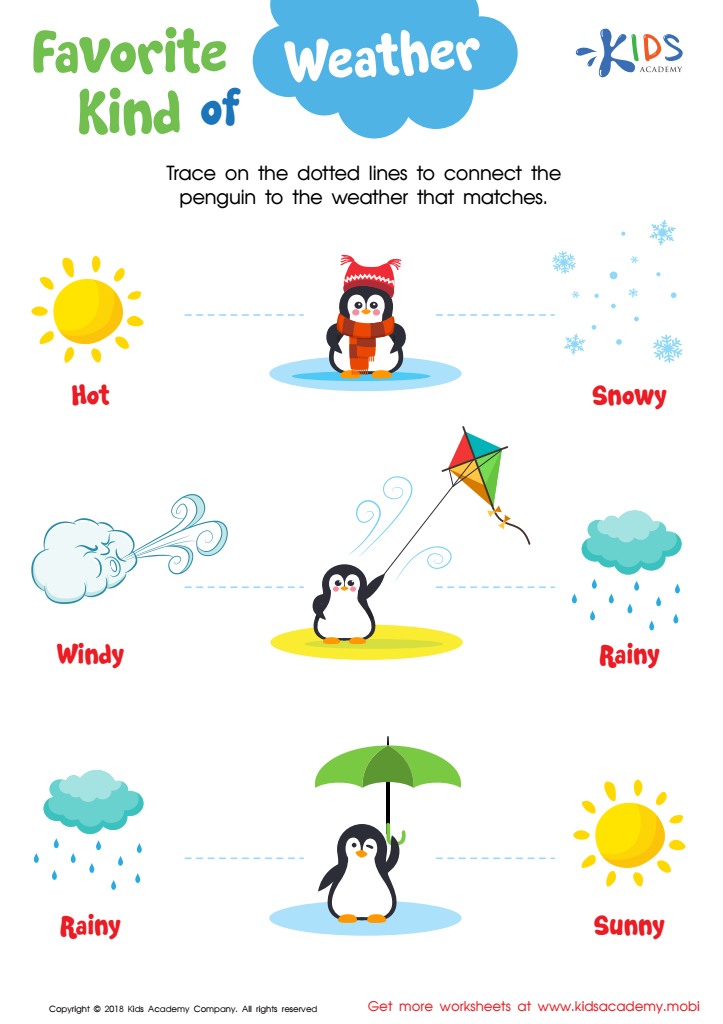
Favorite Kind of Weather Worksheet
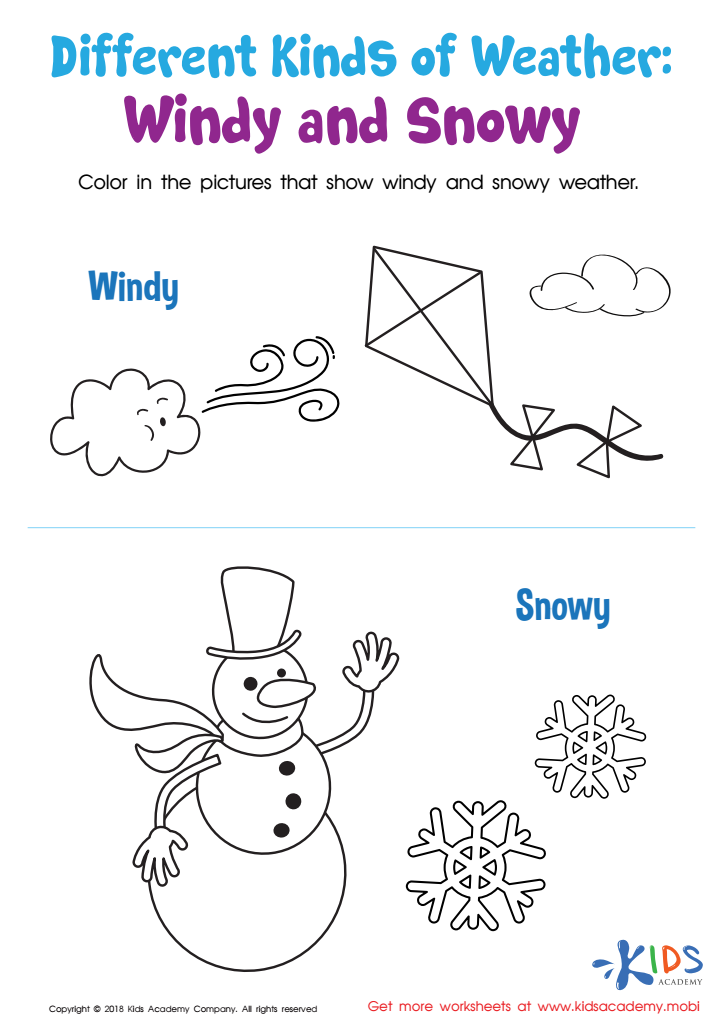
Different Kinds of Weather: Windy and Snowy Worksheet
 Assign to My Students








Understanding weather vocabulary is crucial for preschool children as it lays the foundation for scientific literacy and critical thinking skills. When parents and teachers engage children in discussions about weather, it fosters curiosity and nurtures a basic understanding of the environment. Concepts like sunny, rainy, windy, or cloudy, and terms such as thermometer, forecast, and seasons, allow young learners to categorize their experiences and communicate about the world around them.
Additionally, early exposure to weather vocabulary enhances language development. Learning new words enables children to express emotions related to weather, like excitement about playing in the snow or disappointment when it rains. These discussions also encourage observation skills as children learn to look at their surroundings and recognize weather patterns.
Furthermore, mastering weather vocabulary connects directly to important scientific concepts and early STEM education. It promotes inquiry-based learning, where children can ask questions, seek answers, and engage in hands-on experiments, such as tracking daily temperatures or creating simple weather charts. Teaching weather vocabulary not only enriches a child's linguistic and cognitive skills but also fosters a lifelong appreciation for nature and the scientific processes that govern it. Through this foundational learning, children become more informed and responsible stewards of their environment.