Visual interpretation Building Vocabulary Worksheets
3 filtered results
-
From - To
Enhance your child's vocabulary with our Visual Interpretation Building Vocabulary Worksheets! Designed for early learners, these engaging worksheets help kids develop essential reading skills through visual aids and contextual clues. Each worksheet focuses on enhancing comprehension, enabling children to interpret images and relate them to words effectively. By connecting visuals with vocabulary, these activities boost memory retention and communication skills. Ideal for classrooms or at-home learning, our worksheets cater to various learning styles, ensuring a fun and interactive experience. Foster a love for language while sparking creativity and imagination. Start your child's vocabulary-building journey today!
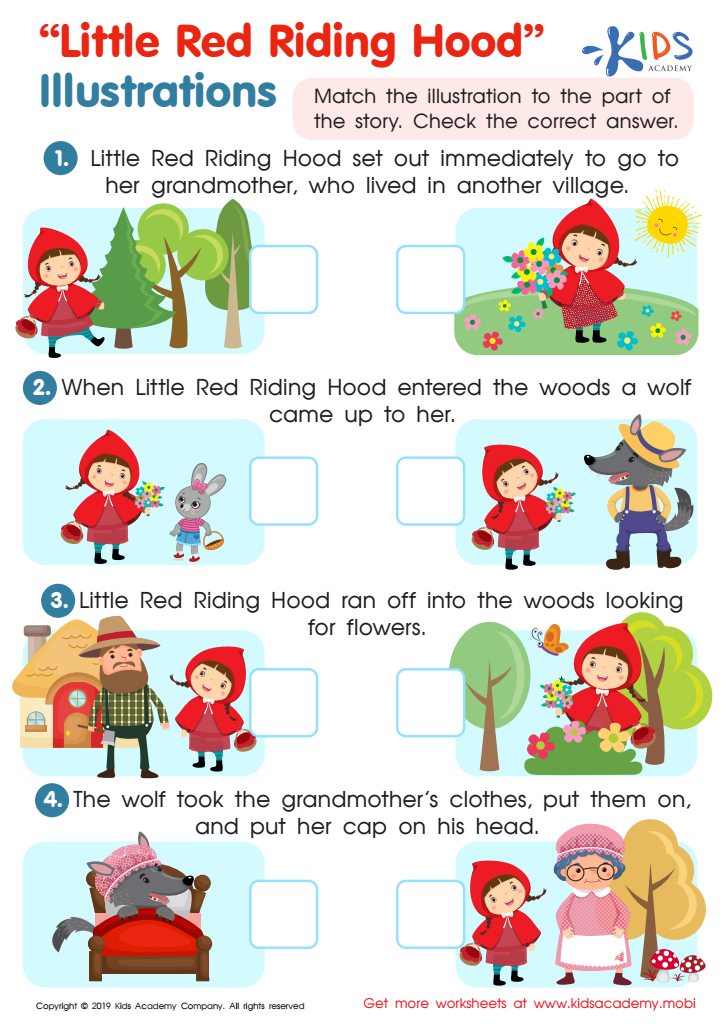
Little Red Riding Hood: Illustrations Worksheet
 Assign to My Students











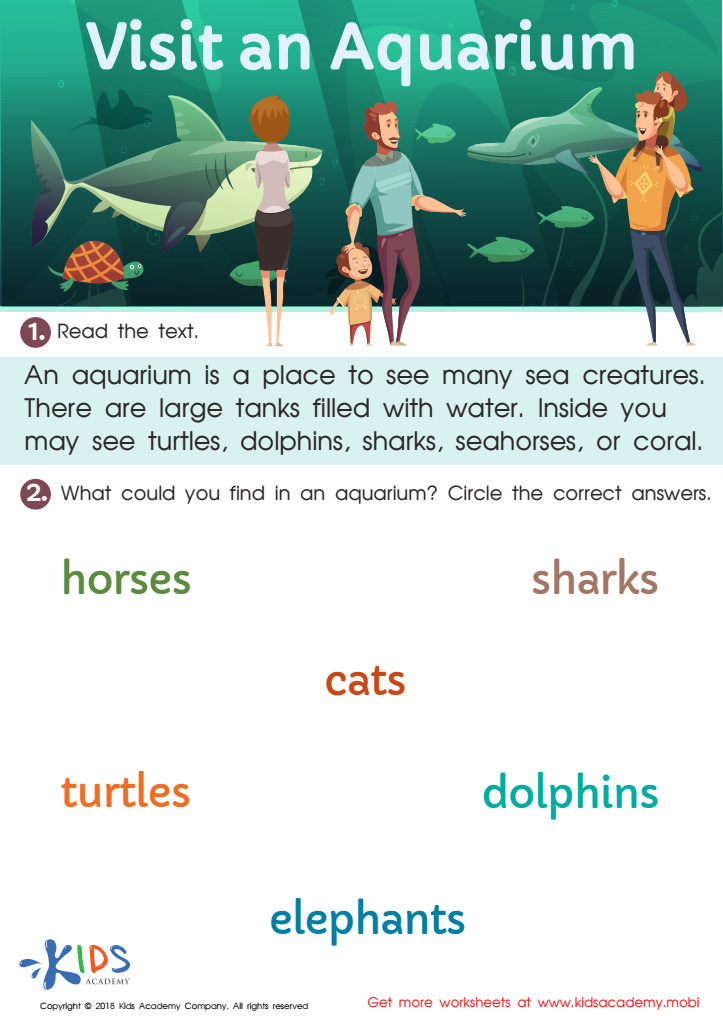
Visit an Aquarium Worksheet


.jpg)
.jpg)




Parents and teachers should prioritize visual interpretation as a key component of building vocabulary, as it enhances children’s understanding and engagement with language. Visual interpretation helps students connect words to images, making concepts more relatable and memorable. When children see visual representations of words, they are more likely to grasp meanings and contexts, thereby enriching their vocabulary.
Additionally, strong visual interpretation skills foster critical thinking. Children learn to analyze visuals – such as illustrations in books or graphs in informational texts – which encourages deeper comprehension and encourages them to infer meanings of unfamiliar words contextually. This understanding equips them to communicate effectively and creatively.
Furthermore, integrating visuals engages diverse learning styles, catering to visual learners who may struggle with traditional verbal approaches. By incorporating visual aids, such as infographics, diagrams, and storytelling images, parents and teachers foster a more stimulating learning environment.
Ultimately, by enhancing visual interpretation alongside vocabulary building, educators and parents promote holistic literacy development, ensuring children not only learn new words but also understand their usage in varying contexts. This foundational skill set is critical for academic success and effective communication in a visually-oriented world.








