Critical thinking skills Reading Fiction Worksheets
4 filtered results
-
From - To
Ignite your child's imagination and enhance their analytical abilities with our "Critical Thinking Skills Reading Fiction Worksheets" at Kids Academy. Our carefully crafted activities encourage young readers to dive deep into the world of fiction, exploring character motivations, plots, and themes. These engaging worksheets help students question, infer, and draw conclusions, nurturing essential critical thinking skills. Perfect for young learners, our resources make reading an interactive and thought-provoking experience, fostering a lifelong love of literature. Equip your students or children with the tools they need to comprehend and appreciate fiction on a deeper level with Kids Academy's creative and educational materials.
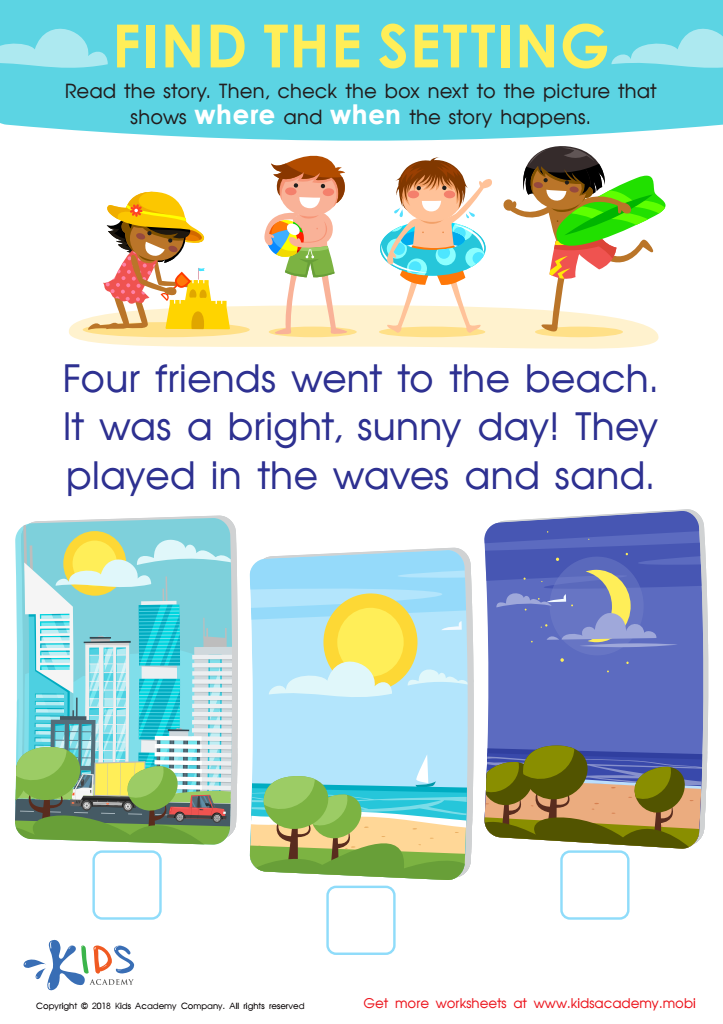
Find the Setting Worksheet
 Assign to My Students
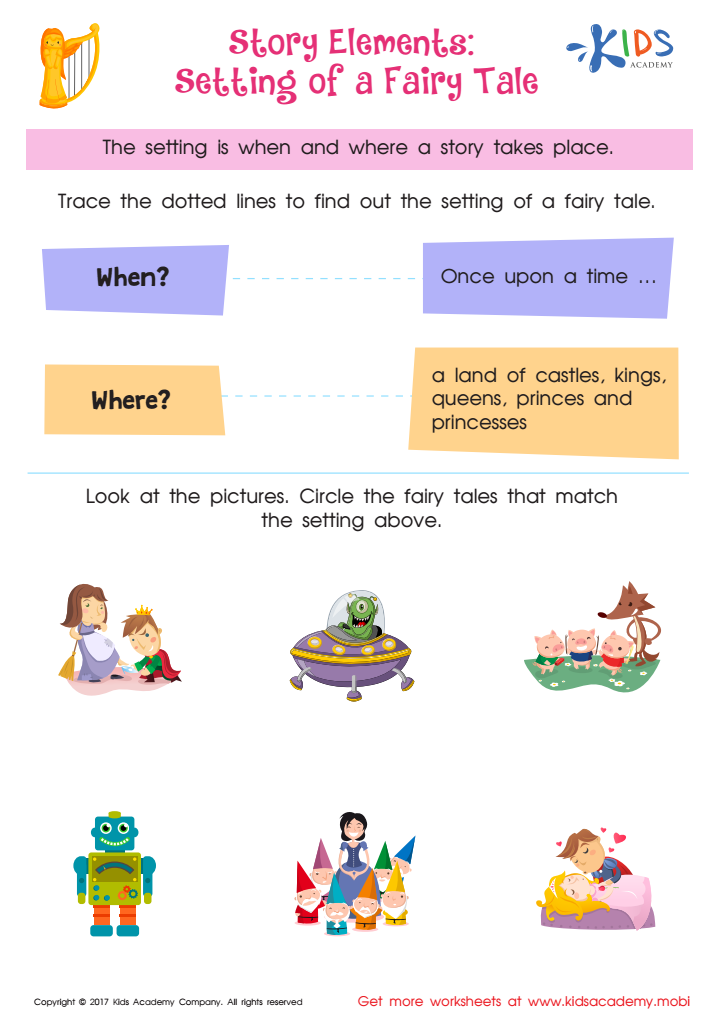
Story Elements: Setting of a Fairy Tale Printable
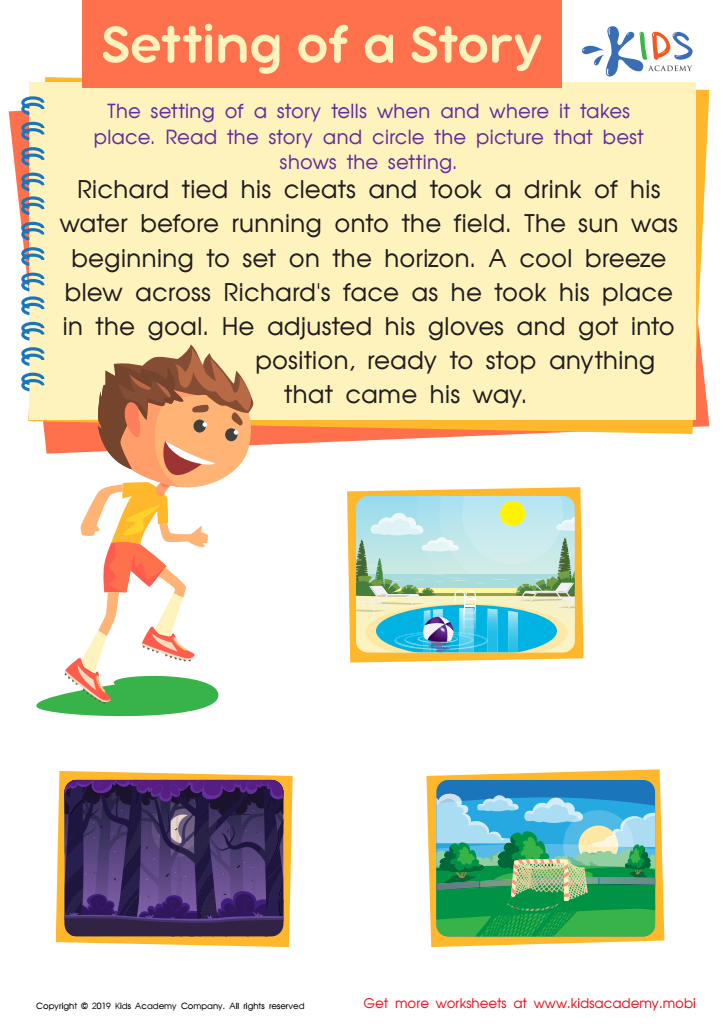
Setting of a Story Worksheet
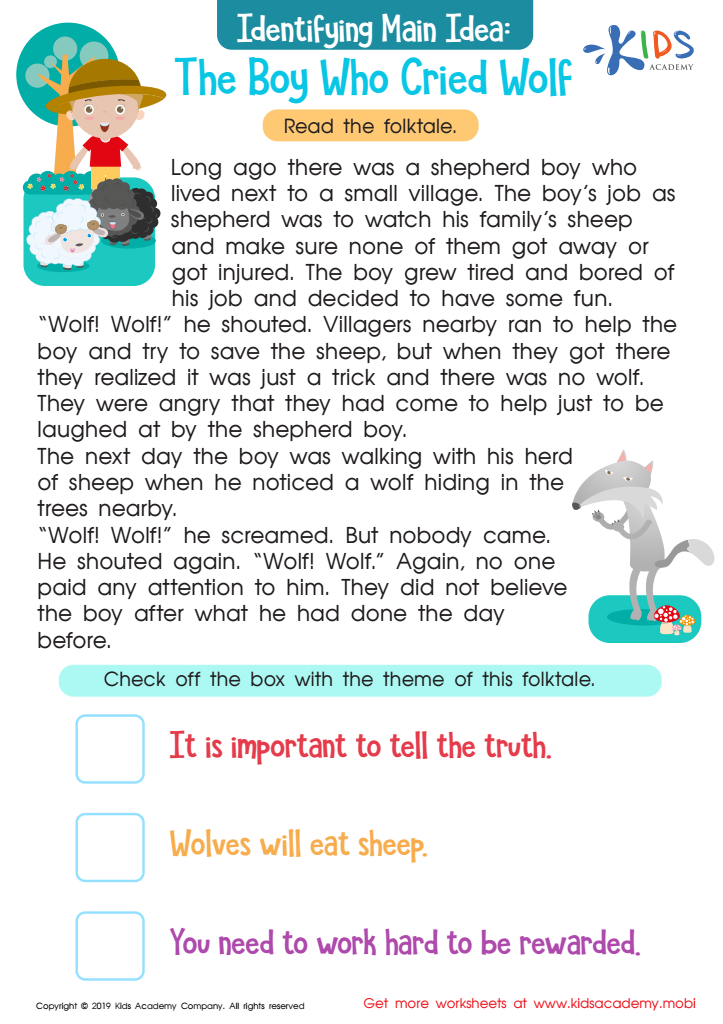
The Boy Who Cried Wolf Part 2 Worksheet








Parents and teachers should prioritize fostering critical thinking skills through reading fiction because these activities are fundamental to a child's intellectual development. Fiction, in particular, offers diverse situations, characters, and moral dilemmas that compel children to analyze, synthesize, and evaluate information—a process at the heart of critical thinking.
When students delve into fictional stories, they're encouraged to explore various perspectives, understand complex motivations, and recognize the consequences of actions, which cultivates empathy and deeper cognitive processing. This, in turn, aids in improving problem-solving abilities, creativity, and the capacity to navigate through real-life issues by applying learned reasoning skills.
Engaging with fiction also enhances comprehension and interpretation capabilities. As children parse through plots and character arcs, they become adept at identifying implicit meanings and making inferences. Teachers and parents can guide these explorations, initiating discussions that challenge youngsters to consider why characters act as they do or how different endings could change the narrative arc.
Ultimately, nurturing critical thinking through reading fiction equips children with analytical skills necessary for academic success and informed citizenship. It's an investment in developing inquisitive, reflective, and capable thinkers who can critically engage with the world around them.








