Visual interpretation Reading Fiction Worksheets
5 filtered results
-
From - To
Unlock the magic of storytelling with our Visual Interpretation Reading Fiction Worksheets by Kids Academy. These innovative printables are designed to enhance children's comprehension and imagination by pairing captivating visuals with engaging fiction texts. Perfect for early learners, these worksheets help kids develop critical thinking and interpretive skills as they draw connections between images and stories. Foster a deeper understanding and appreciation for literature with fun, interactive exercises specially crafted to support young readers on their literacy journey. Empower your child to become a confident, creative reader with our expertly designed resources. Ideal for both classroom use and home study.
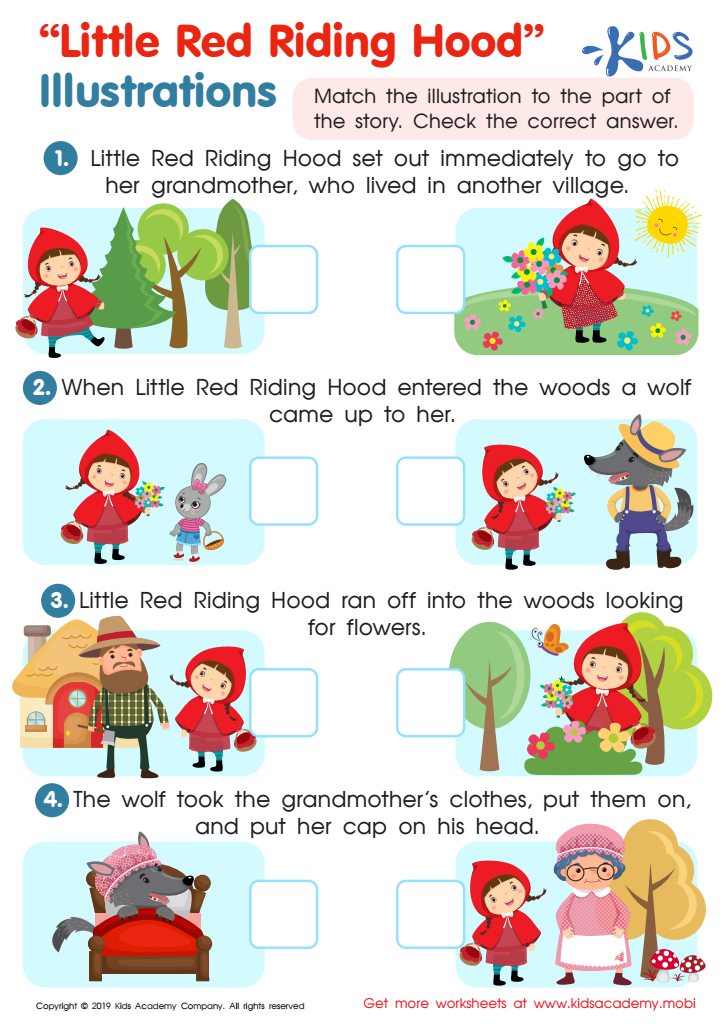
Little Red Riding Hood: Illustrations Worksheet
 Assign to My Students
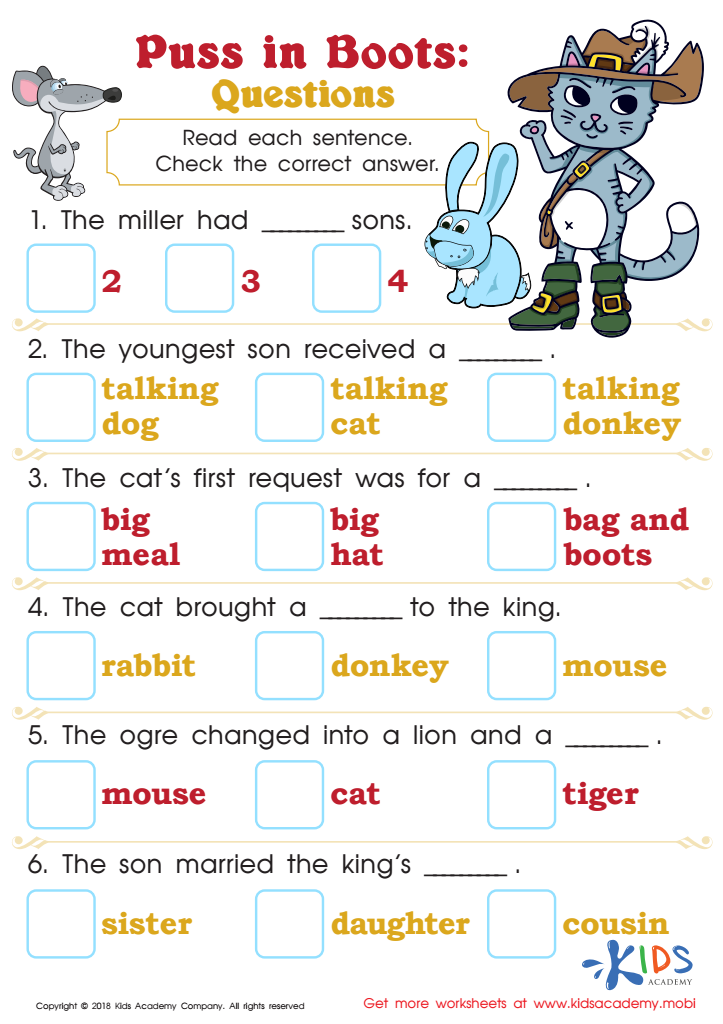
Puss in Boots: Questions Worksheet
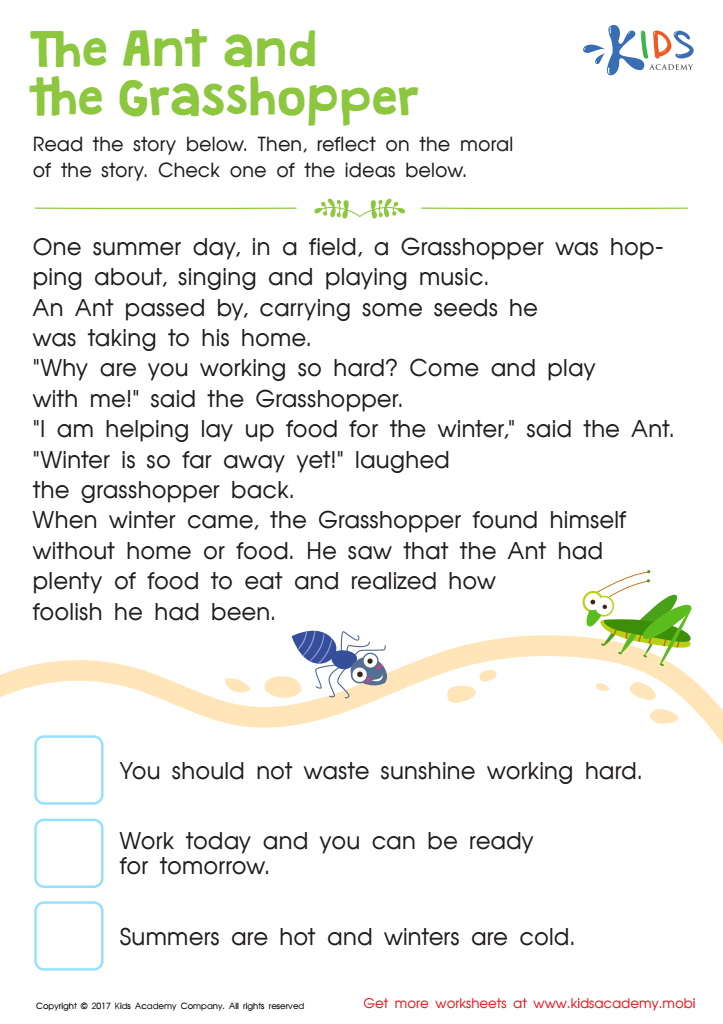
The Ant and The Grasshopper Printable
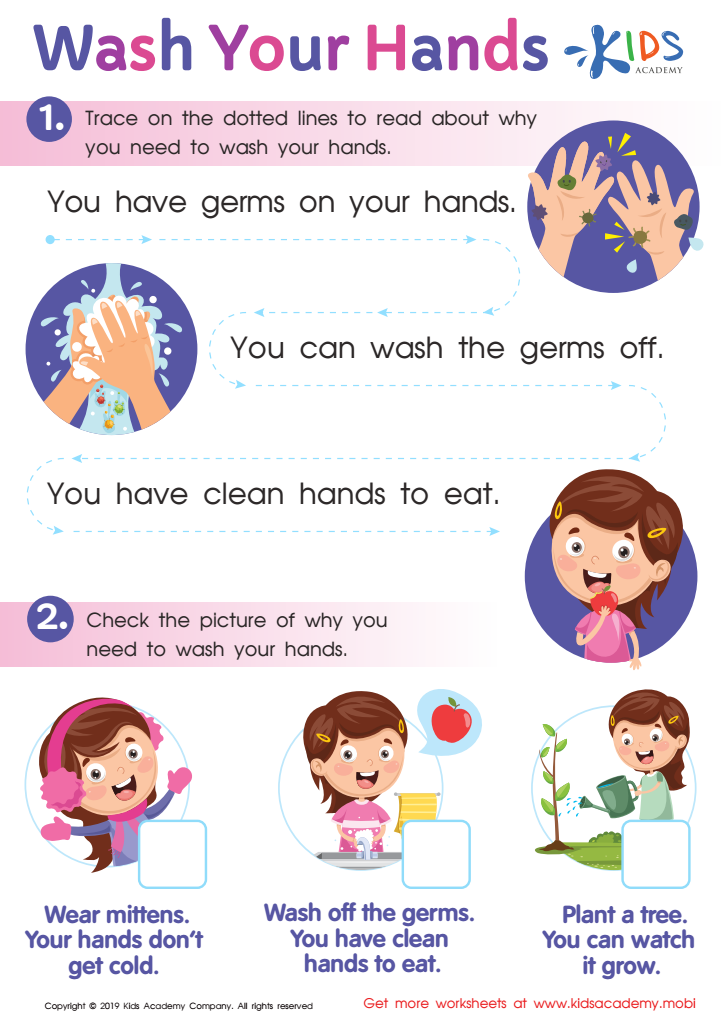
Wash Your Hands Worksheet
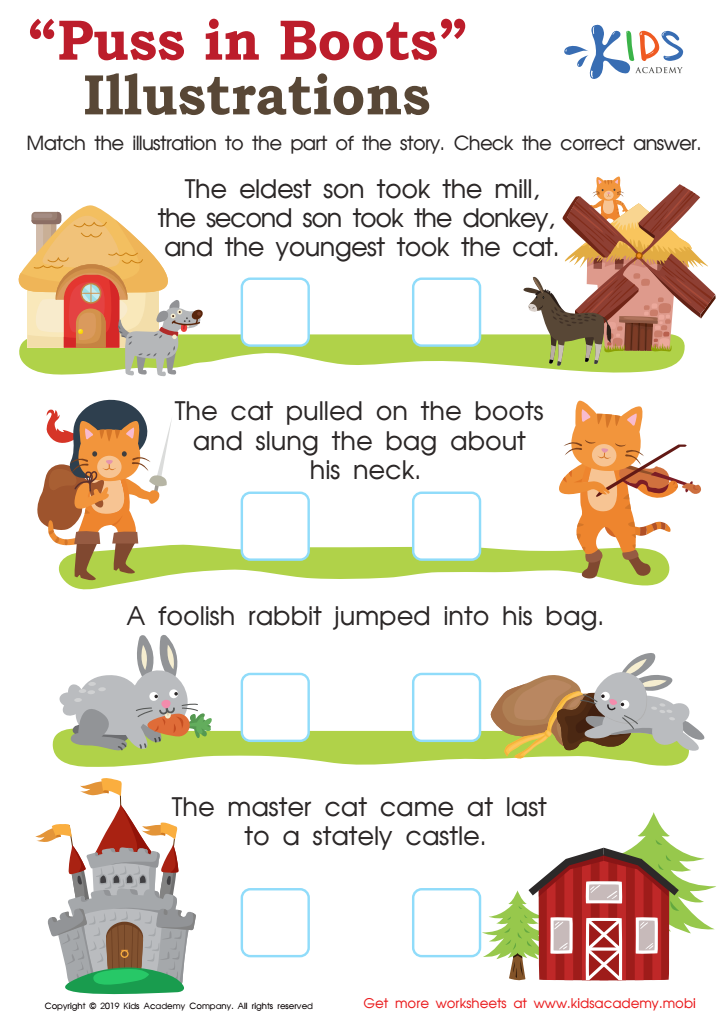
Puss in Boots Illustrations Worksheet







Visual interpretation of reading fiction plays a vital role in fostering a child's imagination and cognitive development. By connecting images with text, children can better understand and remember story elements, enhancing literacy skills and comprehension. When kids visualize scenes as they read, they become more engaged and invested in the narrative, which encourages a lifelong love of reading.
For parents and teachers, encouraging visual interpretation helps children to think creatively and critically. As they visualize settings, characters, and events, they're developing important skills such as attention to detail, inferencing, and the ability to grasp abstract concepts. These abilities are not only crucial for academic success but also for real-world problem-solving and emotional intelligence.
Moreover, visualizing fiction helps children empathize with characters and understand diverse perspectives, fostering inclusivity and emotional development. It makes complex narratives accessible and relatable, bridging gaps between different cultures and experiences.
Incorporating visual interpretation strategies, such as drawing scenes or creating story maps, into reading activities, can make literature more interactive and enjoyable. Parents and teachers should care about nurturing these skills because they lay the foundation for strong reading abilities, enhance creative thinking, and promote a deeper, more empathetic understanding of the world around them.








