Filters

7 filtered results

Clear all filters
Favorites
With answer key
Interactive

7 filtered results

Difficulty Level

Grade


Enhance your students' vocabulary with our engaging Vocabulary Development Reading Fiction Worksheets! Tailored for early learners, these worksheets focus on enriching language skills through fun and interactive activities based on captivating fictional texts. With a variety of exercises, children will explore new words, contexts, and meanings, transforming their reading experience. Our resources encourage critical thinking and comprehension, ensuring a well-rounded approach to vocabulary acquisition. Perfect for classroom use or at-home learning, these worksheets foster a love for reading while developing essential language skills. Help your students unlock the world of words today with our thoughtfully designed resources.

Check out this FREE Trial Lesson on Reading Fiction!

Compare and Contrast the Experiences of Characters in Familiar Stories

Favorites
With answer key
Interactive
  • Vocabulary development
  • Reading Fiction
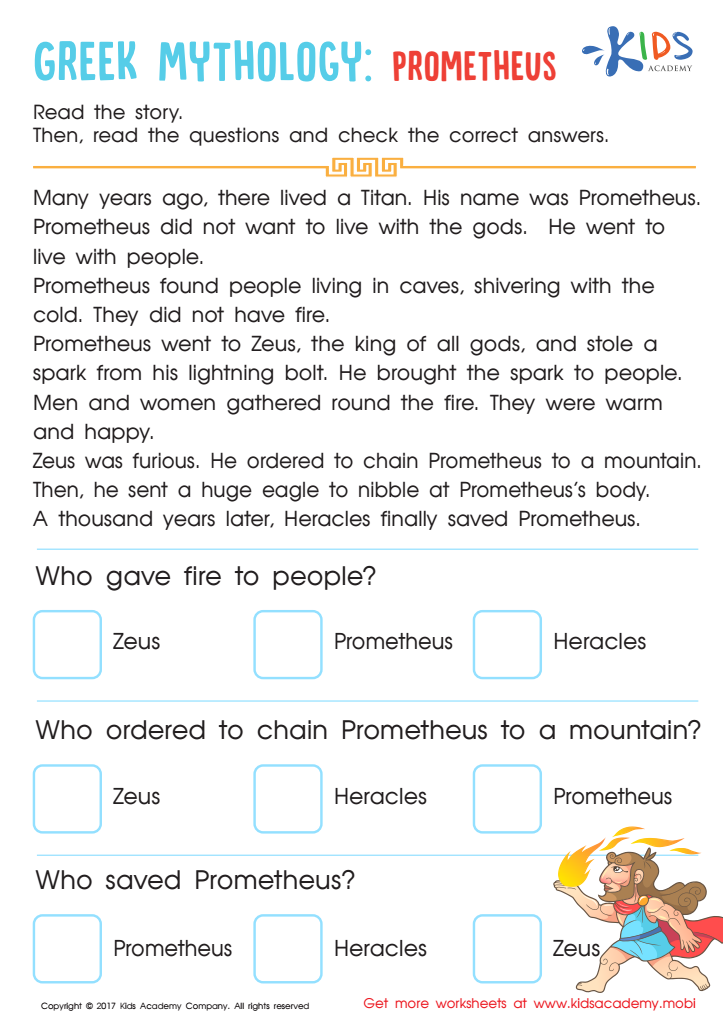
Prometheus story worksheet

Prometheus Story Worksheet

Help kids improve reading comprehension with this Prometheus story worksheet! Learn about this classic mythological tale and break down the plot into understandable parts. By doing so, children will understand the story each step of the way.
Prometheus Story Worksheet
Worksheet
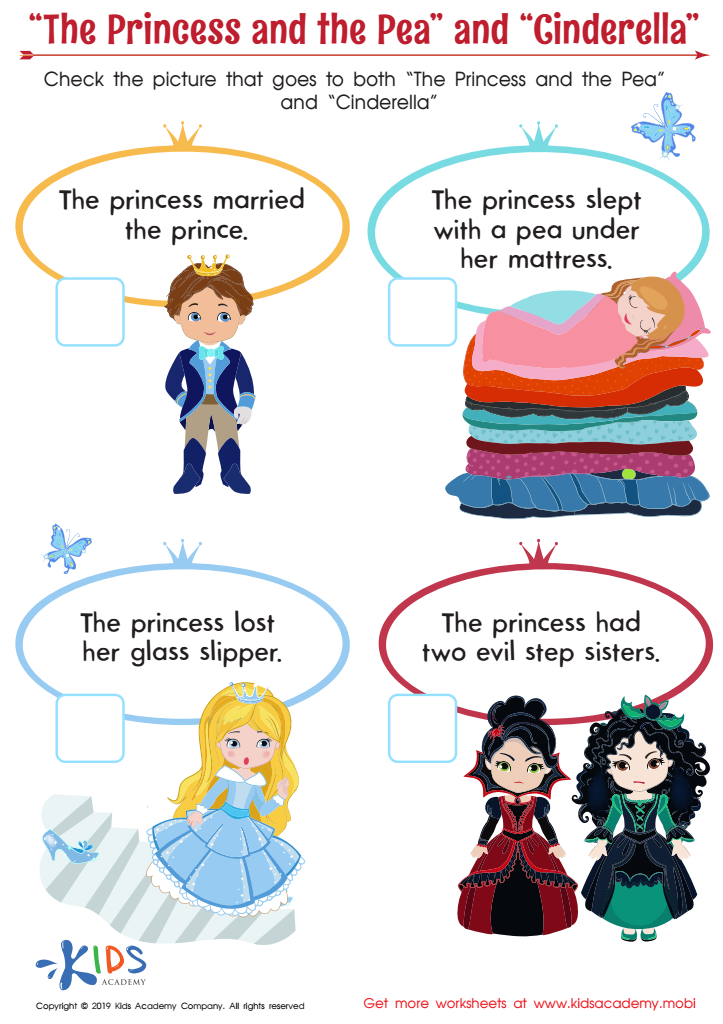
“The Princess and the Pea” and “Cinderella” Worksheet

“The Princess and the Pea” and “Cinderella” Worksheet

Read "Cinderella" and "The Princess and the Pea" to your little ones. Ask them what their favorite parts were and what similarities they found in the princesses. This worksheet has four pictures of scenes from the stories. Ask your kids which picture goes with both tales.
“The Princess and the Pea” and “Cinderella” Worksheet
Worksheet
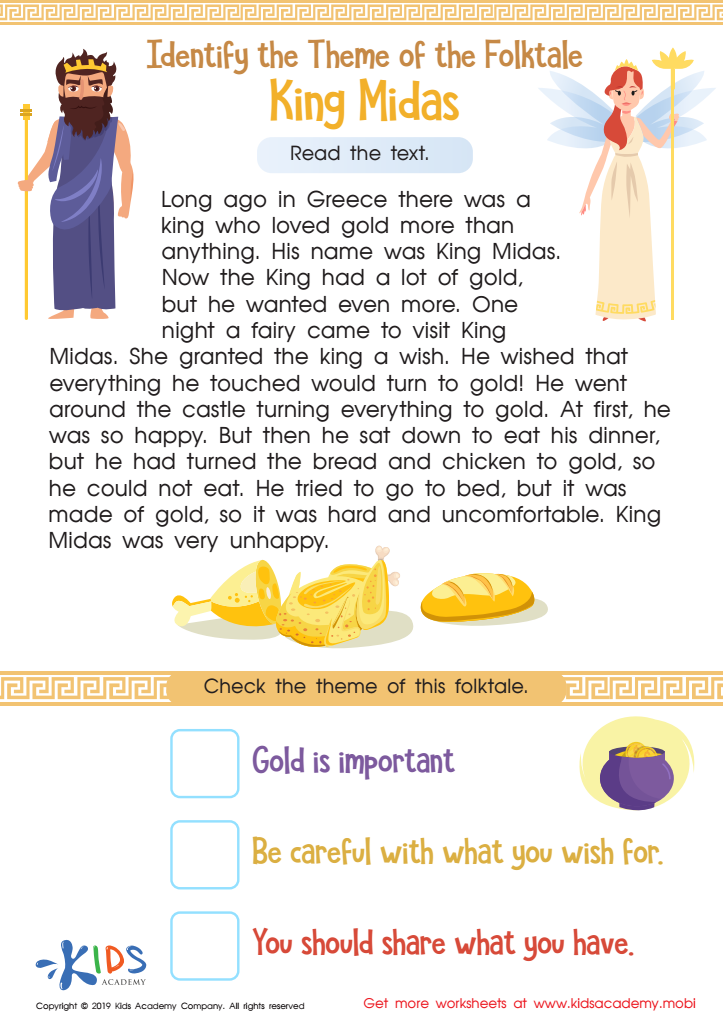
King Midas Worksheet

King Midas Worksheet

Read the ancient Greek history of King Midas to your kids. If they're into Greek gods and mythology, they'll be excited to complete the exercise. Read the text carefully, and if needed, twice. Help your kids locate the story's theme at the bottom of the page. 80 words.
King Midas Worksheet
Worksheet
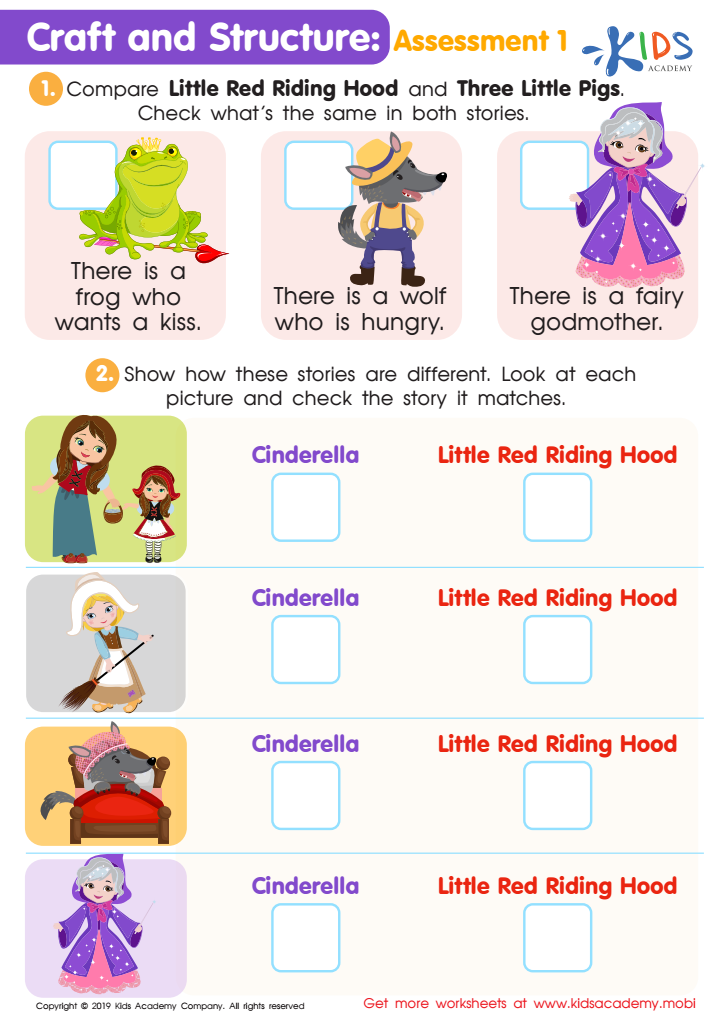
Craft and Structure: Assessment 1 Worksheet

Craft and Structure: Assessment 1 Worksheet

Fairytales are a great way to bond with your kids while teaching them. Popular stories include Little Red Riding Hood and Three Little Pigs. Test how well they understood these two with this assessment worksheet. Ask them to compare the two stories and check what is the same. Doing this will help kids learn new words and sentence construction, as well as teaching them life lessons.
Craft and Structure: Assessment 1 Worksheet
Worksheet
Finding Character Traits Worksheet

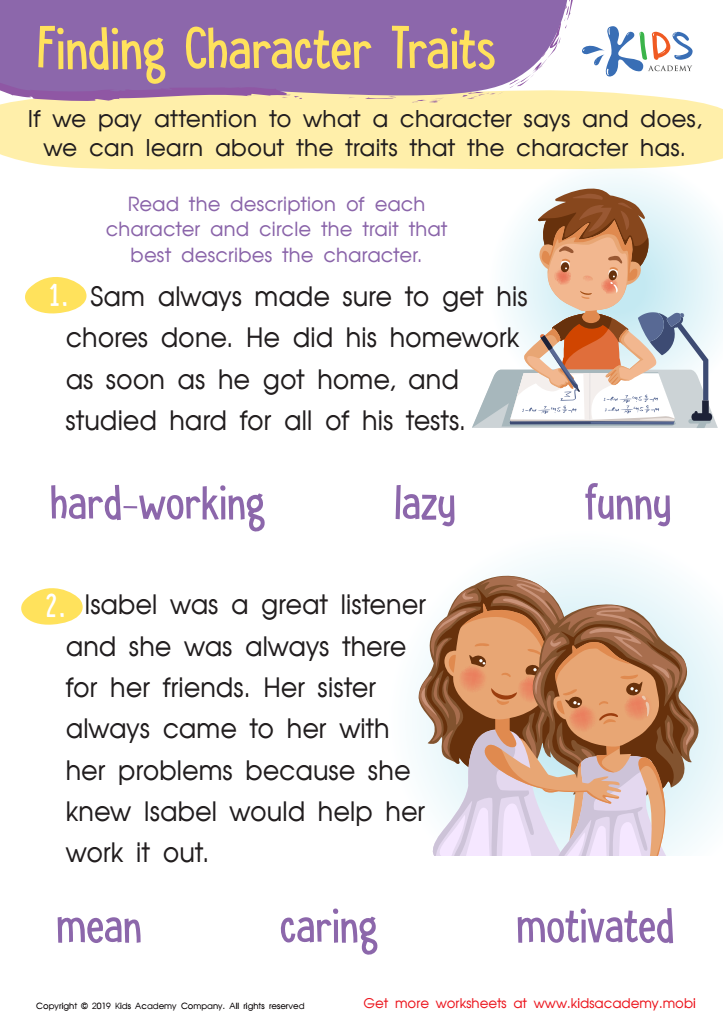
Finding Character Traits Worksheet

Before you start, make sure your kids know the difference between a character trait and a feeling. Traits are part of a character's entire personality and can be inferred from what they say and do in a story. Read the character descriptions on the worksheet and help your kids circle the best trait for each.
Finding Character Traits Worksheet
Worksheet
Craft and Structure of Informational Texts: Assessment 1 Worksheet

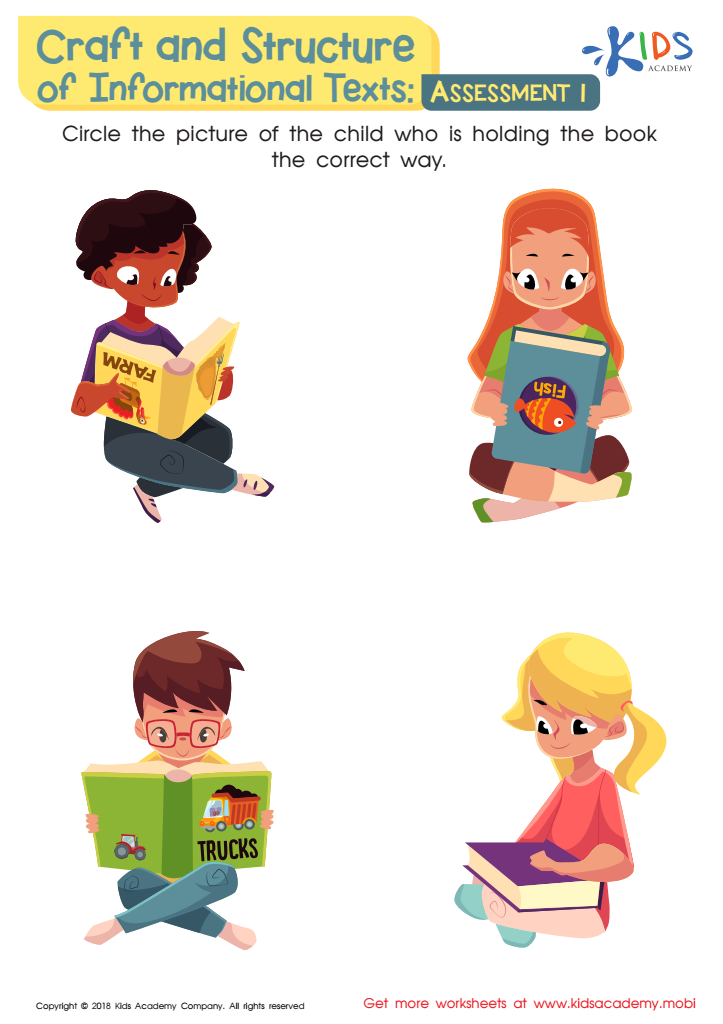
Craft and Structure of Informational Texts: Assessment 1 Worksheet

Young children need to know how to hold books correctly when they start reading. This assessment worksheet helps them show they know what to do. They'll look at the pictures and circle the child who is holding the book correctly. It's a great way to tell they are well on their way to becoming lifetime readers!
Craft and Structure of Informational Texts: Assessment 1 Worksheet
Worksheet
Who, What, Where? Worksheet


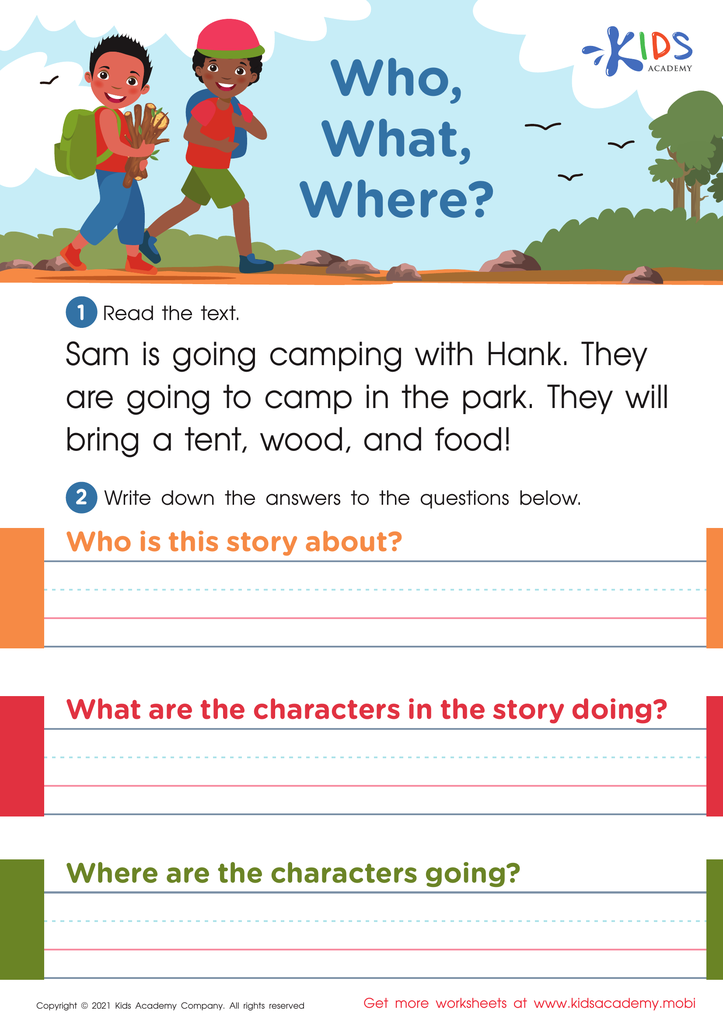
Who, What, Where? Worksheet

The availability of technology has changed the way students learn and interact with their environment in a very meaningful way. Technology has revolutionized learning and interaction for students. It offers an array of opportunities to engage with their surroundings, leading to a more meaningful educational experience.
Who, What, Where? Worksheet
Worksheet


Vocabulary development is crucial for young learners, as it forms the foundation for effective communication and comprehension skills. Reading fiction plays a vital role in this process, providing children with rich language exposure and diverse contexts in which words can be understood and applied.

When children engage with fictional texts, they encounter varied vocabulary in context, aiding retention and understanding. Stories introduce them to different characters, settings, and experiences, expanding their ability to articulate thoughts, feelings, and ideas. Moreover, as children navigate the narratives, they learn new words naturally and see how language can convey nuances and emotions.

Parents and teachers should prioritize vocabulary development through reading fiction because it enhances overall academic success. A robust vocabulary is linked to improved reading comprehension, which is essential for mastering all subjects in school. Furthermore, strong vocabulary skills foster critical thinking and creativity, allowing children to express themselves more clearly and confidently.

Encouraging a love for reading in fiction not only bolsters vocabulary but also nurtures imagination and empathy, leading to well-rounded, articulate individuals. By supporting vocabulary development through engaging stories, parents and teachers can significantly influence children's social and academic trajectories.