Animal identification Reading Non-Fiction Worksheets
4 filtered results
-
From - To
Discover our engaging Animal Identification Reading Non-Fiction Worksheets designed to enhance your child's reading and comprehension skills. These printable resources offer fascinating facts and vivid illustrations to help students identify and learn about various animals. Perfect for early learners, each worksheet includes exercises that develop critical thinking, vocabulary, and scientific knowledge. Encourage your child's curiosity and love for reading with our fun and educational worksheets. Explore the world of animals today and build a strong foundation for future learning. Start your adventure in animal identification with Kids Academy!
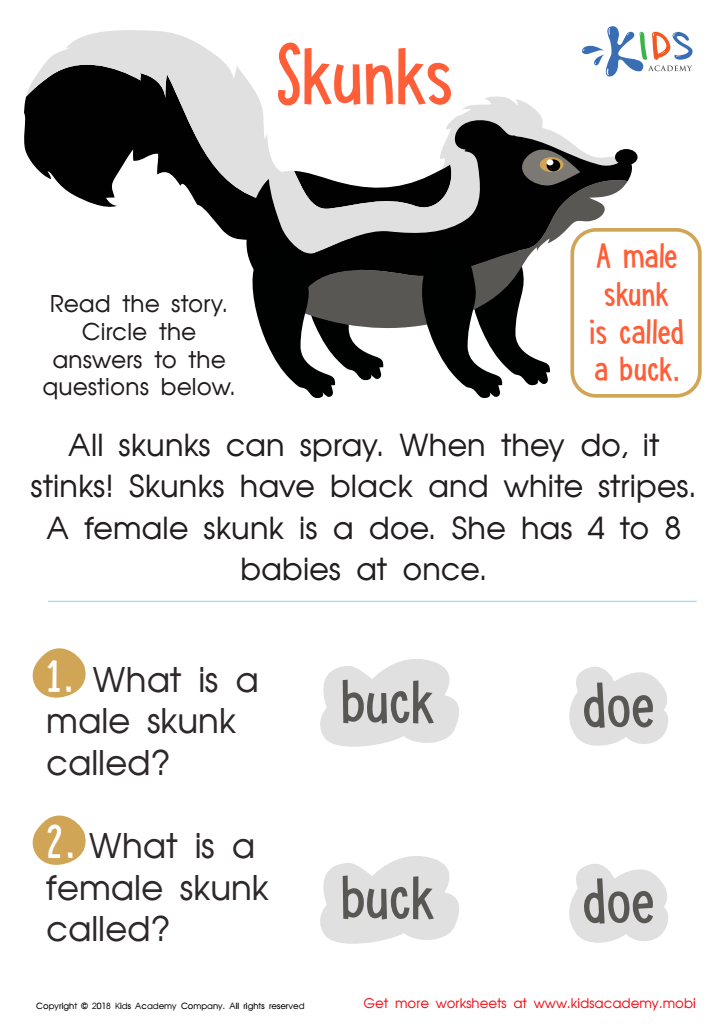
Skunks Worksheet
 Assign to My Students
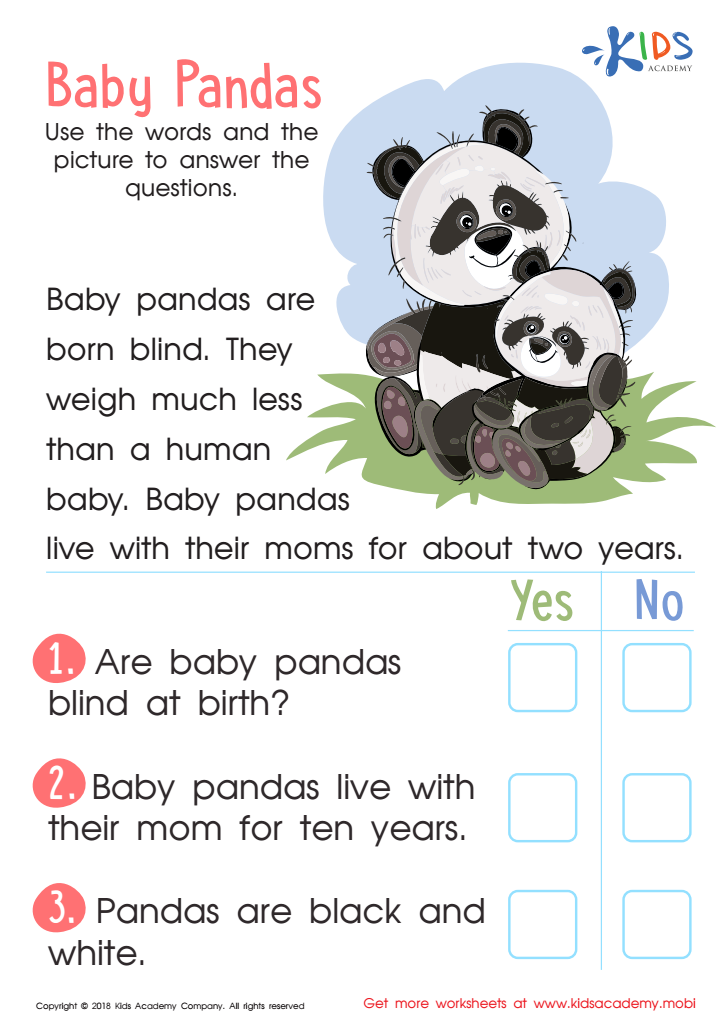
Baby Pandas Worksheet
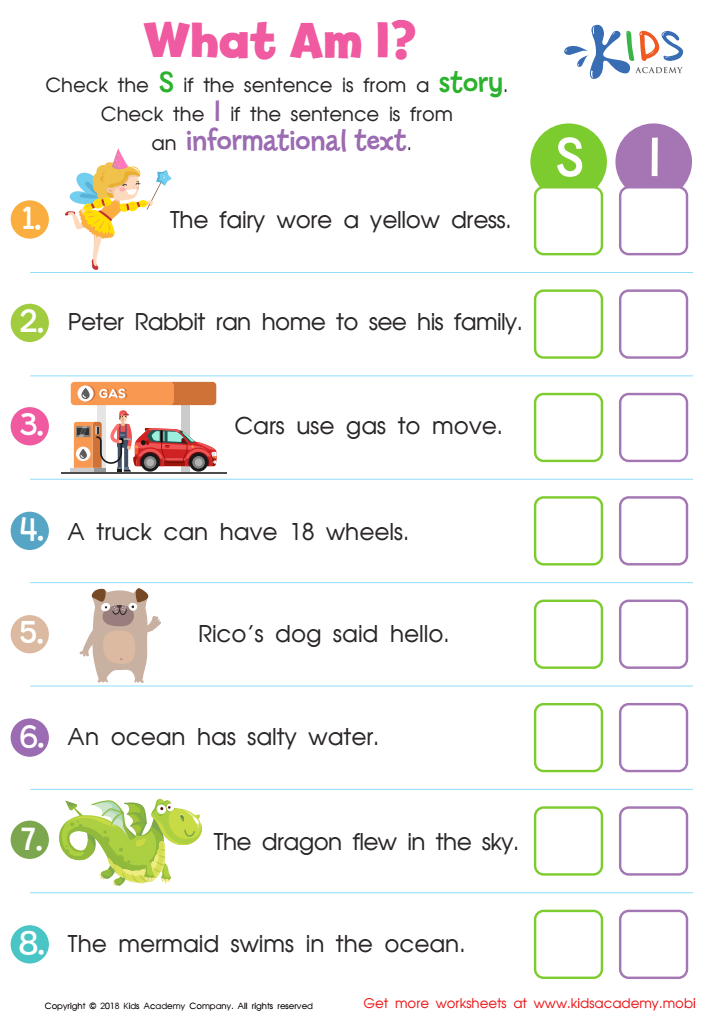
What Am I? Worksheet
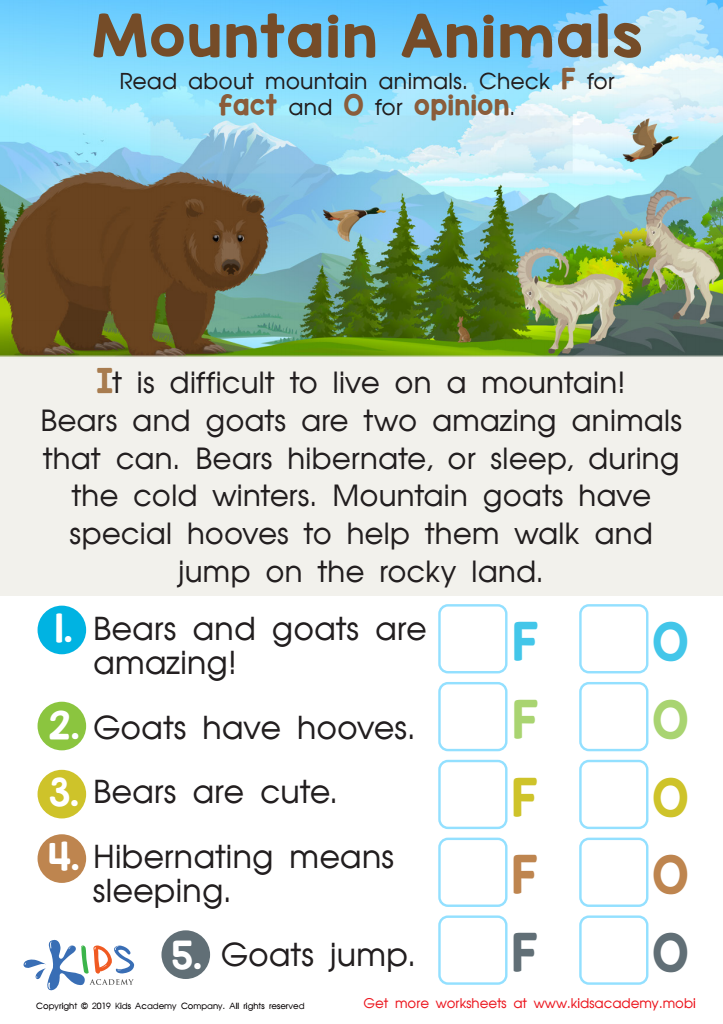
Mountain Animals Worksheet








Understanding animal identification in non-fiction reading is important for young learners because it lays a foundation for broader educational and personal benefits. When students read non-fiction texts about animals, they gain critical literacy skills that go beyond simple word recognition. These texts expose them to new vocabularies, concepts, and factual information, enhancing their ability both to comprehend and reproduce complex information.
Moreover, animals fascinate children, making learning about them an engaging way to foster a love for reading. This inherent interest helps build concentration, curiosity, and a habit of lifelong learning. Parents and teachers should capitalize on this by encouraging regular interaction with non-fiction material about animals.
Learning about animal identification also promotes scientific thinking and awareness of biodiversity. Students learn about different species, their habitats, and relationships with ecosystems. This knowledge fosters empathy and respect for the natural world, important values in today’s context of environmental conservation.
Additionally, it helps develop observational skills and attention to detail, crucial for academic success across all subjects. Parents and teachers who focus on incorporating animal-identification non-fiction texts in early education therefore contribute to building well-rounded, knowledgeable, and empathetic individuals ready to tackle future academic and real-world challenges.








