Color recognition Reading Non-Fiction Worksheets
3 filtered results
-
From - To
Color Recognition Reading Non-Fiction Worksheets are engaging tools designed for early learners to enhance both color recognition and reading skills. These worksheets integrate vivid illustrations with informative non-fiction content, captivating young minds while imparting essential knowledge about the world. Ideal for classrooms and homeschool settings, they support cognitive development by combining visual learning with reading practice. Each worksheet encourages interaction and curiosity, making learning a delightful adventure. Available in varied topics, these resources nurture a child's ability to identify and differentiate colors while fostering a love for reading. Perfect for educators and parents aiming to build a strong educational foundation.
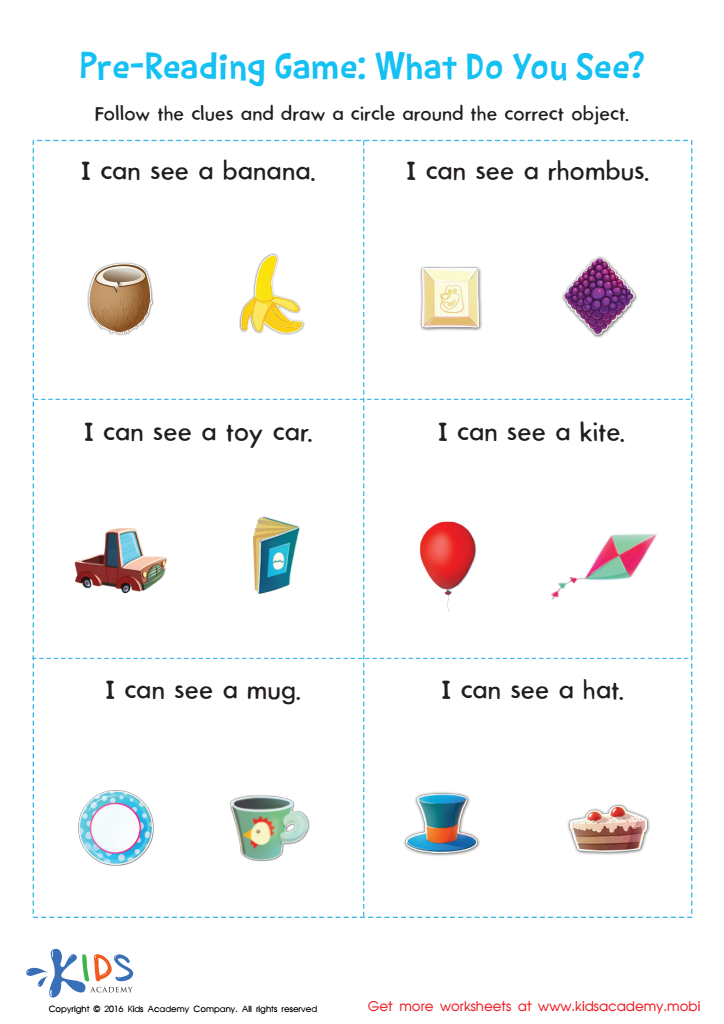
Pre–reading Worksheet: What Do You See?
 Assign to My Students
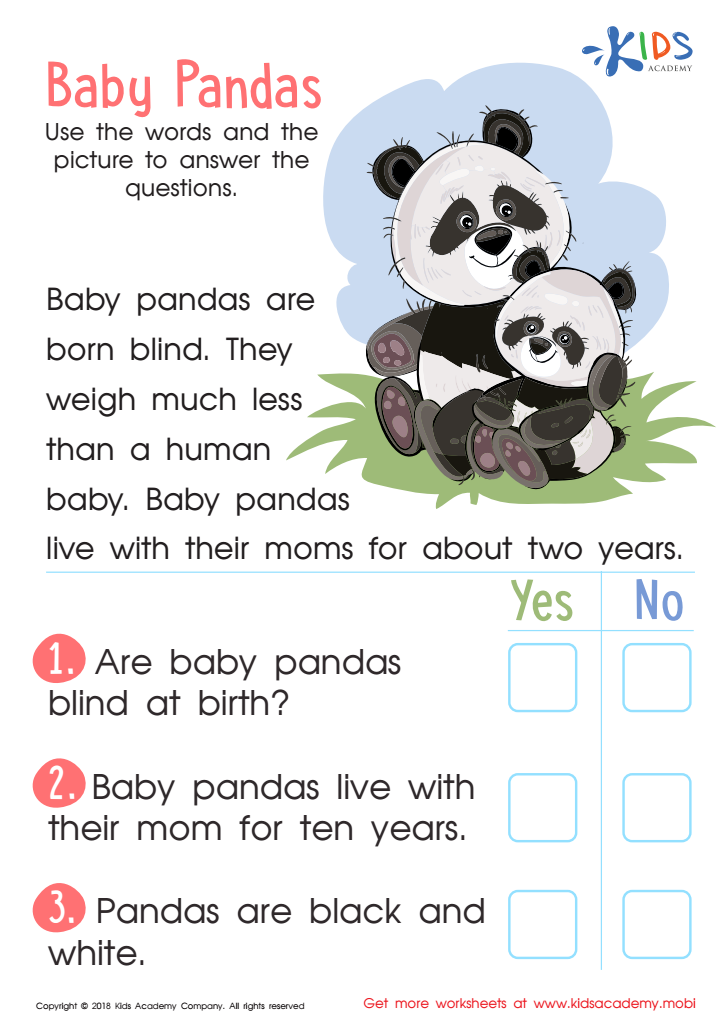
Baby Pandas Worksheet
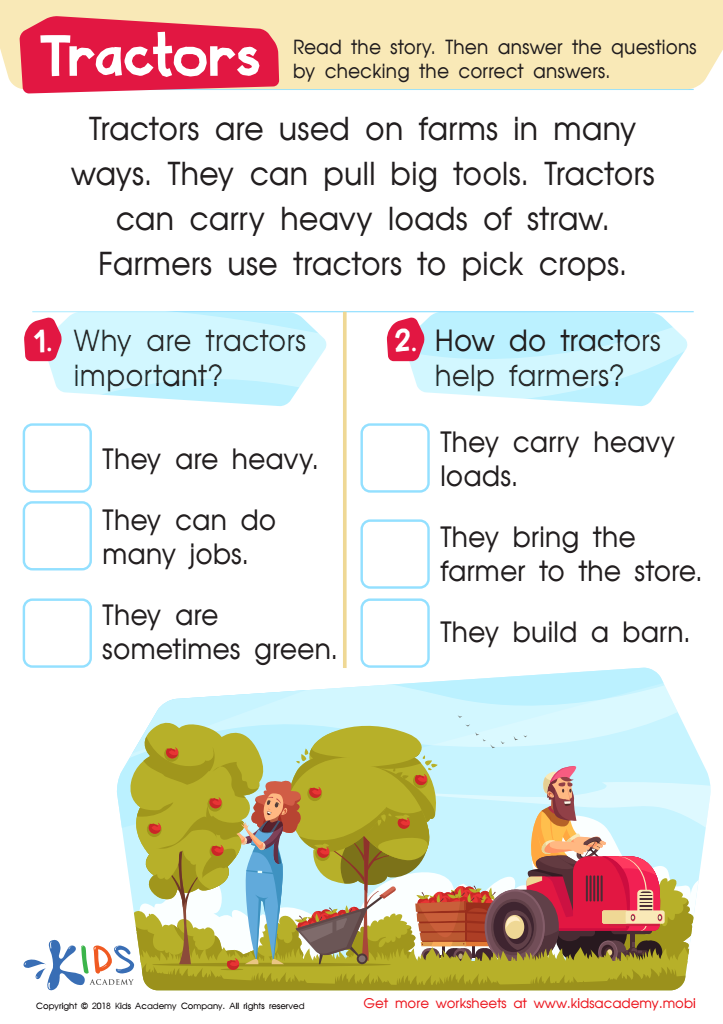
Tractors Worksheet








Color recognition and reading non-fiction are both pivotal aspects of early childhood education, and parents and teachers should understand their importance for several reasons.
Color recognition is foundational to a child’s cognitive and language development. When children learn to identify and name colors, they enhance their vocabulary, which is crucial for effective communication. This skill also aids in sorting and categorizing objects, promoting logical thinking and organization. Moreover, color recognition is linked to early mathematics skills, as identifying similarities and differences in colors can help lay the groundwork for recognizing shapes and patterns.
Reading non-fiction, on the other hand, nurtures curiosity and broadens a child’s knowledge base. Non-fiction exposes children to real-world concepts, facts, and phenomena, fostering a sense of discovery and encouraging critical thinking. By engaging with non-fiction texts, children develop an understanding of how to obtain and process information, a crucial skill for lifelong learning. It also builds reading comprehension and vocabulary, as non-fiction often introduces new terminology and varied language structures.
Combining color recognition and non-fiction reading can create a dynamic and effective learning environment. Parents and teachers who emphasize these areas help children develop essential cognitive skills, cultivate a love for learning, and prepare them for future academic challenges.








