Filters

9 filtered results

Clear all filters
Favorites
With answer key
Interactive

9 filtered results

Difficulty Level

Grade


Enhance students' analytical skills with our "Critical Thinking Reading Non-Fiction Worksheets." Designed for young learners, these printable activities challenge students to evaluate information, make inferences, and form logical conclusions from non-fiction texts. Each worksheet promotes reasoning and problem-solving abilities through engaging exercises that foster a deeper understanding of content. Perfect for classroom use or at-home learning, our resources support curriculum standards while encouraging curiosity and intellectual growth. By integrating these worksheets, educators can provide a dynamic learning experience that cultivates critical thinkers ready to navigate a complex world.

Check out this FREE Trial Lesson on Reading Non-Fiction!

Identify Text Features

Favorites
With answer key
Interactive
  • Critical Thinking
  • Reading Non-Fiction
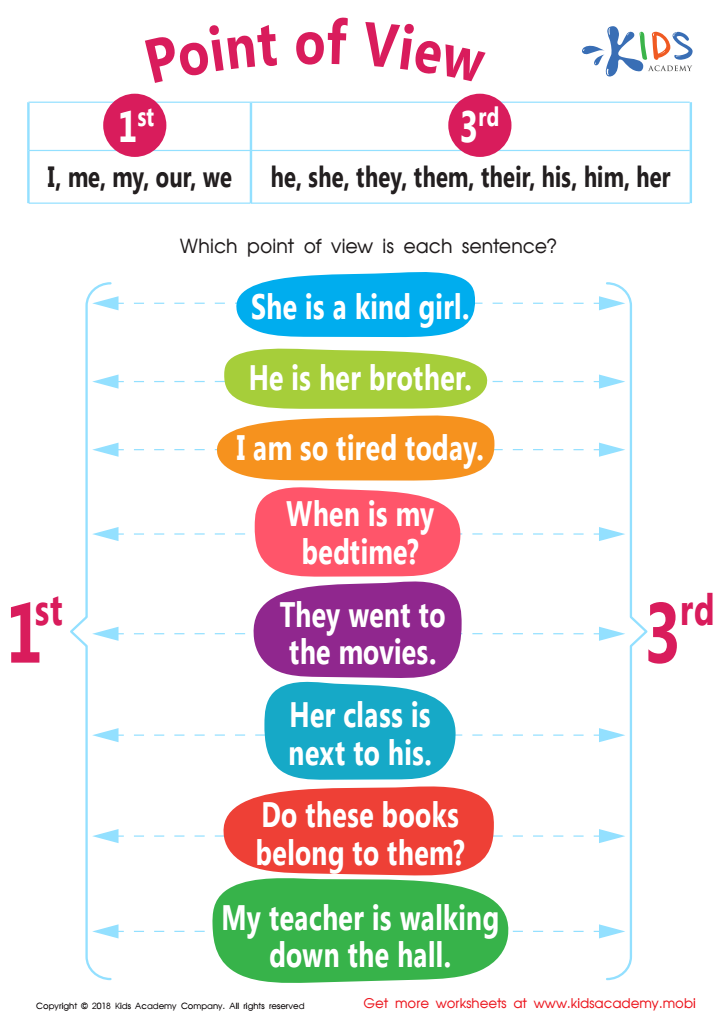
Point of View Worksheet

Point of View Worksheet

This printable worksheet helps kids understand Point of View by providing 1st and 3rd person choices. It's a fun way to practice differentiating between the two viewpoints and improve their reading comprehension. Match the sentences to 1st or 3rd person to strengthen understanding and enjoy the task!
Point of View Worksheet
Worksheet
Book Bingo Worksheet

Book Bingo Worksheet

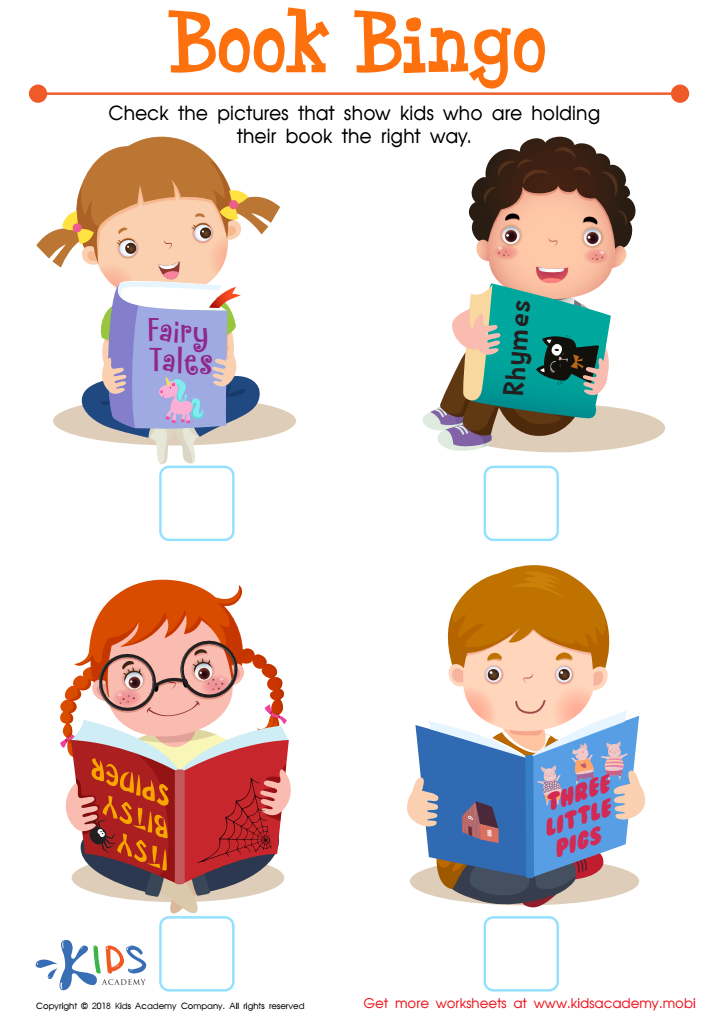
Help your kids spot which of the kids in the worksheet are reading correctly. Early instruction in reading helps ensure kids won't face problems later on, plus any impairments can be identified and corrected quickly. Can your child read? Have them check the pictures of kids holding books the right way.
Book Bingo Worksheet
Worksheet
Explanatory Writing Worksheet

Explanatory Writing Worksheet

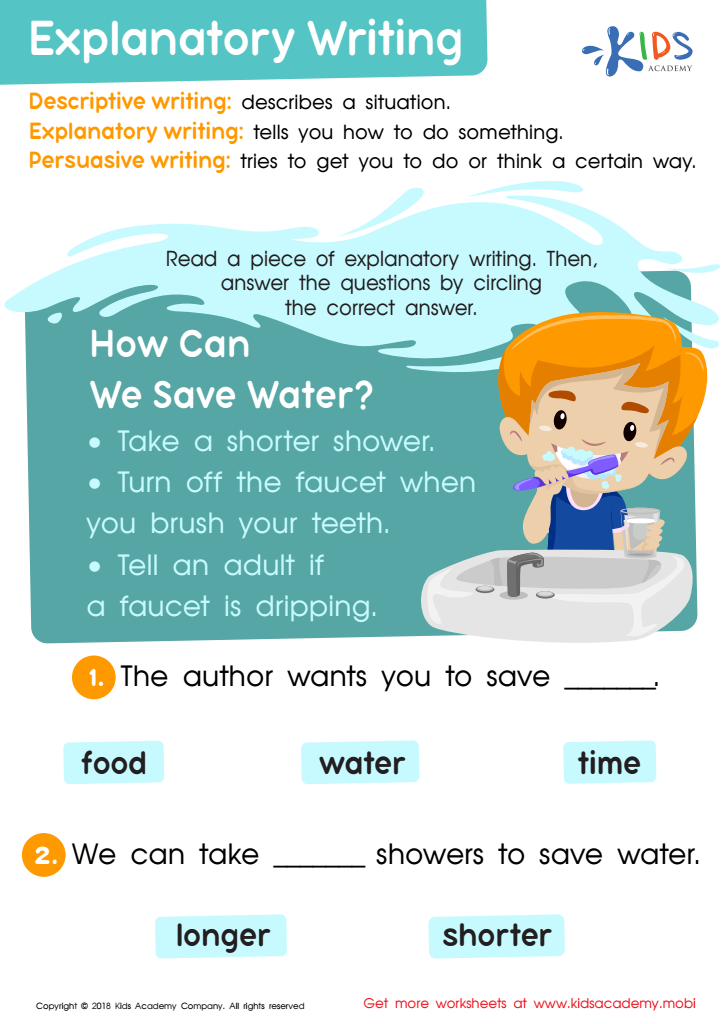
This worksheet teaches kids the three main types of writing. Descriptive writing describes a situation, explanatory writing explains how to do something, and persuasive writing is used to sway readers' opinions. Read the text and help your kids answer the questions by circling the right answer.
Explanatory Writing Worksheet
Worksheet
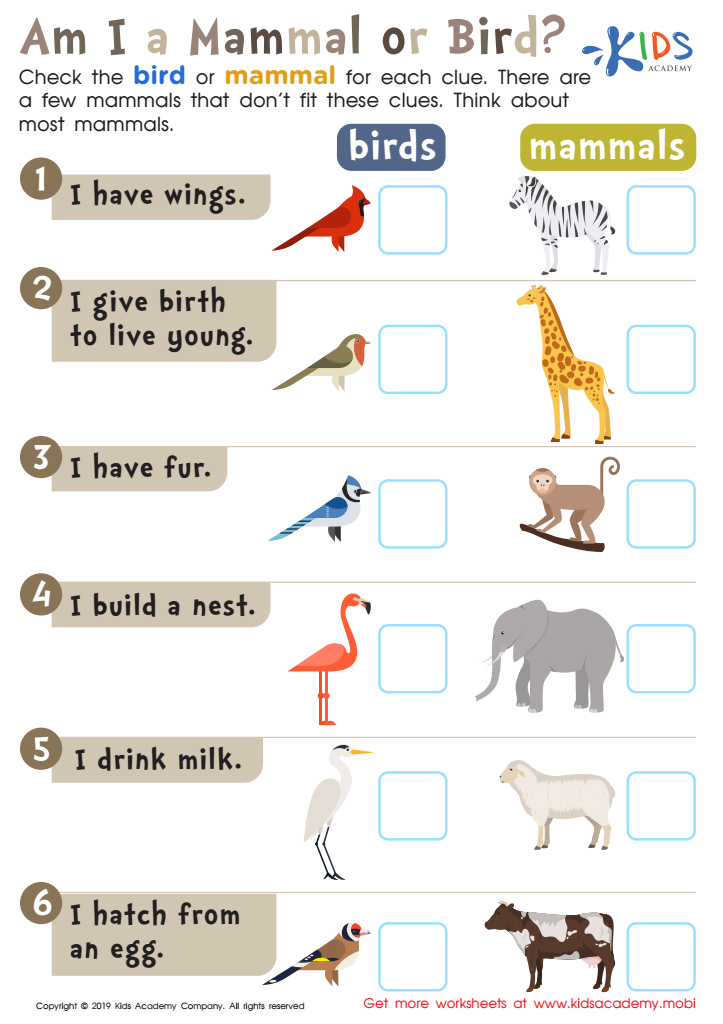
Am I a Mammal or Bird? Worksheet

Am I a Mammal or Bird? Worksheet

We categorize animals into groups such as mammals, birds, reptiles, etc. This worksheet helps kids understand the difference between birds and mammals. Read through the clues and think about each one. Then decide if it describes a bird or mammal, check the box and complete!
Am I a Mammal or Bird? Worksheet
Worksheet
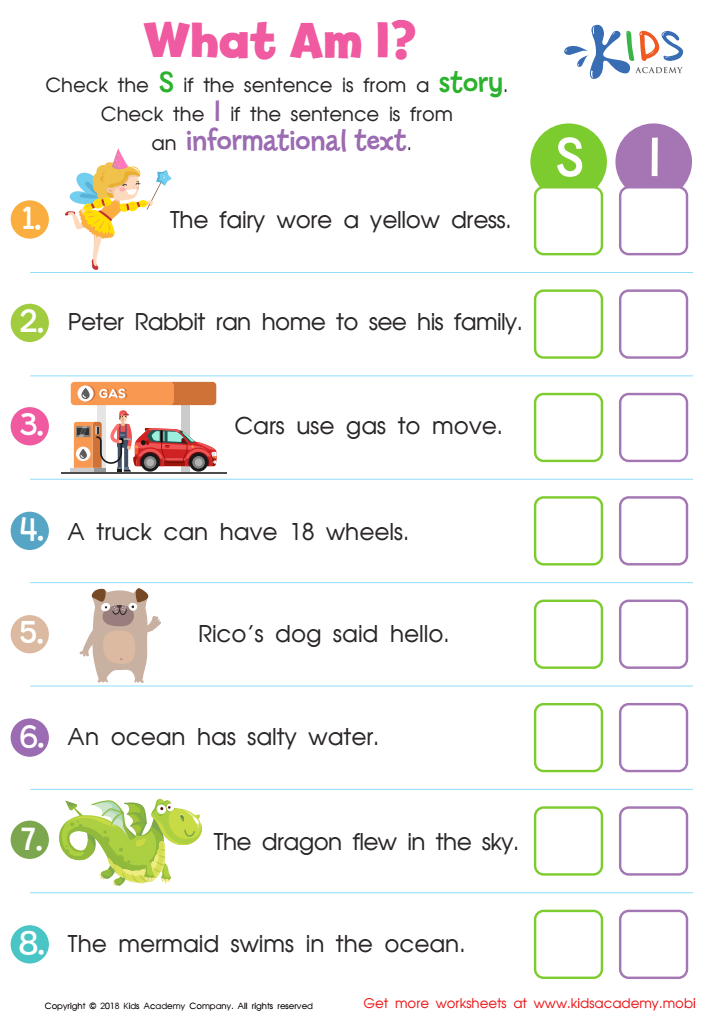
What Am I? Worksheet

What Am I? Worksheet

This worksheet assesses students' ability to differentiate between stories and texts they read for facts. Students learn to distinguish between reading for pleasure and reading for information. It includes statements from both a story and an informational text, and students must decide what type of text it is.
What Am I? Worksheet
Worksheet
Mountain Animals Worksheet

Mountain Animals Worksheet

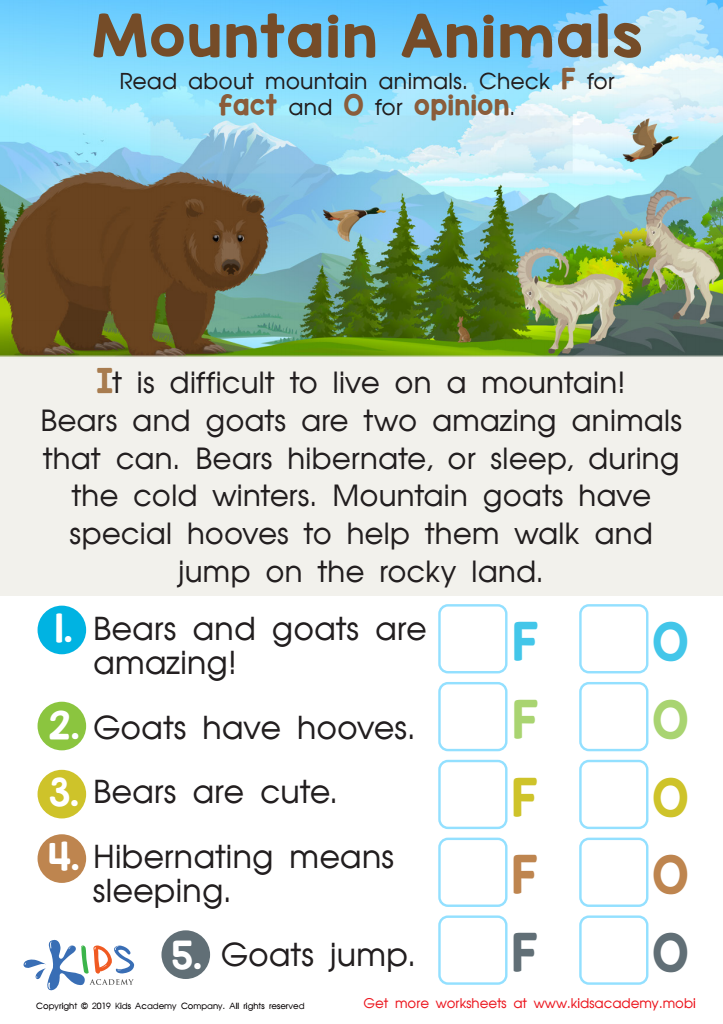
Is mountain wildlife amazing? Fact or fiction? Help your child sharpen critical-thinking skills with this engaging worksheet. Featuring a fun nonfiction passage about animals like bears and goats, your child will read through the text and identify each statement as fact or fiction. Perfect for boosting reading comprehension and analytical abilities!
Mountain Animals Worksheet
Worksheet
Craft and Structure of Informational Texts: Assessment 1 Worksheet

Craft and Structure of Informational Texts: Assessment 1 Worksheet

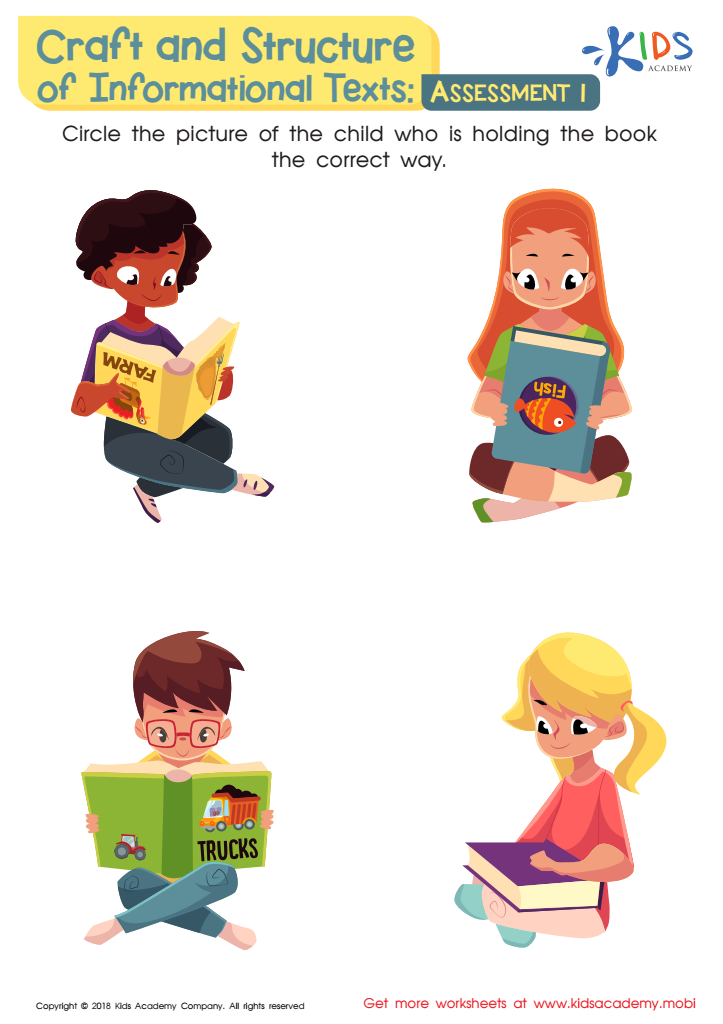
Young children need to know how to hold books correctly when they start reading. This assessment worksheet helps them show they know what to do. They'll look at the pictures and circle the child who is holding the book correctly. It's a great way to tell they are well on their way to becoming lifetime readers!
Craft and Structure of Informational Texts: Assessment 1 Worksheet
Worksheet
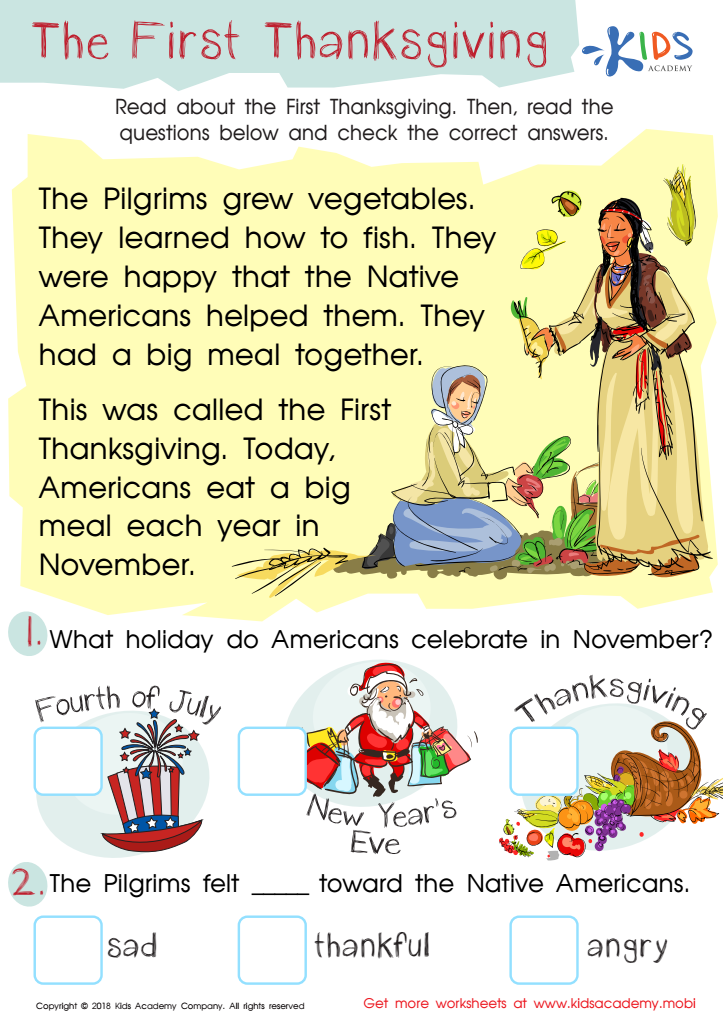
Assessment: First Thanksgiving Worksheet

Assessment: First Thanksgiving Worksheet

When the Pilgrims arrived in America in 1620, they met the Native Americans and formed a pact to live in harmony. The Native Americans taught the Pilgrims how to survive in the new land, which helped them celebrate the First Thanksgiving. Read this text to your children and help them answer the questions below.
Assessment: First Thanksgiving Worksheet
Worksheet
Ben Franklin Part 2 Worksheet


Ben Franklin Part 2 Worksheet

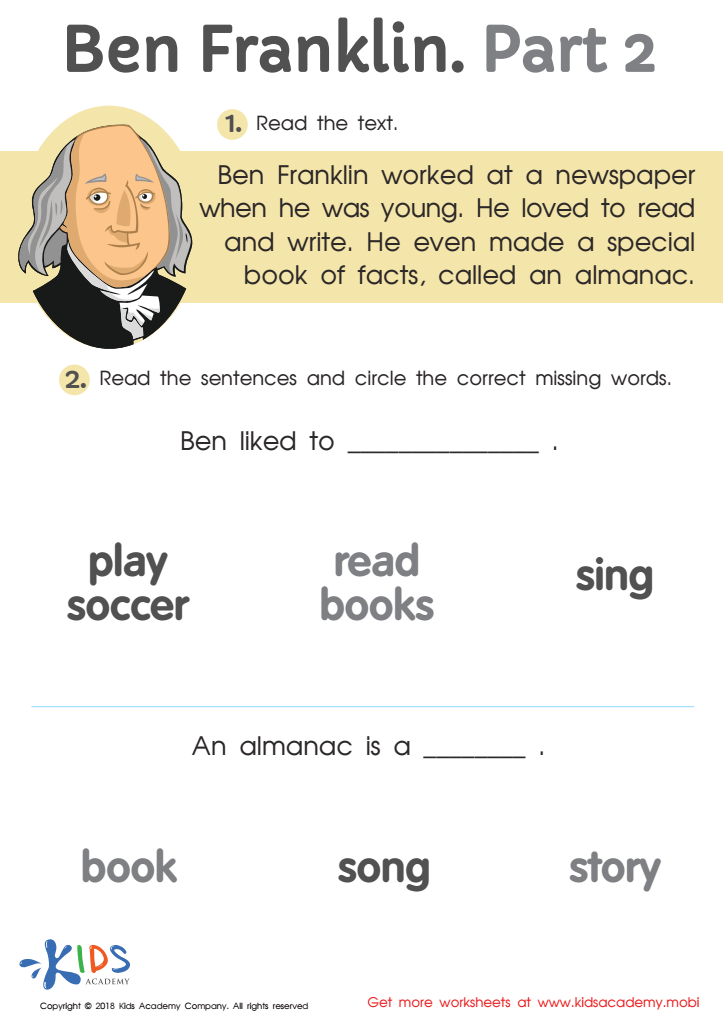
History is filled with great figures, like Benjamin Franklin. Let your kids in on the legacy by introducing them to the founder of the US fire department, diplomat, and inventor. Then, use a worksheet to have them fill in the blanks with the correct word to teach them more. Read the text, then read the sentences and have them circle the missing word.
Ben Franklin Part 2 Worksheet
Worksheet


Parents and teachers should care about critical thinking in reading non-fiction because it cultivates essential life skills in children. Engaging with non-fiction texts encourages students to analyze, evaluate, and comprehend information objectively. This helps them develop the ability to discern fact from opinion, leading to informed decision-making—a vital skill in today’s information-rich world.

Through critical thinking, children learn to question the authenticity and relevance of information, thereby becoming savvy consumers of media. Non-fiction texts often expose students to real-world issues, diverse perspectives, and scientific concepts, enriching their general knowledge. This clear, factual understanding fosters their curiosity and drives them to explore complex subjects further, promoting lifelong learning.

For parents, fostering critical thinking ensures that children grow up to be independent thinkers capable of rigorous, unbiased analysis. For teachers, it enhances classroom discussions and supports academic achievement across subjects, not just in reading but also in science, history, and social studies.

By prioritizing critical thinking in non-fiction reading, adults empower children with the tools to navigate the world's complexities thoughtfully and responsibly, laying a strong foundation for future success both academically and personally.