Alphabetical order understanding Grade 2 Letter Recognition Worksheets
4 filtered results
Difficulty Level
Grade
Age
-
From - To
Subject
Activity
Standards
Enhance your second grader’s letter recognition skills with our "Alphabetical Order Understanding Grade 2 Letter Recognition Worksheets." These engaging and educational worksheets are thoughtfully designed to help students master the sequence of the alphabet, a fundamental skill critical for literacy development. Through fun exercises, children will practice sorting and ordering letters, reinforcing their understanding of alphabetical order. Perfect for classroom or at-home learning, these worksheets support Grade 2 curriculum standards, making learning both effective and enjoyable. Boost your child's confidence in reading and writing by integrating these worksheets into their daily practice. Start exploring today for a brighter educational future!
Favorites
With answer key
Interactive
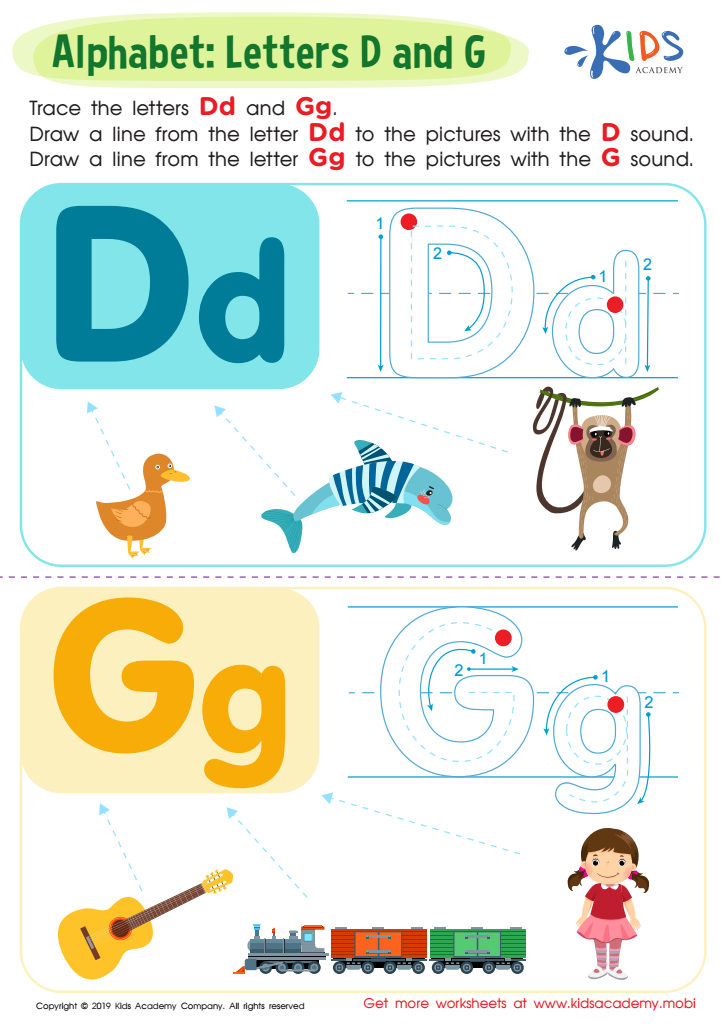
Letter D and G Tracing Worksheet
Kids can explore their imagination with the 'Alphabet: Letters D and G' worksheet! They'll trace capital and lowercase "D" and "G" and trace a line from the words. Colorful animals and objects make the task more fun and entertaining!
Letter D and G Tracing Worksheet
Worksheet
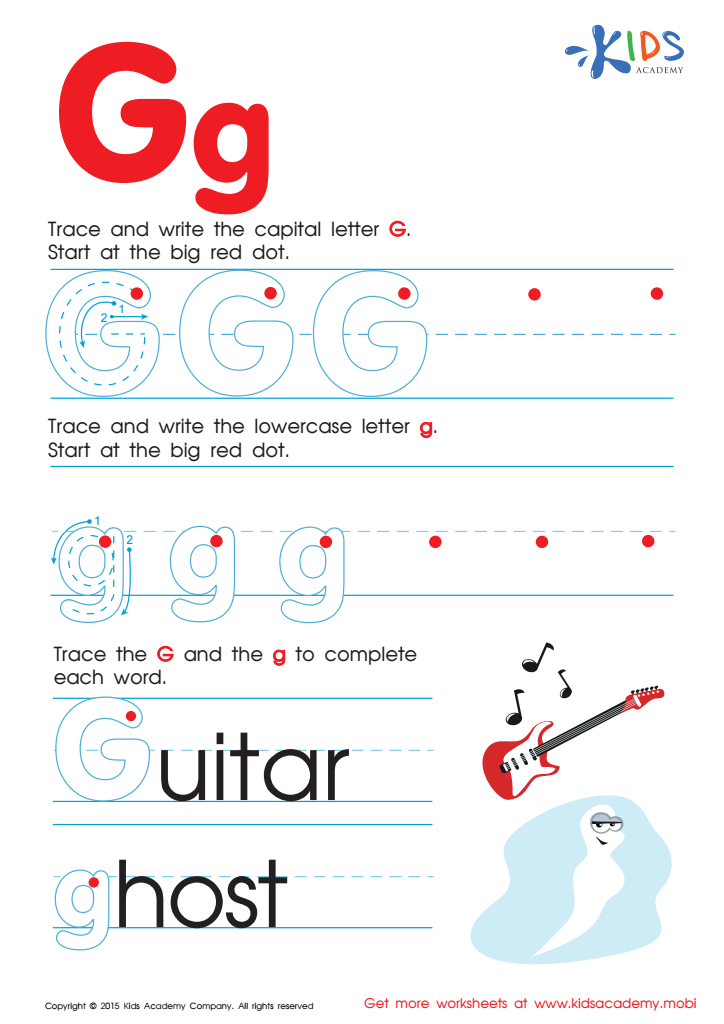
Letter G Tracing Page
Get ready to trace the letter "G" – with a big red spot as the starting point, trace the lines and watch the letter appear. Uppercase and lowercase letters are both easy and fun to write. Give it a go and finish the word "go". Play the guitar and say "hello" to a funny ghost!
Letter G Tracing Page
Worksheet
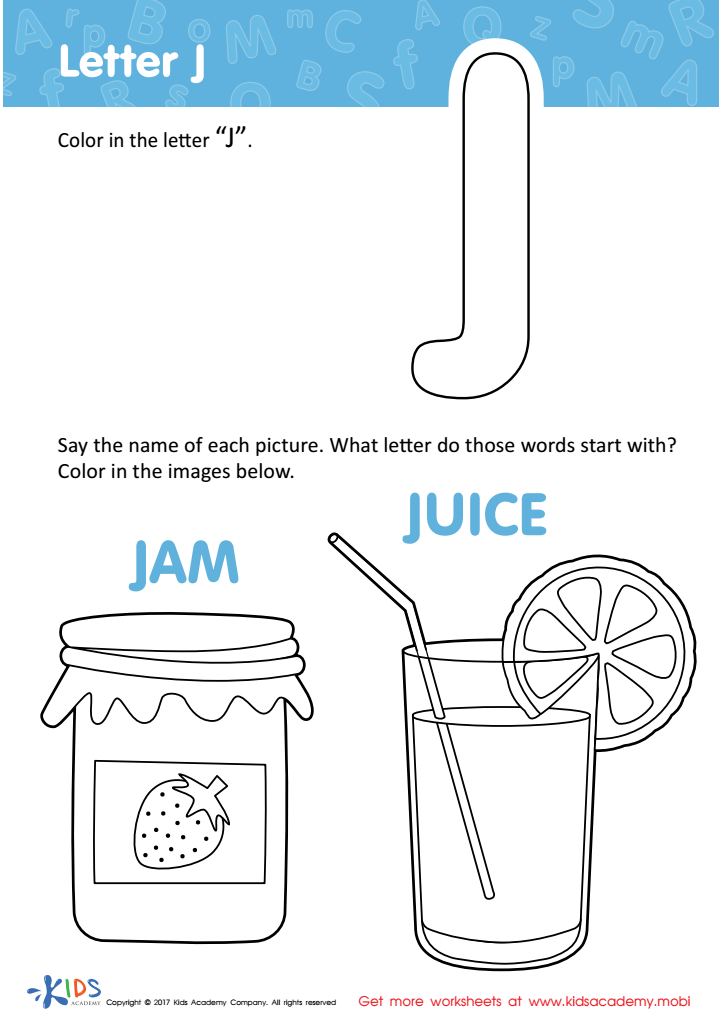
Letter J Coloring Sheet
Practice the letter 'J' with your little one with this fun coloring page! Pictures of jar, juice, jam and jelly make it an enjoyable experience for kids. Learning the letter and coloring is fun for even the youngest learners.
Download (PDF)
 Assign to My Students
Assign to My Students
Letter J Coloring Sheet
Worksheet
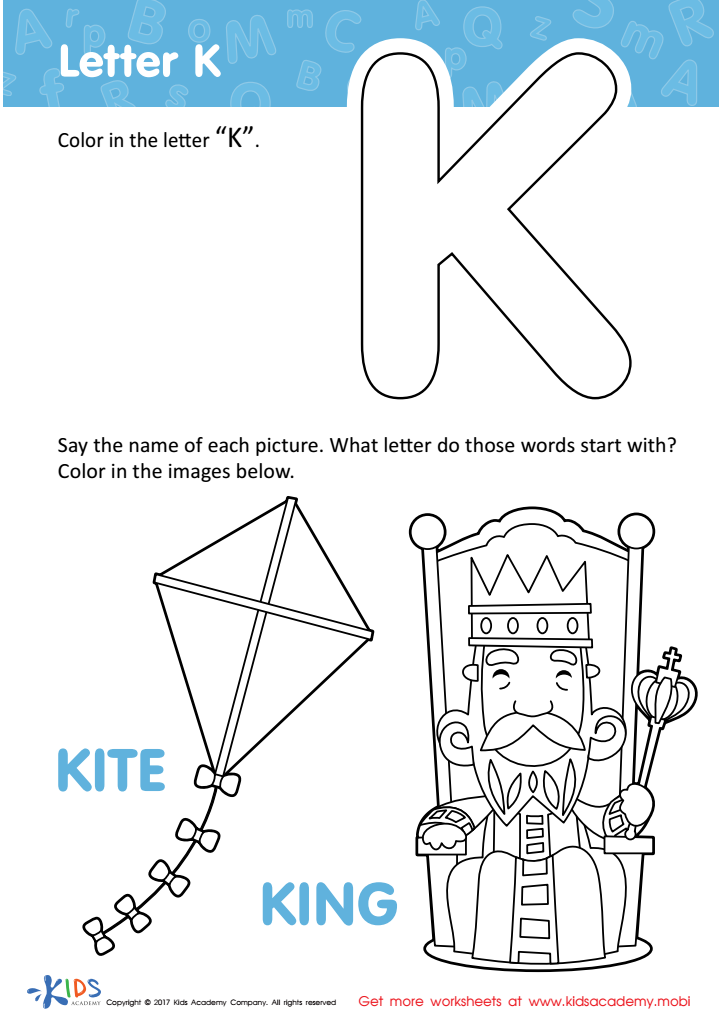
Letter K Coloring Sheet
This letter K coloring page captivates your child's creativity while learning the letter! Showcasing a king and kite, common words for their age group, it's sure to spark their imagination.
Download (PDF)
Assign to My Students
Assign to My Students
Letter K Coloring Sheet
Worksheet
Join Kids Academy for Free
Who is primarily going to use this learning content?




Understanding alphabetical order and letter recognition in Grade 2 is crucial for children's literacy development. By mastering alphabetical order, students enhance their reading and writing abilities, as well as their overall language skills. This fundamental skill helps children systematically organize information and improves their ability to locate words in dictionaries, indexes, and other resources.
Moreover, recognizing letters and their sequence assists children in decoding words, which is a critical aspect of reading fluency. Early exposure to alphabetical order lays the groundwork for efficient and accurate reading habits, fostering a stronger vocabulary and better comprehension skills. It also aids in spelling, allowing children to visualize and correctly sequence the letters in a word.
From an early age, being familiar with alphabetical order promotes cognitive development by honing memory, attention to detail, and sequencing abilities. For parents and teachers, supporting this learning process ensures that children build a solid foundation for later academic success. By incorporating games, activities, and consistent practice focused on these skills, adults can significantly contribute to a child’s confidence and proficiency in reading and writing, setting the stage for lifelong learning and effective communication.