Sound Association Grade 2 Letter Recognition Worksheets
5 filtered results
-
From - To
Enhance your second grader's reading skills with our engaging Sound Association Grade 2 Letter Recognition Worksheets. Designed to support early literacy, these worksheets help students connect sounds to letters, fostering phonemic awareness and improving decoding abilities. Kids will enjoy a variety of fun activities, including matching letters to sounds, identifying sound patterns, and practicing sound-letter associations. Each worksheet engages learners through colorful images and creative exercises, making learning enjoyable and interactive. Ideal for classroom or homeschooling settings, these resources ensure that children build a strong foundation in reading. Boost your child's confidence in literacy with our effective and enjoyable worksheets!
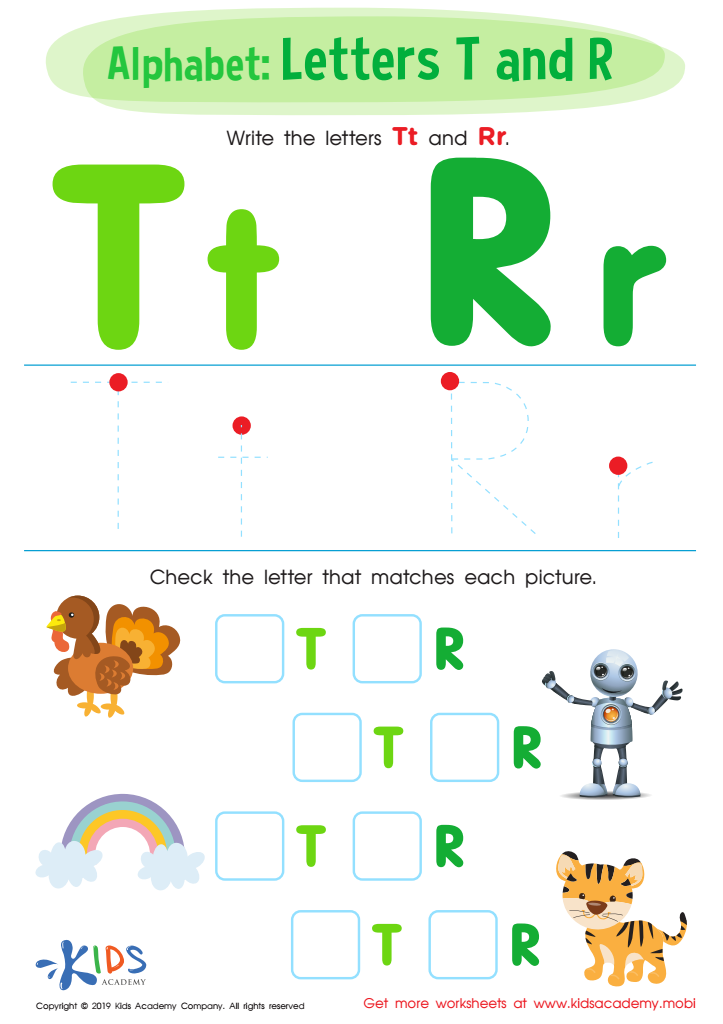
Letters T and R Worksheet
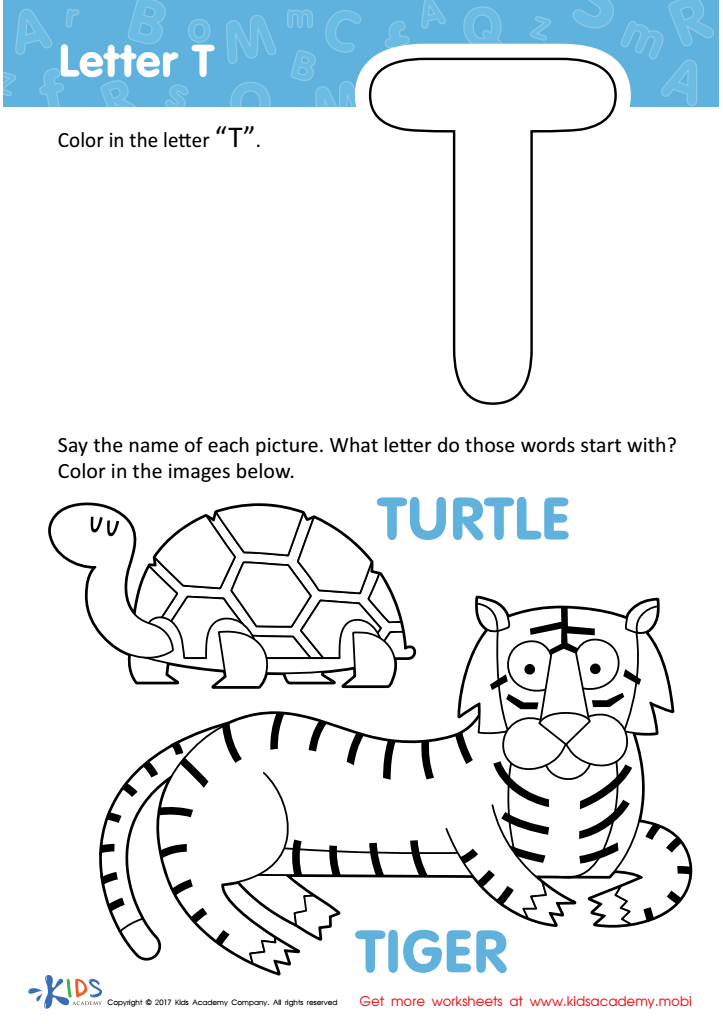
Letter T Coloring Sheet
 Assign to My Students
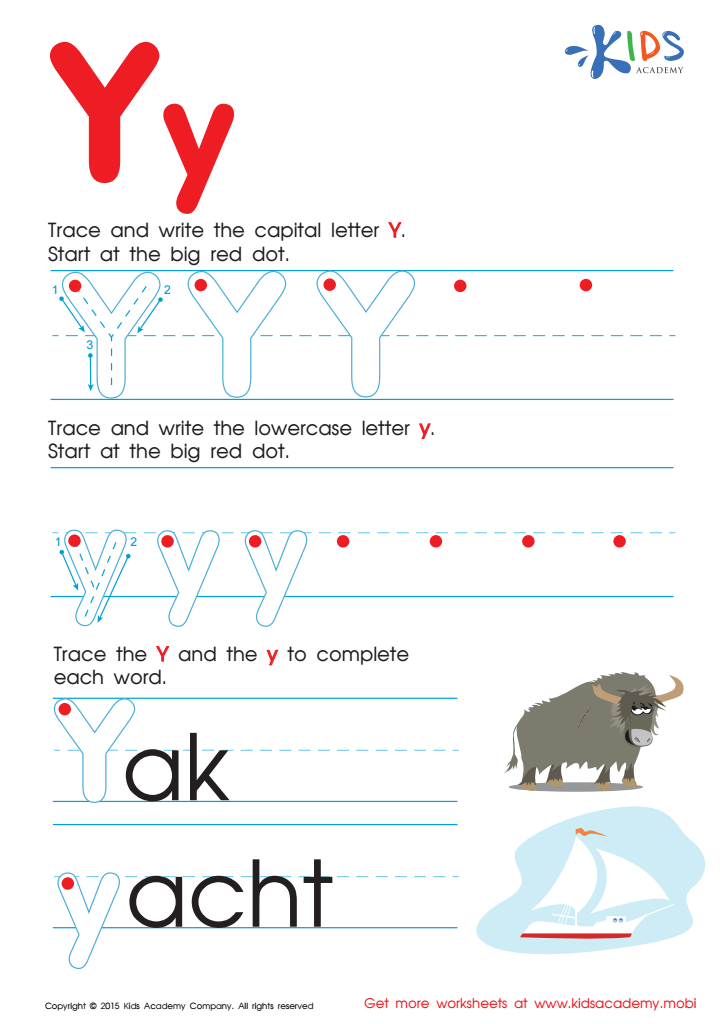
Letter Y Tracing Page
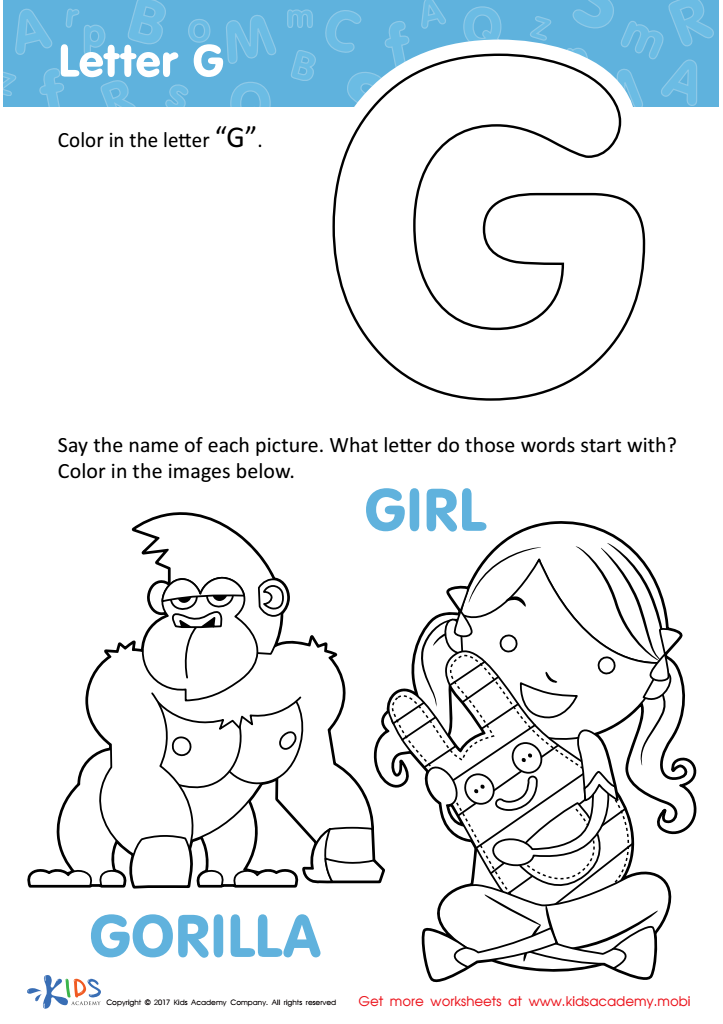
Letter G Coloring Sheet
Assign to My Students
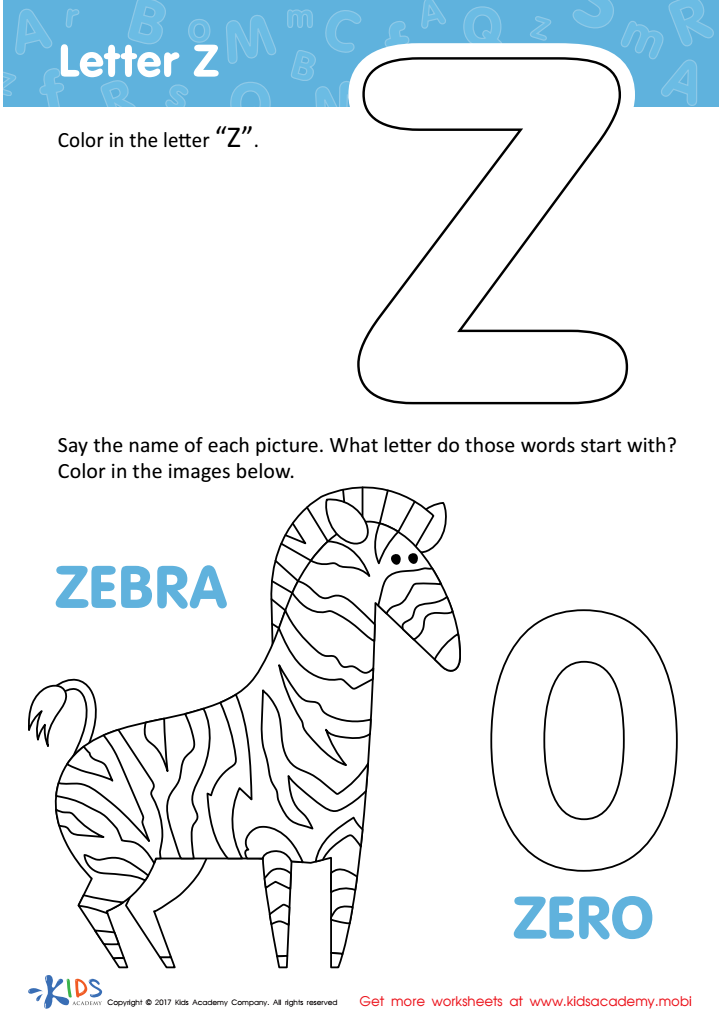
Letter Z Coloring Sheet
Assign to My Students




Sound association in Grade 2 letter recognition is crucial for several reasons that directly impact a child's literacy development. At this stage, children are transitioning from learning to read to reading to learn. Sound association helps them link letters to their corresponding sounds, forming the foundation of decoding skills essential for reading fluency. When children grasp these connections, they can tackle new words more confidently, enhancing their comprehension abilities.
Moreover, strong letter-sound recognition fosters spelling skills, as children begin to understand phonetic patterns within words. This not only aids in written communication but also builds a robust vocabulary, empowering them to express their thoughts and ideas.
Teachers and parents play a vital role in this developmental process. By incorporating phonics activities, games, and regular reading sessions, they can support and reinforce sound association skills. Families who engage in alphabet-related activities create a rich language environment, further encouraging literacy growth.
Ultimately, fostering letter recognition and sound association lays a crucial groundwork for lifelong learning. Parents and teachers should prioritize these skills to nurture confident, skilled readers ready to tackle more complex texts in the future. Such early interventions have a lasting positive impact on academic success and overall communication abilities.