Color Identification Grade 2 Phonics Worksheets
3 filtered results
-
From - To
Discover our engaging Color Identification Grade 2 Phonics Worksheets, designed to enhance your child's reading and language skills while exploring the vibrant world of colors. Each worksheet strategically combines phonics practice with color recognition activities, making learning enjoyable and interactive. Perfect for second-graders, these worksheets foster creativity and critical thinking as children match colors with corresponding words and images. With colorful visuals and clear instructions, your students will be motivated to learn and improve their phonics abilities. Ideal for classroom settings or at-home learning, our worksheets support the development of essential literacy skills in a fun and effective way!
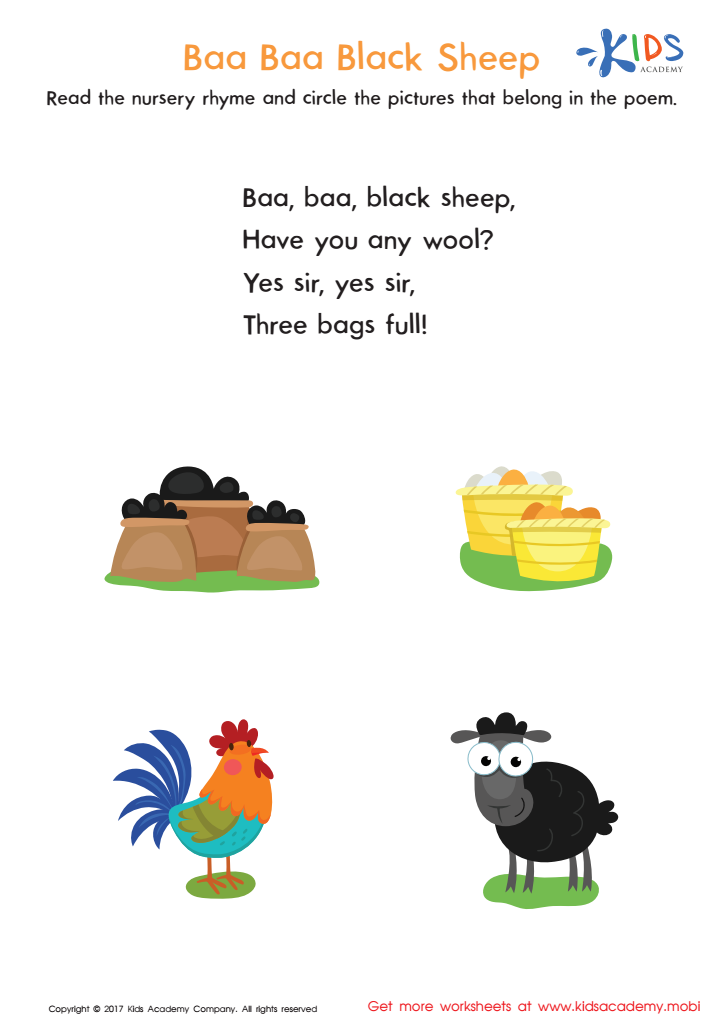
Baa Baa Black Sheep Printable
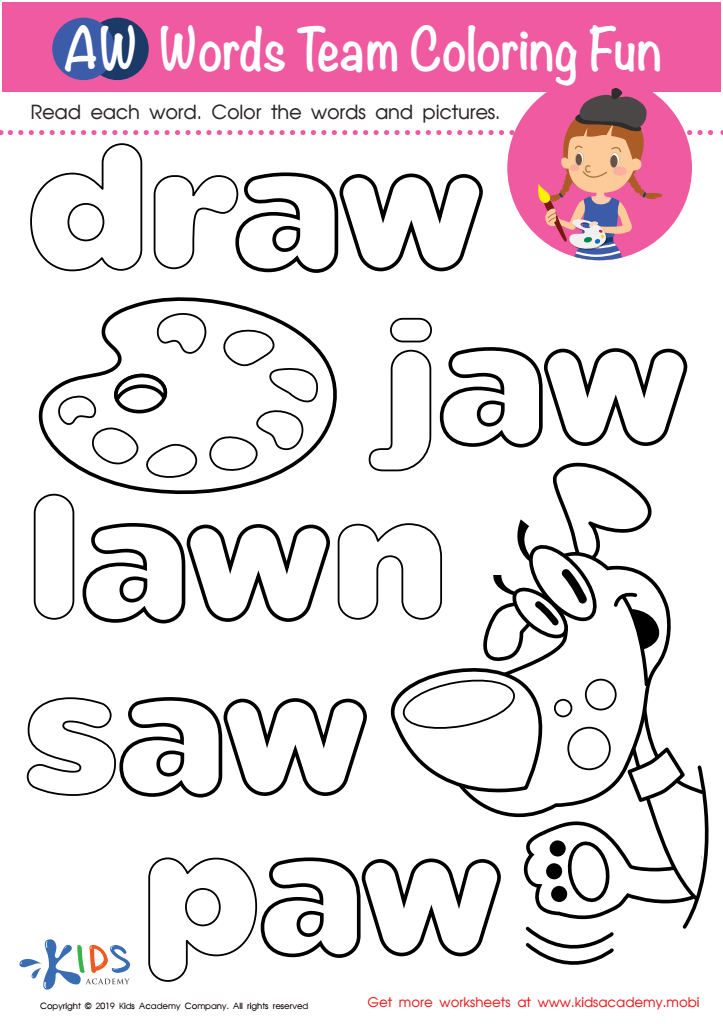
AW Words Team Coloring Fun Worksheet
 Assign to My Students
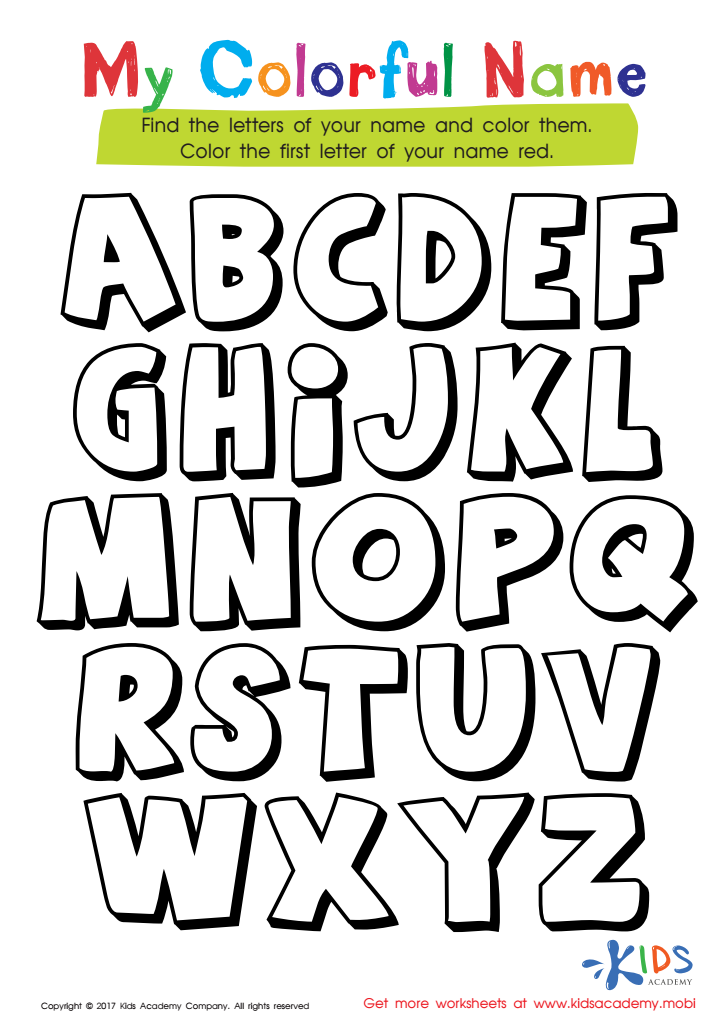
My Colorful Name Worksheet
Assign to My Students



Color identification in Grade 2 not only enhances phonics learning but plays a crucial role in a child's overall development. At this age, children are beginning to merge language skills with broader cognitive abilities, and incorporating colors into phonics can make learning more engaging and effective.
By associating colors with letters, sounds, and words, children can improve memory retention and recall. This multisensory approach helps in solidifying their understanding of phonics, laying a strong foundation for reading. Color identification also promotes creativity, as students can express concepts through art and visual aids, making lessons more enjoyable.
Moreover, understanding colors is fundamental to a child's everyday experiences. It aids in developing language skills, as children learn to describe their environment and communicate more vividly. Parents and teachers can utilize color-coded tools and activities to create an interactive learning atmosphere.
Additionally, embedded in these colors are valuable lessons about categorization and organization. This foundational skill is essential for analytical thinking and problem-solving in later educational stages. Therefore, engaging children in color identification within phonics not only aligns with academic development but also enriches cognitive and emotional growth, making it a vital component of their early education journey.