Vocabulary Building Grade 2 Phonics Worksheets
5 filtered results
Difficulty Level
Grade
Age
-
From - To
Subject
Activity
Standards
Enhance your child's linguistic abilities with our Vocabulary Building Grade 2 Phonics Worksheets! Specially designed for second graders, these engaging worksheets help develop essential phonics skills through fun and interactive activities. Your child will explore letter sounds, word patterns, and spelling rules, all while building a robust vocabulary. Each worksheet is crafted to spark curiosity and foster a love for learning, providing a solid foundation for reading and writing. Perfect for both classroom and at-home practice, our worksheets are an excellent resource for young learners eager to advance their language skills and boost their confidence.
Favorites
With answer key
Interactive
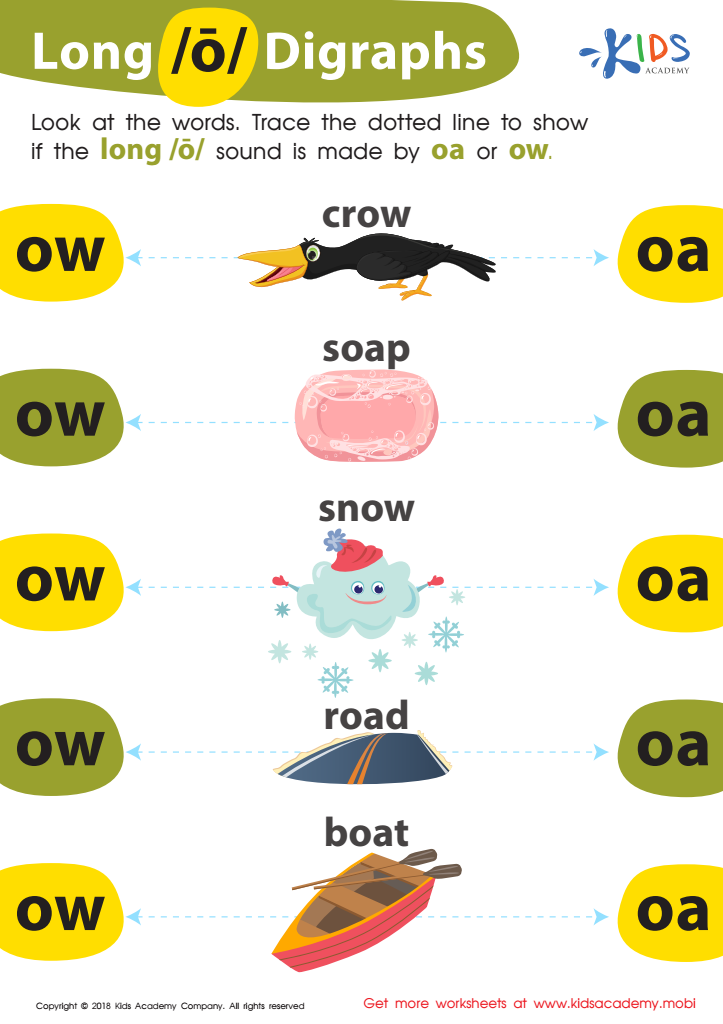
Reading: Long O Digraphs Worksheet
Reading and decoding words can be complex for learners when they start studying digraphs, two letters that make one sound. This worksheet focuses on the long O sound, /oa/ and /ow/. With the understanding of digraphs, students can decode more words and build their reading confidence.
Reading: Long O Digraphs Worksheet
Worksheet
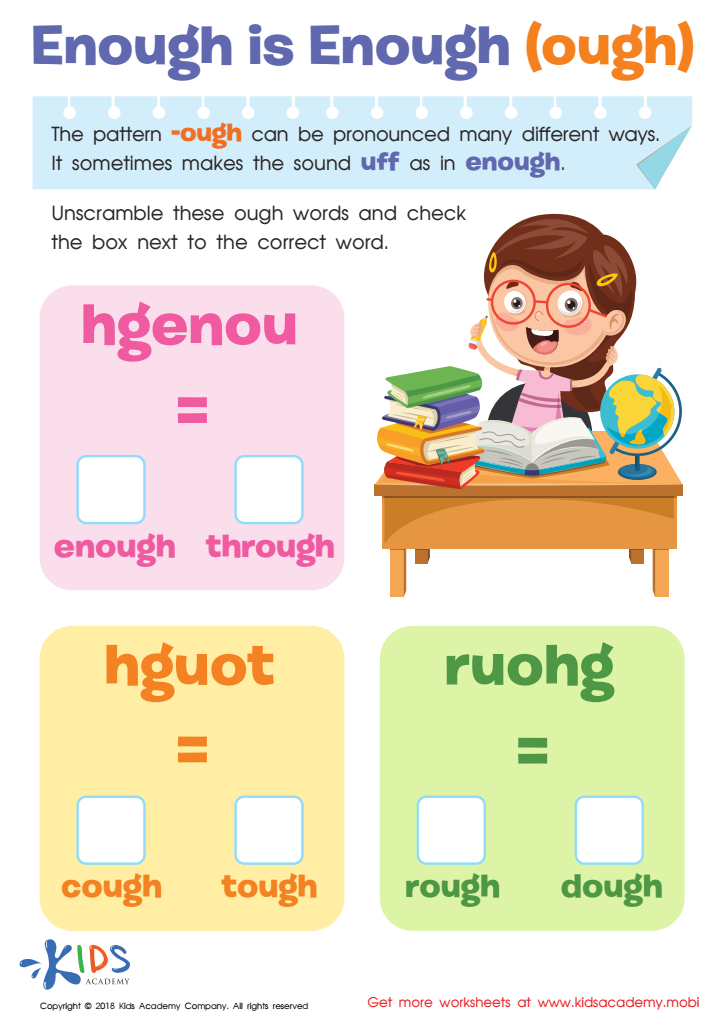
Enough Is Enough (ough) Worksheet
As your students learn more about reading and pronouncing words, they can explore how some word patterns can be said differently. The 'ough' pattern, for instance, can be pronounced several ways. 'Enough' has the 'uff' sound. Provide your students with examples of words pronounced similarly and help them unscramble 'ough' words on this worksheet, ticking the box for the correct word.
Enough Is Enough (ough) Worksheet
Worksheet
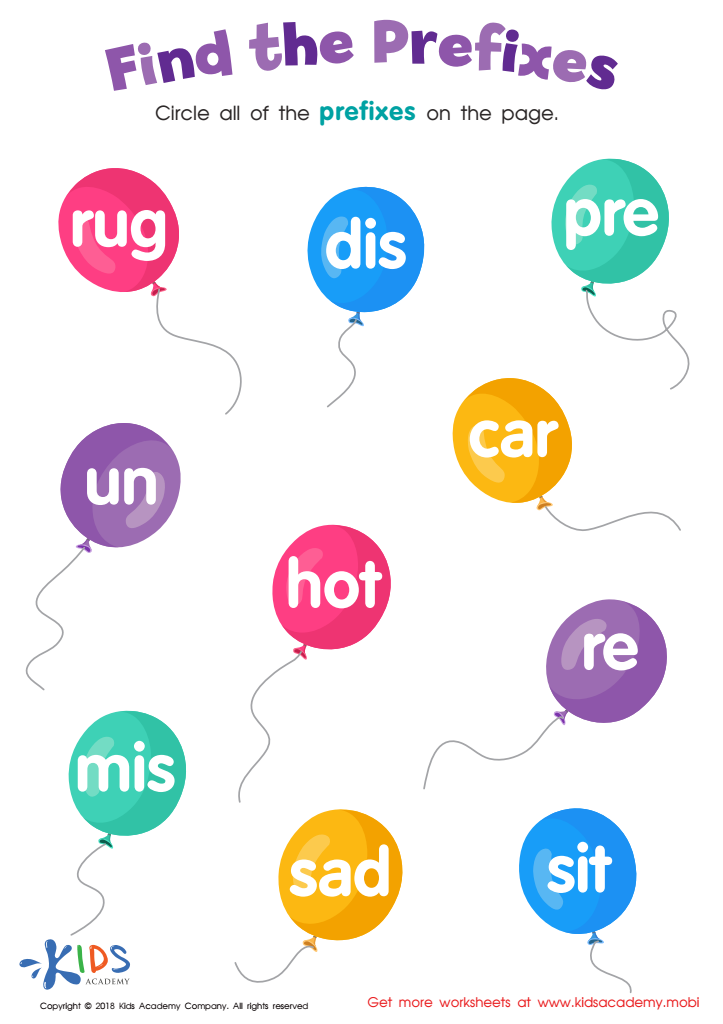
Reading: Find the Prefixes Worksheet
Students are asked to circle all prefixes on this worksheet and brainstorm a list of words that have them. It's a great tool for teaching vocabulary and helps students understand new and unfamiliar words by recognizing how prefixes change meaning.
Reading: Find the Prefixes Worksheet
Worksheet
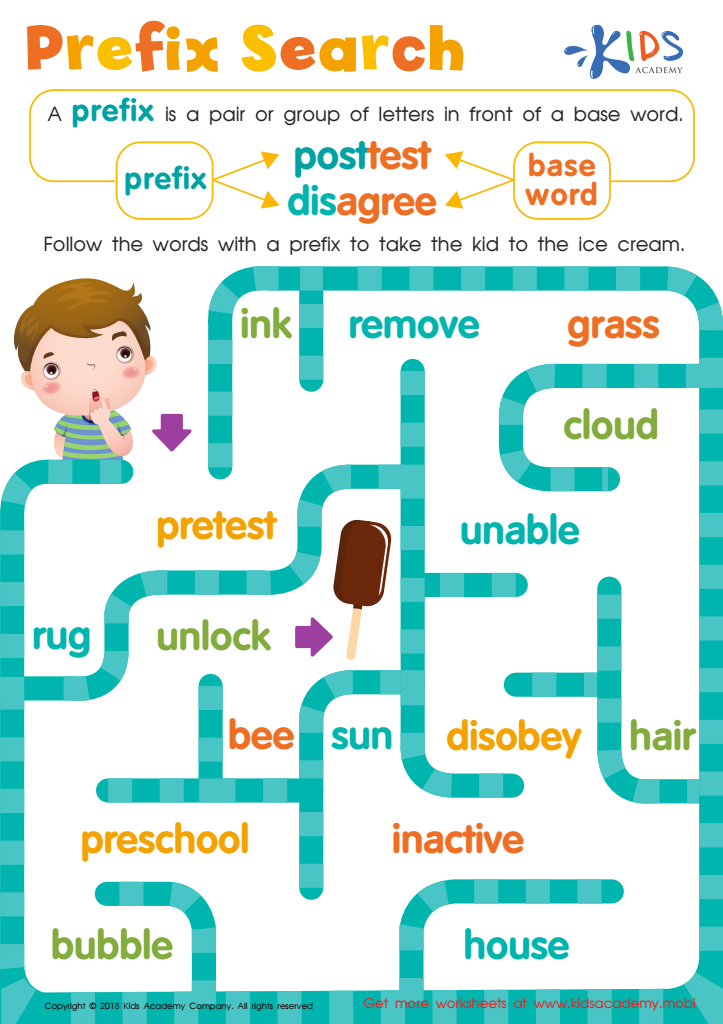
Reading: Prefix Search Worksheet
Maze your way through prefixes! This worksheet helps students practice reading new words with a prefix and figuring out the base word. An understanding of prefixes gives students the skills to comprehend new words. A fun and useful activity for the reading classroom!
Reading: Prefix Search Worksheet
Worksheet
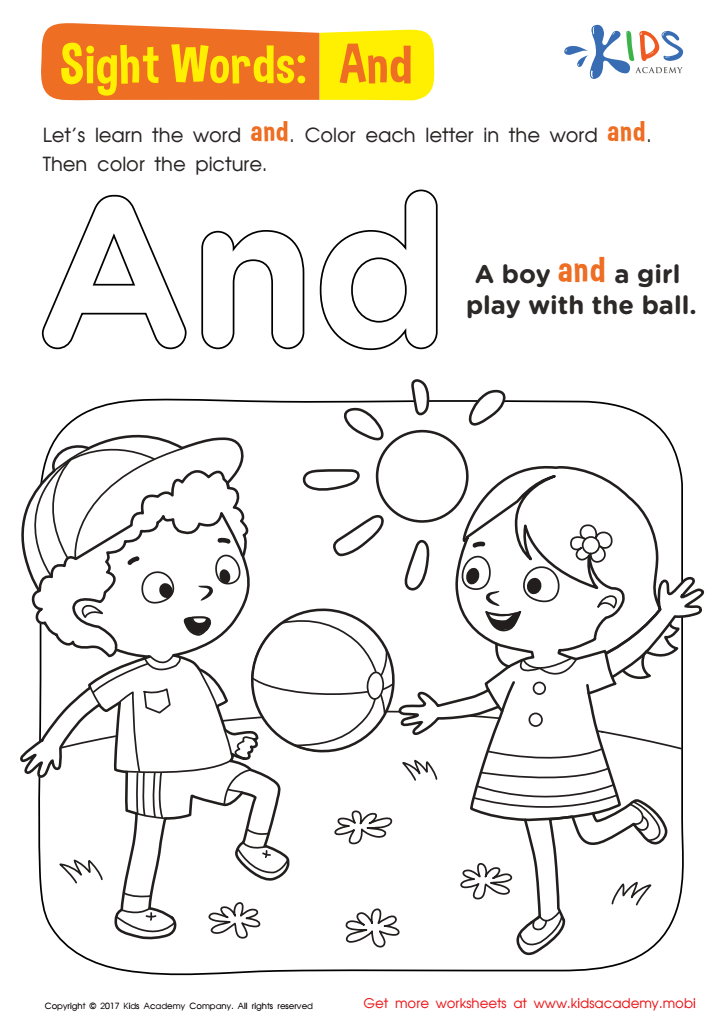
And Worksheet Sight Words Worksheet
Help your child get a jumpstart on reading with sight words! Print out this fun worksheet and get your child to read the sentence. Point out the word "and", then color the word and enjoy the rest of the scene! It's a great way to introduce sight words and get their early reading skills going!
Download (PDF)
 Assign to My Students
Assign to My Students
And Worksheet Sight Words Worksheet
Worksheet
Join Kids Academy for Free
Who is primarily going to use this learning content?



Vocabulary building in Grade 2 is pivotal for children's educational development, as it supports their overall literacy and comprehension skills. At this stage, children are transitioning from learning to read to reading to learn, making a robust vocabulary essential. Engaging with words helps children develop stronger reading capabilities, enabling them to understand and absorb more complex materials.
Phonics plays a critical role in this process by teaching children the relationship between sounds and their spellings. This understanding is foundational for decoding new words, which is a crucial first step in reading fluently and with confidence. As students improve their phonics skills, they can more easily recognize familiar words and sound out unfamiliar ones.
Moreover, a rich vocabulary aids in expressive and receptive language development. Children with a more expansive vocabulary can articulate their thoughts and understand instructions and stories more thoroughly, fostering better communication skills. This, in turn, translates to improved performance across all subjects since language is the medium through which most learning occurs.
By prioritizing vocabulary building and phonics in the second grade, parents and teachers can set children on a path of academic success, leading to stronger lifelong reading habits and a deeper love for learning.