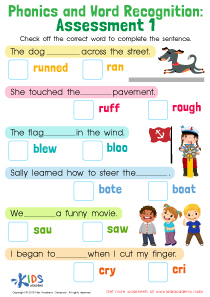
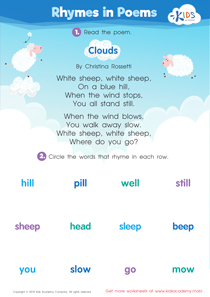
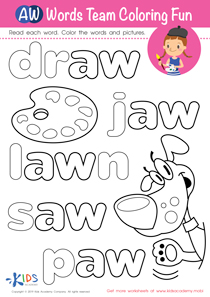
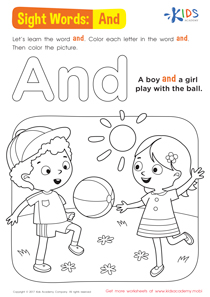
Enhance your second graders' reading and writing skills with our engaging Vowel Recognition worksheets. Designed specifically for Grade 2 students, these interactive exercises focus on identifying and understanding vowels in various contexts. Our worksheets provide a variety of activities such as filling in the blanks, matching sounds, and sorting vowels, making learning fun and effective. Perfect for classroom use or at-home practice, these resources support literacy development by fostering vowel recognition and enhancing phonemic awareness. Equip your students with the tools they need to excel in their reading journey and watch them gain confidence with every completed worksheet!

Check out this FREE Grade 2 Trial Lesson on Vowels!

Distinguish Between Words with Long U and Short U

Favorites
With answer key
Interactive
  • Grade 2
  • Vowel Recognition
  • Vowels
Vowel match Worksheet

Vowel match Worksheet

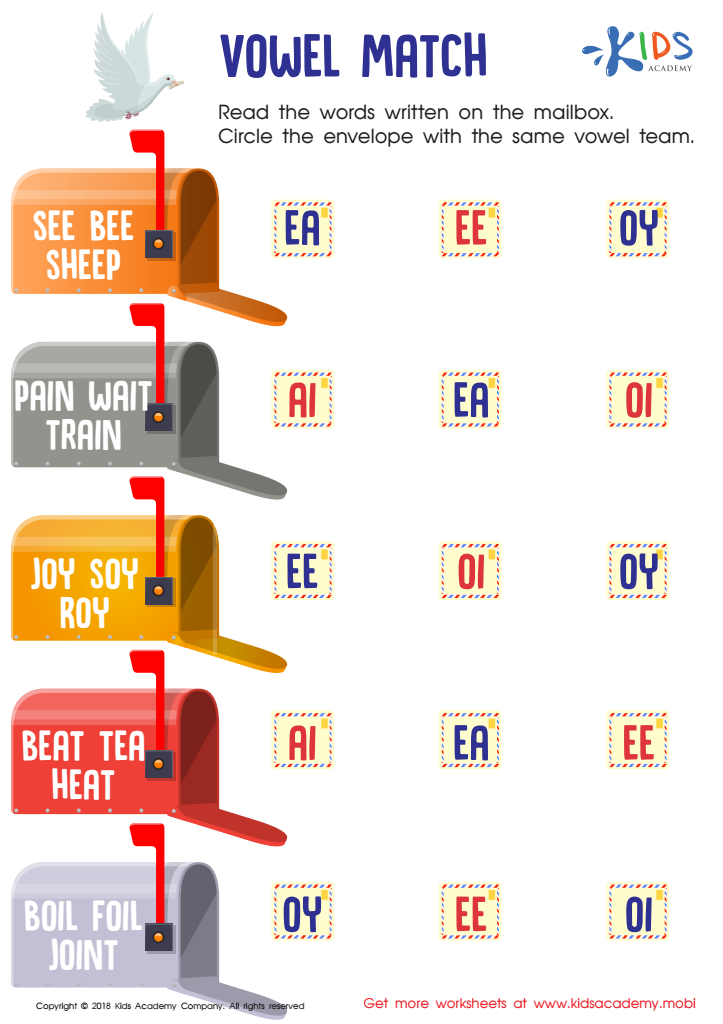
Early readers can find vowel teams (digraphs) tricky. This simple worksheet helps kids match words with the right digraphs and learn to read! They'll practice reading words from different families, and linking the letters to their sounds. It's a fun way to get kids sending letters to the right addresses!
Vowel match Worksheet
Worksheet
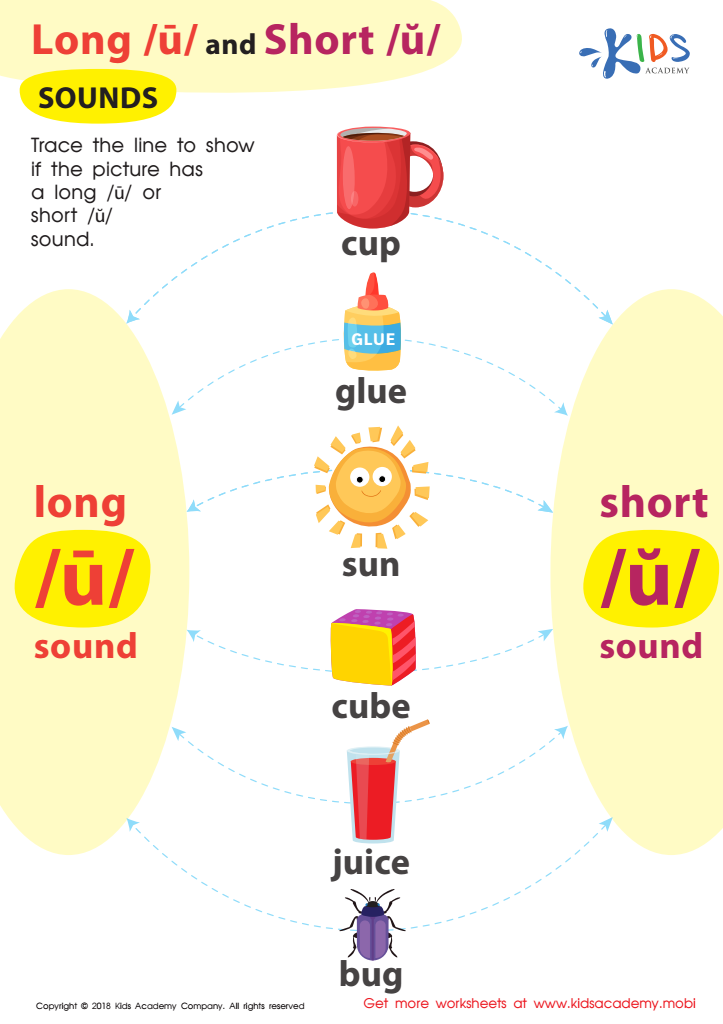
Reading: Long U and Short U Sounds Worksheet

Reading: Long U and Short U Sounds Worksheet

Learning about long and short vowel sounds can be tricky, especially with the letter U. Extra practice with this worksheet is recommended for mastering this sound. Children read words with the different vowel sounds and categorize them. Great for instruction, practice and reteaching in reading classes.
Reading: Long U and Short U Sounds Worksheet
Worksheet
Long I, O, U words worksheet

Long I, O, U Words Worksheet

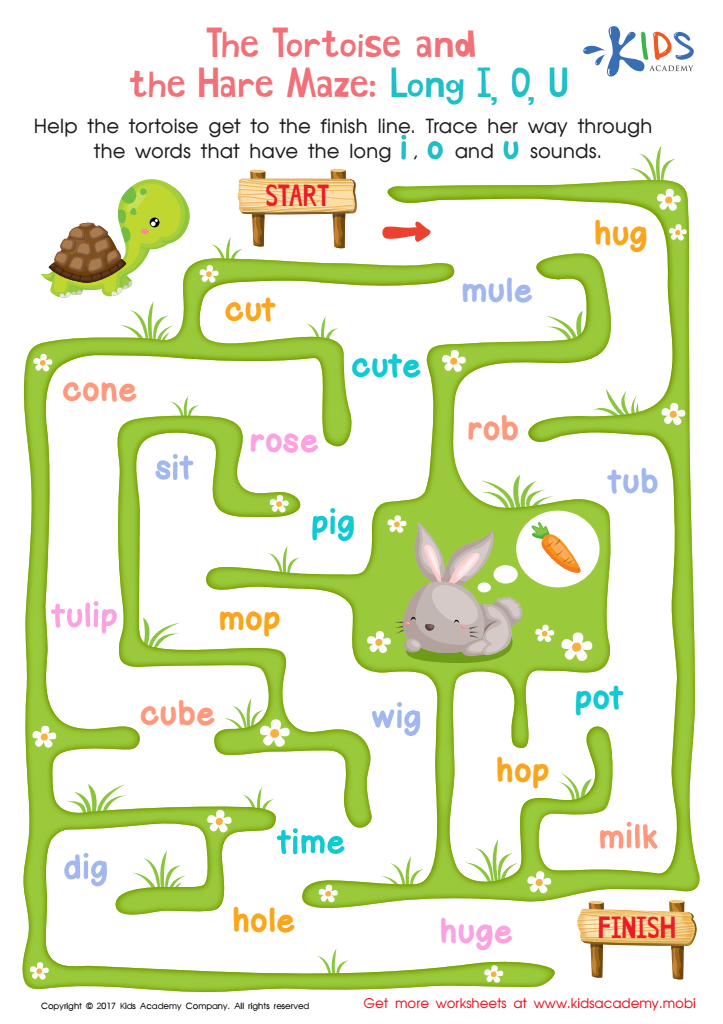
This fun phonics worksheet has your child race the tortoise and hare to the finish line. Find all the long vowel sounds to win! It'll help your child's recognition of long I, O, and U words without him realizing it!
Long I, O, U Words Worksheet
Worksheet
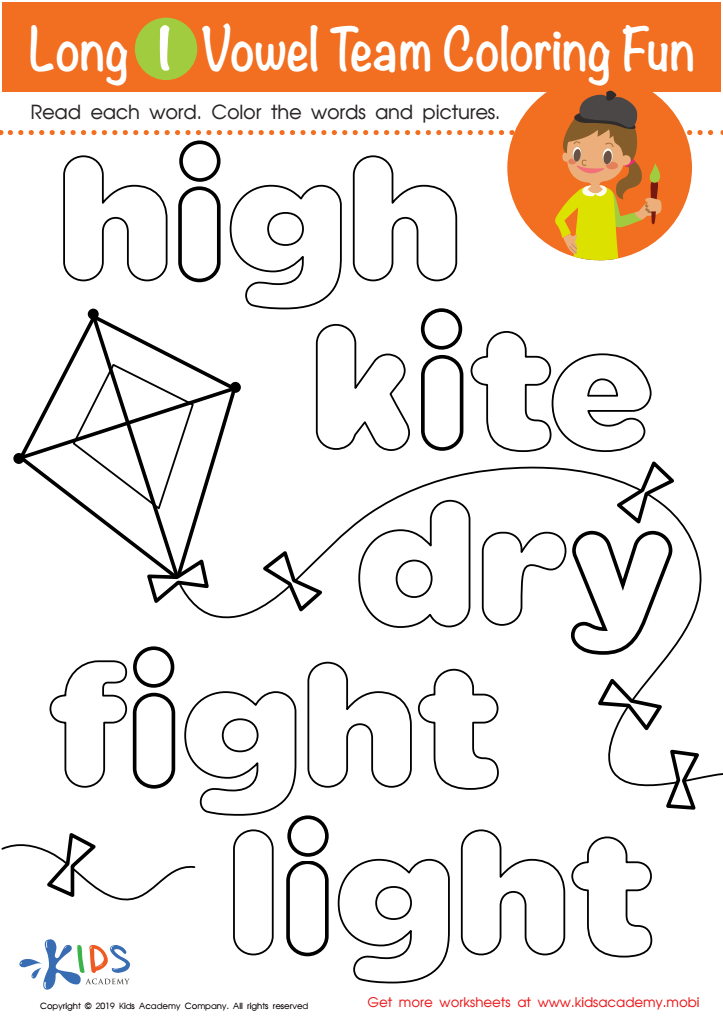
Long I Vowel Team Coloring Worksheet

Long I Vowel Team Coloring Worksheet

This worksheet provides practice with letter combinations that make the long "i" sound while enhancing creativity and motor skills with a fun coloring activity. Unknowingly, new readers learn key phonics skills while having fun!
Download (PDF)
Assign to My Students
Long I Vowel Team Coloring Worksheet
Worksheet
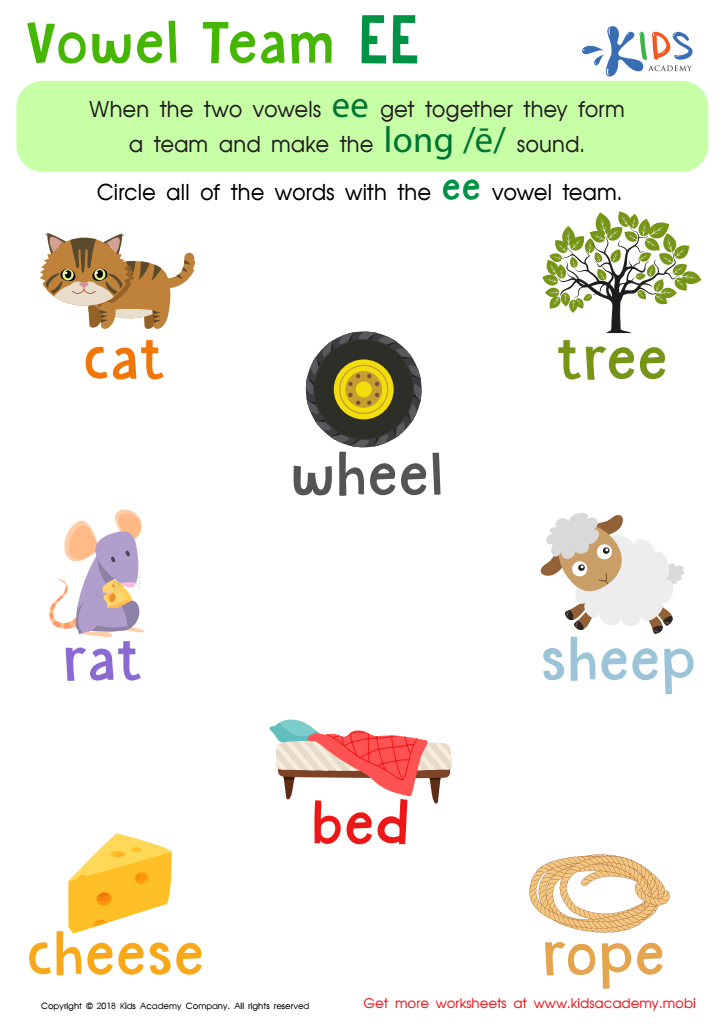
Reading: Vowel Team EE Worksheet

Reading: Vowel Team EE Worksheet

This worksheet is perfect for helping young learners master the /ee/ vowel team. It shows the first vowel with a long sound and the second vowel silent. It also provides pictures for unfamiliar words for readers of all levels. It's an ideal resource for teaching phonics skills.
Reading: Vowel Team EE Worksheet
Worksheet
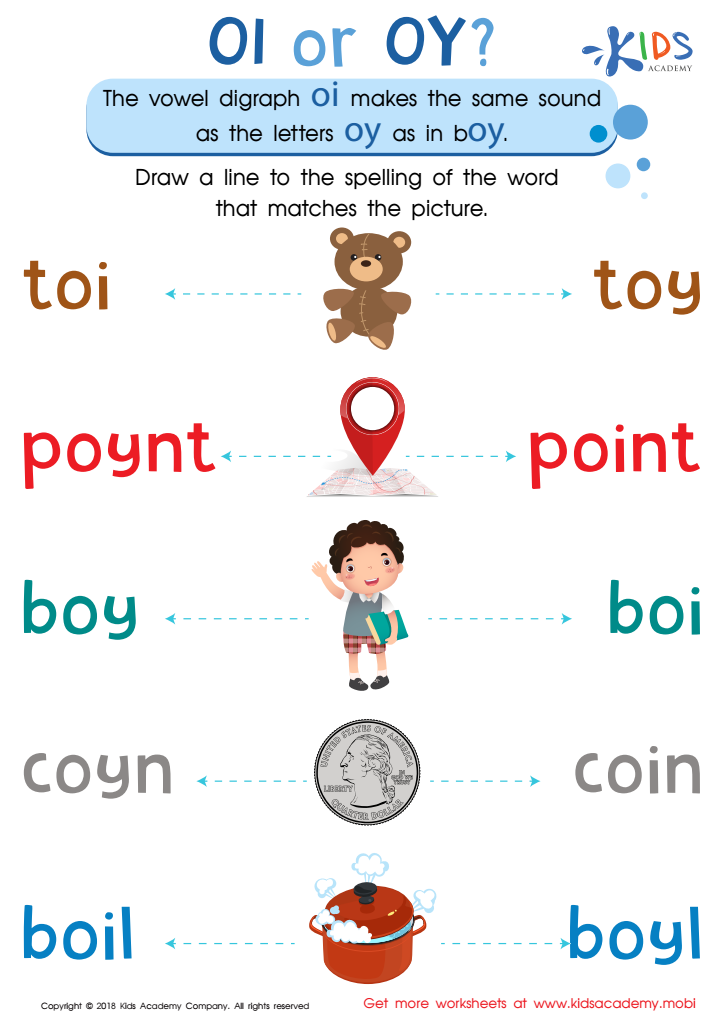
Reading: OI and OY Worksheet


Reading: OI and OY Worksheet

Ask your students if they know the rule for words with /oi/ or /oy/ sound. If not, it's easy to learn! Rule: If /oy/ at end of word, spell with 'oy'; if /oi/ in middle of word, spell with 'oi'. Use this worksheet to help them master these digraphs and improve their ability to decode.
Reading: OI and OY Worksheet
Worksheet


Vowel recognition is a critical skill for second-grade students as it serves as the foundation for reading and writing. Understanding vowels—A, E, I, O, U, and sometimes Y—is essential because they are integral to forming syllables and words. By mastering vowel recognition, students can improve their phonetic awareness, which helps them decode unfamiliar words as they read.

Parents and teachers should care about this developmental milestone because it directly impacts a child's literacy skills. Strong vowel recognition enhances reading fluency, comprehension, and spelling abilities. When children grasp how vowels function, they can better navigate the complexities of the English language, crucial for academic success in later grades.

Moreover, supporting vowel recognition helps foster a love for reading. When children feel confident in their ability to sound out words, they are more likely to engage with texts and explore different genres. This instills a lifelong habit of reading, promoting critical thinking and curiosity.

Ultimately, investing time in vowel recognition not only bolsters literacy skills but also nurtures a child's overall academic self-efficacy and enthusiasm for learning—two essential ingredients for their future success in school and beyond.