Comparing quantities Grade 2 Worksheets
8 filtered results
-
From - To
Our Comparing Quantities Grade 2 Worksheets are designed to help students build confidence in math through fun and engaging activities! These worksheets provide a variety of exercises that challenge young learners to compare quantities, using terms like greater than, less than, and equal to. Through vibrant visuals and real-world scenarios, students will master the concepts of number comparisons, alongside developing critical thinking and problem-solving skills. Ideal for classroom or home study, our worksheets ensure kids grasp foundational math principles, making learning math both enjoyable and educational. Enhance your child’s math journey with our top-quality, printable resources today!
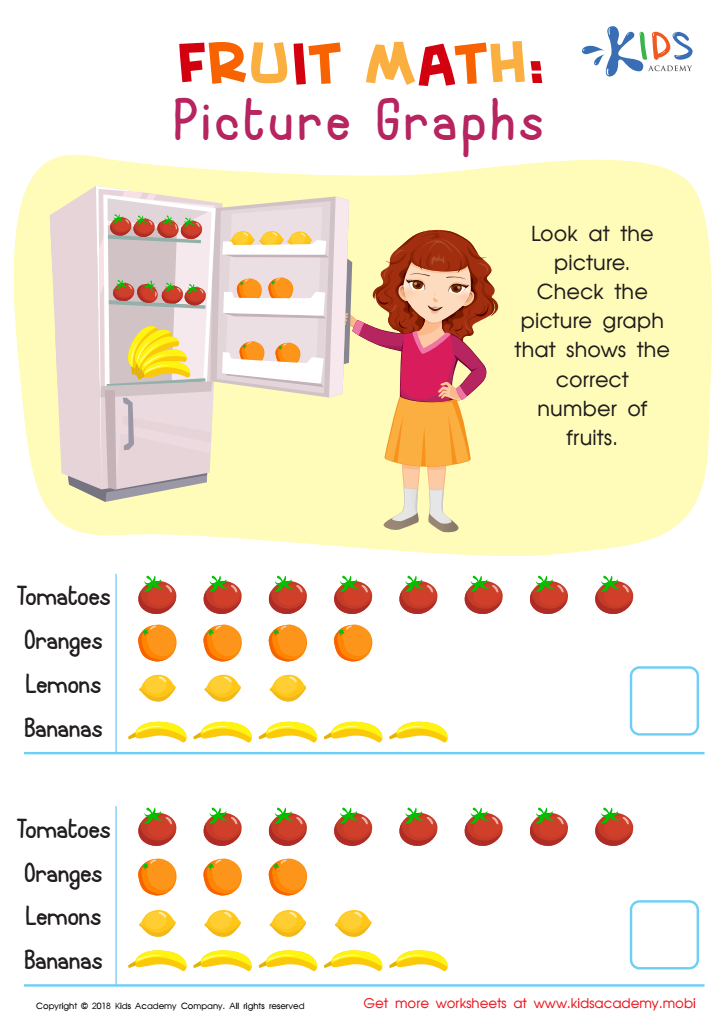
Fruit Math: Picture Graphs Worksheet
 Assign to My Students
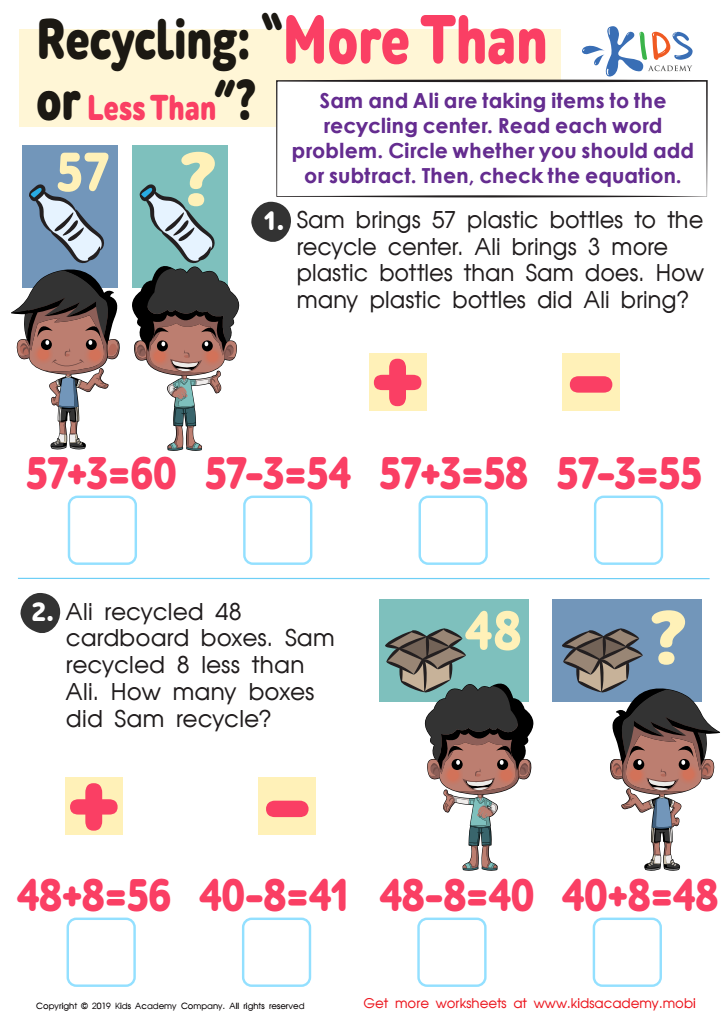
Recycling - More or Less Worksheet







Understanding and comparing quantities are foundational skills in early mathematics education, especially in Grade 2. Parents and teachers should prioritize these concepts for several key reasons. Firstly, comparing quantities lays the groundwork for number sense, which is crucial for more advanced mathematical operations like addition, subtraction, multiplication, and division. When students grasp these basic concepts, they build confidence and competency in math, which is essential for their overall academic success.
Moreover, comparing quantities fosters critical thinking and problem-solving skills. When children learn to distinguish which of two quantities is larger or smaller, they engage in logical reasoning. This ability to analyze and interpret data also translates to real-world applications, such as budgeting, measuring, and even making decisions based on comparisons.
Additionally, mastering these concepts early can reduce math anxiety. Early struggles with fundamental math concepts often lead to a lack of confidence and a negative attitude toward math in later years. Ensuring children are proficient in these areas helps create a solid foundation and a positive mathematical mindset.
Finally, success in understanding and comparing quantities aligns with curriculum standards and prepares students for standardized testing. By focusing on these foundational skills, parents and teachers ensure that students are not only meeting but exceeding educational benchmarks, paving the way for future academic achievements.