Comparing shapes Grade 2 Worksheets
4 filtered results
-
From - To
Introducing our "Comparing Shapes Grade 2 Worksheets" – the perfect resource for young learners to master geometric concepts! These worksheets offer engaging activities designed to help second graders compare and contrast different shapes, enhance their problem-solving skills, and solidify their understanding of geometry. Through attractive illustrations and interactive exercises, students will practice identifying similarities and differences in shapes, including size, sides, and angles. Ideal for classroom use or at-home practice, these educational worksheets align with common core standards and make learning fun and effective. Boost your child's confidence in math with Kids Academy's expertly crafted resources!
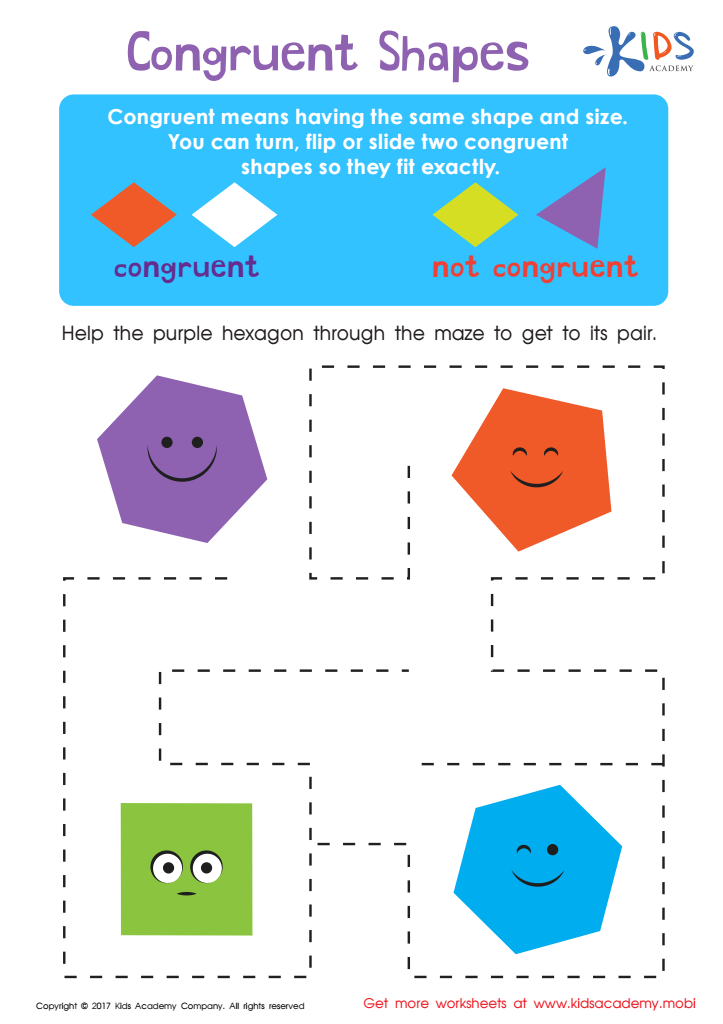
Congruent Shapes Worksheet
 Assign to My Students
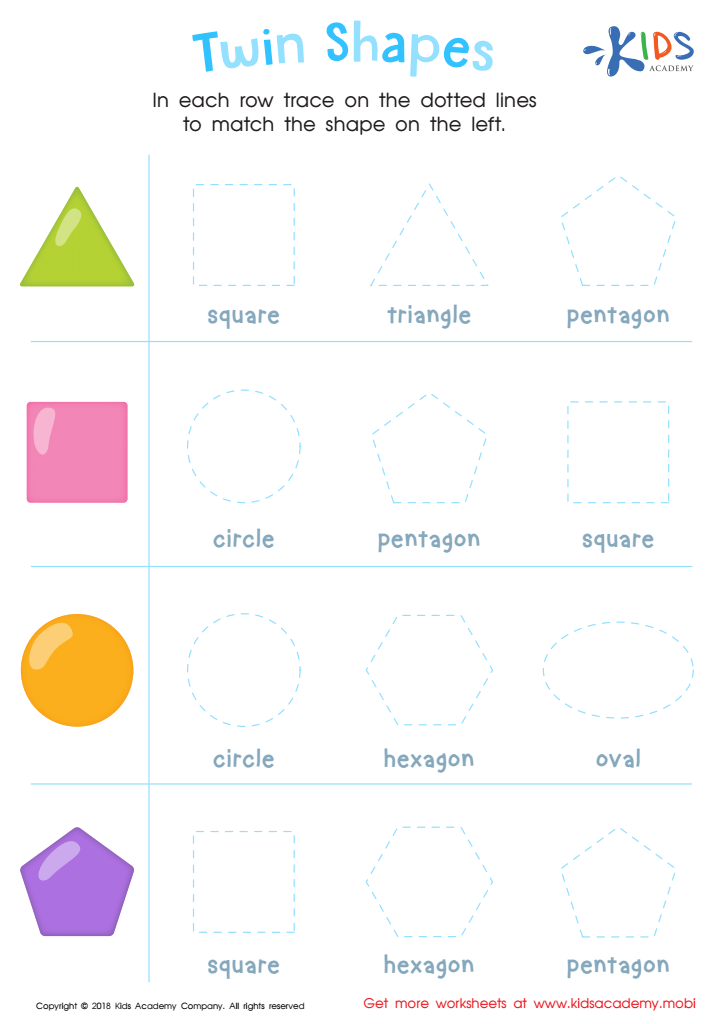
Twin Shapes Dot-to-Dot Worksheet






Comparing shapes in Grade 2 is essential for a child's cognitive and academic development. At this stage, children are naturally curious and eager to explore the world around them, and shapes are a fundamental part of this exploration. Understanding shapes isn't just about identifying them; it's about recognizing their properties, comparing their similarities and differences, and using critical thinking skills to classify them.
Fostering these skills helps young learners develop spatial awareness, a crucial component in everyday problem-solving and later mathematical concepts. For instance, recognizing that a square and a rectangle both have four sides but differ in their side lengths lays the groundwork for more advanced topics like geometry and algebra. This foundational knowledge translates into better performance in subjects requiring analytical thinking.
Moreover, comparing shapes helps improve a child's language and communication skills. Describing shapes and explaining their characteristics enhances vocabulary and encourages precise language use. It also promotes collaborative learning as students discuss their observations and reasoning with peers.
Lastly, exploring shapes can be incredibly engaging and fun. Using tangible objects, interactive games, and creative activities make learning enjoyable, which fosters a love for learning and a positive attitude towards schoolwork. Therefore, parents and teachers should embrace and prioritize teaching shape comparisons in Grade 2.