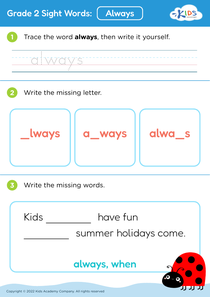
Fine motor skills (writing numbers) Grade 2 Worksheets
4 filtered results
-
From - To
Enhance your Grade 2 students' fine motor skills with our engaging "Writing Numbers" worksheets! Designed specifically for developing hand-eye coordination and writing precision, these worksheets offer a variety of fun activities that make learning enjoyable. Each worksheet focuses on number formation, allowing students to practice tracing, writing, and even coloring to reinforce their numerical literacy. Perfect for classroom use or at-home learning, our resources help kids build confidence and improve their handwriting skills. With clear instructions and visually stimulating designs, these worksheets are an essential tool for fostering effective fine motor development in young learners. Download your printables today and watch their skills soar!
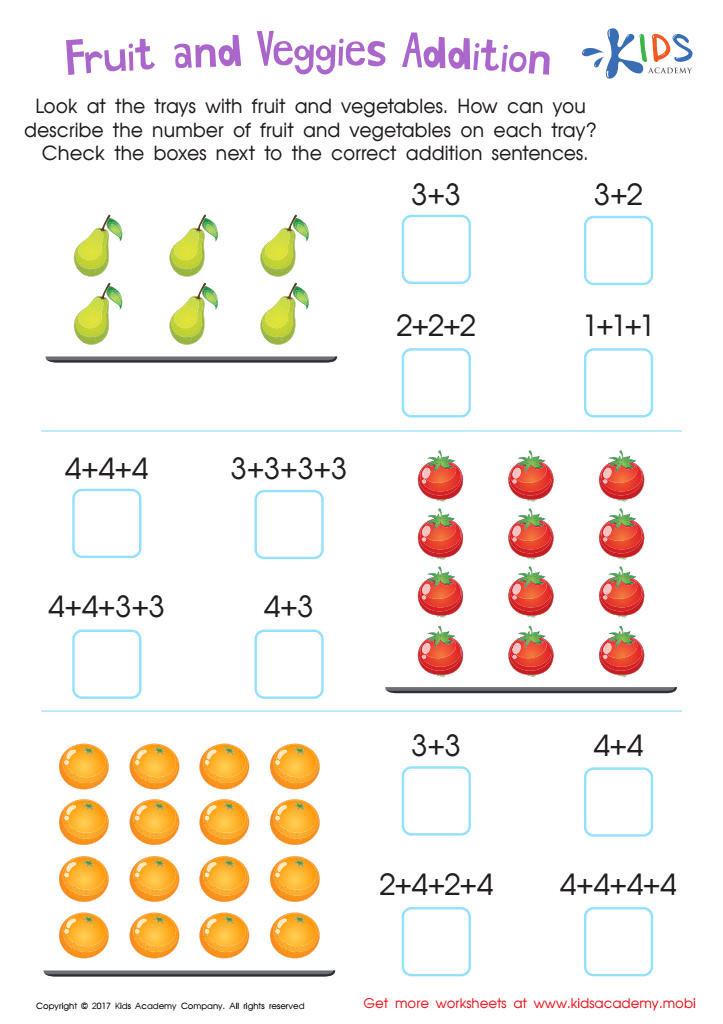
Fruit and Veggies Worksheet
 Assign to My Students
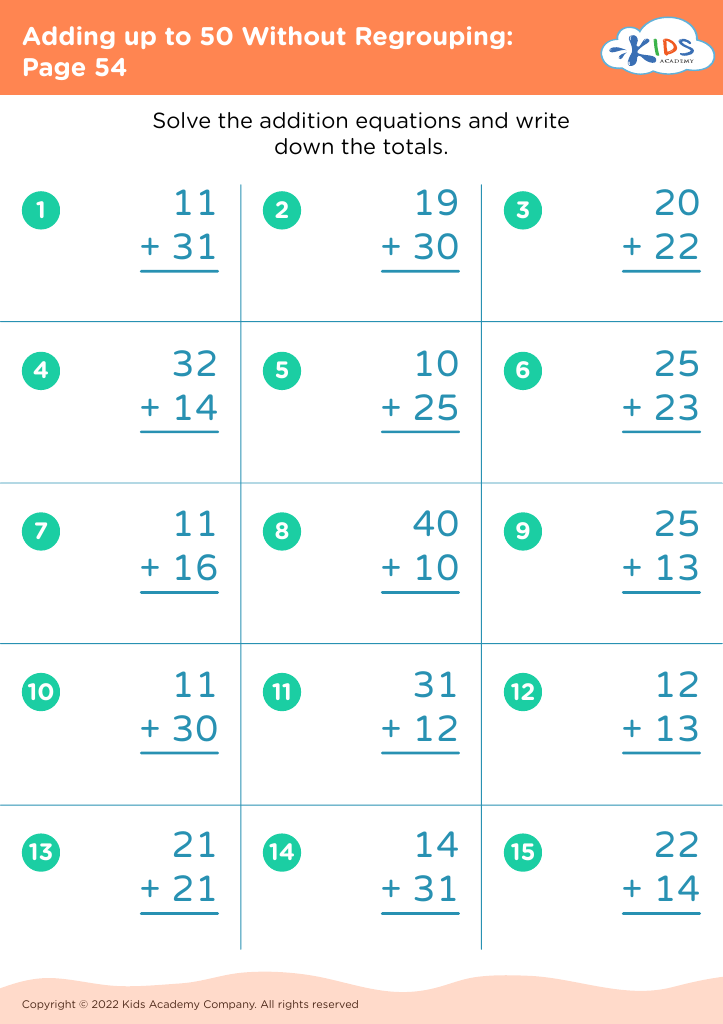
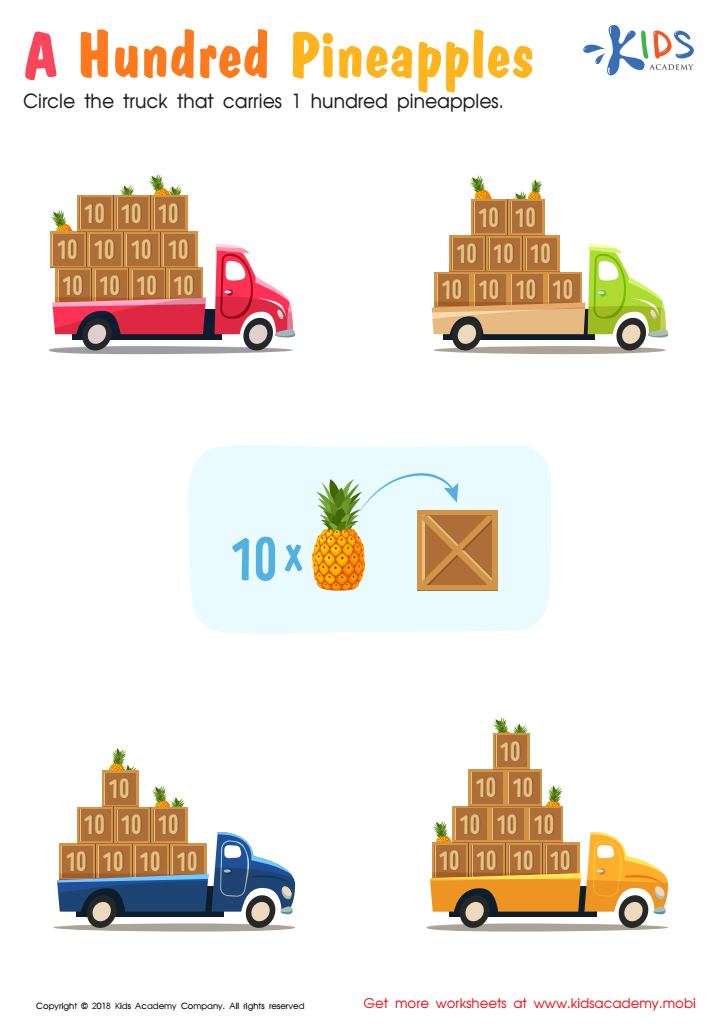
A Hundred Pineapples Worksheet
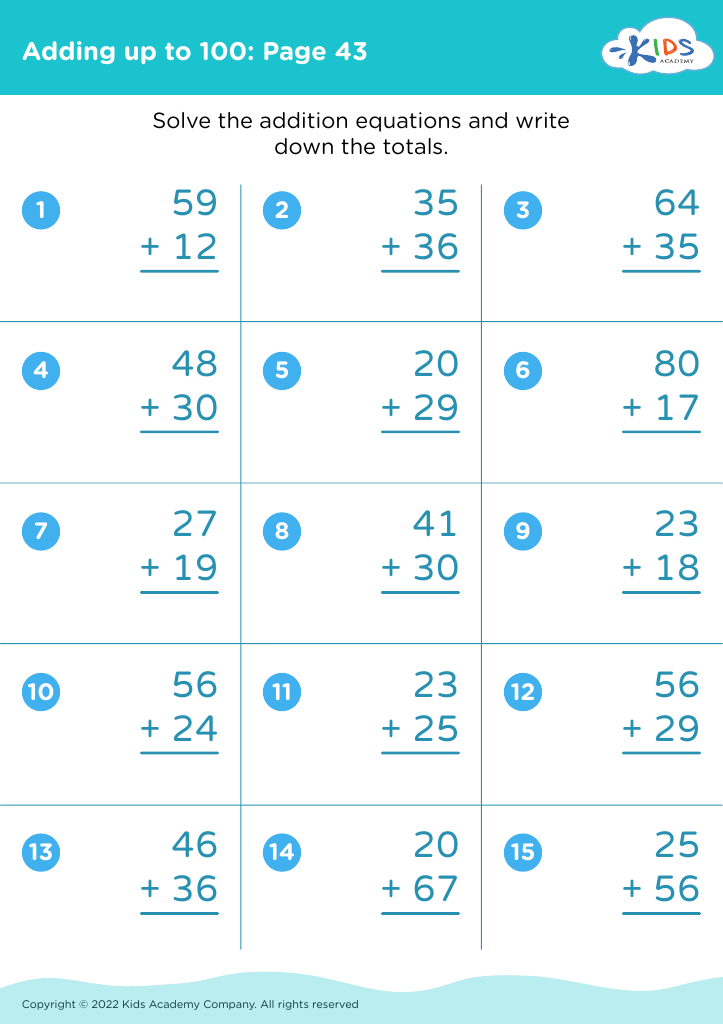








Fine motor skills are crucial for children’s overall development, especially in grade 2, where foundational skills in writing numbers are essential for academic success. Parents and teachers should prioritize these skills because they directly impact a child's ability to perform tasks that are vital for classroom learning and daily life.
Developing fine motor skills enhances hand-eye coordination, which is necessary when writing numerals accurately. Mastering number formation helps children understand math concepts and expressions, laying the groundwork for future mathematical challenges. Improved fine motor skills also foster self-confidence; as children become more proficient in writing, they feel a sense of accomplishment that can inspire further learning.
In addition, strong fine motor abilities positively influence a child's ability to complete various tasks not strictly related to academics, such as buttoning clothes or using utensils. Overall, the development of fine motor skills not only supports academic performance but also contributes to a child's independence and self-esteem.
By focusing on these skills during grade 2, parents and teachers can help ensure that children are ready to tackle more complex concepts in later grades, setting the stage for lifelong learning and success.