Reading analog clocks Grade 2 Worksheets
5 filtered results
-
From - To
Enhance your Grade 2 students' time-telling skills with our engaging Reading Analog Clocks worksheets! Designed specifically for young learners, these printable resources provide fun and interactive ways to master reading analog clocks. Our worksheets feature various activities, including identifying hour and minute hands, recognizing different times, and solving real-life clock problems. Each activity is crafted to make learning enjoyable, helping students build confidence as they become proficient in telling time. Perfect for classroom or at-home practice, these worksheets cater to diverse learning styles. Empower your child with essential time-telling skills today! Visit our site to download your worksheets easily!
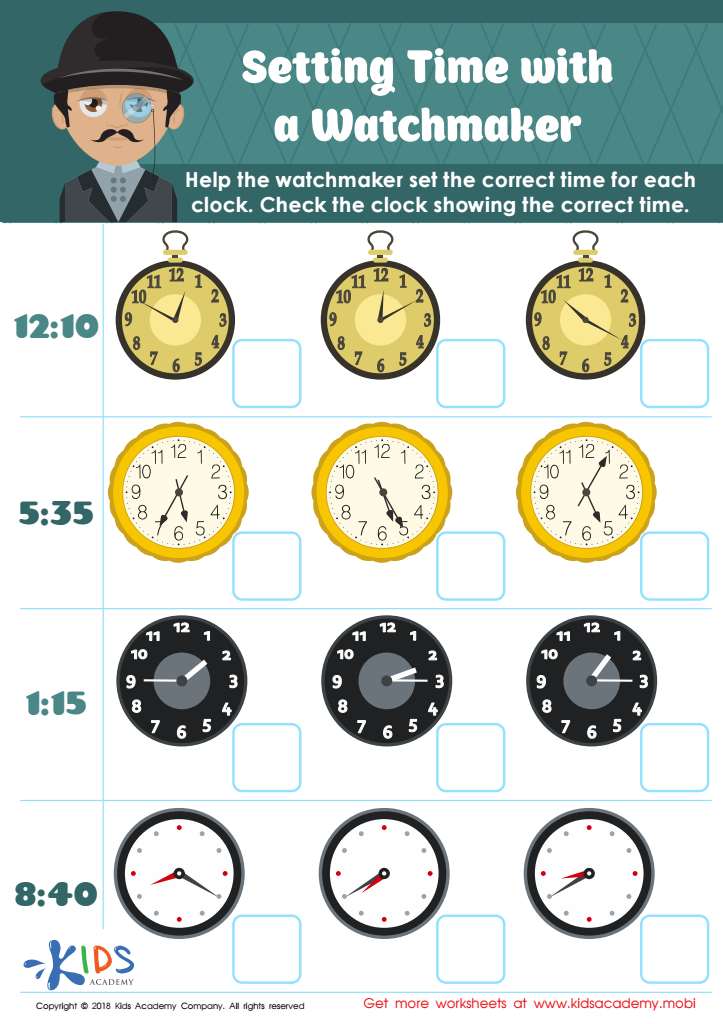
Setting Time with Watchmaker Worksheet
 Assign to My Students







Reading analog clocks is a fundamental skill that extends beyond merely telling time; it's essential for fostering a child's cognitive and practical abilities. For parents and teachers of Grade 2 students, ensuring children grasp this skill can significantly impact their overall development.
Firstly, understanding analog clocks promotes numeracy skills. It helps children reinforce concepts of number sense, counting, and understanding fractions—key mathematical skills they will encounter in higher grades. Engaging in clock reading challenges them to think critically and develop spatial awareness.
Secondly, analog clocks are still commonly used in everyday life, from classroom schedules to public transportation. Being able to read these clocks prepares children for real-world scenarios and enhances their independence. It nurtures responsibility by allowing them to manage time effectively for tasks such as homework, playdates, and bedtime routines.
Finally, learning to read an analog clock fosters focus and patience, as students practice and develop these skills over time. Early mastery boosts confidence and encourages a love for learning. Overall, prioritizing reading analog clocks helps children gain valuable abilities that support their academic journey and everyday life. Thus, parents and teachers play a crucial role in mentoring their young learners to become confident, capable individuals.