Check out this FREE Grade 2 "Understanding fractions" Trial Lesson!

One-Syllable Long and Short Vowel Words

Favorites
With answer key
Interactive
  • Grade 2
  • Understanding fractions
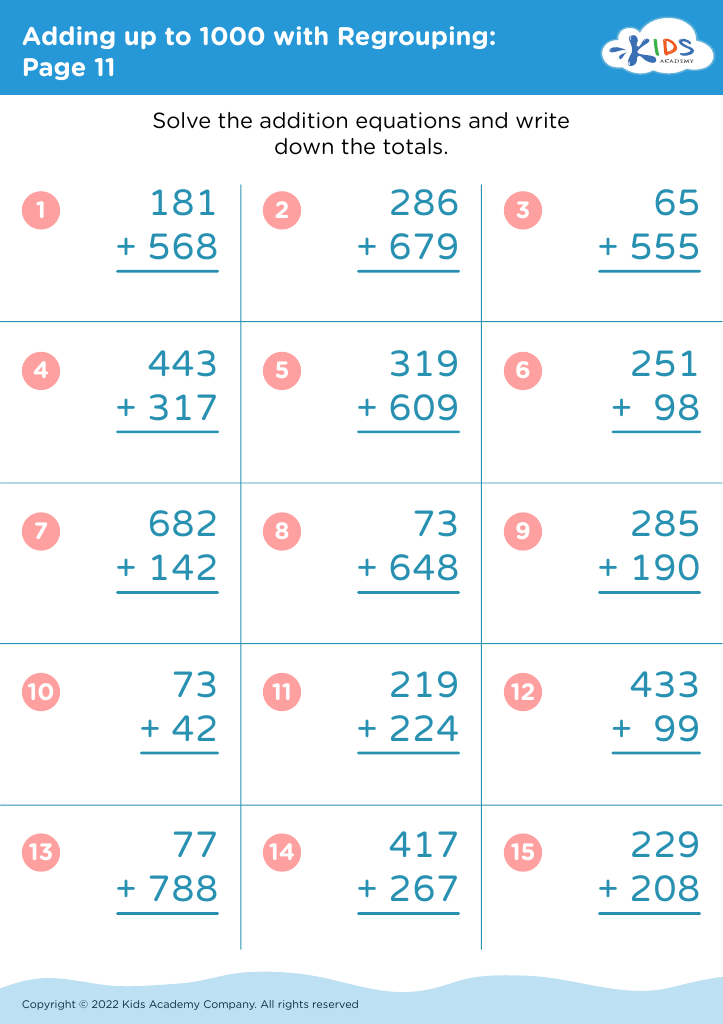
Adding up to 1000 with Regrouping: Page 11
Worksheet
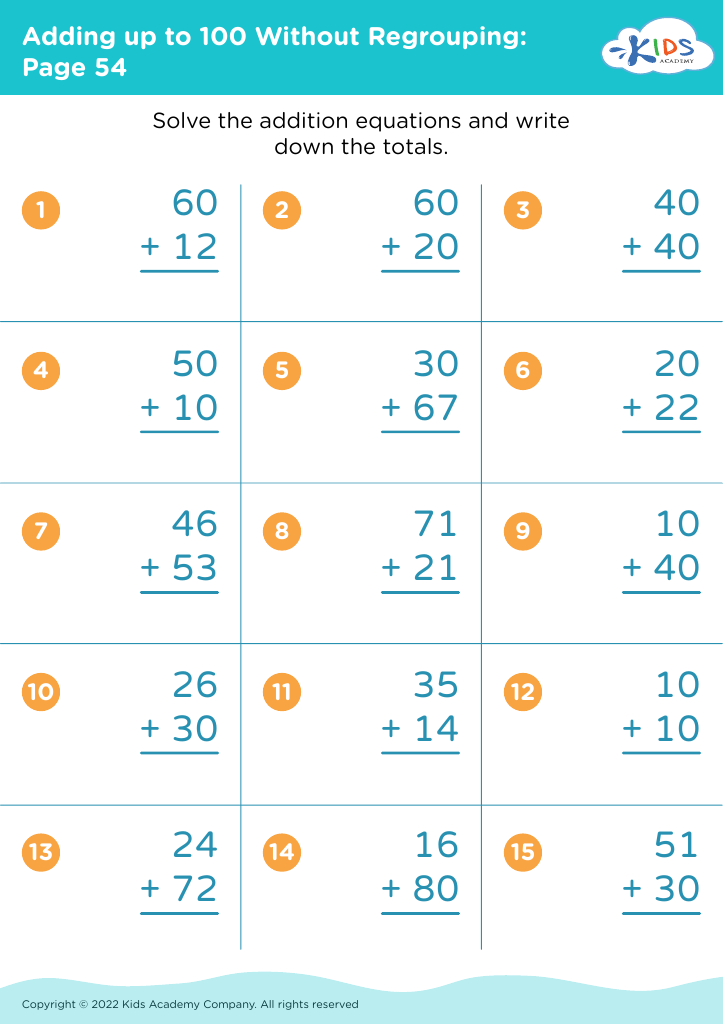
Adding up to 100 Without Regrouping: Page 54
Worksheet
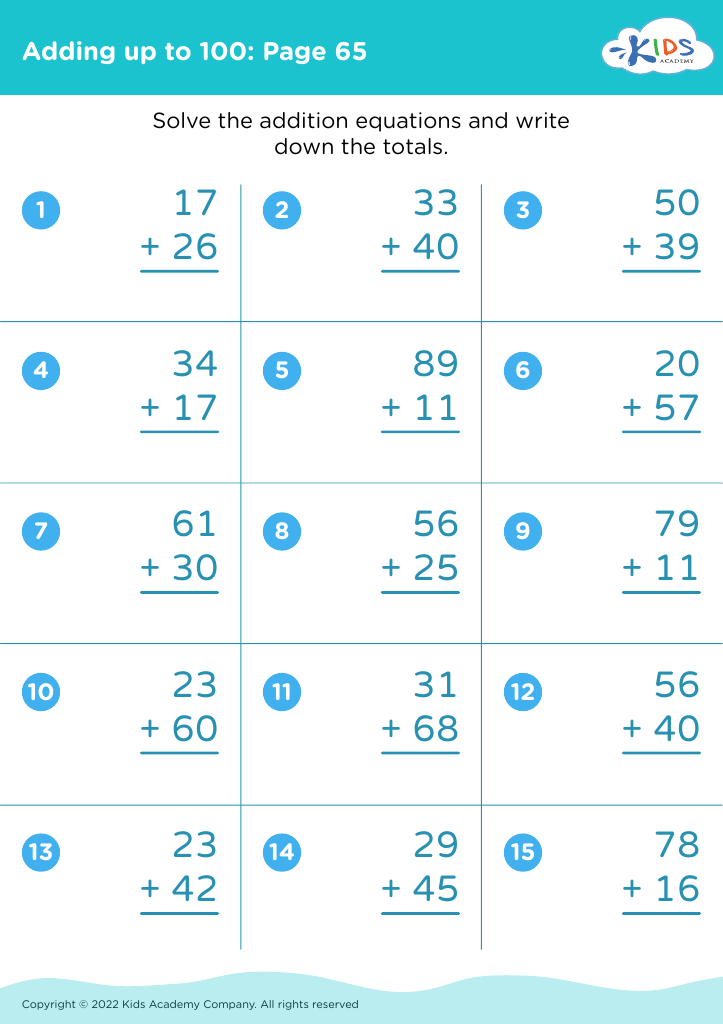
Adding up to 100: Page 65

Adding up to 100: Page 65

Adding up to 100: Page 65
Worksheet
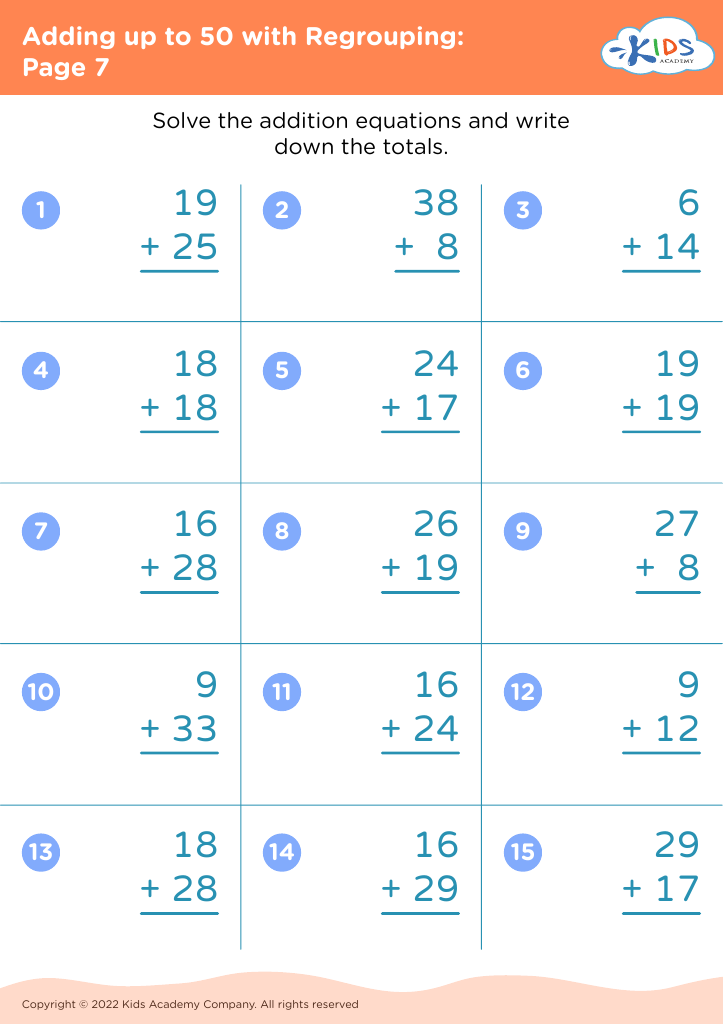
Adding up to 50 with Regrouping: Page 7
Worksheet
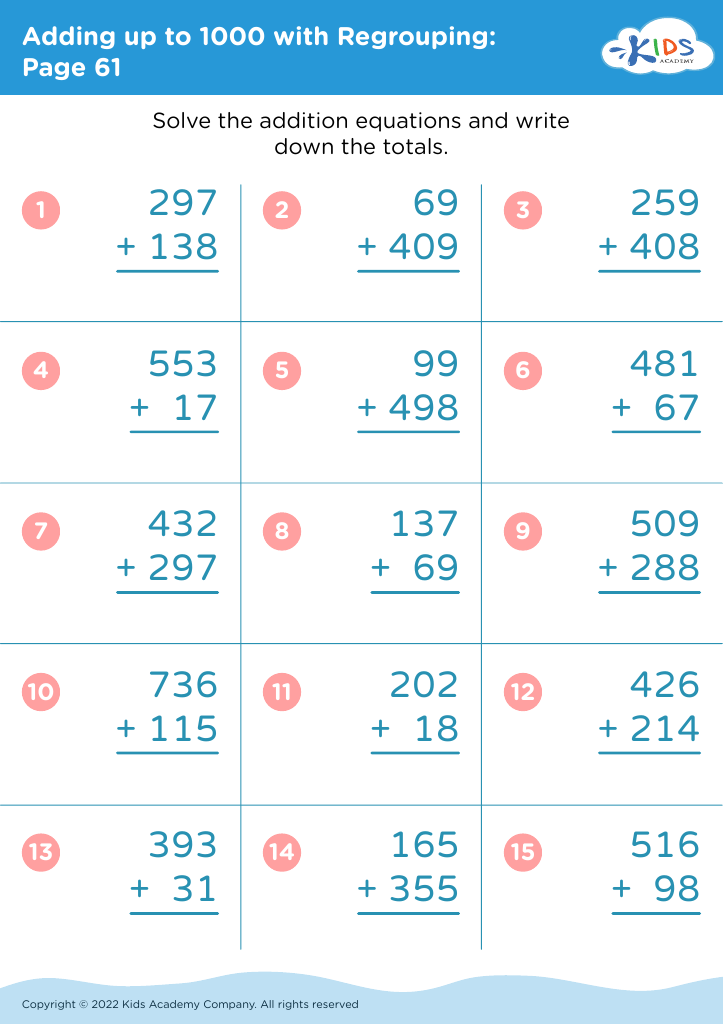
Adding up to 1000 with Regrouping: Page 61
Worksheet
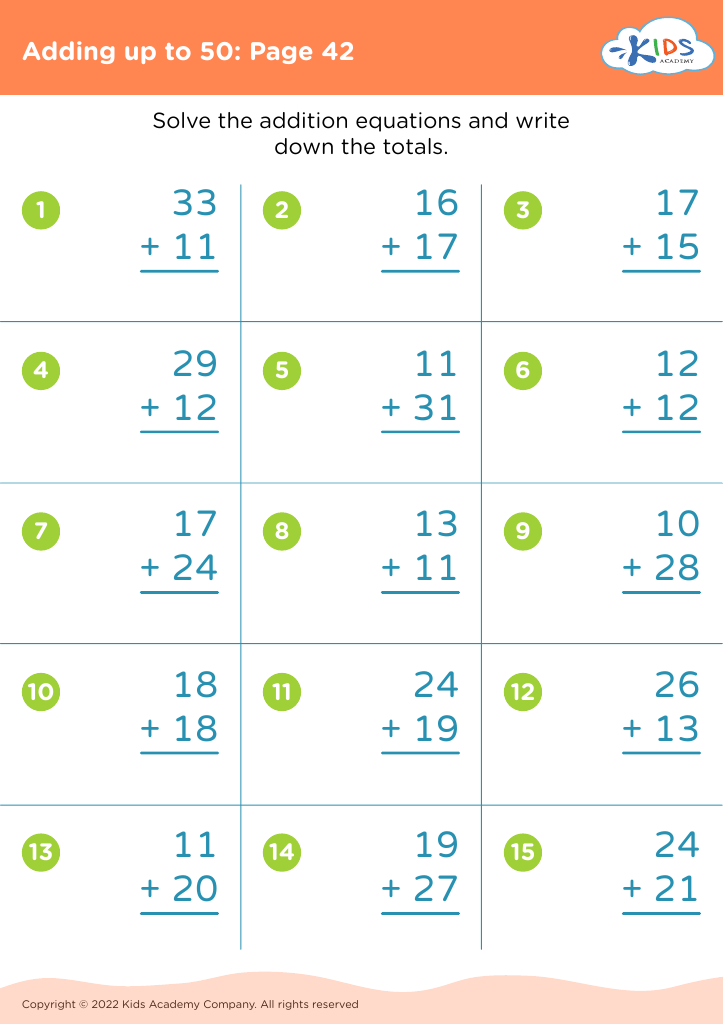
Adding up to 50: Page 42

Adding up to 50: Page 42

Adding up to 50: Page 42
Worksheet
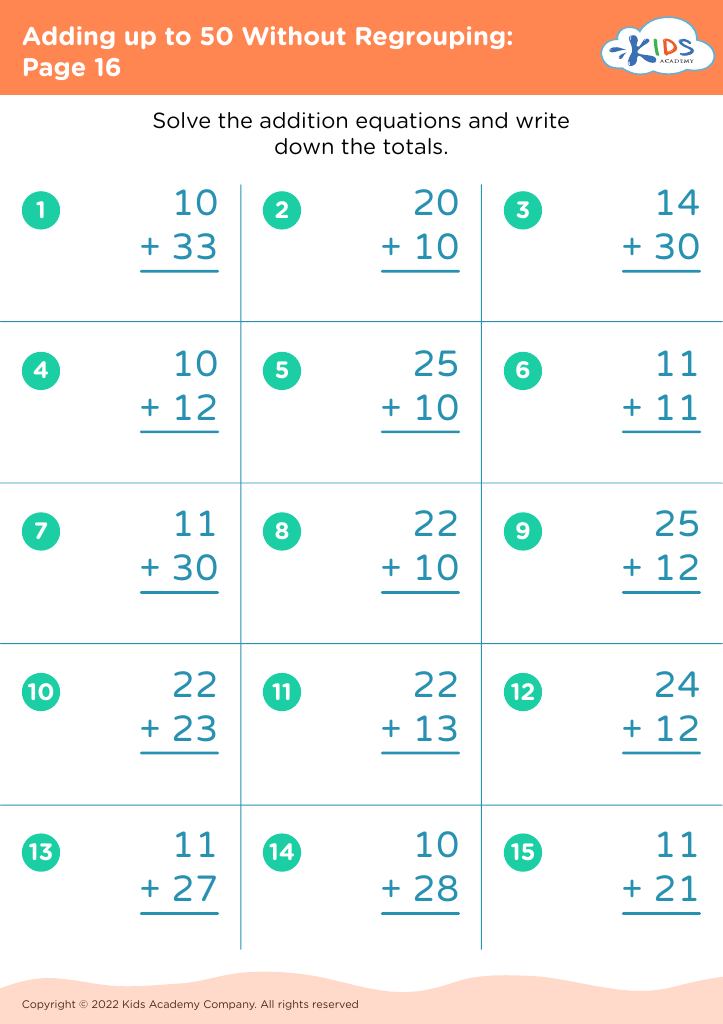
Adding up to 50 Without Regrouping: Page 16
Worksheet
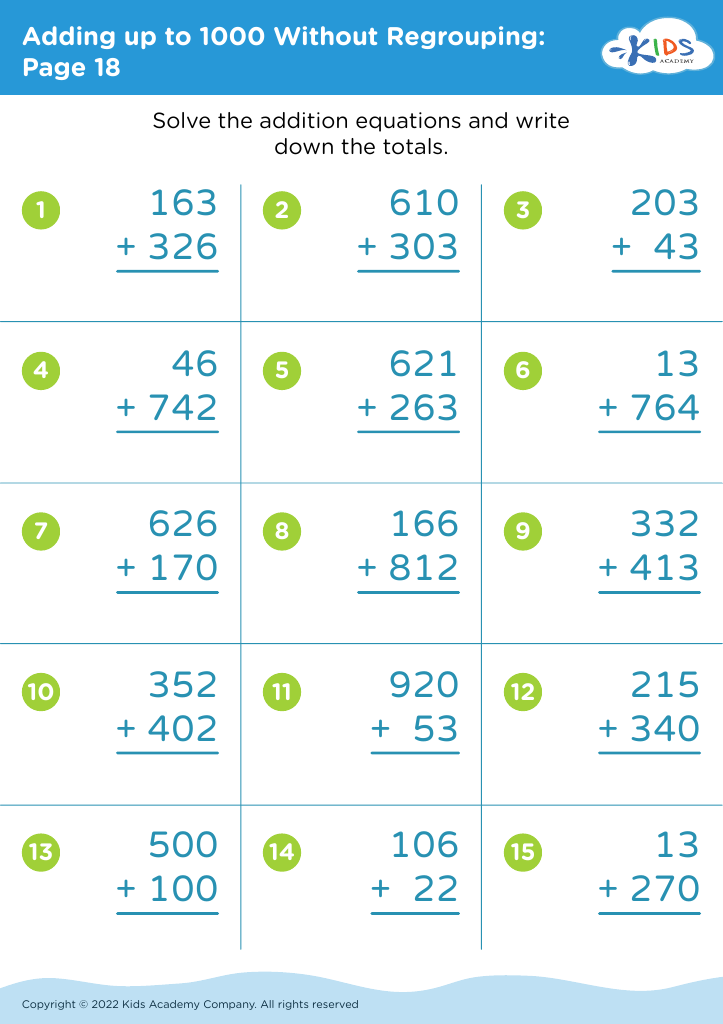
Adding up to 1000 Without Regrouping: Page 18
Worksheet
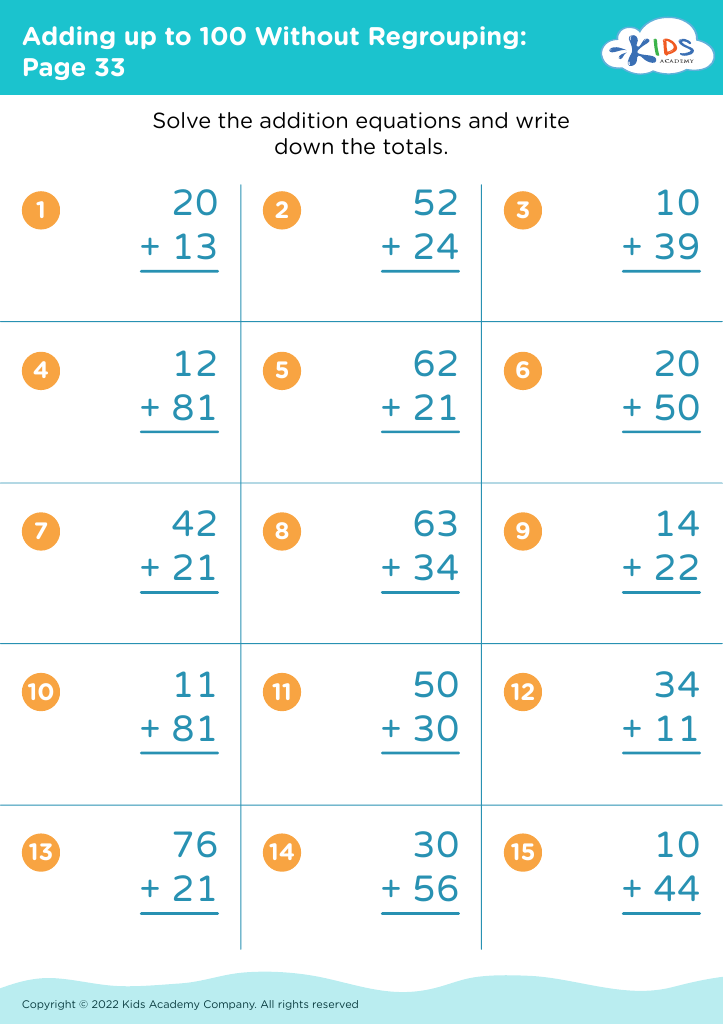
Adding up to 100 Without Regrouping: Page 33
Worksheet
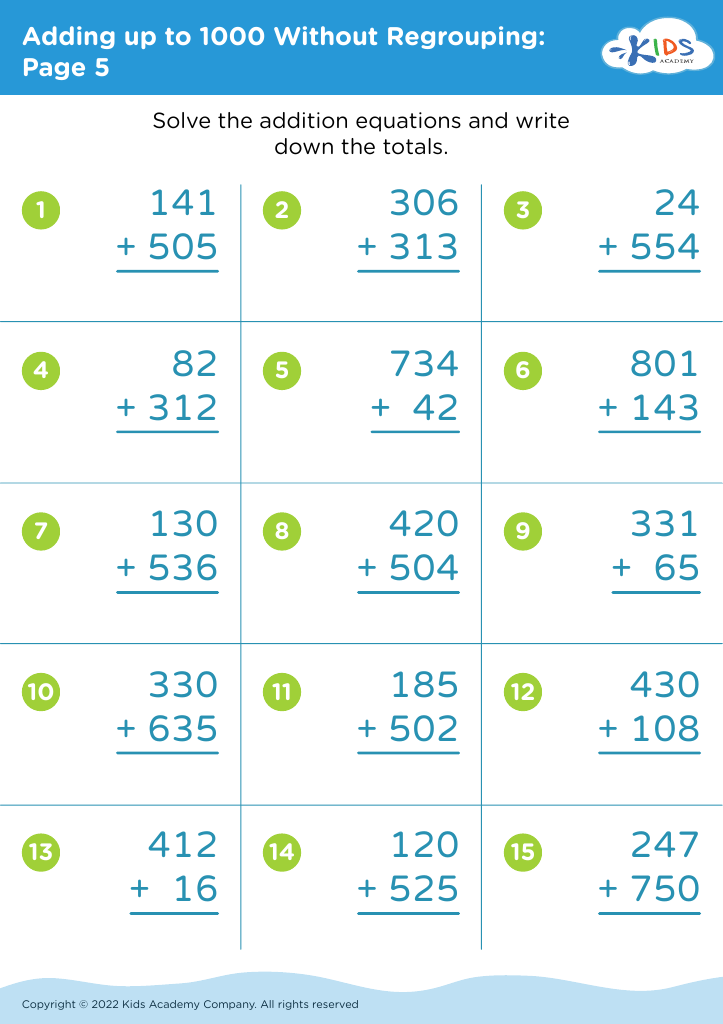
Adding up to 1000 Without Regrouping: Page 5
Worksheet
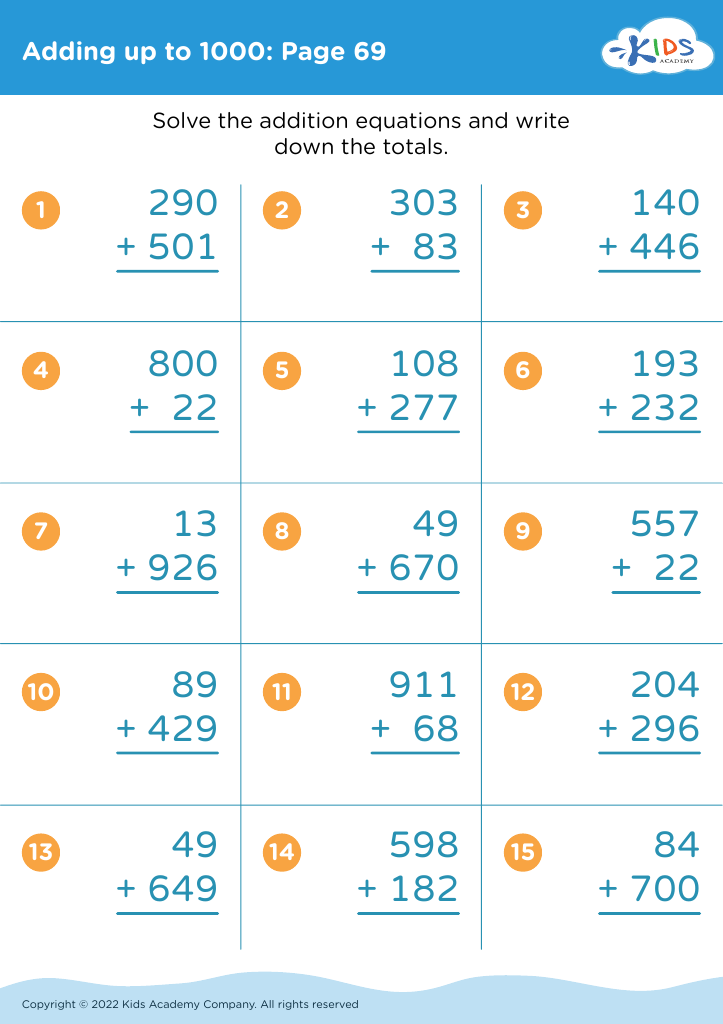
Adding up to 1000: Page 69

Adding up to 1000: Page 69

Adding up to 1000: Page 69
Worksheet
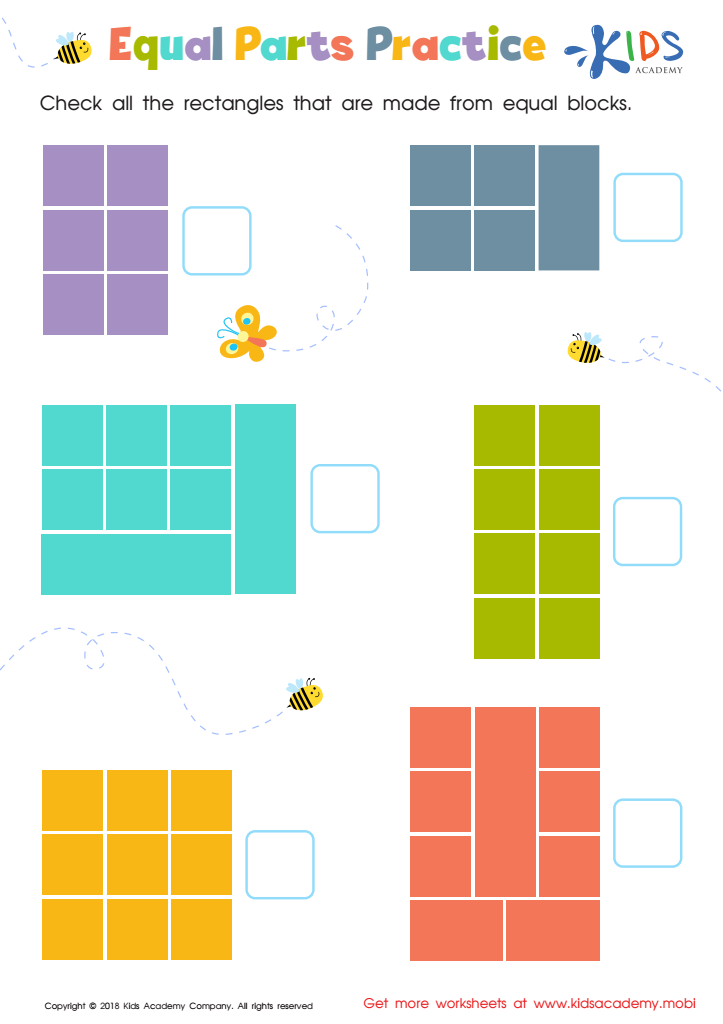
Equal Parts Practice Worksheet

Equal Parts Practice Worksheet

This worksheet checks your child's knowledge of halves and equal pieces. Have them go through the rectangles and check those made up of equal blocks. Your kids should be able to tell which parts are equal and which are not after the exercise.
Equal Parts Practice Worksheet
Worksheet
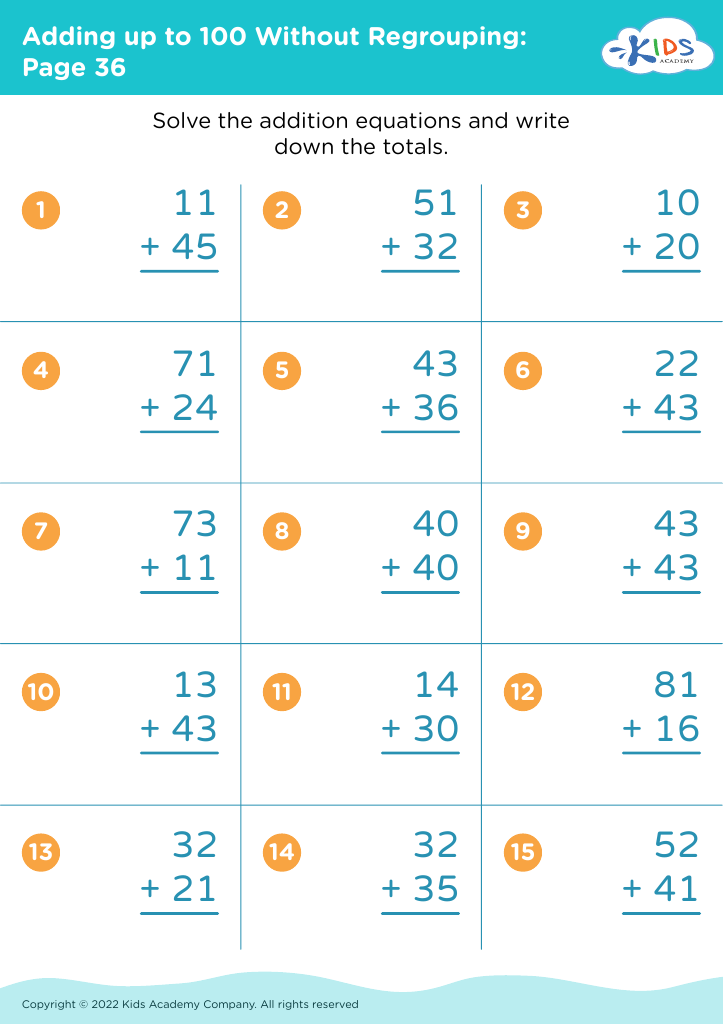
Adding up to 100 Without Regrouping: Page 36
Worksheet
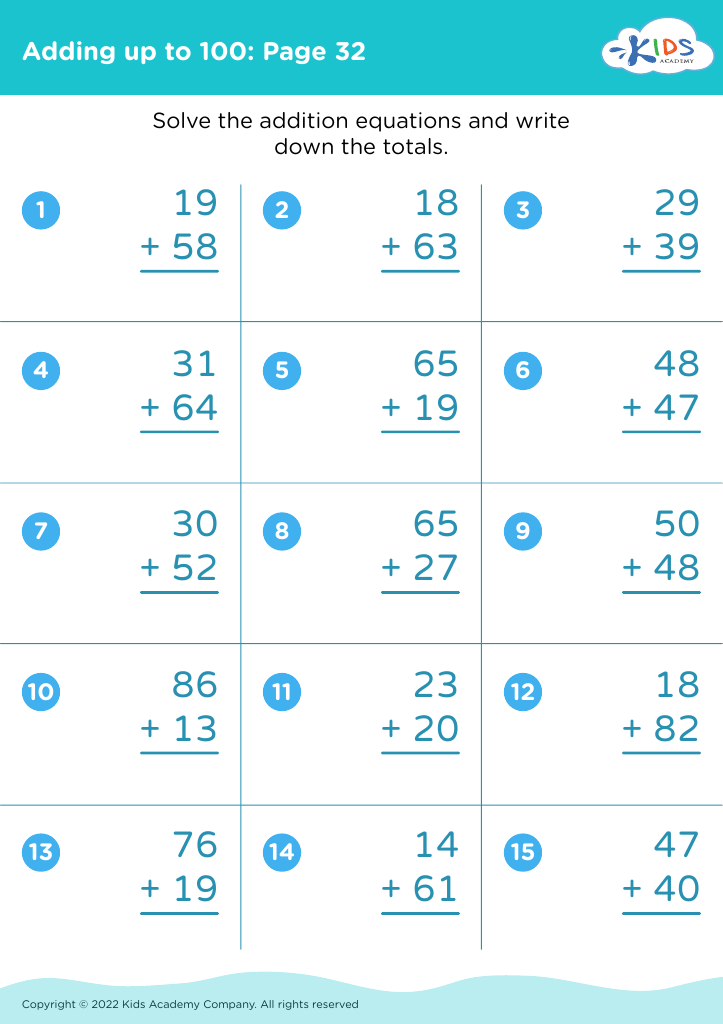
Adding up to 100: Page 32

Adding up to 100: Page 32

Adding up to 100: Page 32
Worksheet
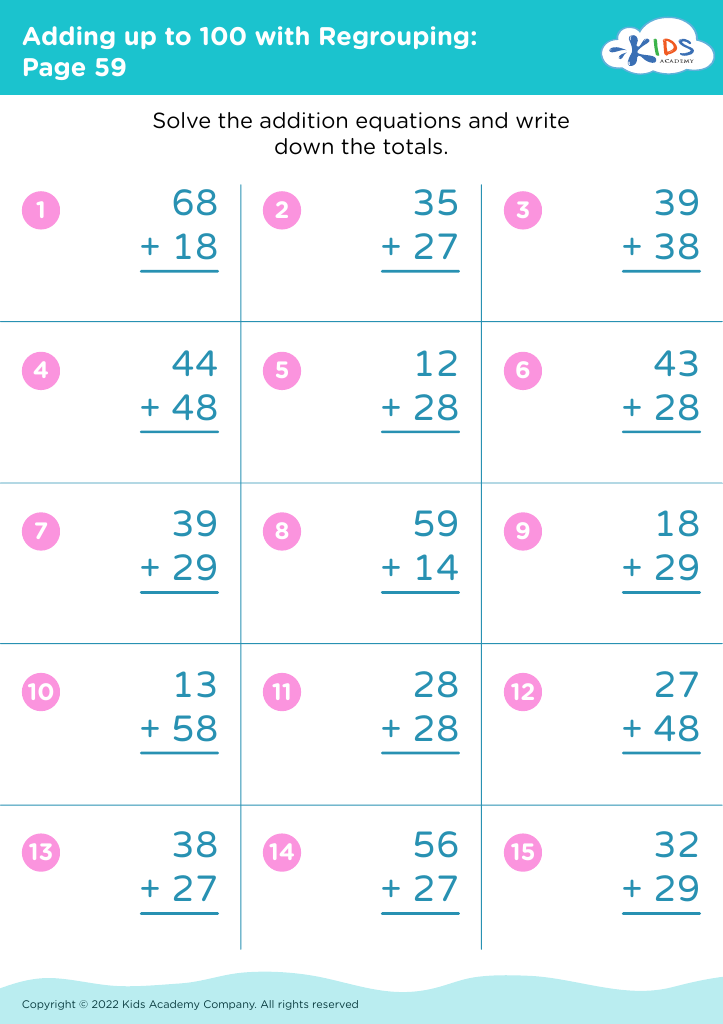
Adding up to 100 with Regrouping: Page 59
Worksheet
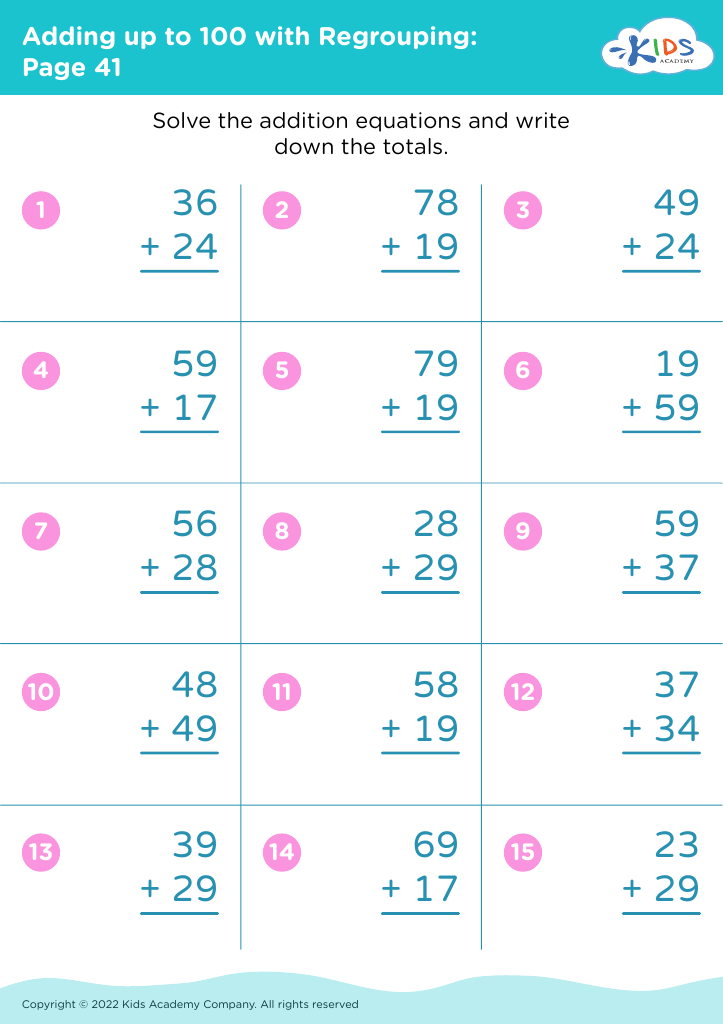
Adding up to 100 with Regrouping: Page 41
Worksheet
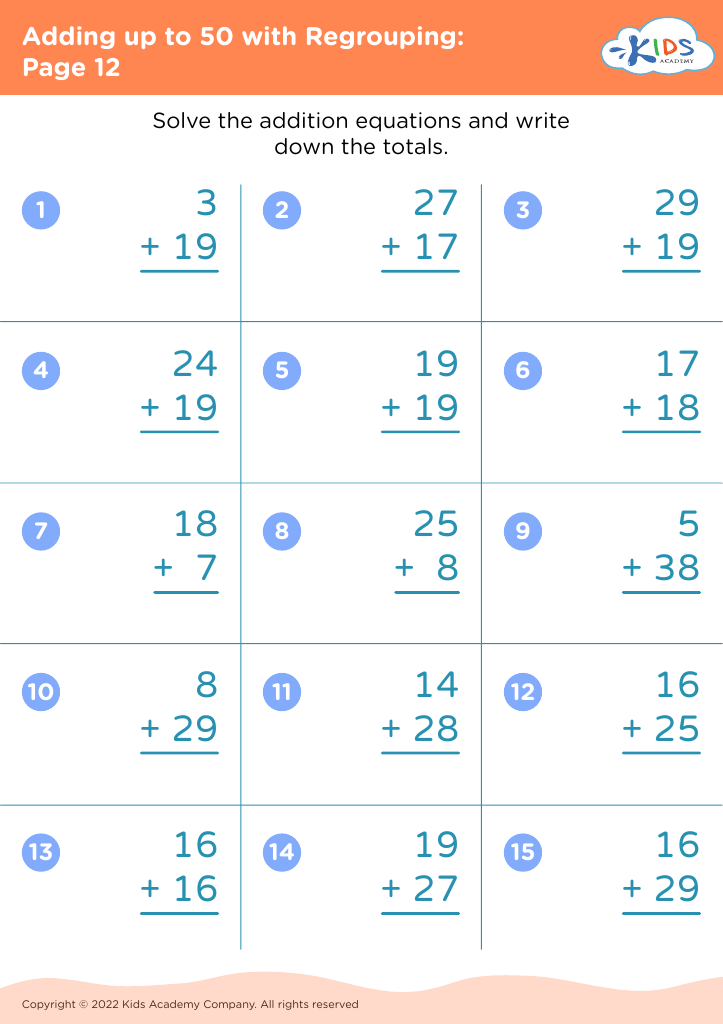
Adding up to 50 with Regrouping: Page 12
Worksheet
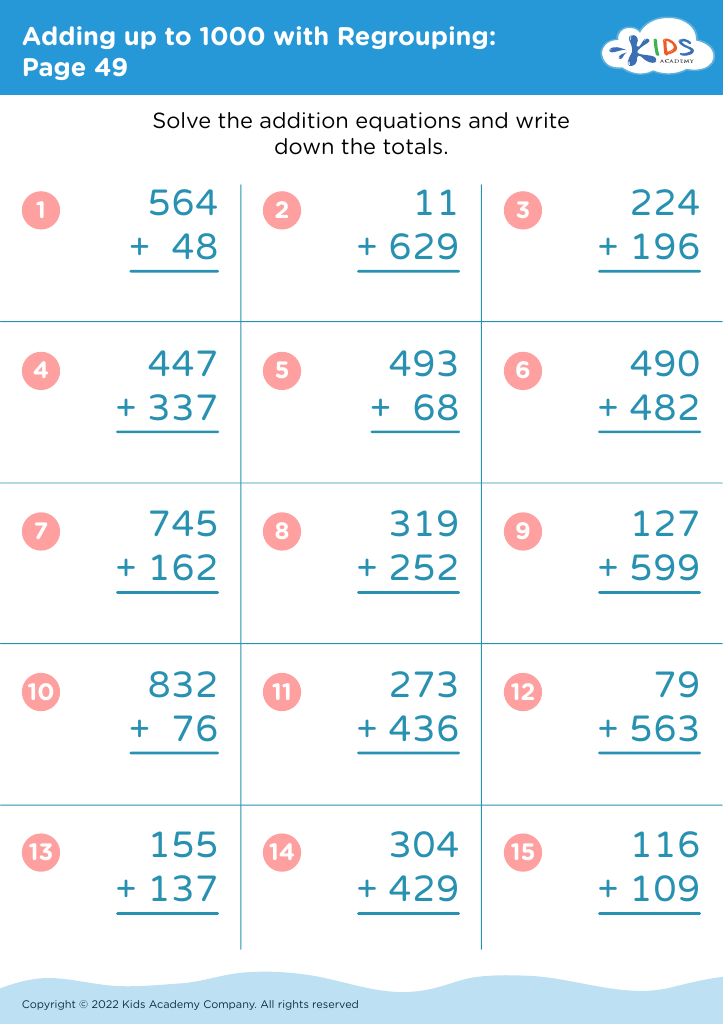
Adding up to 1000 with Regrouping: Page 49
Worksheet
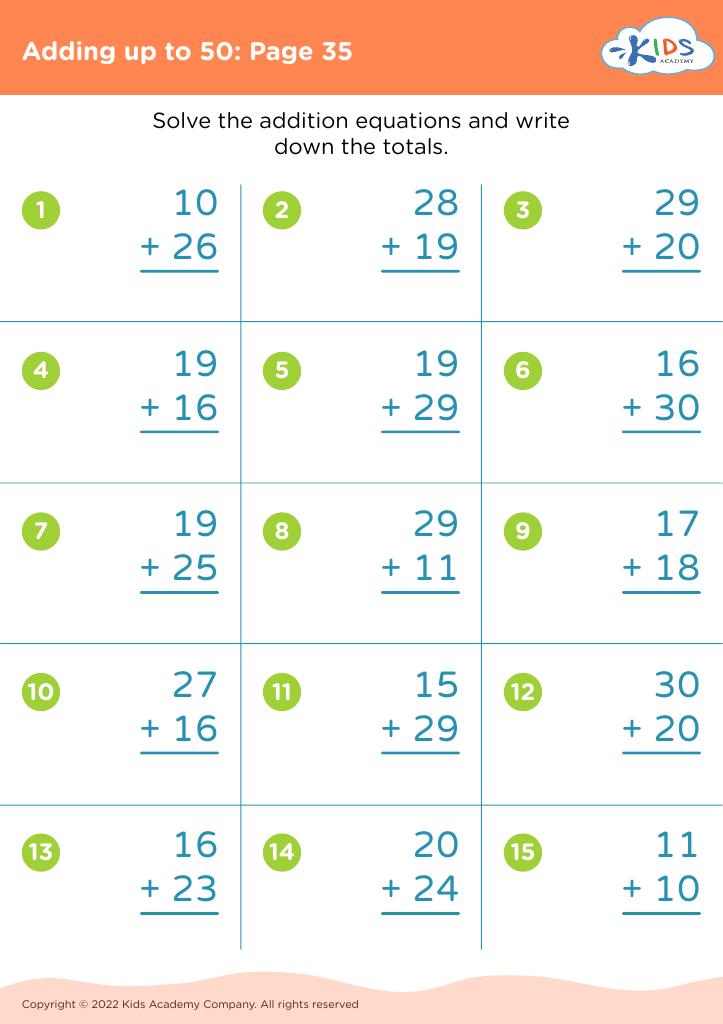
Adding up to 50: Page 35

Adding up to 50: Page 35

Adding up to 50: Page 35
Worksheet
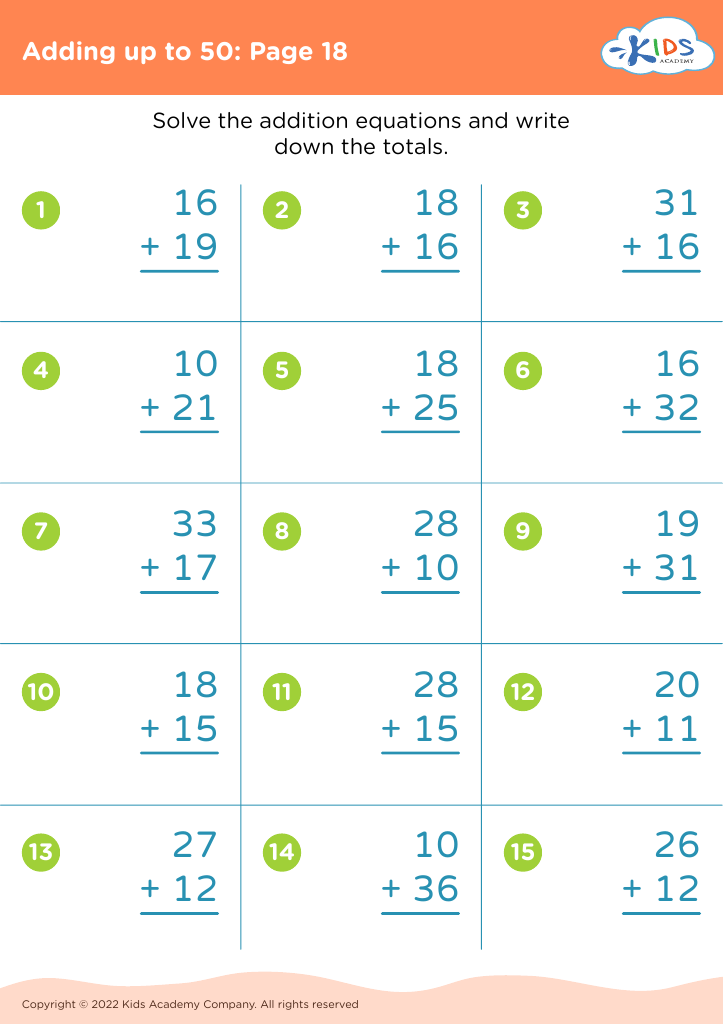
Adding up to 50: Page 18

Adding up to 50: Page 18

Adding up to 50: Page 18
Worksheet
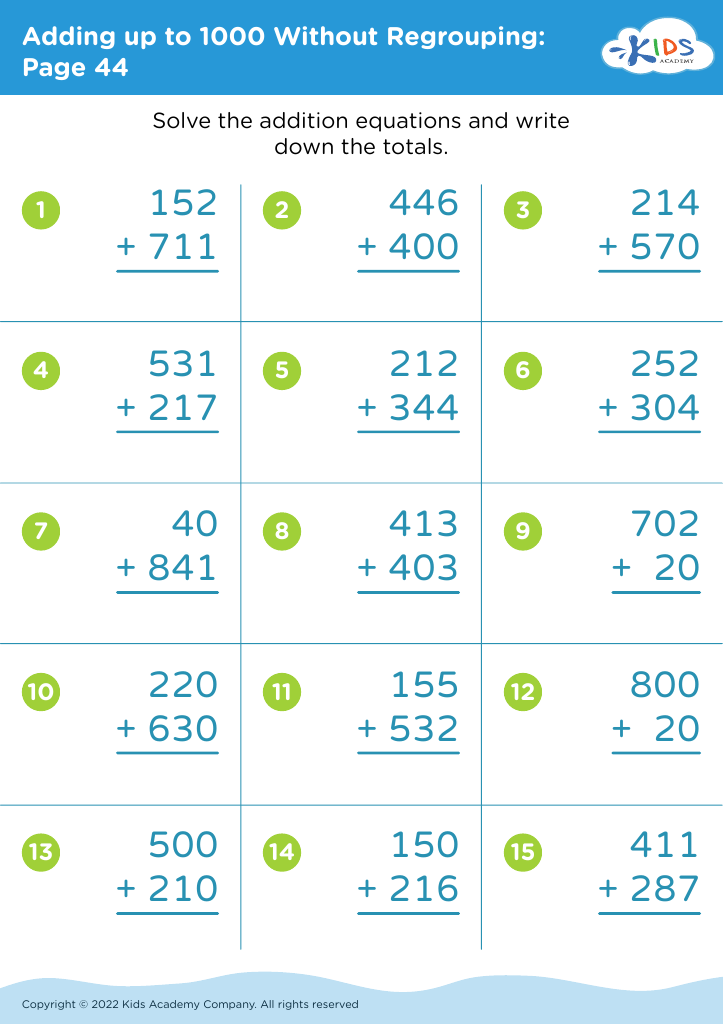
Adding up to 1000 Without Regrouping: Page 44
Worksheet
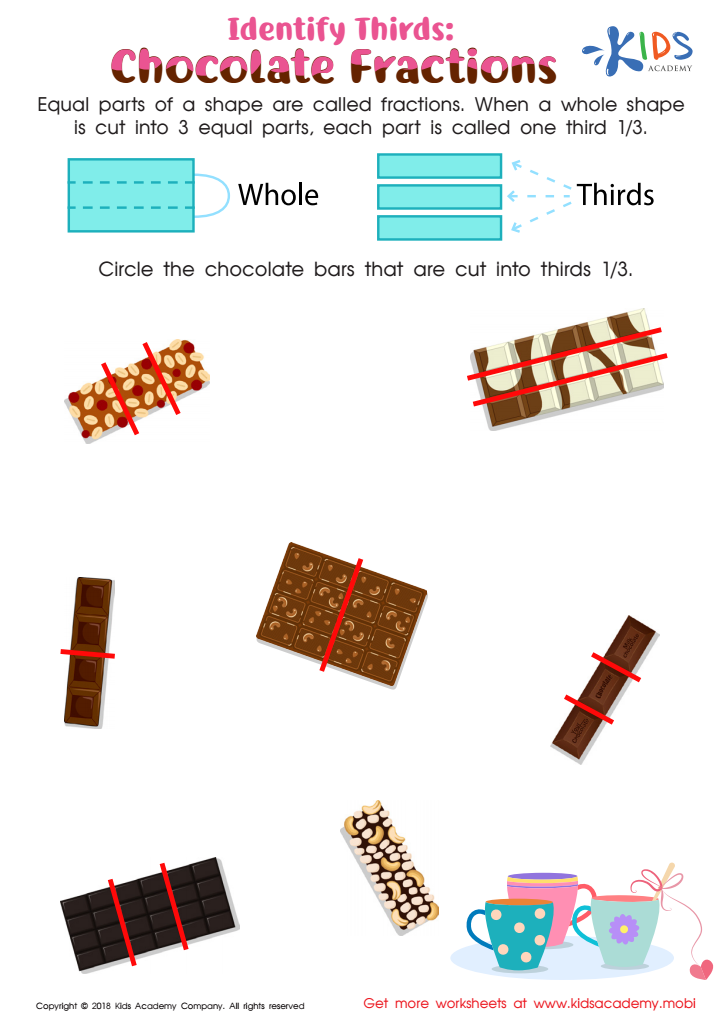
Identify Thirds: Chocolate Fractions Worksheet
Identify Thirds: Chocolate Fractions Worksheet

Divide shapes into equal parts and explain fractions to your child. Show them a worksheet with pictures of chocolate bars cut into thirds (1/3) and ask them to circle them.
Identify Thirds: Chocolate Fractions Worksheet

Worksheet
Adding up to 50: Page 23

Adding up to 50: Page 23

Adding up to 50: Page 23
Worksheet
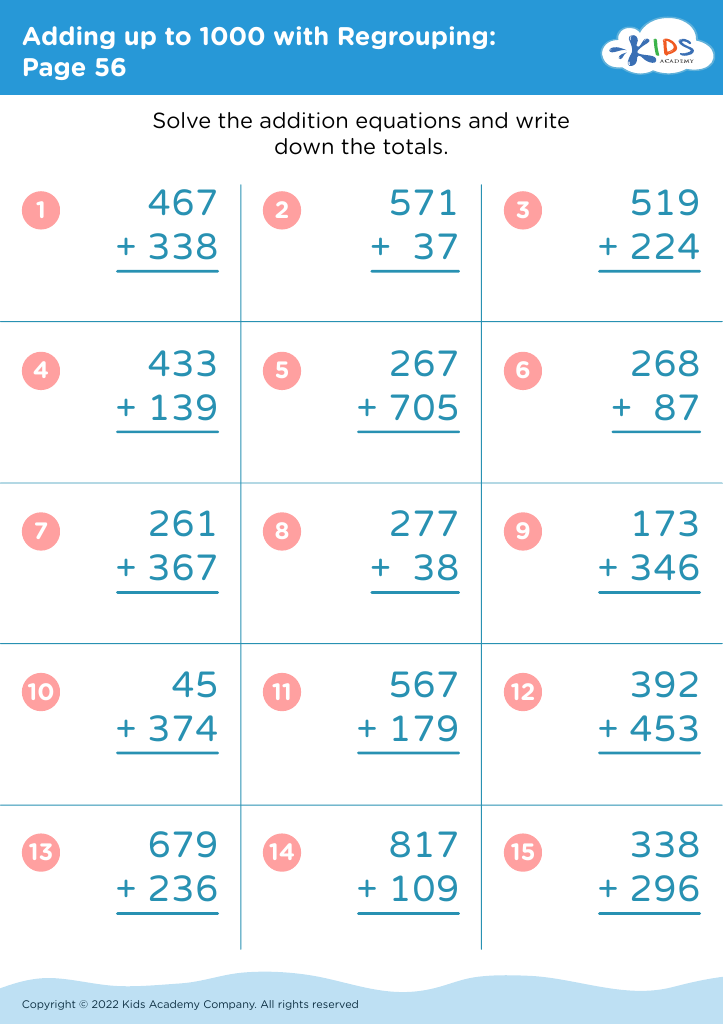
Adding up to 1000 with Regrouping: Page 56
Worksheet


Understanding fractions is crucial for second-grade students as it serves as a foundation for their future success in mathematics and real-life applications. At this stage, children begin to comprehend the concept of parts and wholes, which is essential for their cognitive development. Mastery of fractions enhances their problem-solving skills and encourages critical thinking—a skill that will benefit them across various subjects.

Furthermore, fractions are omnipresent in everyday life, from sharing snacks to measuring ingredients in cooking. By grasping the significance of fractions early on, children build practical skills that will facilitate their understanding of more complex mathematical concepts later, such as addition and subtraction of fractions, ratios, and even percentages.

Parents and teachers should advocate for engaging and interactive teaching methods that make fractions approachable and enjoyable for children. Activities like visual aids, cooking, and stickering can make learning fractions fun and accessible. Engaging with fractions in a supportive environment not only aids in academic development but also fosters a positive attitude towards learning math, setting the stage for lifelong mathematical proficiency. In essence, nurturing this understanding is vital for children's academic journey, social interactions, and daily decision-making.