ELA Skills Brush-Up with Kids Academy: Getting Ready for Third Grade
Aug. 4, 2026
Written by Lori Toney, English teacher, educational writer and mother of three school children
The third grade represents a pivotal jump from second grade when it comes to literacy development. In the early elementary years, the focus is centered squarely around learning to read. But by the end of the second grade, something amazing happens; kids are equipped with all the necessary skills to read more independently. While they are still expanding their vocabulary and decoding larger words, they should be able to read grade level texts without much help. As a result, the third grade shifts the focus from learning to read to using reading as a tool for deeper learning.
Of course, this doesn’t mean that children are finished learning to read. Third graders continue to improve their fluency while broadening their literacy skills to gather information and explore new ideas. This may seem like quite a big jump, and it is! Luckily, summer is an excellent time to spend more time reading to strengthen key ELA skills, like fluency and reading comprehension. Below is a guide that reviews four essential skill areas to focus on with your child for a successful start to third grade!
1. Reading Fluency and Comprehension
Second graders are expected to read grade-level texts accurately and smoothly, and many parents are simply unaware whether their child can do this because they are still reading to their kids instead of allowing them to take the lead. To gauge fluency, it’s important to offer brief passages that are not too easy or too difficult. Use Kids Academy’s reading worksheets for practice.
Worksheet: Jack and the Beanstalk
Worksheet: Reading Fiction: The First Day


Ask your child to read the passages aloud, and listen for how smooothly, accurately, and quickly they progress through each. Did he or she need help with decoding any words, or were there any lines or words missed or skipped?
After reading for fluency, check on your child’s comprehension. Each worksheet includes a question or two to assess whether they are able to understand what they’ve read. Read through the questions together, and avoid giving the answer! If your learner is unable to answer the question right away, teach him or her to go back to the passage and read quietly until they find the answer.
2. Understanding Literature and Informational Text Features
Soon, your budding third grader will read a wide variety of texts from poetry to informational articles. To prepare, begin introducing different genres and discussing the various attributes that make them unique. For example, poetry is often written using shorter lines and groups of words called stanzas, and it can include rhyming words to make it look and sound even more interesting. Reinforce your child’s understanding of rhyming with this online resource.

Third grade also places an increasing emphasis on informational text. This is where students make the switch from simply learning how to read to using their reading skills to learn new information in all subject areas. There’s also a lot to learn about informational texts! They often include diagrams, charts, and new vocabulary words, all in addition to teaching new facts. Check out the following non-fiction reading sheets and discuss how information is presented in each of them.
Worksheets 1: Life Cycle of Corn
Worksheet 2: The First Thanksgiving


3. Increasing Vocabulary
When we think of learning new vocabulary, most assume this means learning new, whole words. However, third graders learn more about the parts of words so they can decode new words without needing to look them up. This includes learning word parts, such as prefixes, root words, and suffixes.
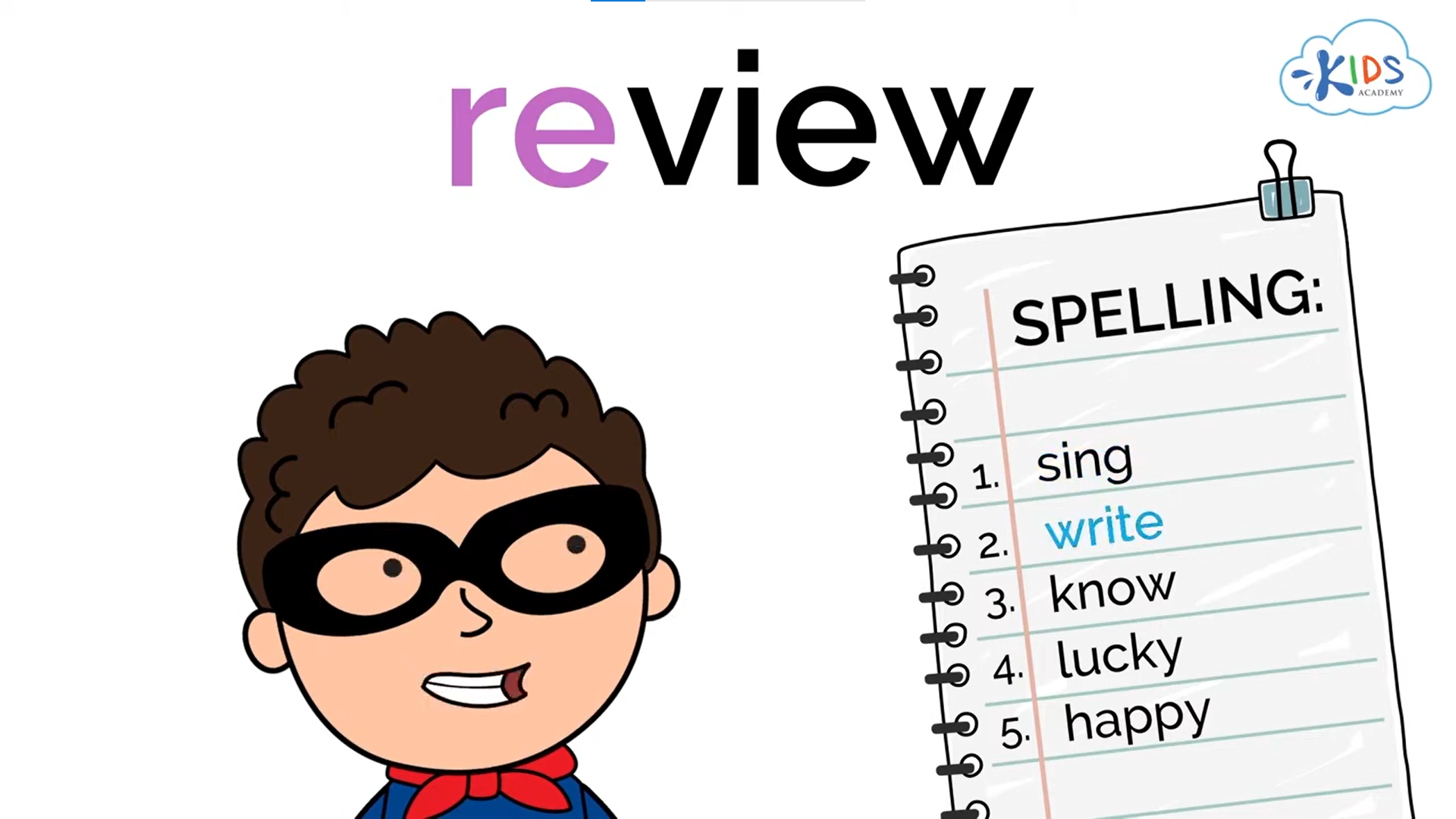
Video: Prefixes: -un, -re, -dis, -by

In the video below, Kids Academy teaches about the most common prefixes and suffixes that learners should look for to quickly decode common words. Inside, you’ll find a range of examples to show how prefixes and suffixes change the meaning of root words.
Assess your child’s learning with this online quiz over prefixes and root words.

Students will also discover compound words, which pair at least two words together to make a new word. By learning how words are constructed, they can build a bigger vocabulary without having to look up every new word they find!
Worksheet: Let’s Practice Compound Words


4. Writing Conventions
Last, but certainly not least, rising third graders should brush up on their writing skills, especially when it comes to parts of speech, grammar, and punctuation. While most adults don’t often think about parts of speech, knowing how a word functions in a sentence is essential for younger learners to construct meaningful sentences as they begin to write in paragraphs. Review parts of speech starting with nouns, verbs, and adjectives before moving on to adverbs and pronouns.
Worksheet: Adjectives: At the Zoo


Each of the printable grammar worksheets above review the basic parts of speech. Don’t forget to remind learners what they are and discuss how they function differently in sentences!
Finally, brush up with punctuation rules and when to use which with our Punctuation video that reviews the three basic end punctuation marks: the period, the exclamation mark, and the question mark. Follow up with reviewing more advanced punctiation rules by using the interactive quiz.


The summer before third grade offers an opportunity to strengthen key ELA skills that will foster success in the upcoming school year. Asking your child to read to you, watching educational videos and completing quick exercises like those shown above will work to maintain the progress made in the second grade while preparing for challenges ahead. By focusing on crucial ELA skill areas, you can help your rising third grader enter the classroom this fall with confidence a solid foundation for learning.