Understanding word problems Grade 2 Worksheets
3 filtered results
Difficulty Level
Grade
Age
-
From - To
Subject
Activity
Standards
Explore our "Understanding Word Problems Grade 2 Worksheets" designed to enhance your child's critical thinking and problem-solving skills. These engaging worksheets help second graders decode math problems presented in narrative form, allowing them to analyze information and apply addition and subtraction strategies effectively. Each activity is crafted to improve comprehension, encouraging students to read carefully, identify key details, and develop logical reasoning. With colorful illustrations and interactive exercises, these worksheets make learning fun and effective. Perfect for classroom use or at-home practice, they prepare young learners for more complex math concepts in the future. Start mastering word problems today!
Favorites
With answer key
Interactive
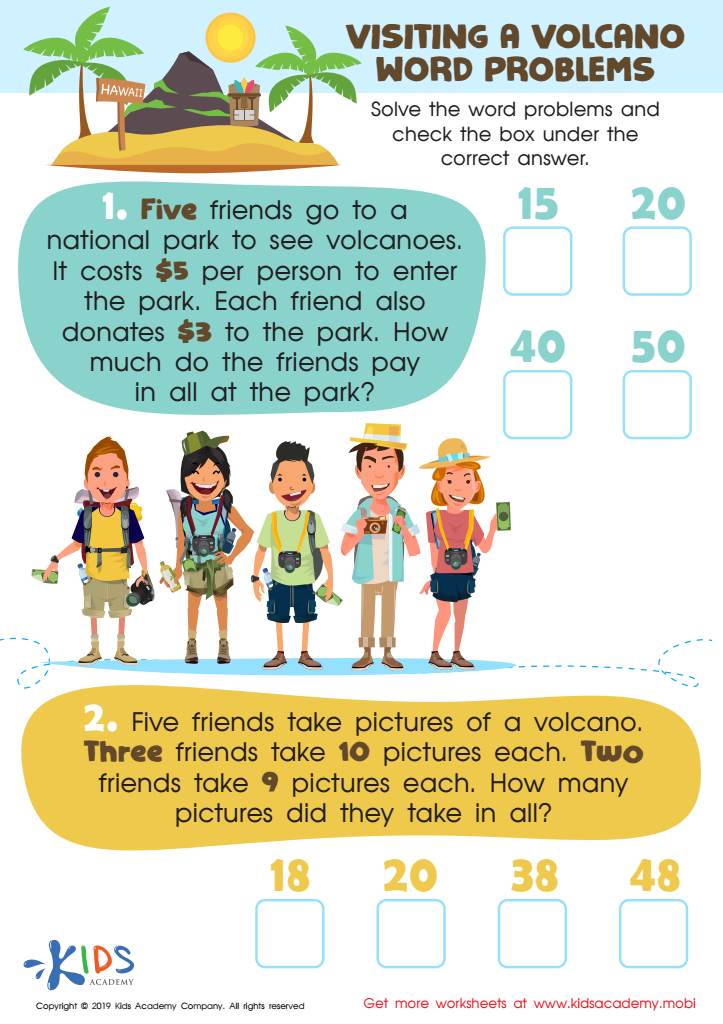
Visiting a Volcano Word Problems Worksheet
Read the word problems to your kids, note down the numbers and help them solve. Check the box under the correct answer. Word problems are sentences posed as math problems; just like regular number problems, first you must understand and interpret the sentence.
 Assign to My Students
Visiting a Volcano Word Problems Worksheet
Worksheet
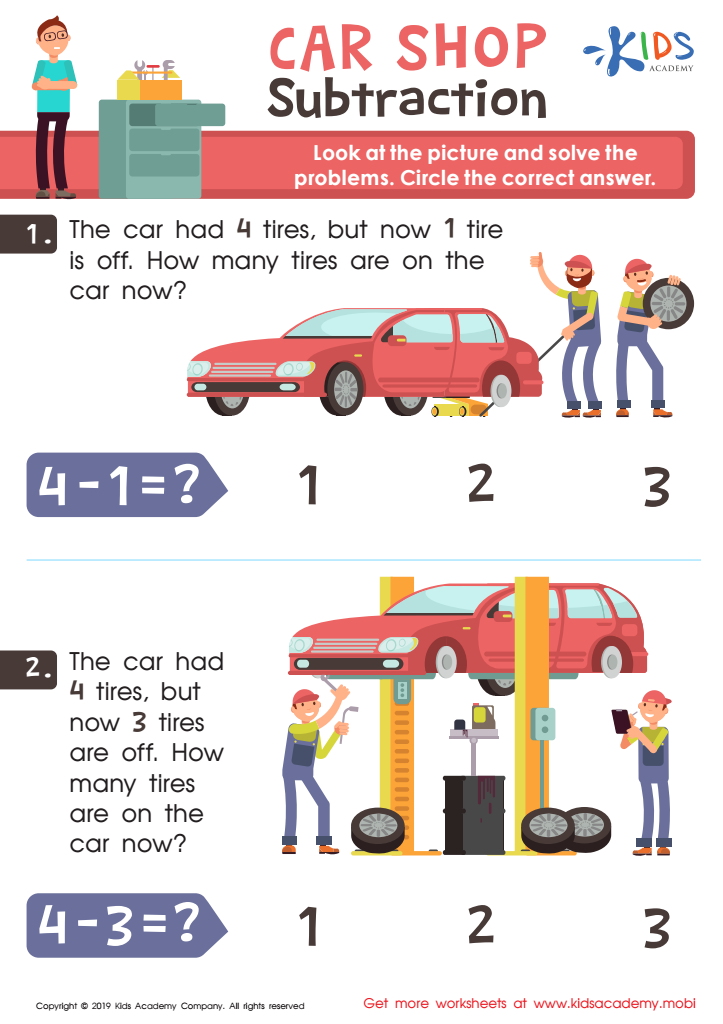
Car Shop Subtraction Worksheet
Encourage your kids to practice addition and subtraction with this worksheet. Read the word problems aloud, help them solve and check the answer from the provided options. With enough exercises and guidance, this task should be fairly easy.
Car Shop Subtraction Worksheet
Worksheet
Join Kids Academy for Free
Who is primarily going to use this learning content?






Understanding word problems is crucial for second graders as it lays the foundation for mathematical reasoning and critical thinking. At this stage, students are transitioning from basic arithmetic operations to applying these skills in real-life scenarios. When parents and teachers emphasize word problems, they help children learn to decode and interpret the language of mathematics, enabling them to discern what a problem is asking and identify the necessary operations to find a solution.
Furthermore, engaging with word problems trains students to think critically and develop problem-solving skills. This not only enhances their mathematical abilities but also cultivates perseverance and resilience, as students learn to work through challenges before arriving at an answer. Additionally, these skills extend beyond the classroom; they prepare children for future academic endeavors and everyday situations that require analytical thinking.
Moreover, parents’ involvement in this process, whether through discussing math concepts at home or encouraging exploratory discussions about word problems, reinforces the significance of learning. By prioritizing word problems, parents and teachers collectively foster a love for math, promote comprehension, and encourage collaboration, contributing to well-rounded, confident learners ready to tackle future challenges.