Improve counting skills Grade 2 Adding up to 100 Without Regrouping Worksheets
3 filtered results
-
From - To
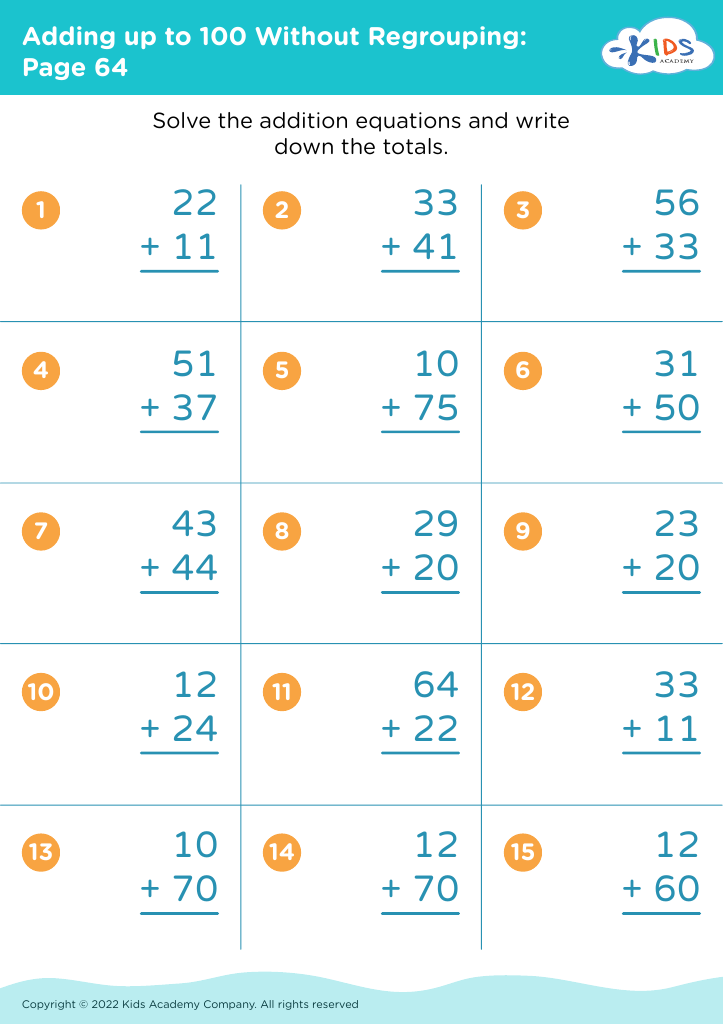
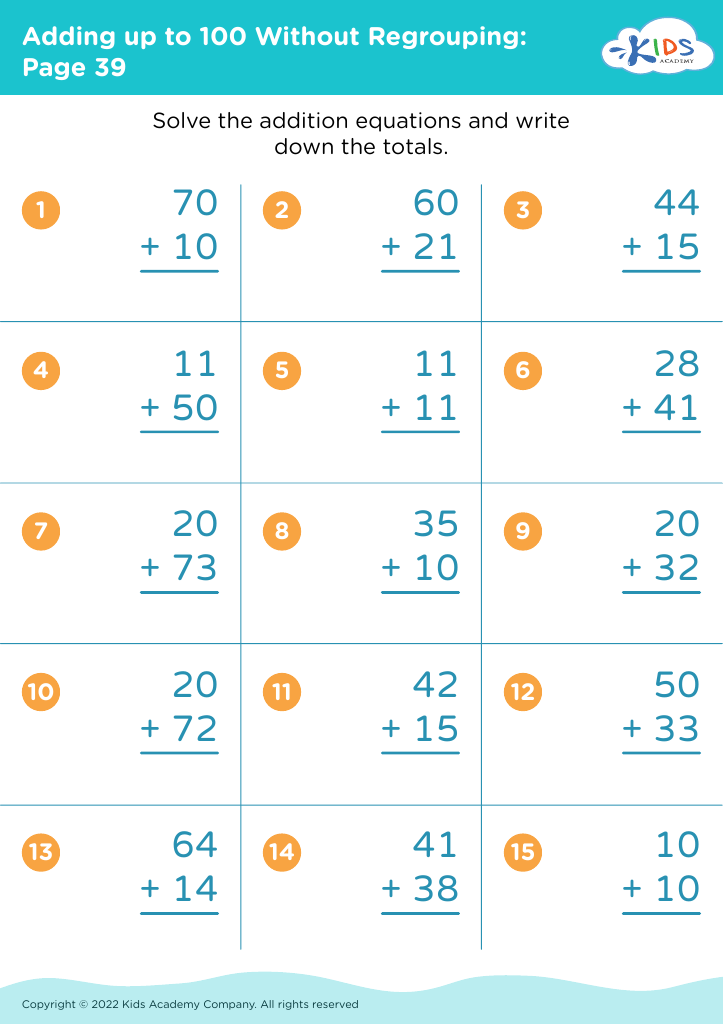
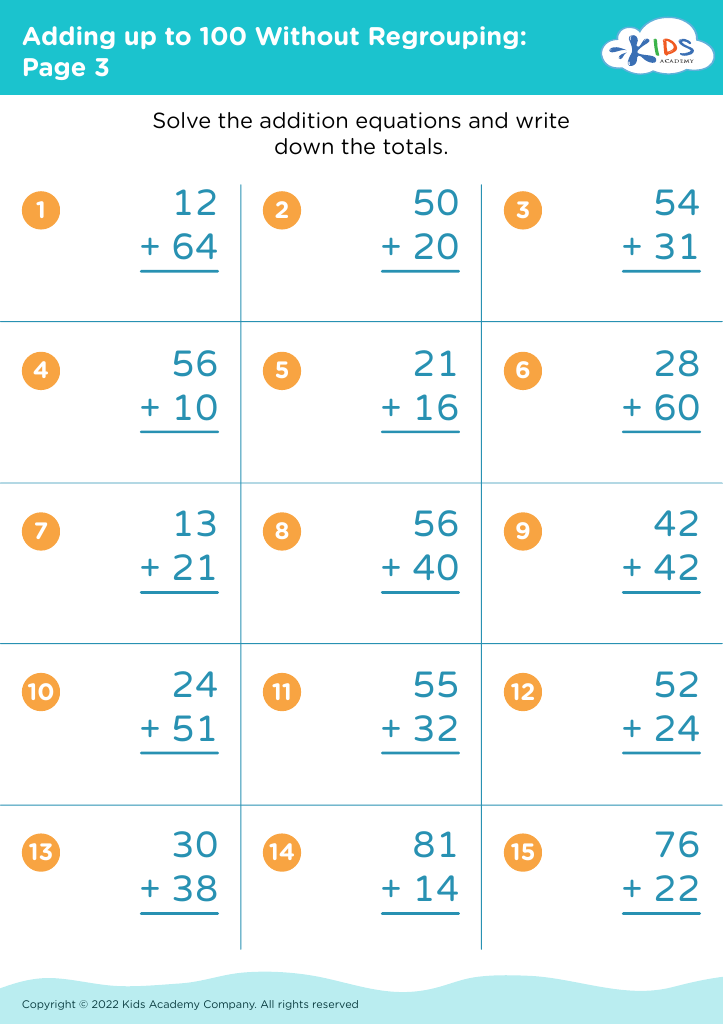
Enhance your Grade 2 students' counting skills with our engaging "Adding Up to 100 Without Regrouping Worksheets." Designed to make learning fun and effective, these worksheets focus on building a solid foundation in addition through easy-to-understand exercises. Students will practice adding numbers up to 100 without regrouping, reinforcing their number sense and improving mental math abilities. Each worksheet features vibrant illustrations and step-by-step guidance, perfect for enriching classroom lessons or supporting at-home learning. By mastering these activities, children will gain confidence in their mathematical skills, making counting a breeze! Start your journey to math mastery today!




Improving counting skills, particularly in grade 2, is crucial for a child's academic foundation and overall development. Mastery of addition up to 100 without regrouping is a milestone that fosters confidence in mathematics. At this stage, students develop essential skills for problem-solving, critical thinking, and analytical reasoning, which are critical not only for math but for other subjects as well.
When parents or teachers emphasize counting and basic addition, they equip children with the necessary tools to understand more complex mathematical concepts in later grades. Additionally, proficient counting expands children's understanding of number relationships and promotes a sense of numerical fluency. This early competency can reduce anxiety around math, paving the way for a more positive attitude toward the subject.
Moreover, strong addition skills enhance life skills such as budgeting, time management, and even helping with homework. Collaboratively practicing these skills at home or in the classroom fosters a supportive learning environment, encourages family bonding, and offers parents a chance to actively engage in their child's education. Ultimately, nurturing counting skills inspires a lifelong love of learning, laying the groundwork for future academic challenges and encouraging a growth mindset in all areas of life.