Number Recognition Grade 2 Adding up to 100 Without Regrouping Worksheets
8 filtered results
-
From - To
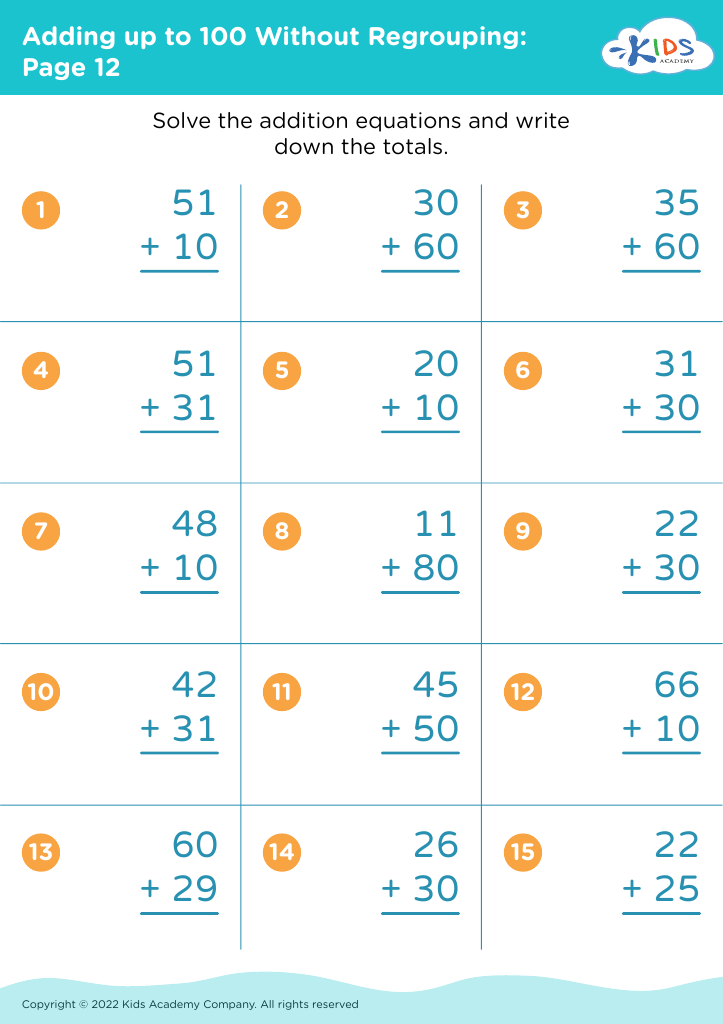
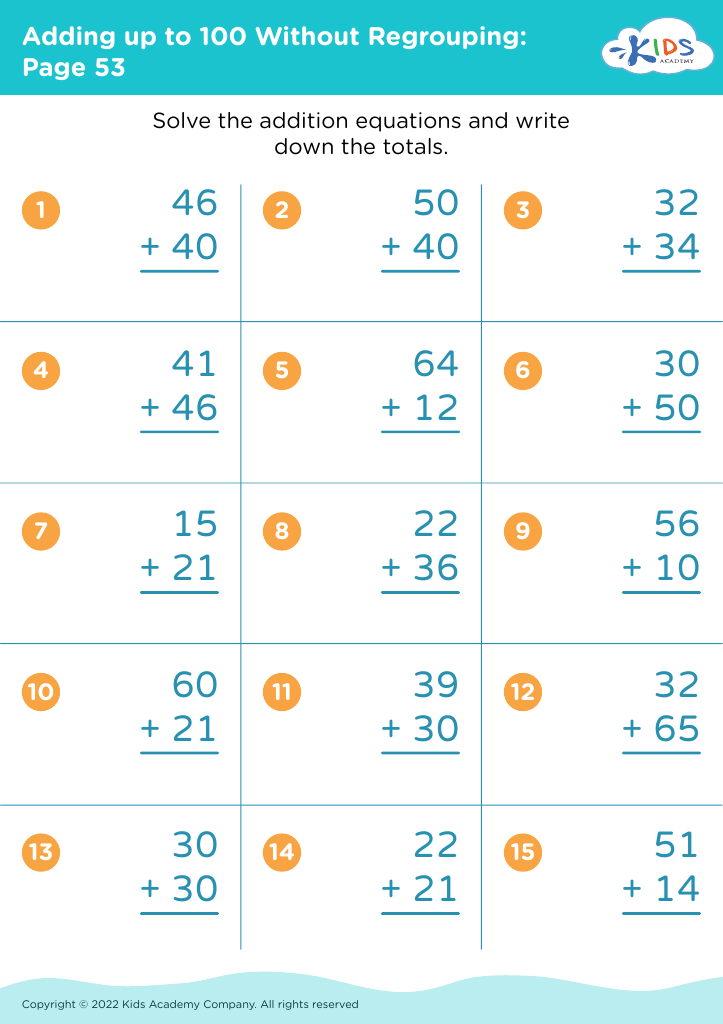
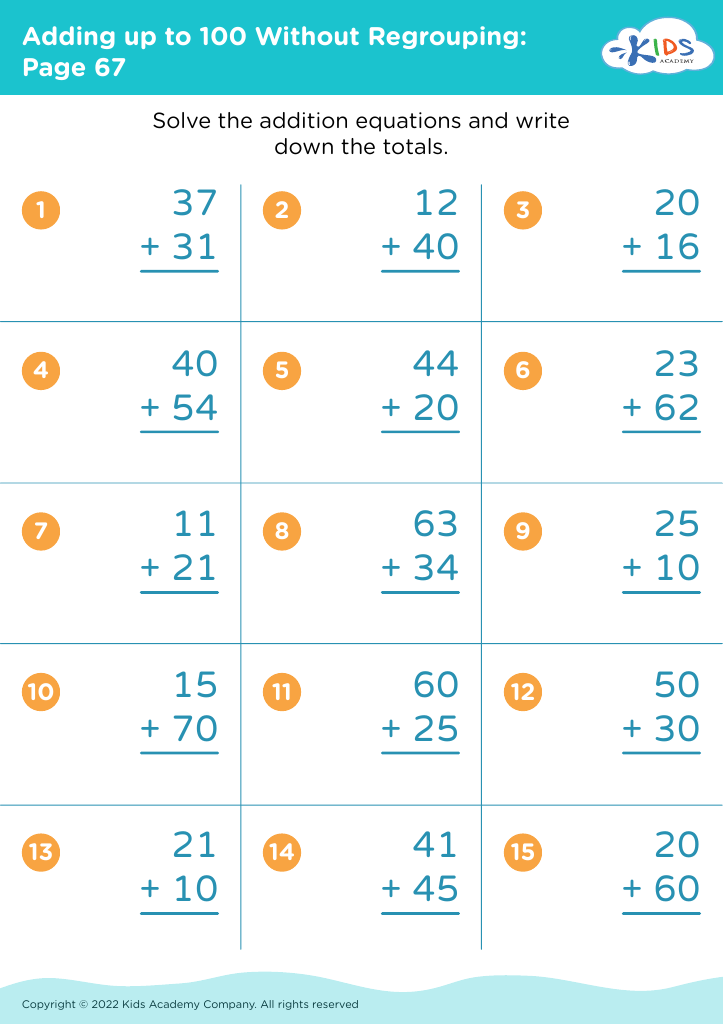
Boost your second grader's number recognition skills with our engaging "Adding Up to 100 Without Regrouping" worksheets! These thoughtfully designed exercises help young learners practice adding numbers without the complexity of regrouping, ensuring a solid foundation in math. Each worksheet features colorful visuals and interactive problems that make learning fun and effective. Whether used in the classroom or at home, these worksheets are perfect for reinforcing essential math skills while enhancing confidence in addition. Prepare your children for success as they explore number patterns and improve their ability to recognize and calculate numbers. Unlock their potential today!
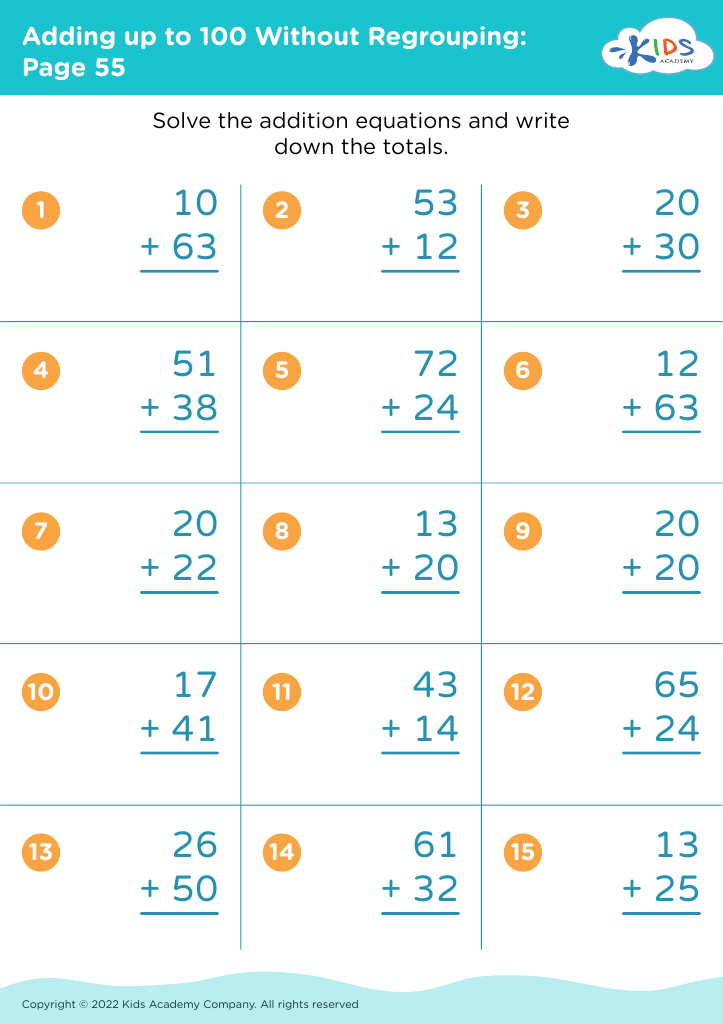
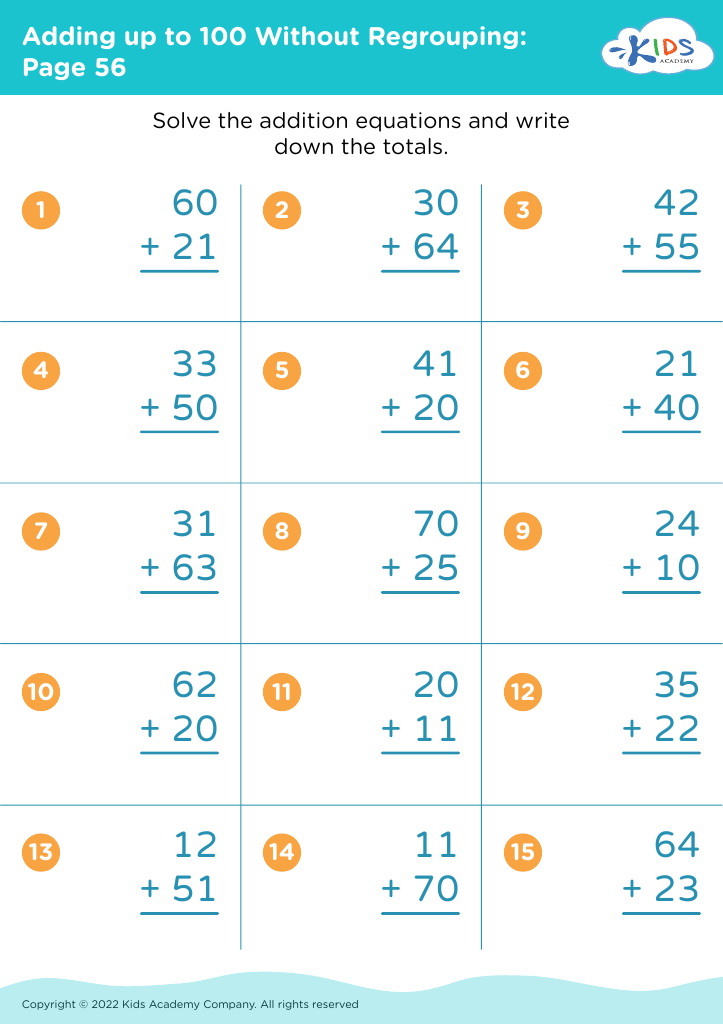
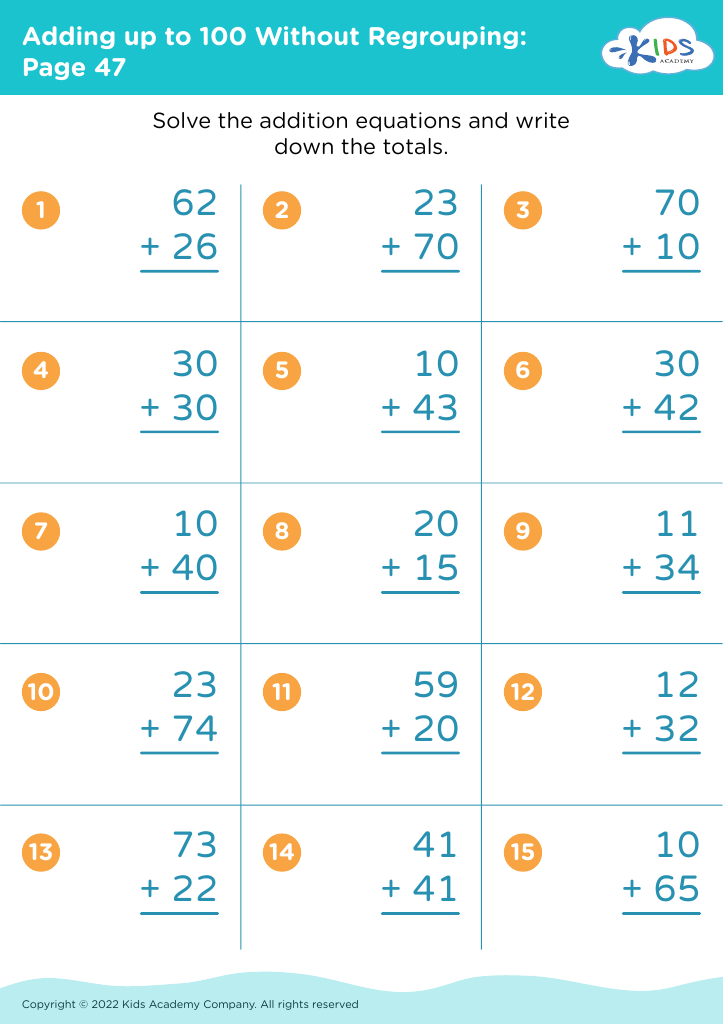
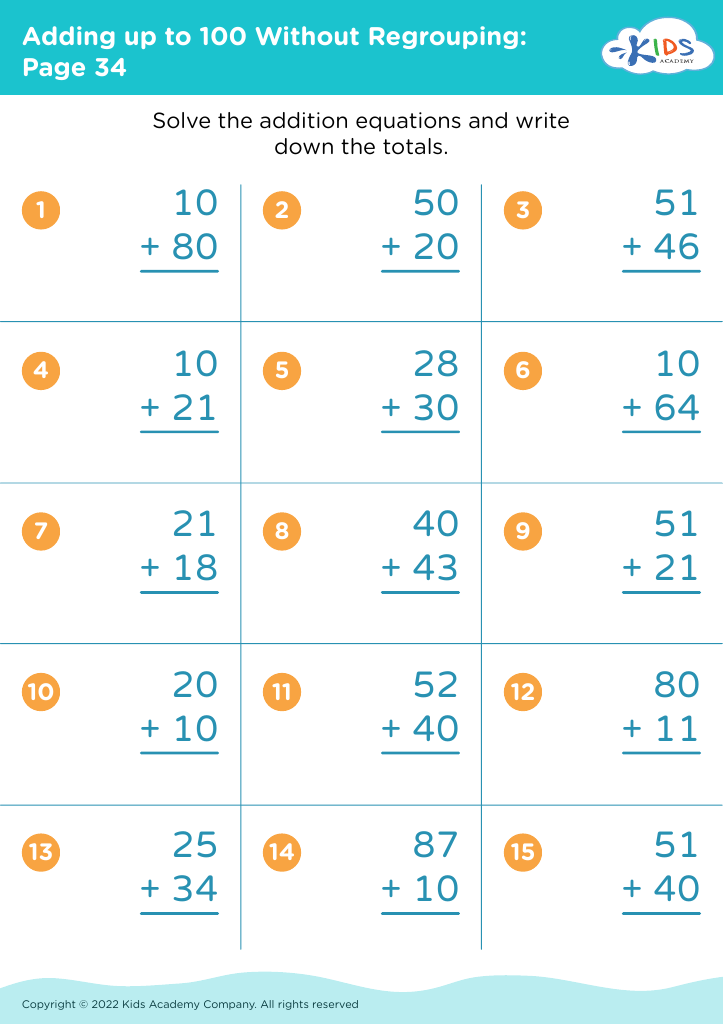
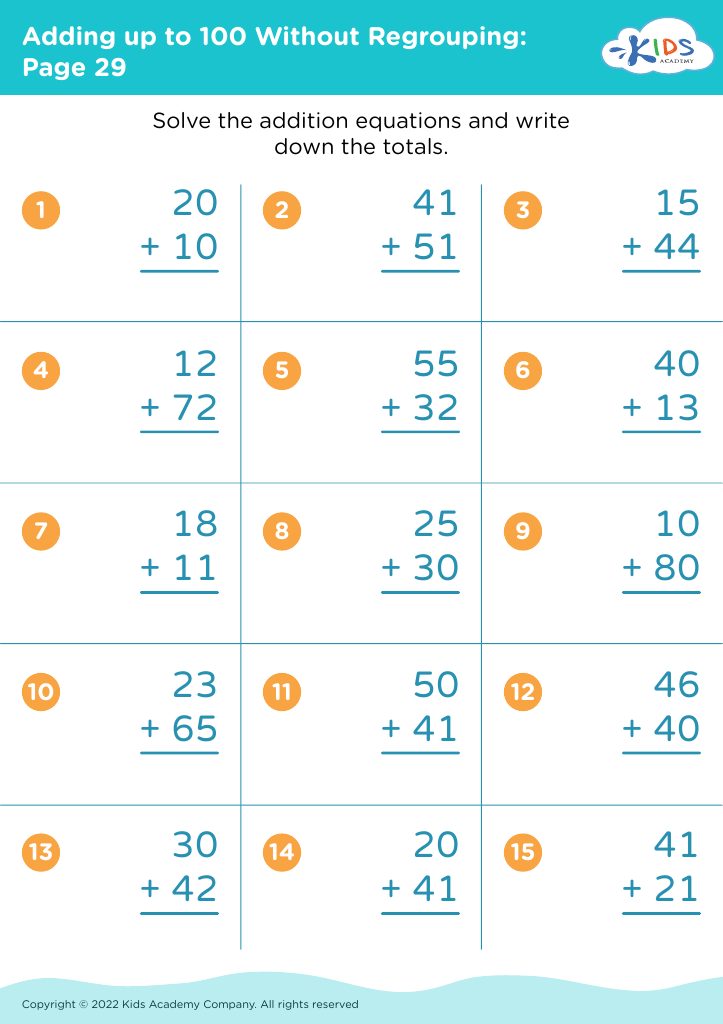




Number recognition and addition skills in early education, especially in Grade 2, are foundational for a child's mathematical development. When children learn to add numbers up to 100 without regrouping, they build essential cognitive skills that contribute to their overall understanding of mathematics. Mastering these skills not only fosters confidence but also promotes fluency in arithmetic operations, which are crucial for more complex mathematical concepts encountered in later grades.
Parents and teachers should care about this aspect of learning because it directly impacts children's problem-solving abilities and logical reasoning. Children who grasp basic addition concepts are better equipped to tackle word problems, understand number patterns, and engage in everyday math activities, such as budgeting or measuring.
Furthermore, proficiency in addition without regrouping lays the groundwork for future math challenges, including adding larger numbers and interacting with decimals and fractions. Encouraging number recognition and addition skills also instills a a sense of accomplishment that can motivate learners, cultivating a positive attitude toward mathematics and learning overall. Investing time and resources in supporting these skills can lead to significant long-term benefits, making early intervention a priority for both educators and parents.