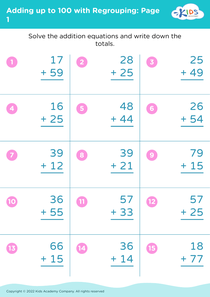
Understanding fractions Grade 2 Adding up to 100 Without Regrouping Worksheets
19 filtered results
-
From - To
Welcome to our "Understanding Fractions Grade 2: Adding Up to 100 Without Regrouping Worksheets" page! Designed specifically for second graders, these worksheets focus on foundational fraction concepts while reinforcing addition skills. Students will learn to recognize fractions, understand their parts, and apply addition strategies without regrouping, ensuring they build confidence in math. Each worksheet integrates engaging visuals and interactive exercises to support learning. Educators and parents can easily track progress, making it an ideal resource for classroom or home practice. Empower your child's mathematical journey with our fun and educational fraction worksheets today! Let's make math enjoyable and understandable!
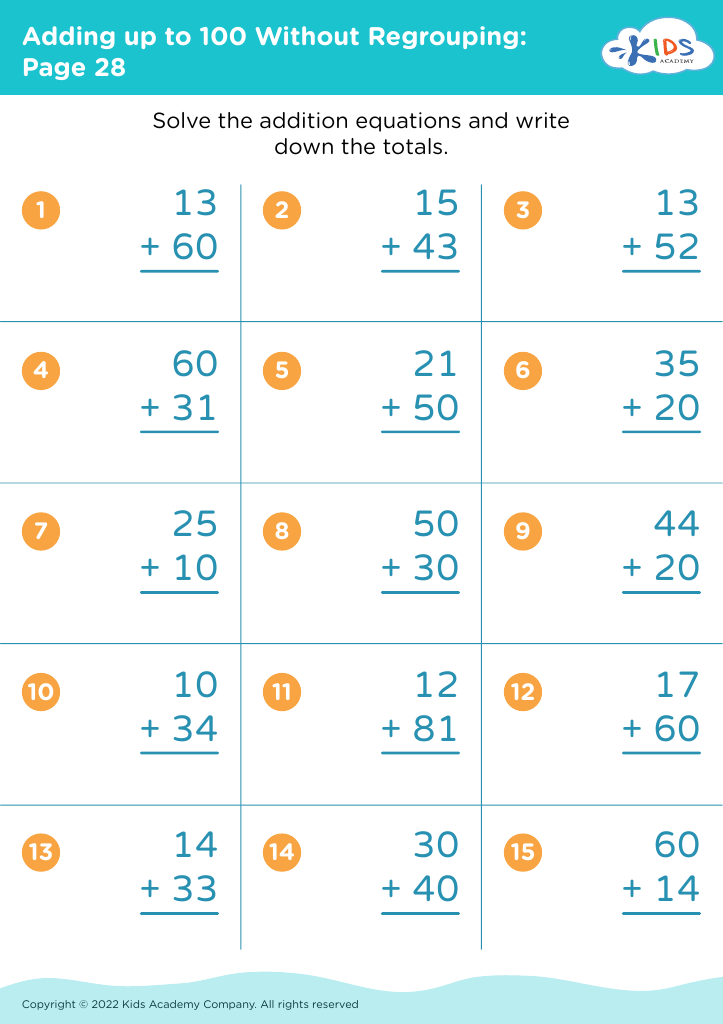
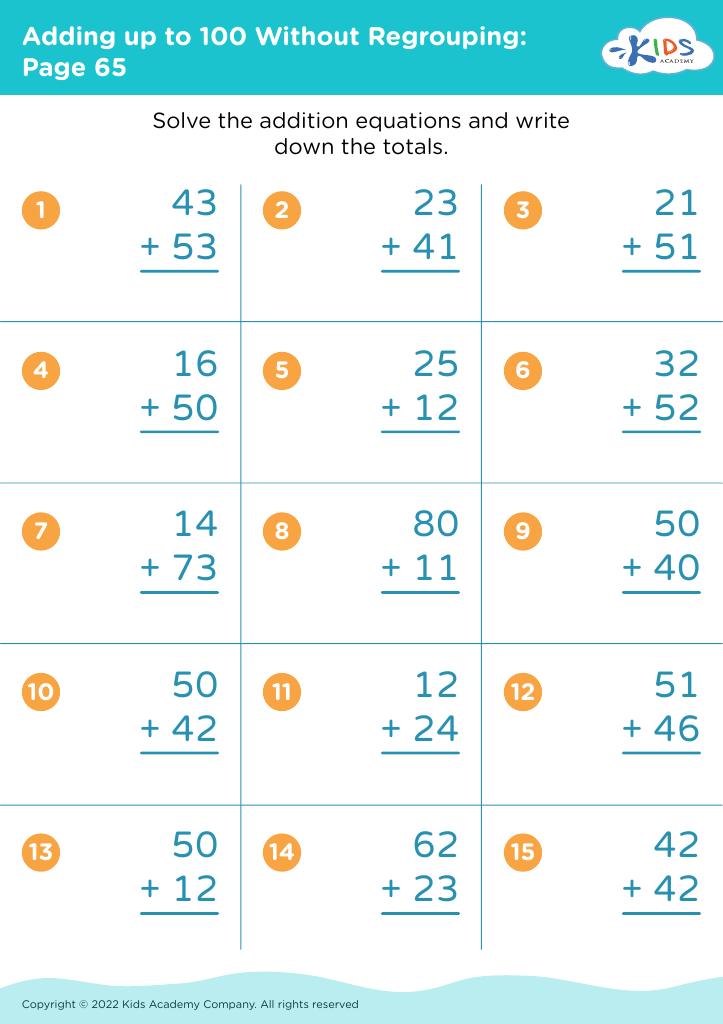
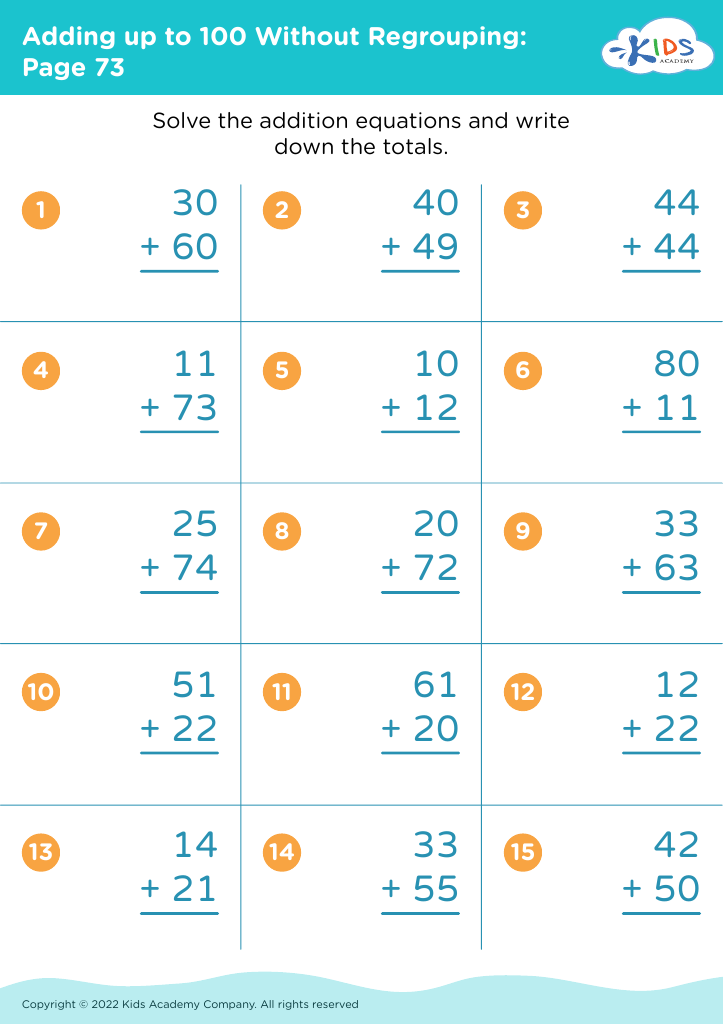
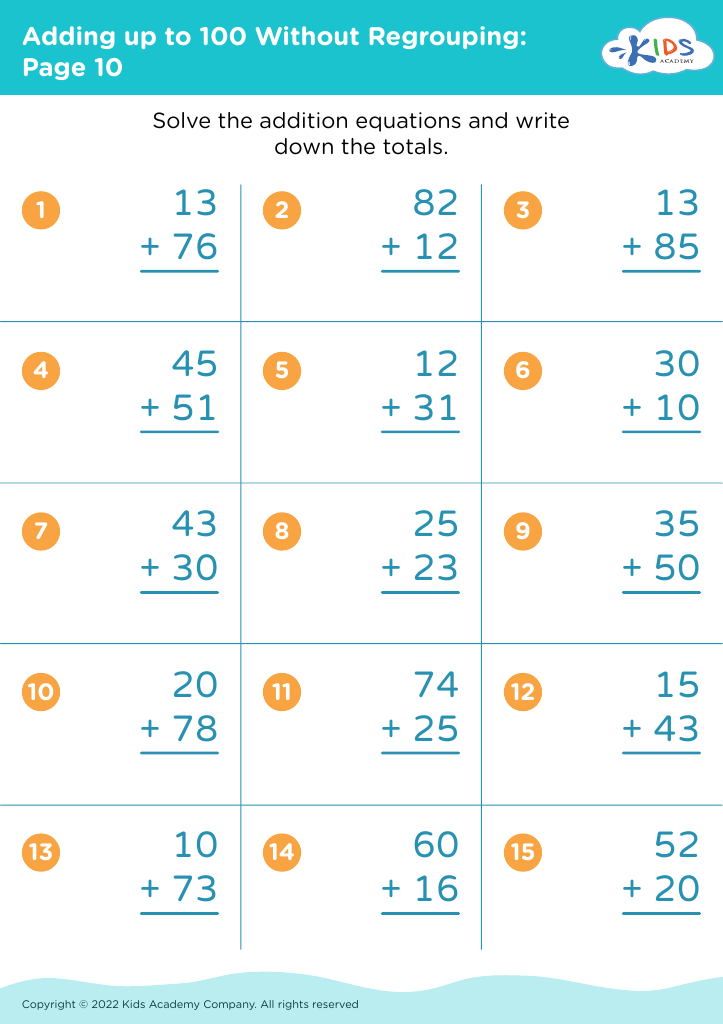
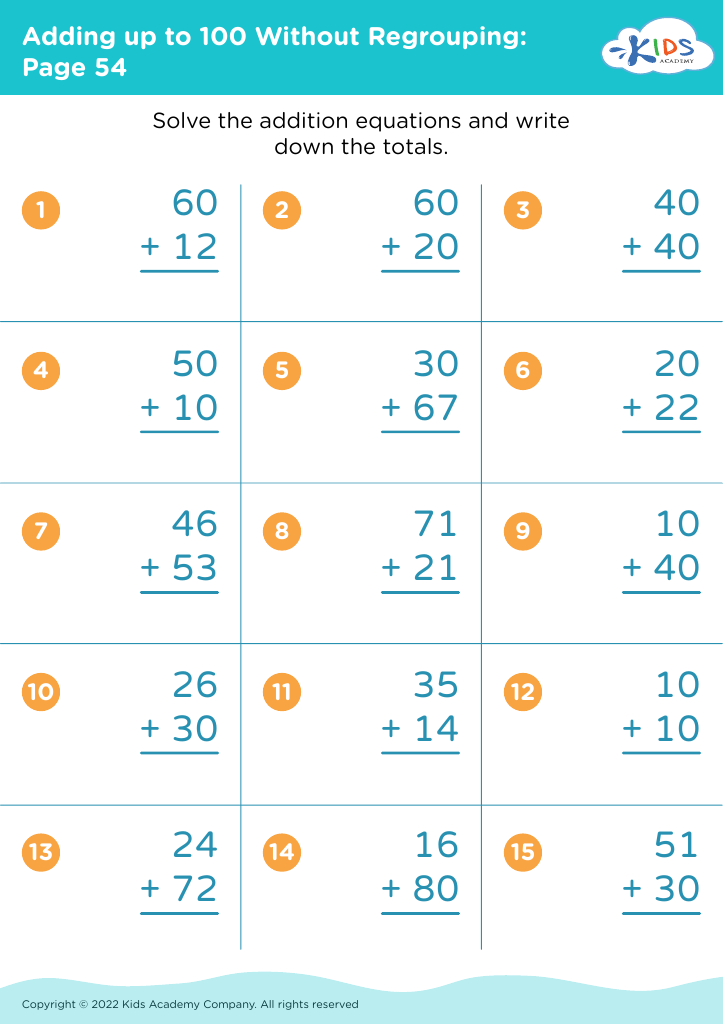
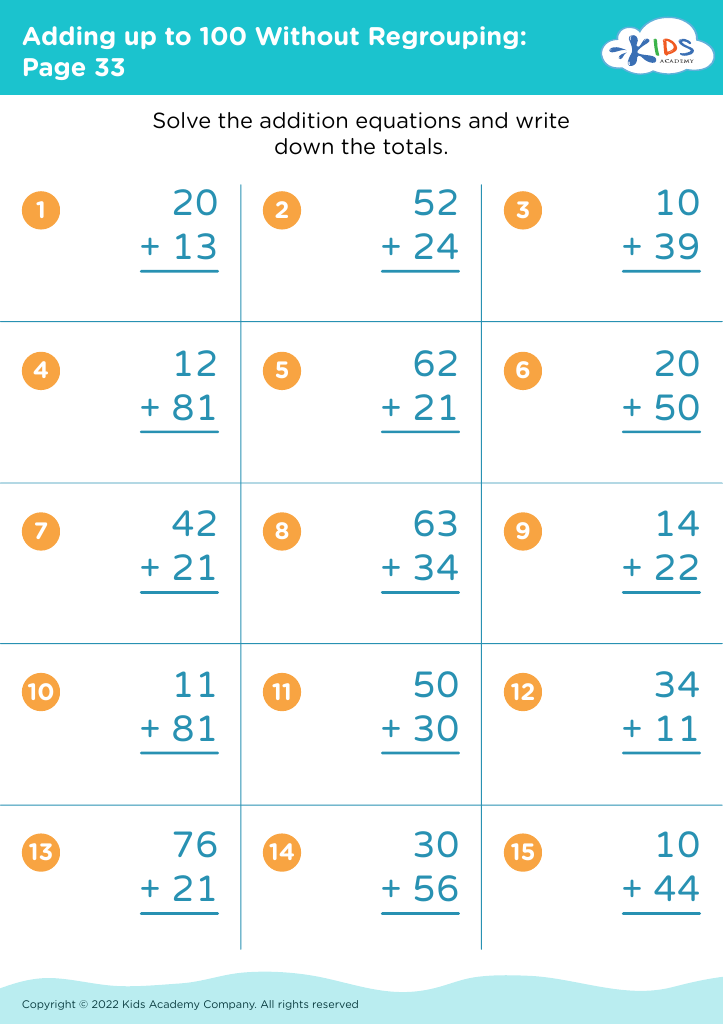
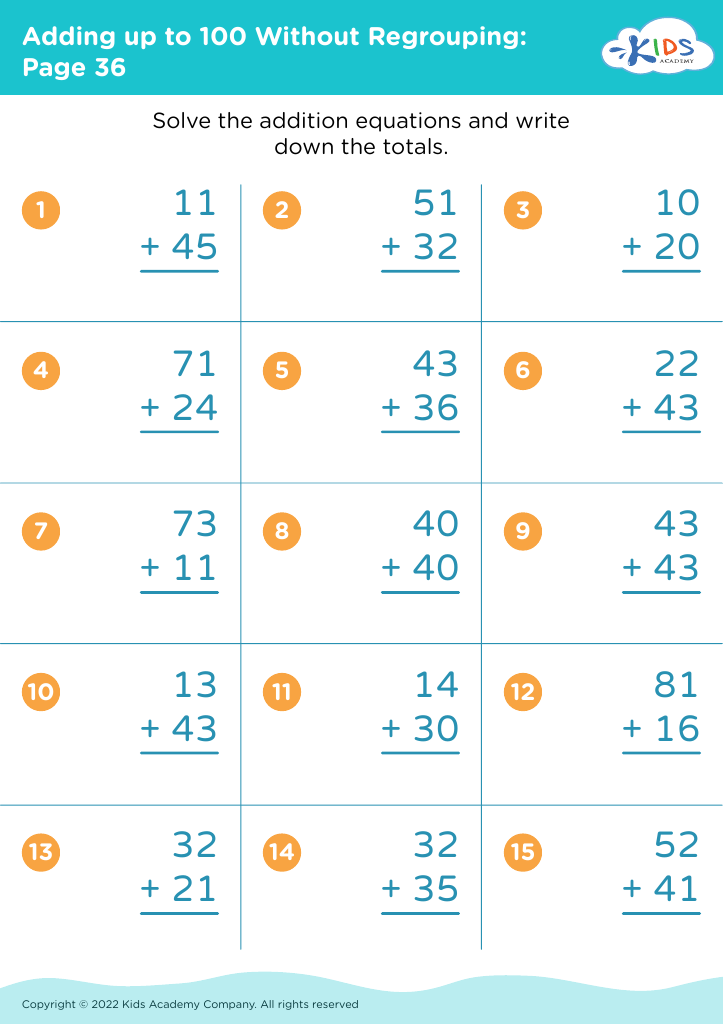
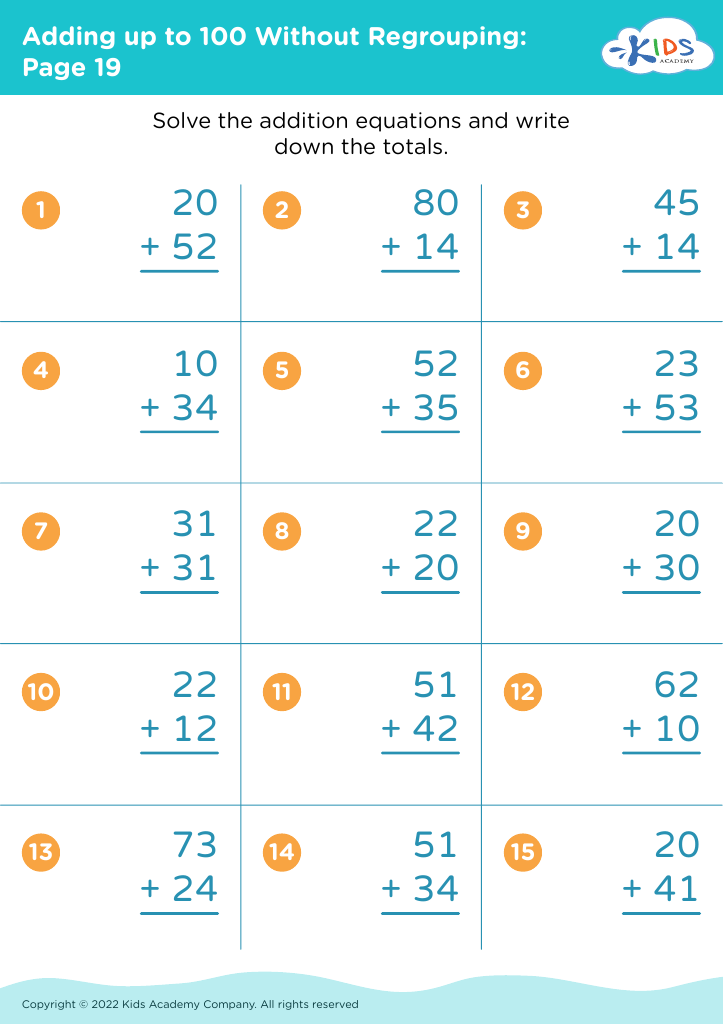
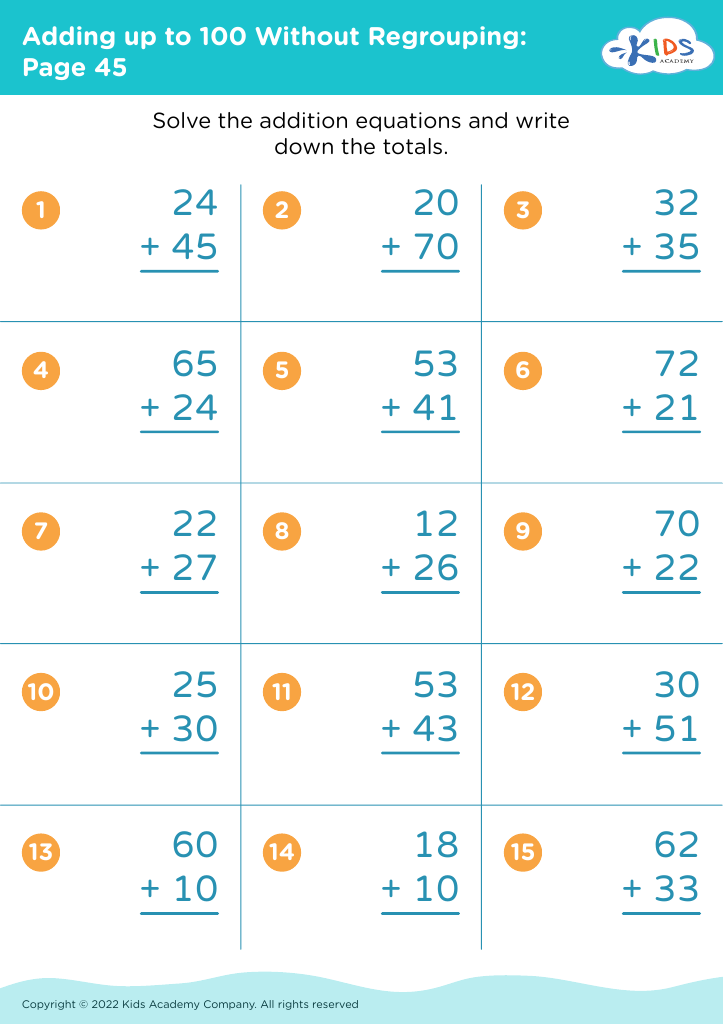
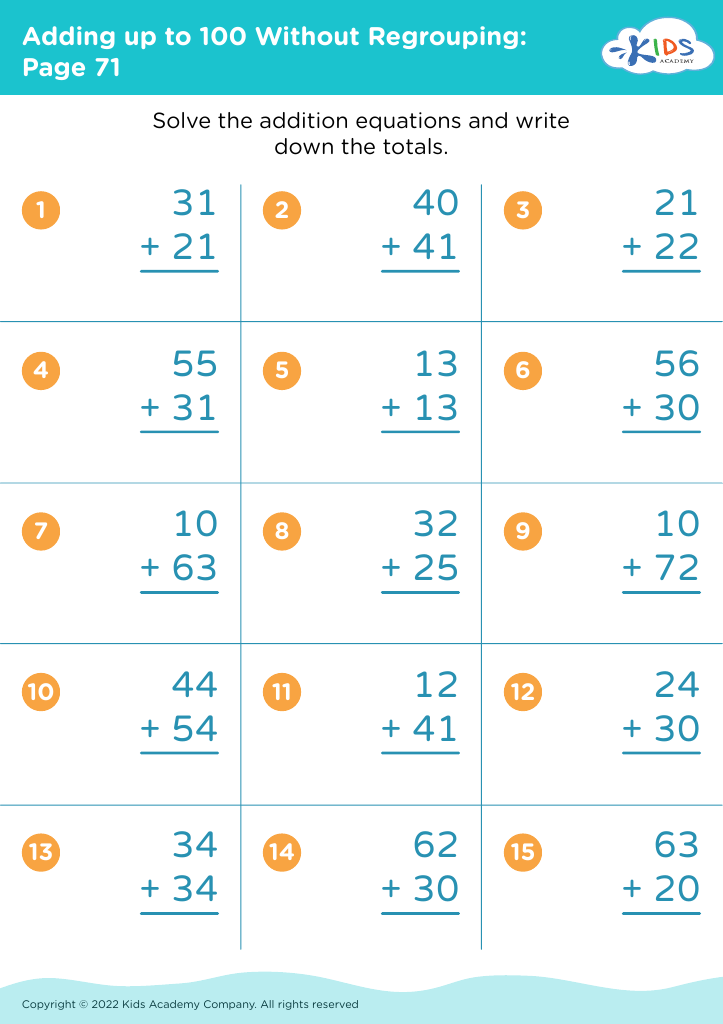
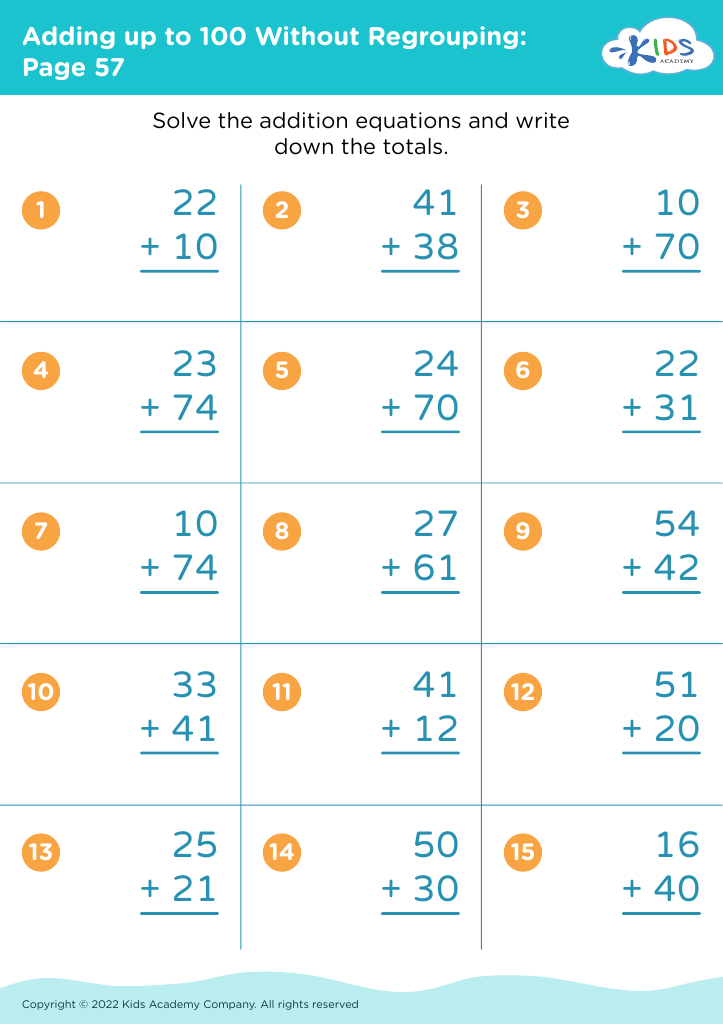
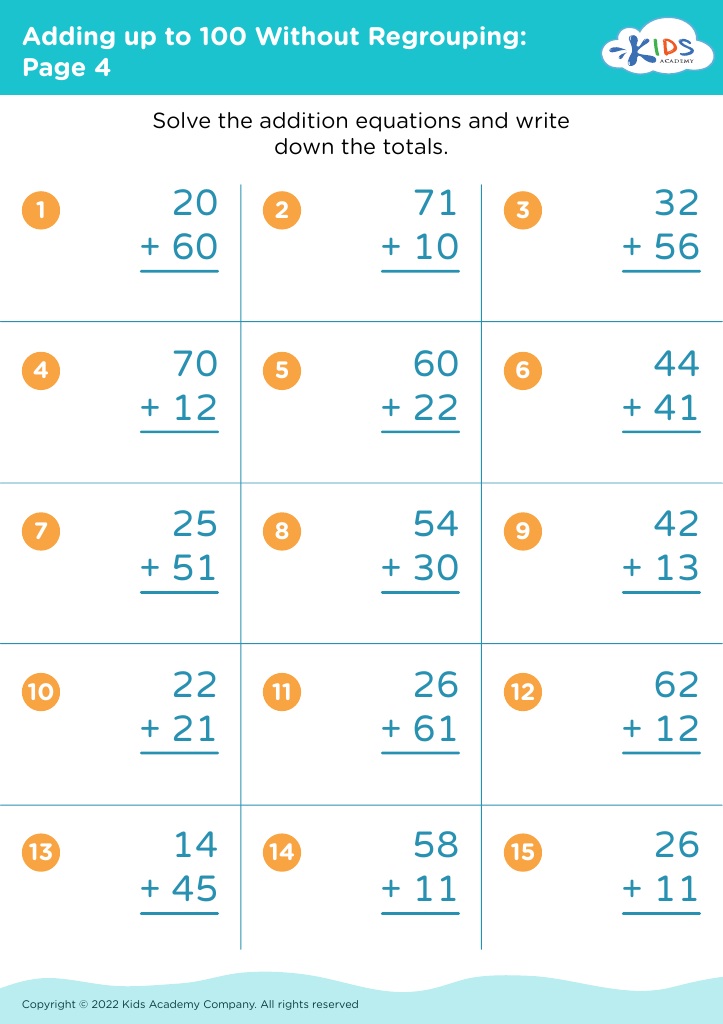
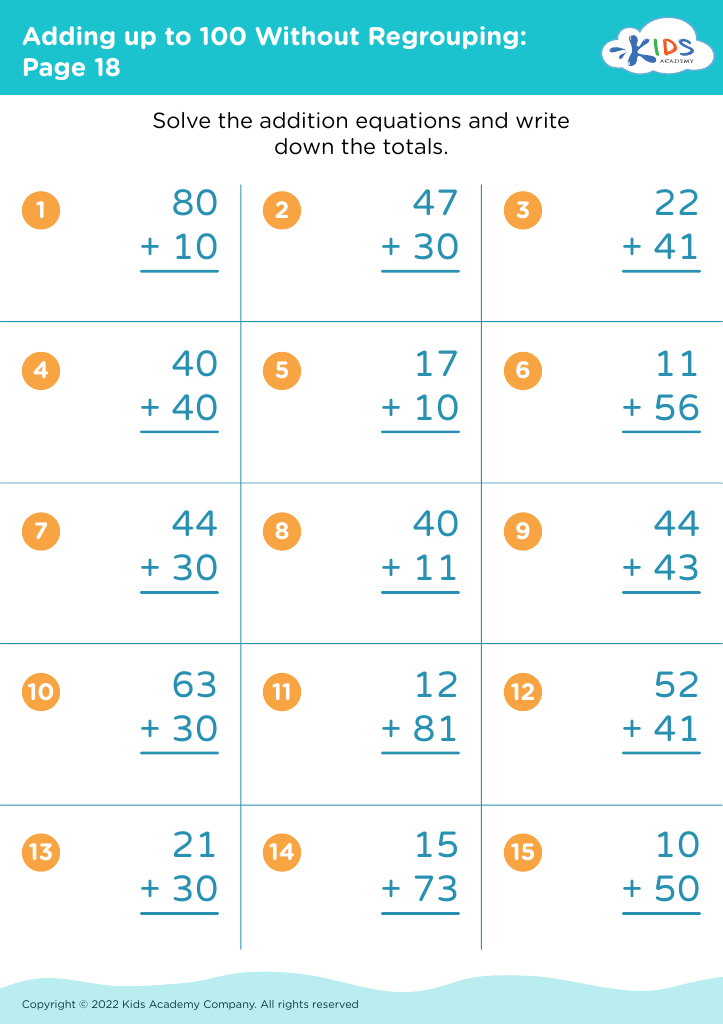
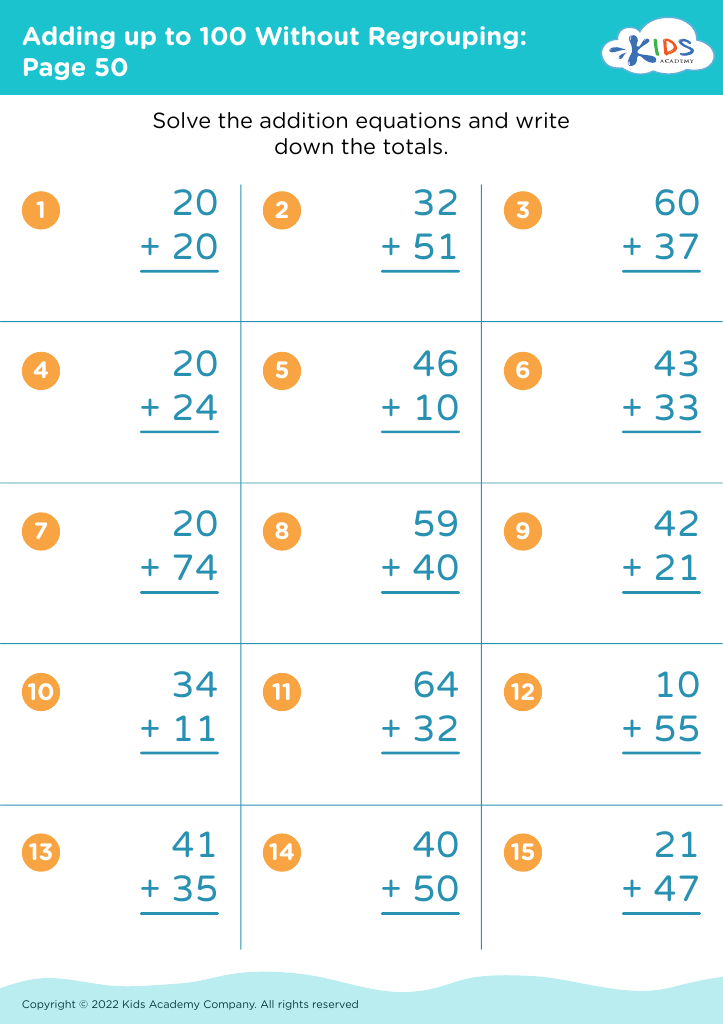
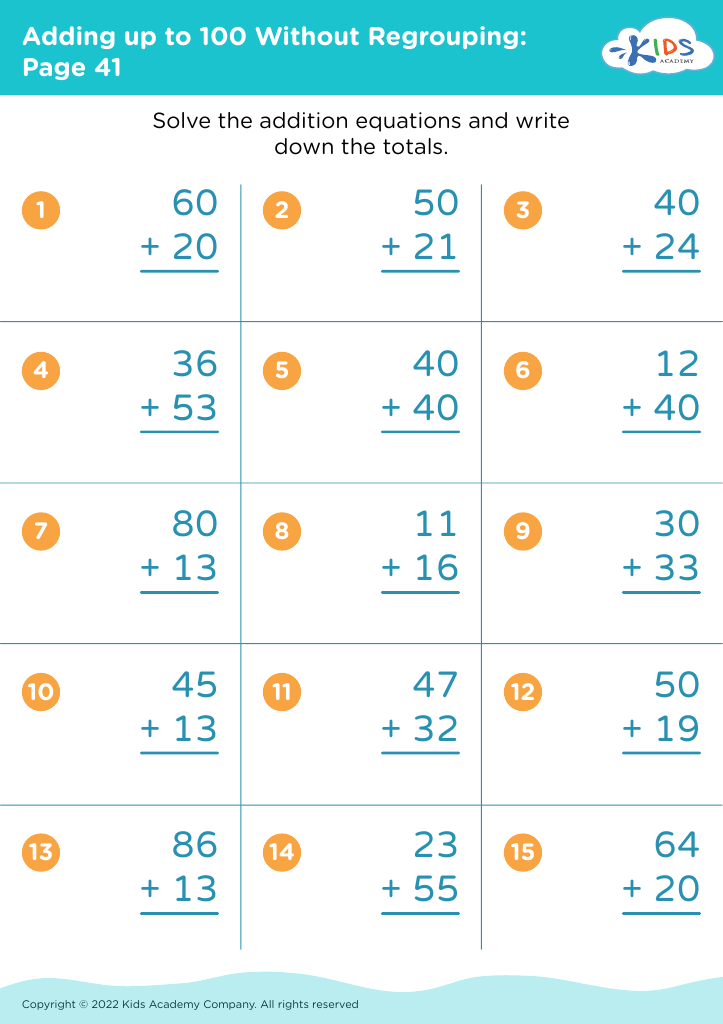
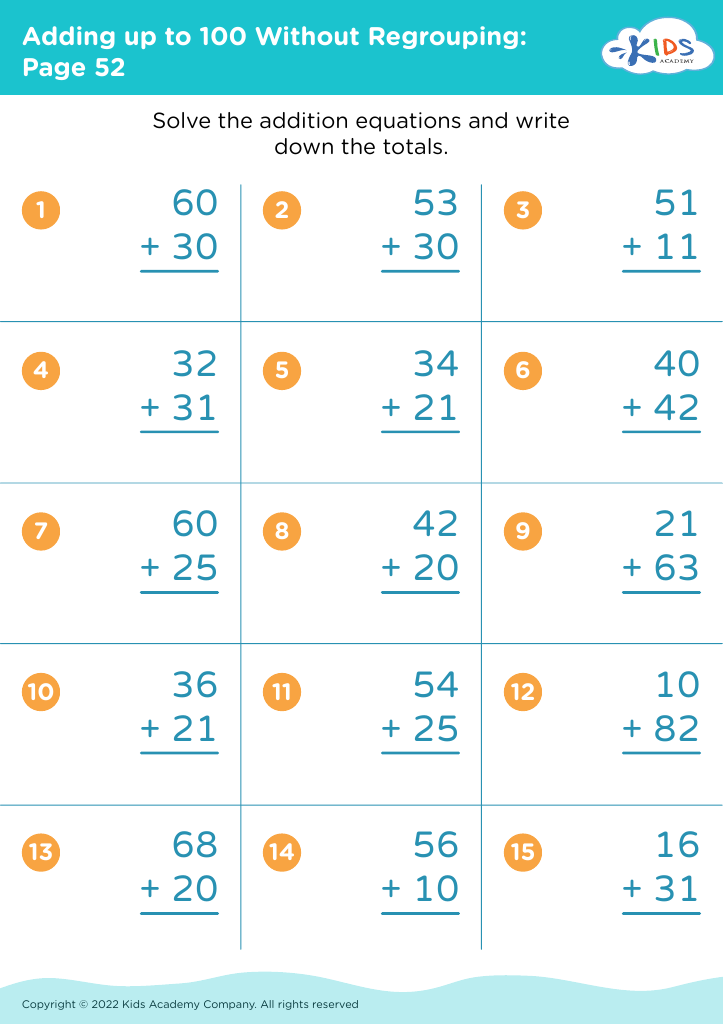
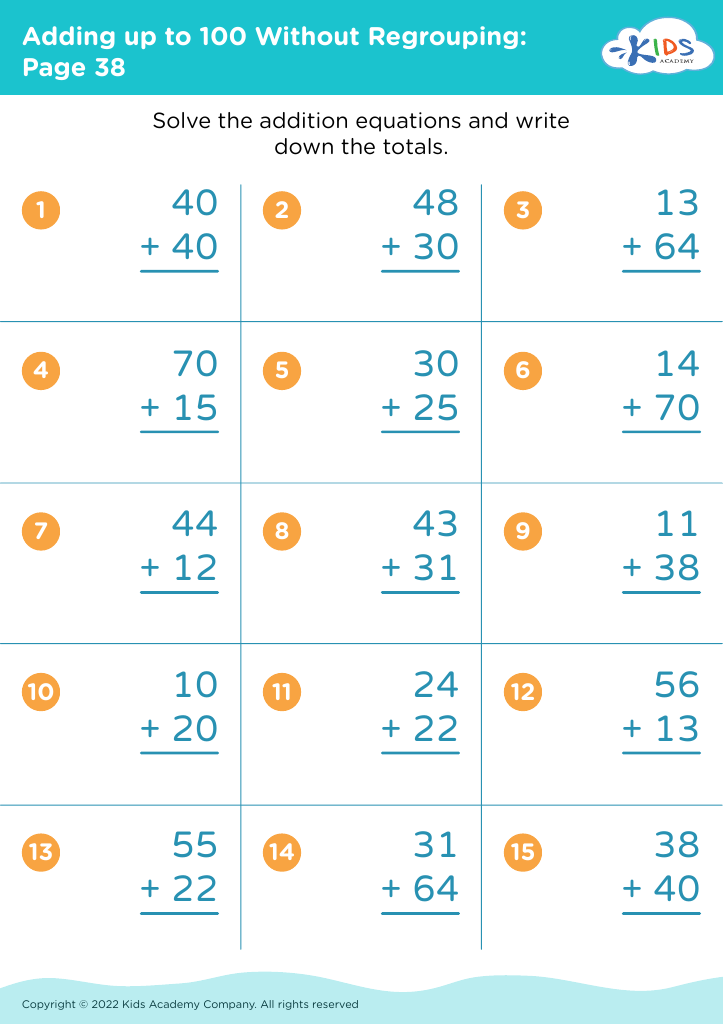
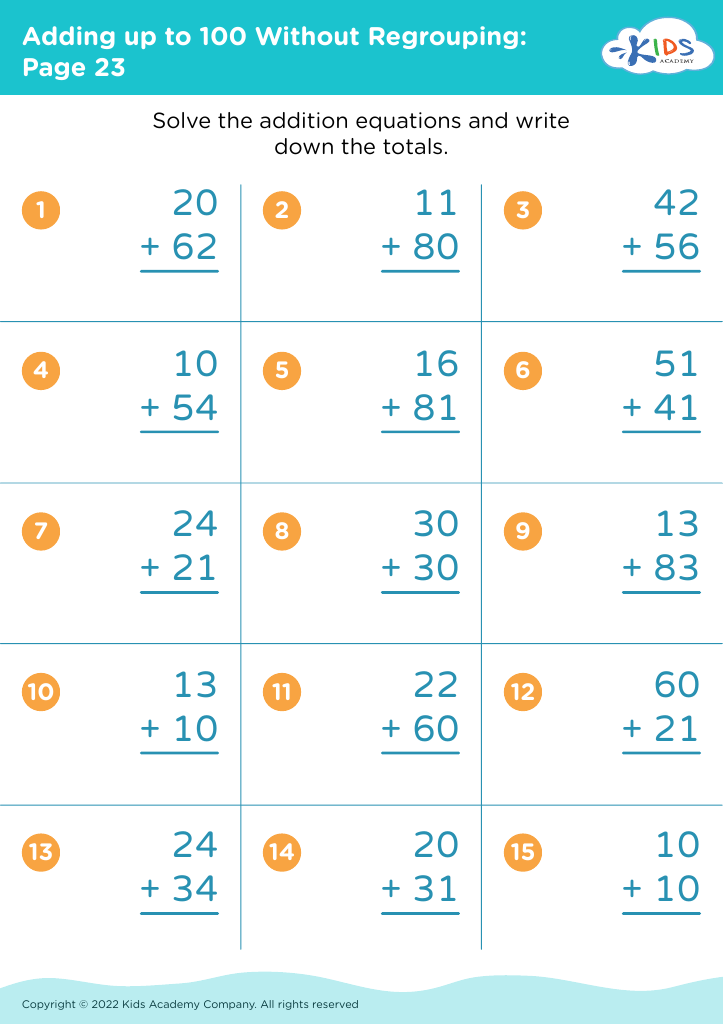
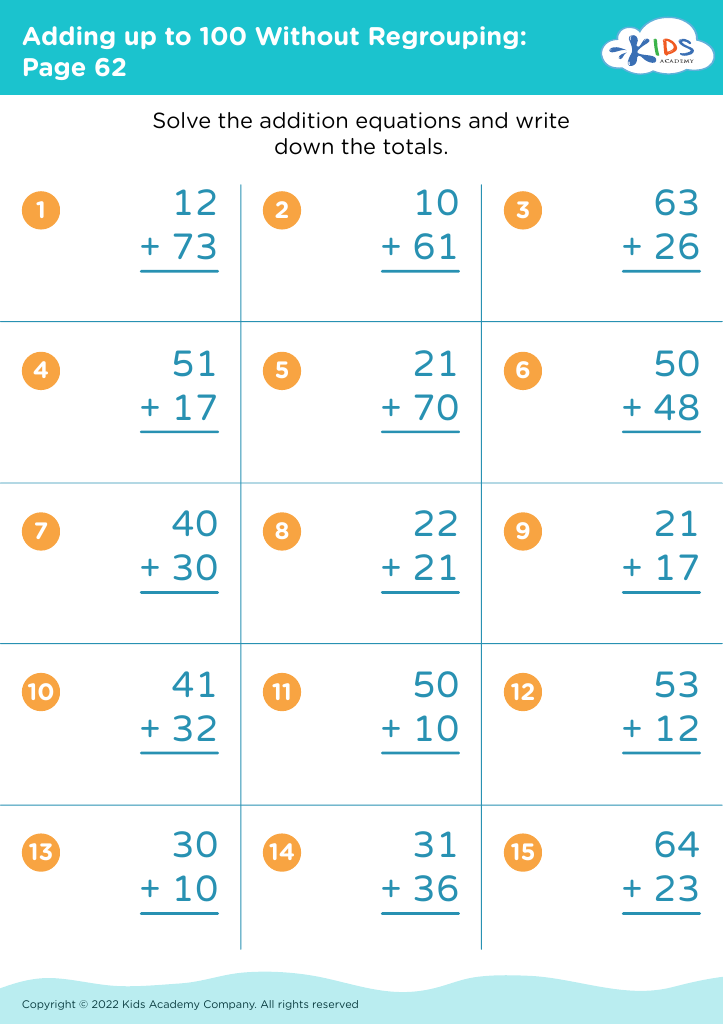




Understanding fractions, particularly in second grade, is crucial for young learners as it lays the foundation for their mathematical knowledge. When educators and parents focus on teaching fractions and how to add them without regrouping, they equip children with essential skills that promote critical thinking and problem-solving.
First, grasping fractions helps children understand division and the concept of part-whole relationships, which are vital in everyday life. By adding fractions that total up to 100, learners develop number sense and an appreciation for how quantities relate to one another.
Moreover, fostering a solid understanding of fractions at this stage helps prevent confusion in later grades, where these concepts become more complex. As students encounter more advanced mathematics, a weak foundation can lead to frustration and decreased confidence.
Additionally, engaging with fractions can enhance skills in other subject areas, such as measurement and data interpretation. When children see practical applications of fractions, they are more likely to see them as relevant and interesting, increasing their motivation to learn.
Overall, caring about a child’s understanding of fractions means supporting their growth into capable, confident mathematicians, ready to tackle more advanced concepts in their educational journey.