Cognitive Development Grade 2 Adding up to 100 Worksheets
4 filtered results
-
From - To
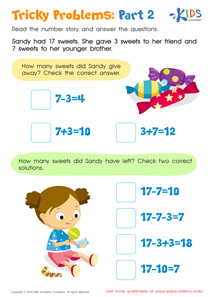
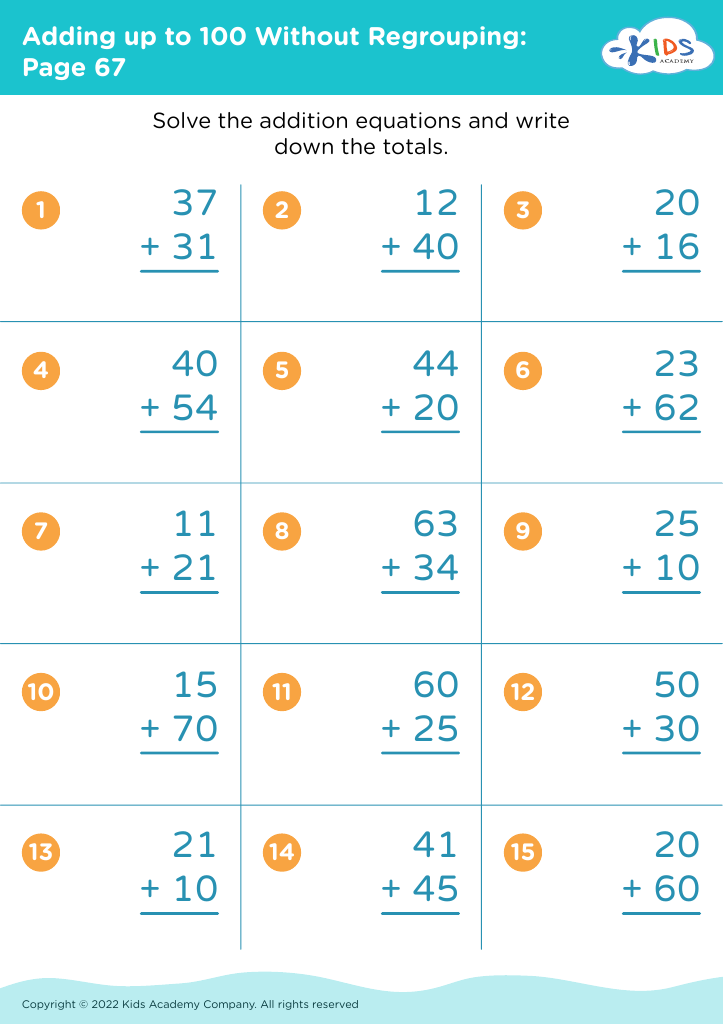
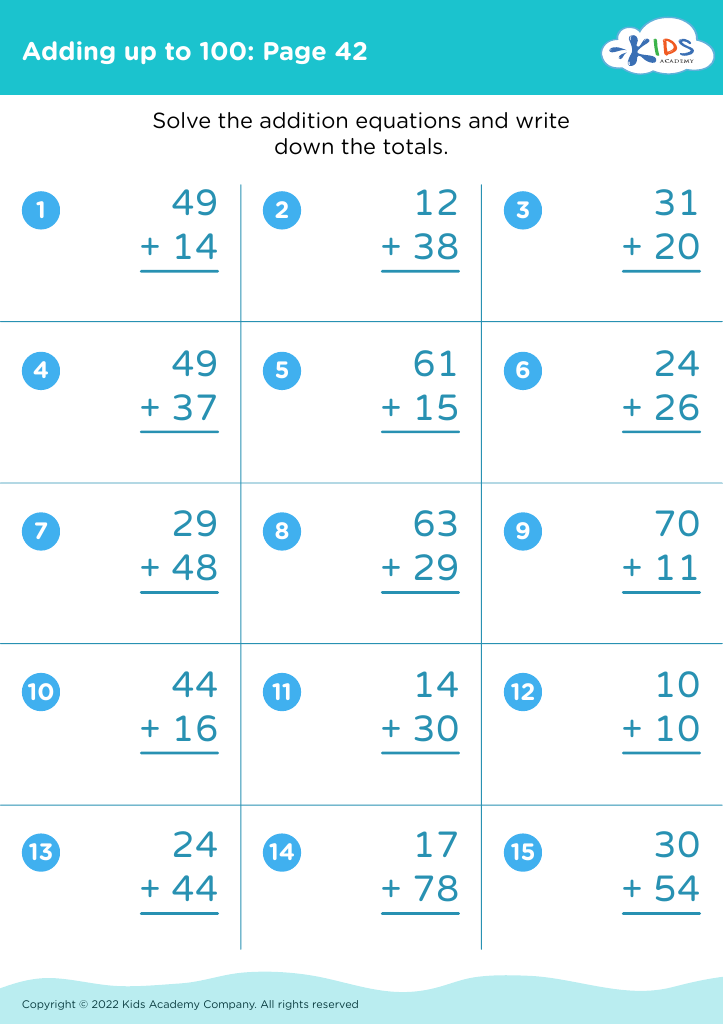
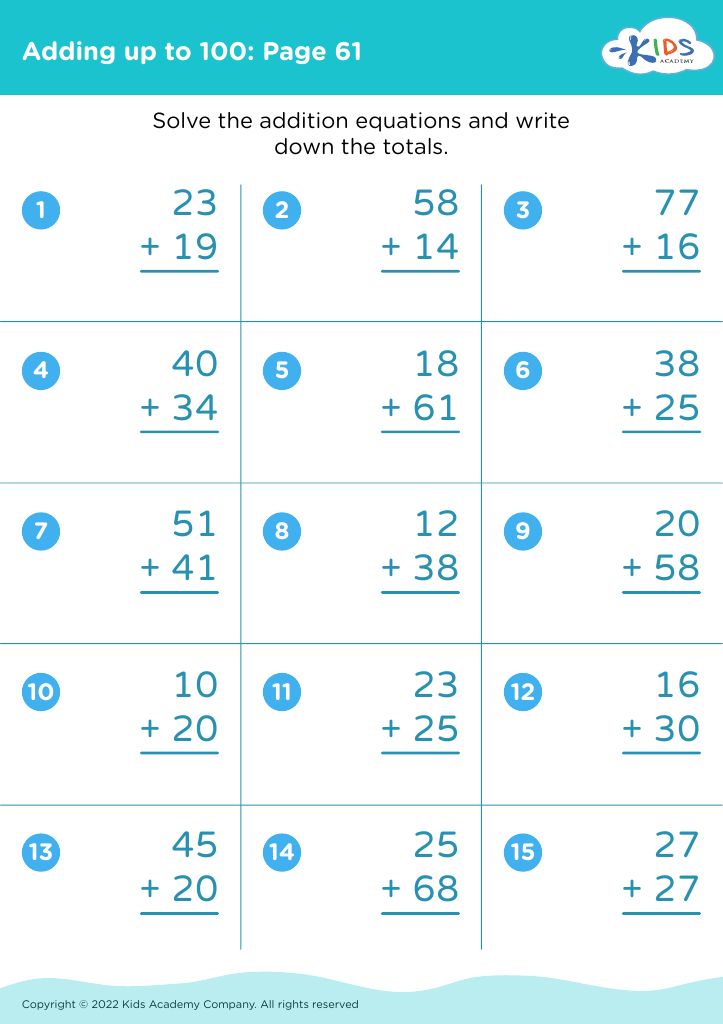
Unlock your child's potential in cognitive development with our engaging "Cognitive Development Grade 2 Adding Up to 100 Worksheets." Designed specifically for second graders, these worksheets provide a fun and interactive way for students to enhance their addition skills while building essential cognitive abilities. Covering concepts from simple addition to more complex problems, our resources promote critical thinking and problem-solving. Each worksheet encourages practice in a variety of formats, ensuring a comprehensive understanding of numbers up to 100. Perfect for classroom use or at-home learning, these worksheets support your child's academic growth and boost their confidence in mathematics!
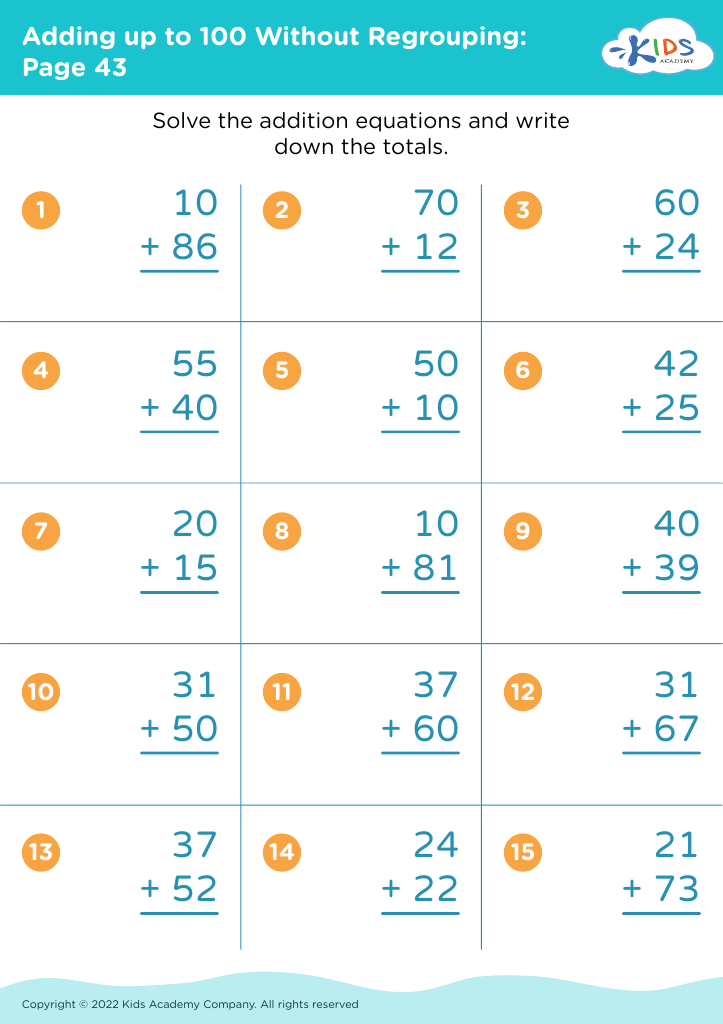





Cognitive development in second graders is crucial as it lays the foundation for critical thinking, problem-solving, and advanced mathematical skills. Understanding how to add up to 100 not only strengthens a child’s number sense but also enhances their ability to work with larger numbers, which is essential in higher math concepts. Mastering this skill allows students to recognize patterns, develop mental math strategies, and gain confidence in their abilities.
Parents and teachers should care about this aspect of cognitive development because early mastery enables children to approach math with a positive mindset, reducing anxiety and fostering a love for learning. Proficiency in adding up to 100 encourages logical reasoning, as students learn to break problems into manageable parts, a skill that is applicable across subjects and real-world scenarios.
Additionally, skills learned in grade 2 serve as building blocks for more complex mathematical operations in subsequent years. By supporting cognitive development now, parents and teachers contribute to a child’s lifelong learning journey, ensuring they are well-equipped for future academic challenges. Investing in these early cognitive milestones ultimately promotes positive educational outcomes, setting students on a path to success in school and beyond.