Develop fine motor skills Grade 2 Adding up to 100 Worksheets
5 filtered results
-
From - To
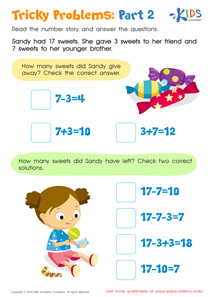
Enhance your child's fine motor skills while mastering essential math concepts with our Grade 2 "Adding Up to 100" worksheets! Designed for young learners, these engaging, printable resources combine fun activities with vibrant visuals to foster precision and coordination. Each worksheet encourages kids to practice adding numbers while also developing their grip, control, and dexterity as they trace, color, and complete fun math challenges. Perfect for both classroom and home use, our worksheets not only promote mathematical understanding but also support the physical development crucial for writing and other tasks. Discover the joy of learning with our playful, skill-building worksheets today!
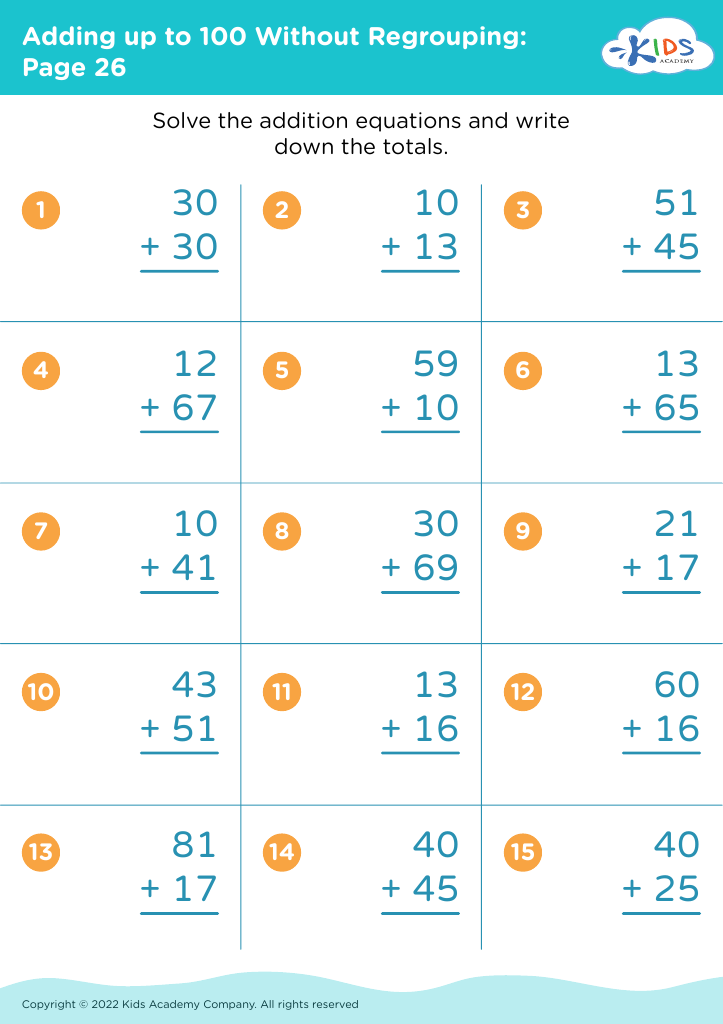
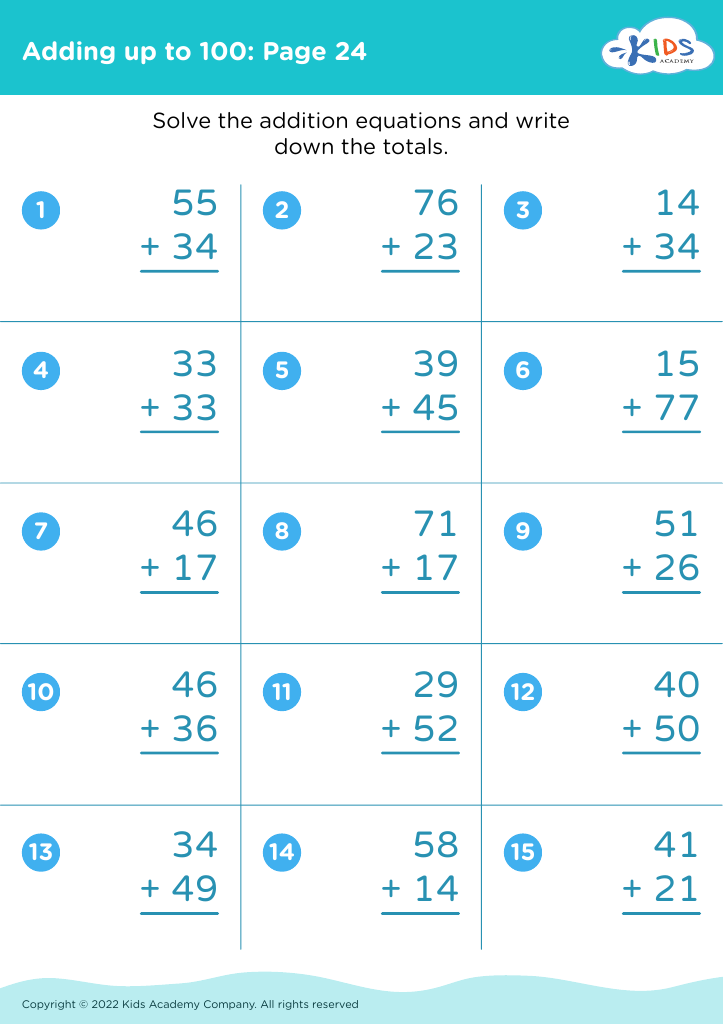
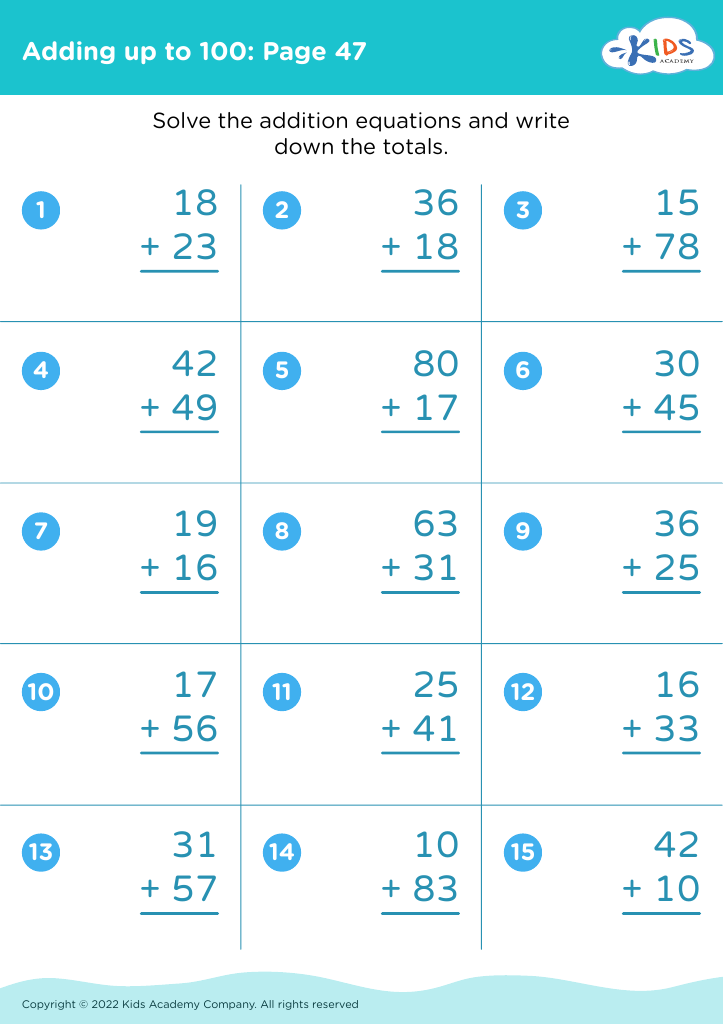
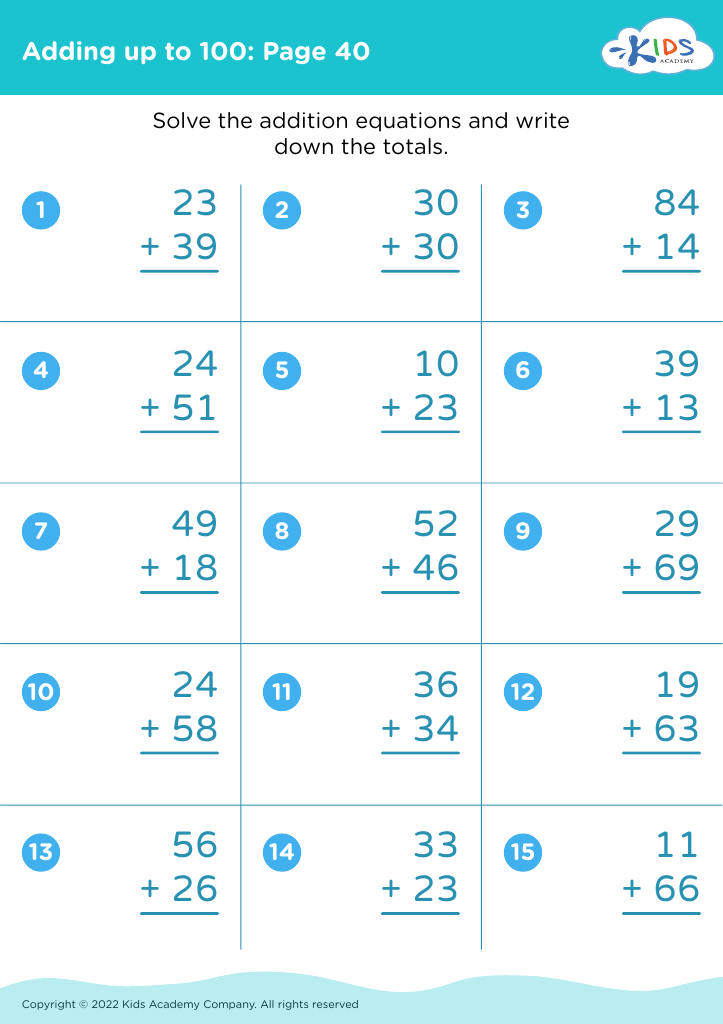
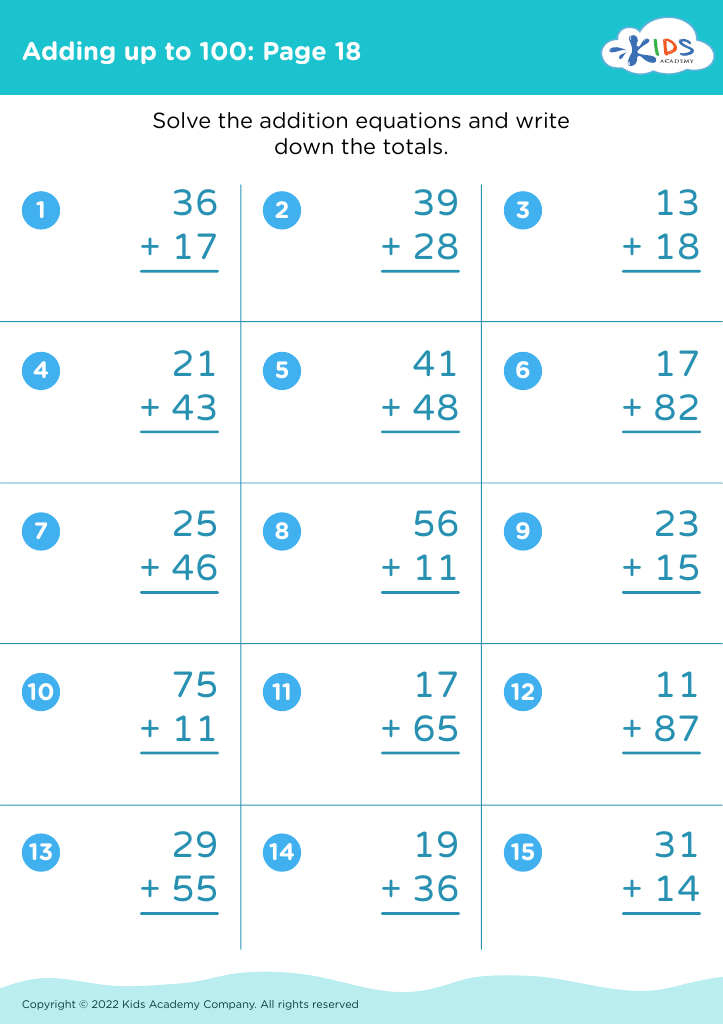





Developing fine motor skills in Grade 2 is crucial for children's overall growth and learning capacity, making it essential for both parents and teachers to prioritize this area of development. Fine motor skills involve precise movements of small muscles, particularly in the hands and fingers, which are vital for everyday tasks such as writing, drawing, and even tying shoelaces. When children add numbers up to 100, fine motor control enhances their ability to manipulate manipulatives, draw number lines, or engage in games that foster mathematical understanding.
As students advance in their academic journey, strong fine motor skills become foundational for more complex tasks such as constructing shapes, balancing equations, and even executing science experiments. These skills also contribute to children’s confidence and independence as they engage in hands-on activities both inside and outside the classroom.
Additionally, well-developed fine motor skills can positively influence a child's concentration, attention to detail, and academic performance, including math skills like addition. Thus, an investment in fine motor skill development not only equips children with necessary life skills, but also supports their mathematical comprehension and enhances their educational experience, benefiting their overall learning and future success.