Enhancing problem-solving abilities Grade 2 Adding up to 100 Worksheets
3 filtered results
-
From - To
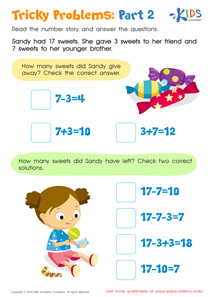
Discover an engaging collection of "Enhancing Problem-Solving Abilities Grade 2 Adding up to 100 Worksheets" designed to nurture young mathematicians' skills! These worksheets offer an array of fun and challenging problems that encourage students to think critically and develop effective strategies for addition. Perfect for reinforcing classroom learning, each activity is tailored to help second graders master adding up to 100 while honing their problem-solving techniques. Packed with visual aids and interactive scenarios, these worksheets turn math practice into an enjoyable experience, empowering students to gain confidence in their abilities. Equip your classroom with these essential resources today!
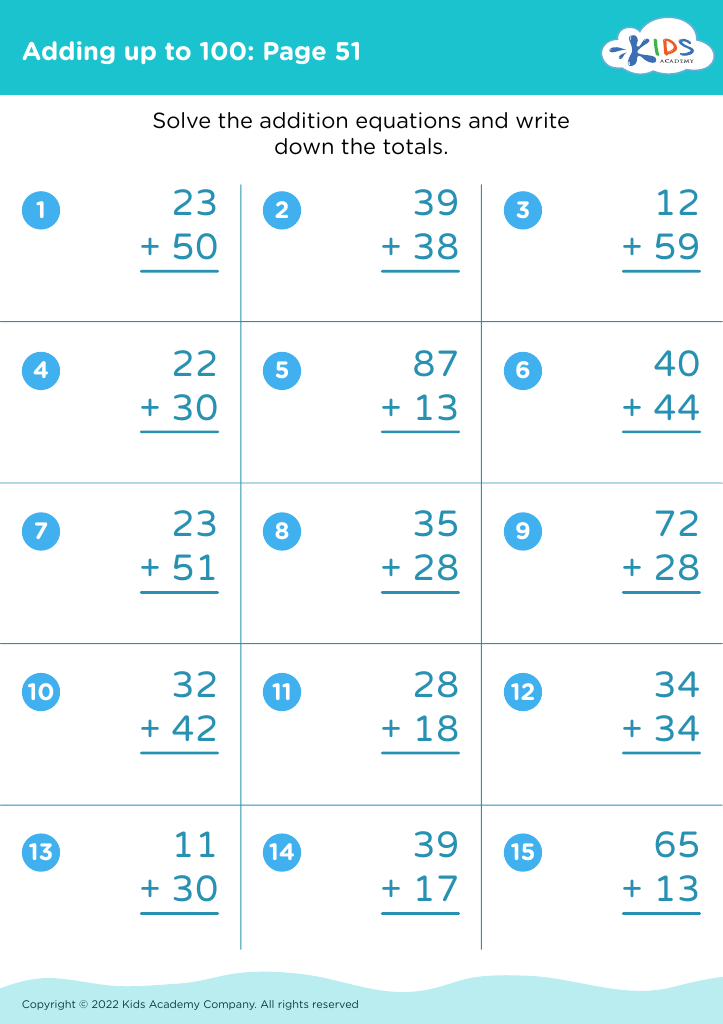
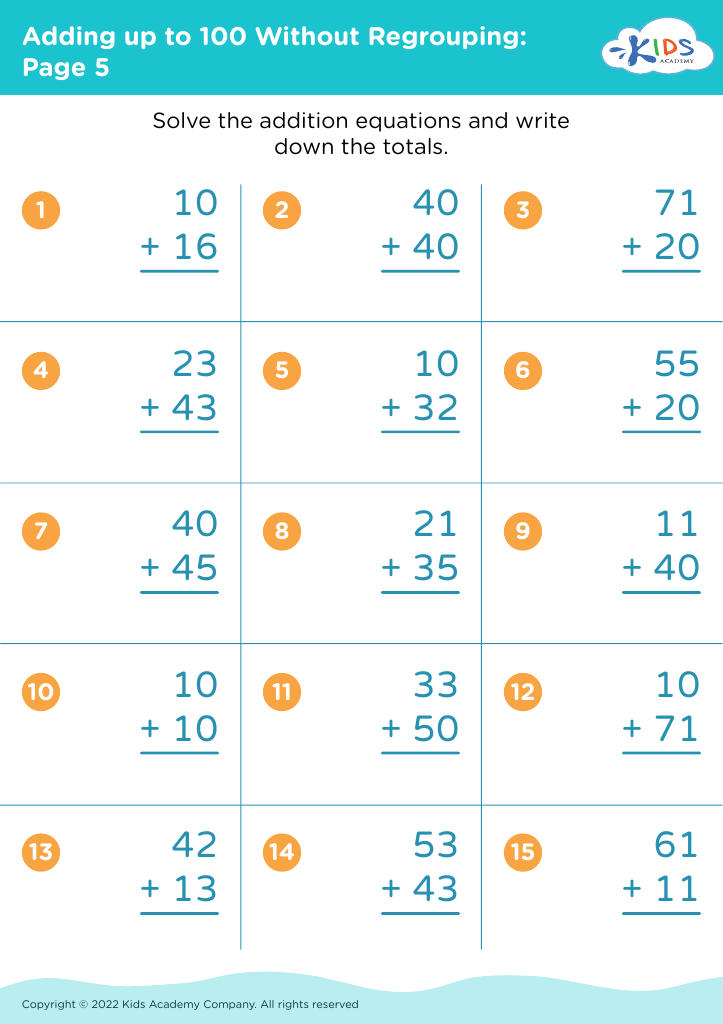
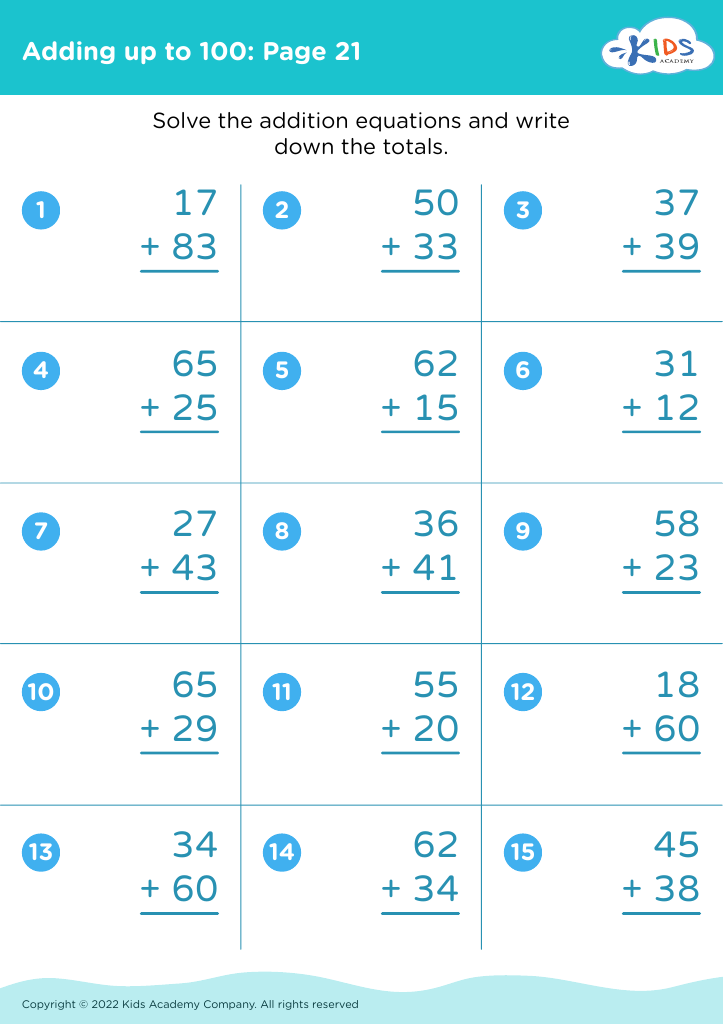





Enhancing problem-solving abilities in Grade 2, particularly through adding up to 100, is crucial for the cognitive and emotional development of young learners. At this stage, children are developing foundational mathematical skills, and mastering addition to 100 prepares them for more complex arithmetic in later grades. It fosters critical thinking, logical reasoning, and perseverance—qualities that are essential for academic success and everyday situations.
Moreover, engaging in problem-solving activities helps children build confidence and independence as they learn to tackle challenges on their own. It promotes a growth mindset, encouraging them to view mistakes as valuable learning experiences rather than setbacks. This mindset is essential not only in mathematics but in all areas of life.
Furthermore, through these activities, children enhance their communication skills by discussing their thought processes and strategies with peers and adults. It also integrates important life skills, such as teamwork and collaboration. For teachers and parents, establishing a solid problem-solving foundation lays the groundwork for lifelong learners who embrace challenges with enthusiasm and resilience. Ultimately, supporting children in this area enriches their educational journey and prepares them for future academic and personal endeavors.