Recognize patterns Grade 2 Adding up to 100 Worksheets
4 filtered results
-
From - To
Discover our engaging "Recognize Patterns Grade 2 Adding Up to 100 Worksheets" designed to help young learners excel in mathematics. These worksheets focus on identifying numerical patterns and sequences while mastering addition skills up to 100. Perfect for second graders, each printable activity promotes critical thinking and problem-solving, allowing students to recognize relationships between numbers in a fun, interactive way. By practicing with these worksheets, children gain confidence in their math abilities, preparing them for future challenges. Enhance your classroom or homeschooling curriculum with our carefully crafted activities that make learning math both enjoyable and effective! Get started today!
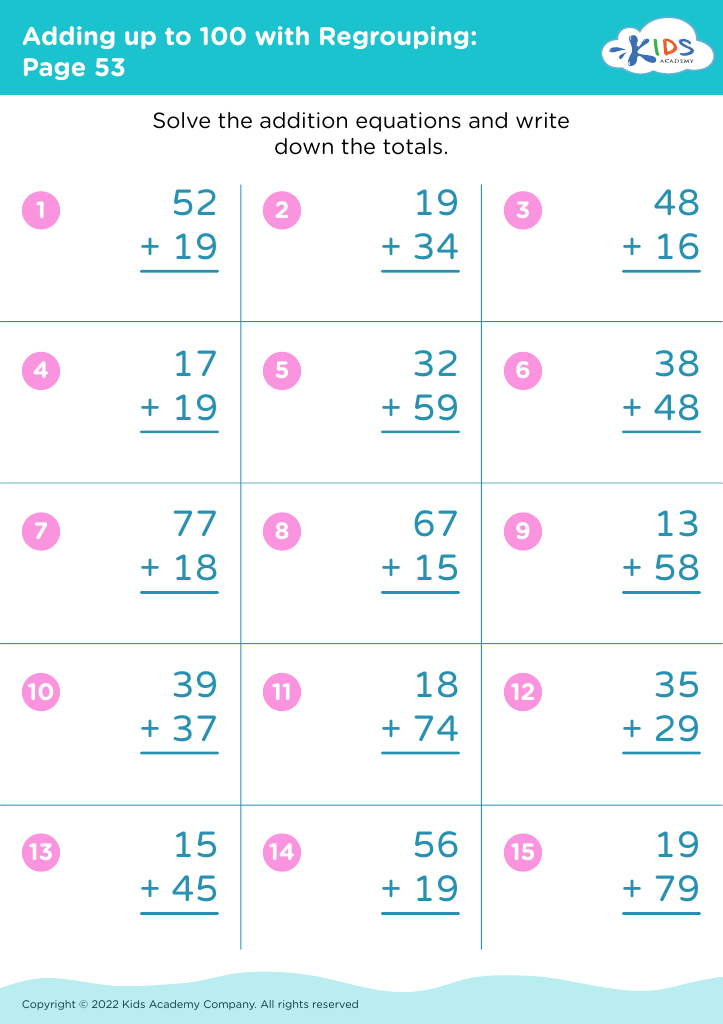
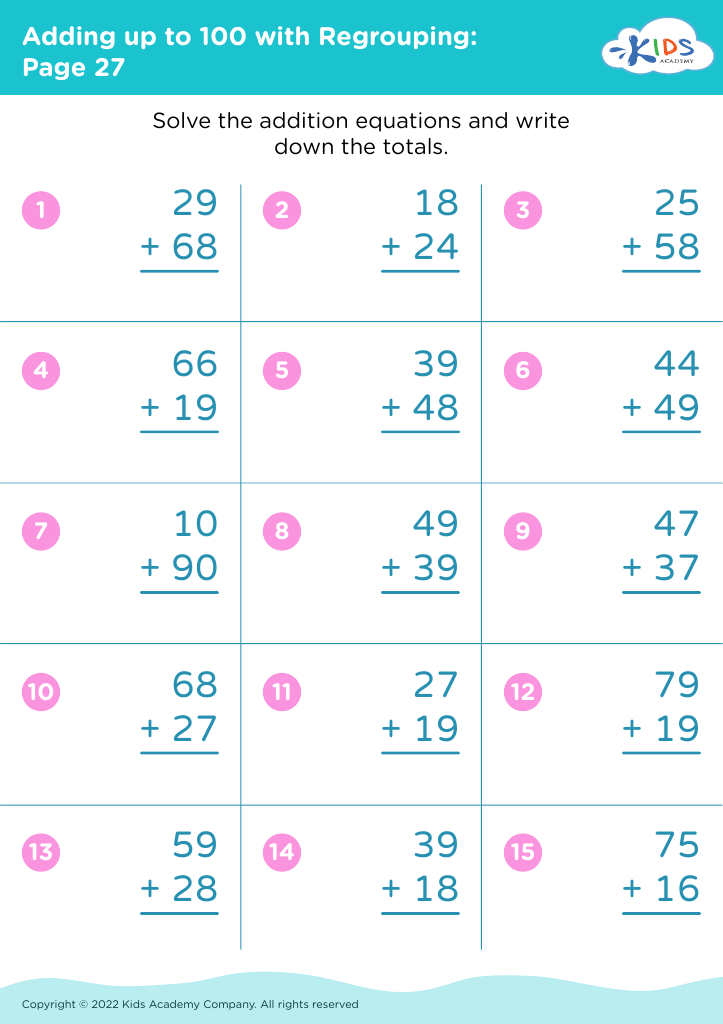
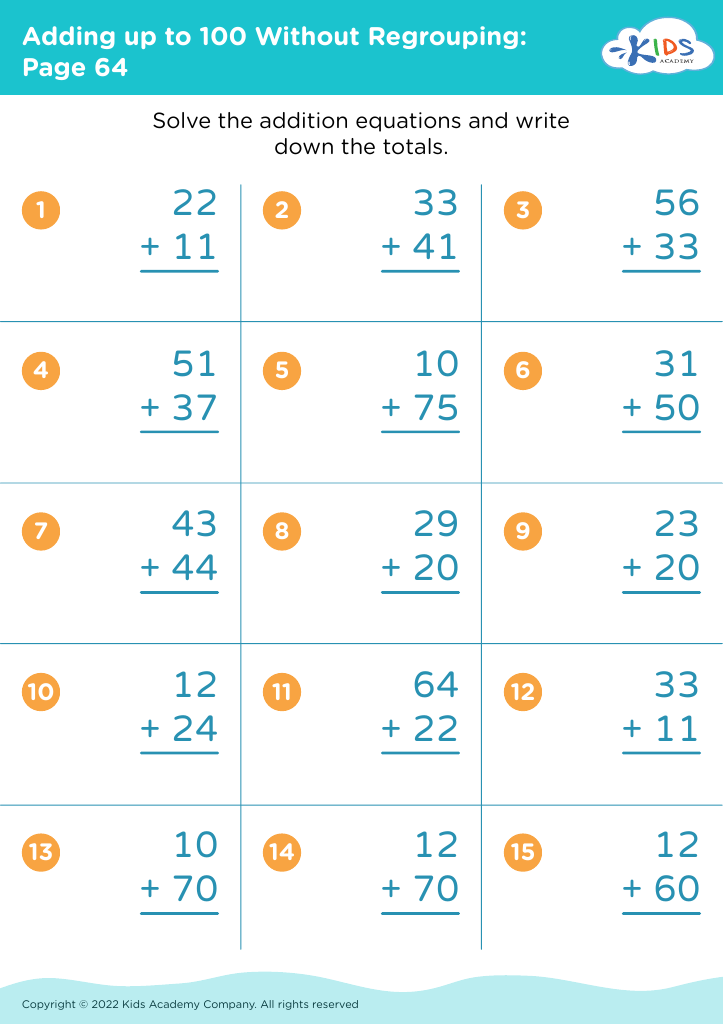
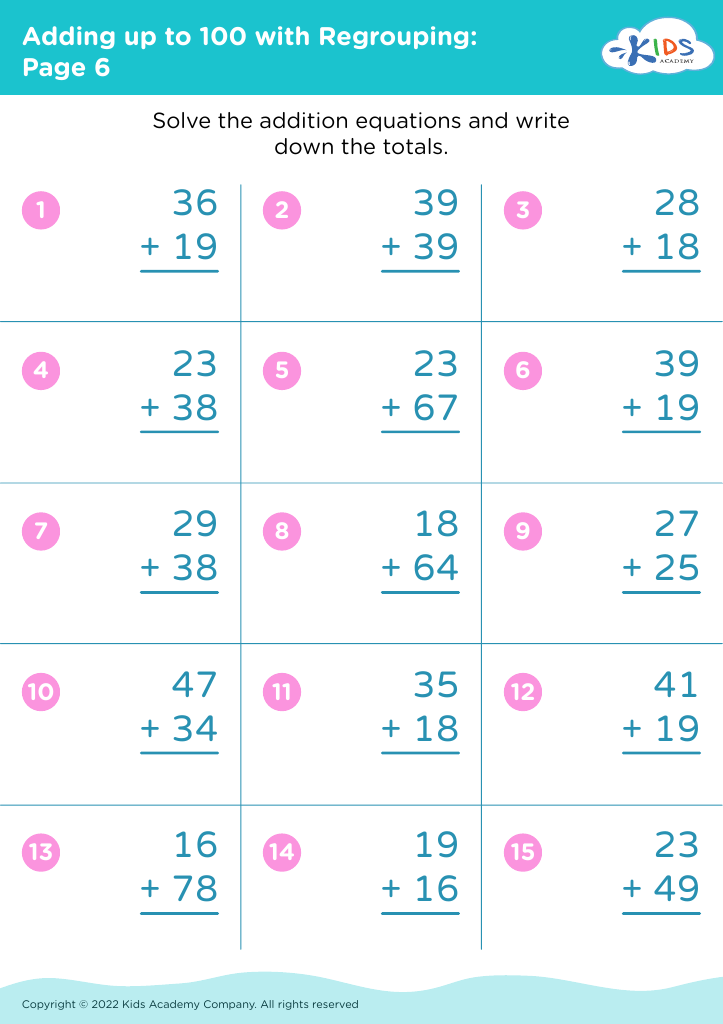





Recognizing patterns and mastering addition up to 100 are critical skills for second graders that resonate far beyond the classroom. For parents and teachers, fostering these skills is essential because they lay a foundation for future mathematical concepts. Understanding patterns in numbers helps students develop stronger problem-solving abilities, enhance their mental math skills, and grasp more complex operations like multiplication and division.
Moreover, recognizing patterns encourages critical thinking and allows children to see relationships between numbers, making them more adaptable learners. Working with addition up to 100 also helps build confidence in young students as they become more comfortable with calculations and begin to take ownership of their learning.
Additionally, mastery of addition up to 100 has practical implications—students will encounter this knowledge in everyday life, from managing money to measuring ingredients while cooking. When parents and teachers emphasize these skills, they ensure children are not only prepared for standardized tests but are also equipped with essential life skills. Ultimately, supporting students in recognizing patterns in addition strengthens their overall mathematical comprehension, cultivates a love for learning, and encourages them to engage more actively with mathematical challenges.