Simplifying Fractions Grade 2 Adding up to 100 Worksheets
3 filtered results
-
From - To
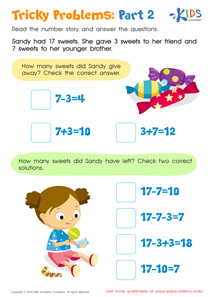
Welcome to our "Simplifying Fractions Grade 2 Adding up to 100 Worksheets!" Designed for young learners, these engaging worksheets help second graders master the concept of simplifying fractions while reinforcing their addition skills up to 100. Through fun problems and interactive exercises, students will strengthen their understanding of fractions and improve their mathematical confidence. Our user-friendly format ensures that students can practice at their own pace, making learning both enjoyable and effective. Explore our comprehensive collection and watch your child develop essential math skills that will serve them well in future grades! Perfect for classroom and home use!
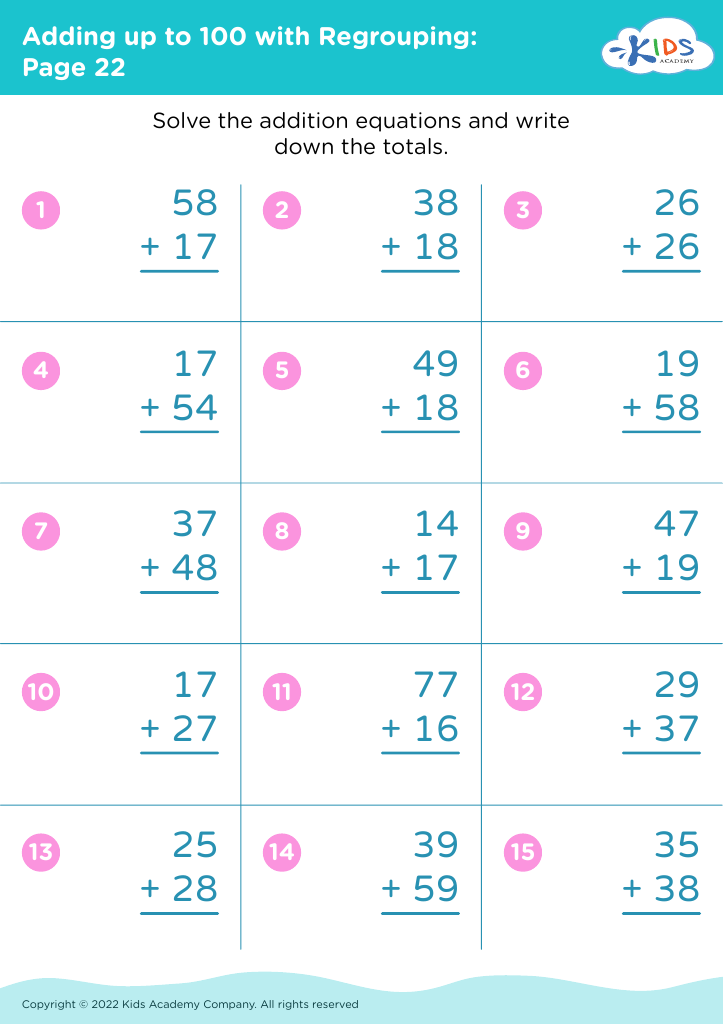
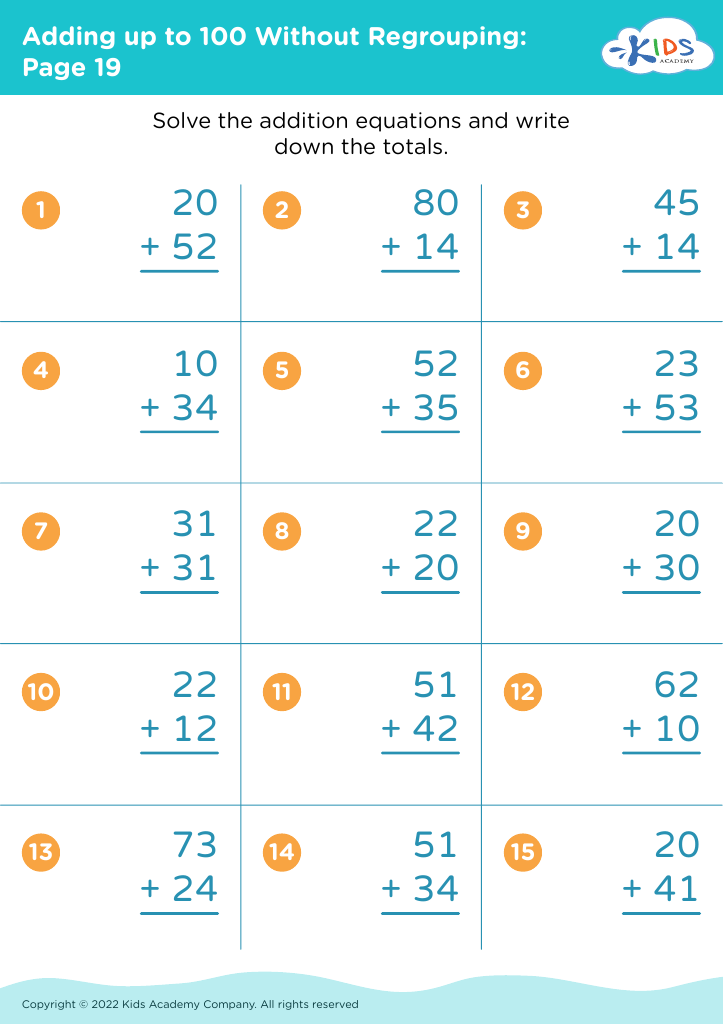
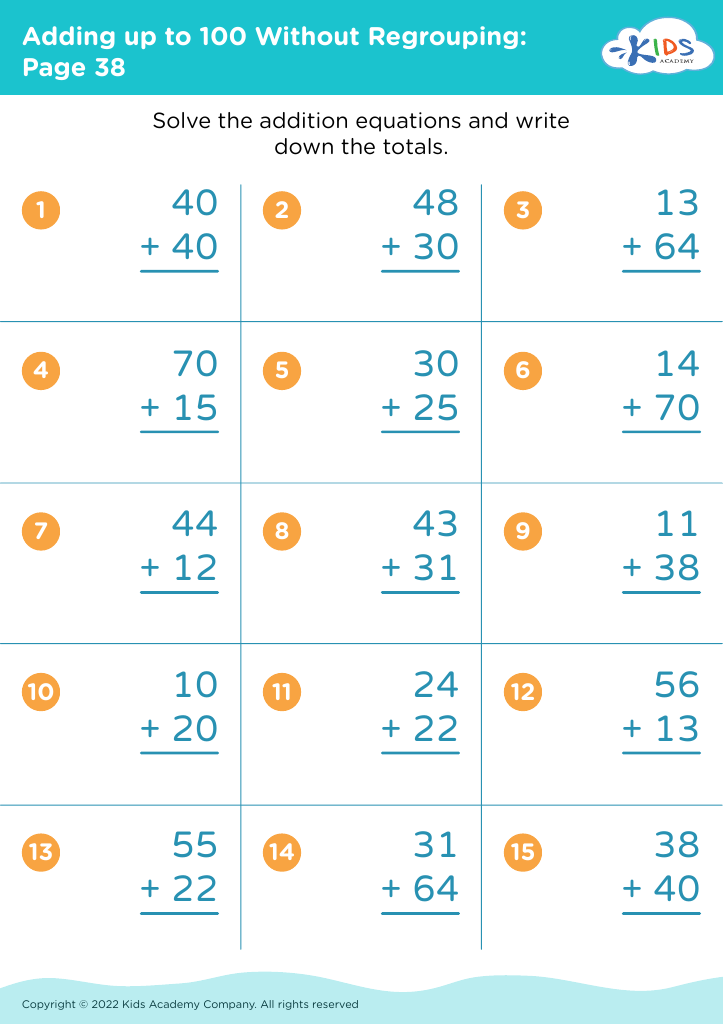





Understanding simplifying fractions is crucial for second graders, as it lays the foundation for their mathematical development. When children grasp the concept of simplifying fractions, they enhance their number sense and problem-solving skills. Simplifying encourages them to identify common factors and understand the relationship between numbers, making it easier to add, subtract, and compare fractions in future grades.
Incorporating exercises like adding up to 100 with simplified fractions also allows children to engage with real-world contexts. For instance, using this concept in cooking or art can make learning more relatable and enjoyable. It helps build their confidence as they see the results of their efforts come to life.
Moreover, parents and teachers play a vital role in supporting children’s understanding. By emphasizing these topics, they can encourage a positive attitude towards mathematics and show the relevance of fractions in everyday life. When children see the practical application of simplifying fractions and adding to 100, they are more likely to appreciate the importance of math. Ultimately, nurturing these skills in grade 2 equips students with the tools they need for greater academic success and lifelong learning in mathematics.