Mathematical reasoning Grade 2 Addition and Subtraction Word Problems Worksheets
5 filtered results
-
From - To
Enhance your child's mathematical abilities with our engaging Grade 2 Addition and Subtraction Word Problems Worksheets. These worksheets are specifically designed to bolster mathematical reasoning, helping students tackle real-world problems with ease. Each worksheet offers a variety of problems that blend fun scenarios with essential arithmetic skills, promoting critical thinking and problem-solving proficiency. Ideal for both classroom and home use, our worksheets provide an excellent way to practice and master addition and subtraction concepts, ensuring your child's math skills are comprehensive and robust. Make math practice enjoyable and effective today!
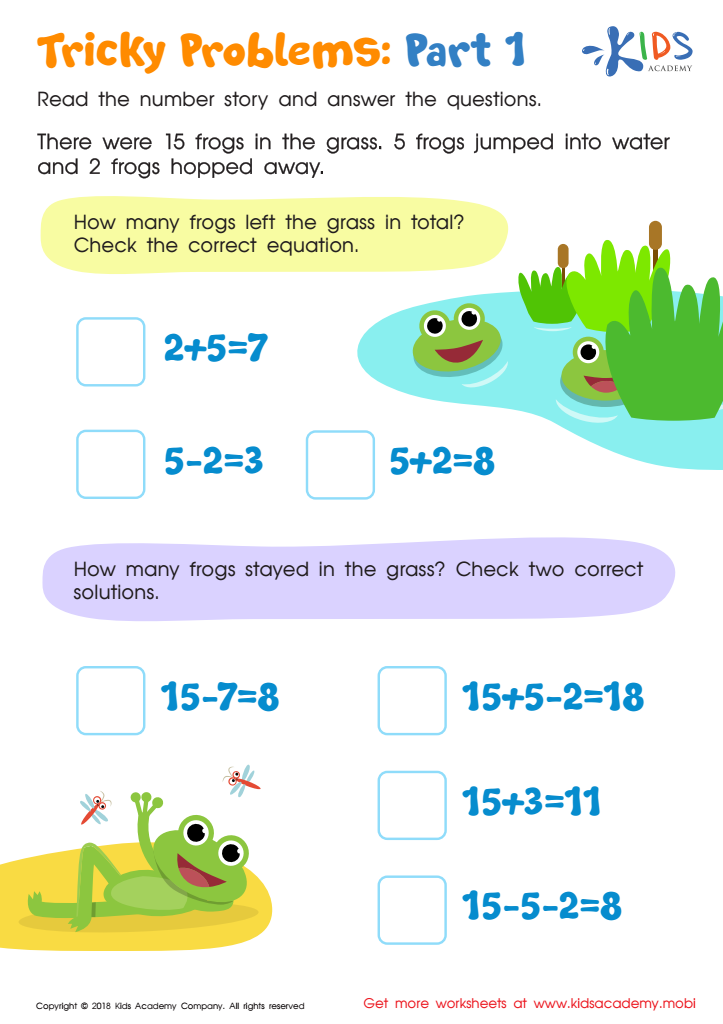
Tricky Problems Worksheet: Part 1
 Assign to My Students
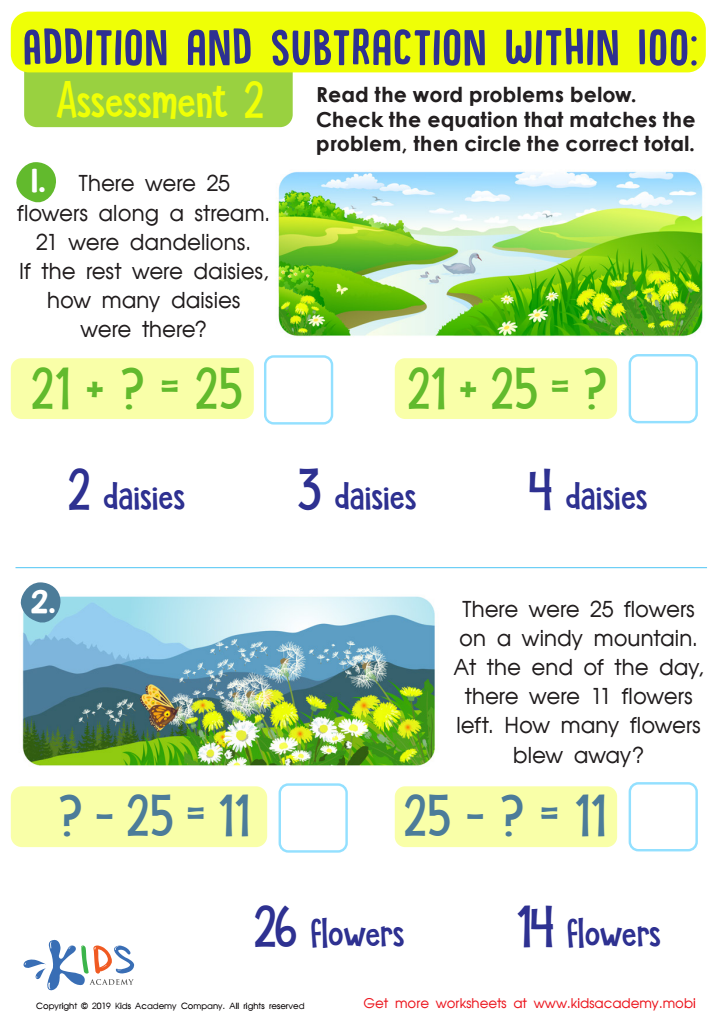
Assessment 2 Math Worksheet
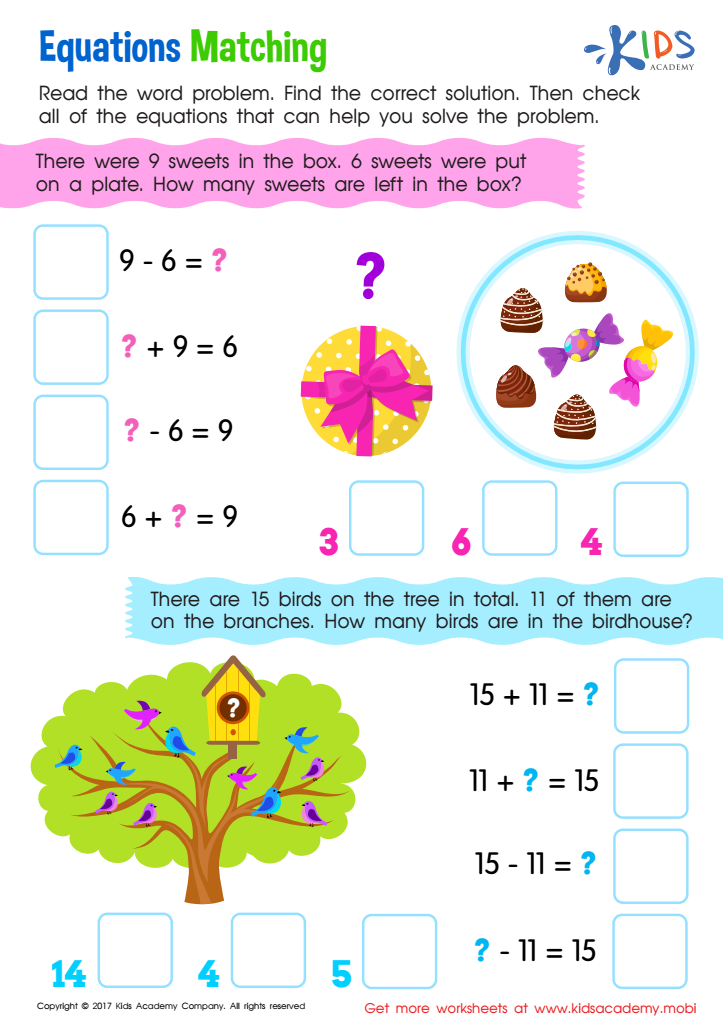
Equations Matching Word Problems Worksheet
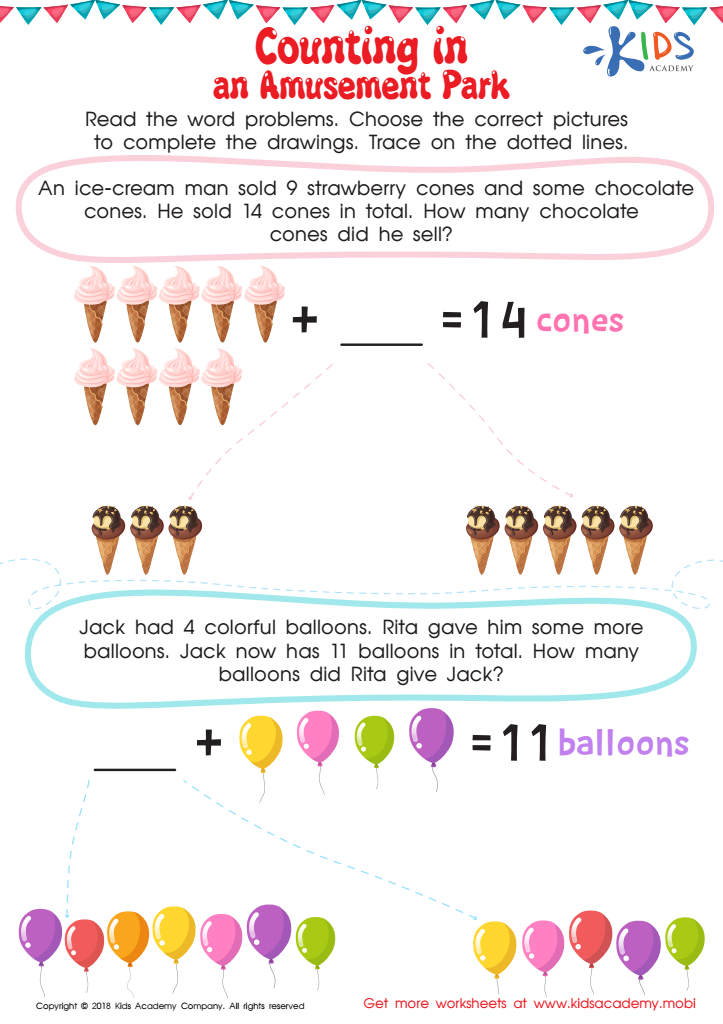
Counting in an Amusement Park Worksheet
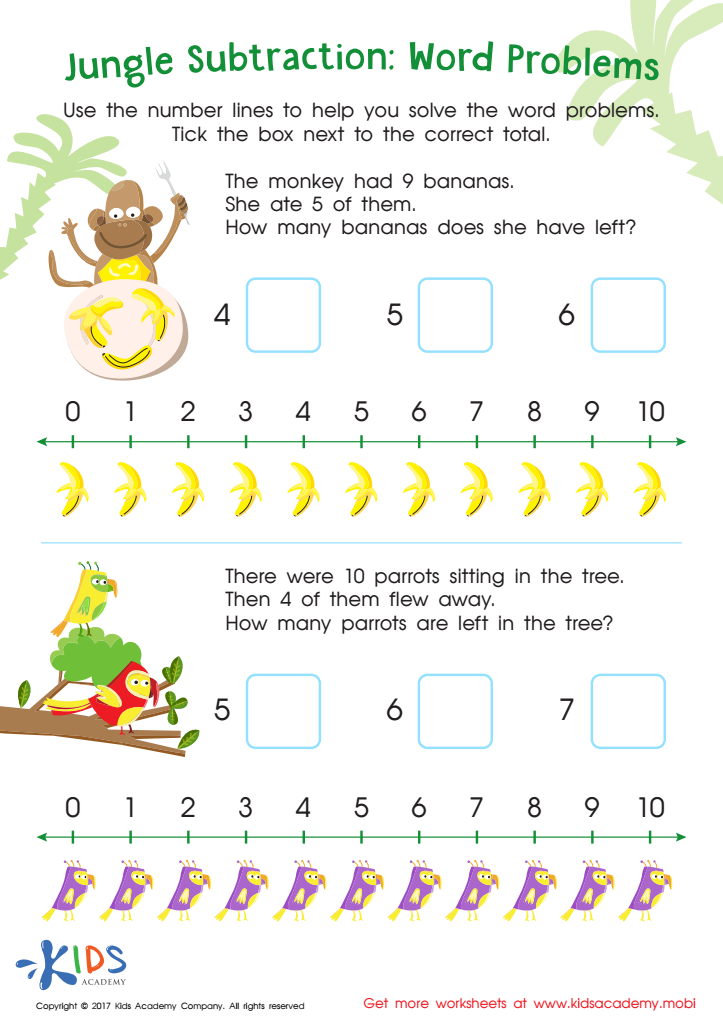
Jungle Subtraction Word Problems Substraction Worksheet








Mathematical reasoning in the context of Grade 2 addition and subtraction word problems is critical for young learners as it develops foundational skills that are essential for future academic success and everyday life. Parents and teachers should prioritize this because it encourages logical thinking, problem-solving abilities, and numerical fluency, which are vital components of cognitive development.
By engaging with word problems, children learn to interpret real-world situations, transform them into mathematical equations, and meticulously figure out the solutions. This process of understanding and translating information boosts their comprehension skills and nurtures their ability to think critically.
Moreover, mastering addition and subtraction at an early stage helps solidify basic arithmetic concepts, which are building blocks for more advanced mathematical operations. It builds their confidence as they gain proficiency, promoting a positive attitude towards math, which is often a challenging subject for many students.
Constant interaction with math problems also enhances children's abilities to pay attention to detail, follow multi-step processes, and persist through challenges—skills that are transferable to other subjects and activities. Thus, fostering these skills early ensures that learners have a strong mathematical foundation, setting them up for future academic achievements and practical problem-solving in daily life.