Basic subtraction Grade 2 Addition & Subtraction Worksheets
6 filtered results
Difficulty Level
Grade
Age
-
From - To
Subject
Activity
Standards
Explore our comprehensive collection of Basic Subtraction worksheets tailored for Grade 2 students! Our engaging activities provide a solid foundation in subtraction, helping young learners build essential math skills while boosting their confidence. Each worksheet features fun illustrations and a variety of problem types, from visual aids to word problems, ensuring a well-rounded understanding of subtraction concepts. Perfect for classroom use or home practice, these resources promote critical thinking and independent problem-solving. Join us in making math enjoyable and interactive for your child! Visit our site now to access high-quality printables that will enhance your child's learning experience in addition and subtraction.
Favorites
With answer key
Interactive
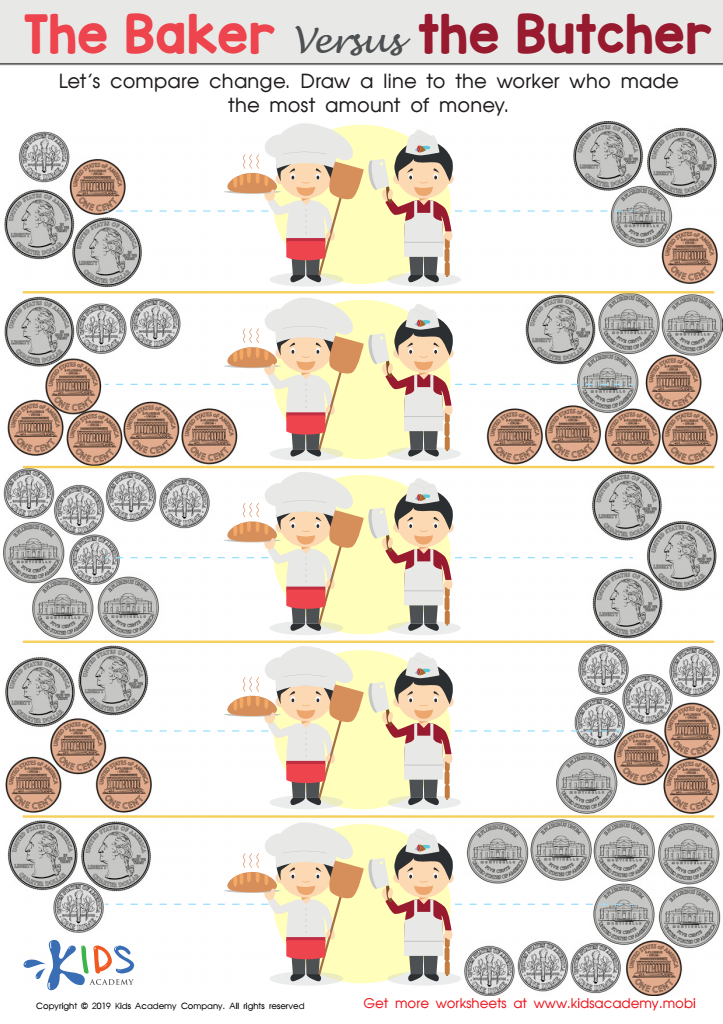
The Baker versus the Butcher Worksheet
At the baker’s and butcher’s, there are plenty of delicious treats and meals! With this worksheet, your kids can see who made more money at the end of the day. Have them trace a line to the worker who made the most amount of money. They’ll have fun while learning the basics of business and money!
 Assign to My Students
The Baker versus the Butcher Worksheet
Worksheet
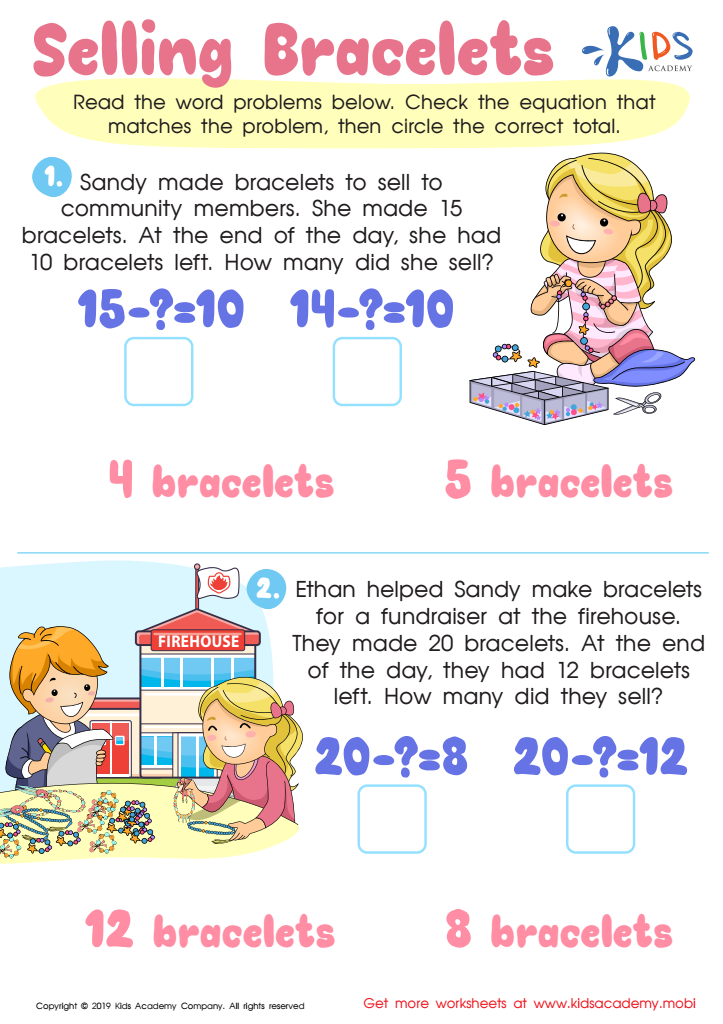
Selling the Bracelets Worksheet
Engage your kids with learning by making it fun! Try this creative worksheet: your kids can practice subtraction while making bracelets. Download the pdf; read the two word problems to them and help them choose the correct total. Have fun! (80 words)
Selling the Bracelets Worksheet
Worksheet
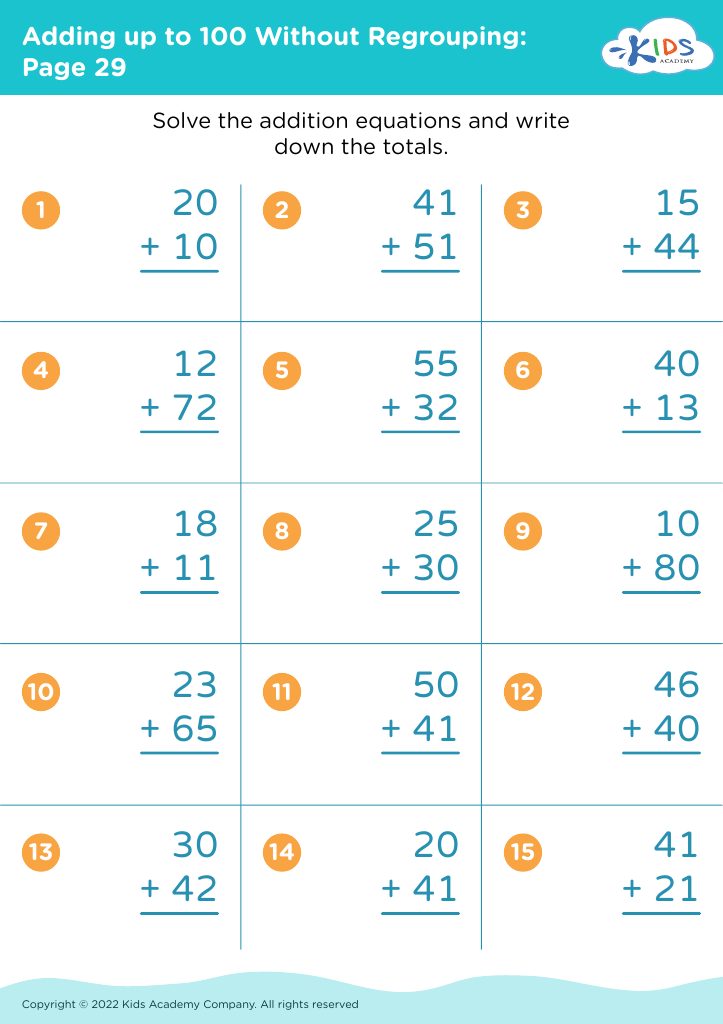
Join Kids Academy for Free
Who is primarily going to use this learning content?








Basic subtraction is a fundamental skill that is essential for young learners, particularly in Grade 2. Parents and teachers should prioritize this skill because it serves as the foundation for more advanced mathematical concepts. Mastery of basic subtraction allows students to develop problem-solving strategies, critical thinking, and logical reasoning.
In Grade 2, children typically transition from using physical objects for arithmetic to performing mental calculations, making subtraction an important part of their cognitive development. Understanding subtraction not only helps students succeed in math but also reinforces skills used in daily life, such as shopping, time management, and budgeting.
Additionally, a strong grasp of subtraction enhances students’ confidence in their mathematical abilities, encouraging a positive attitude toward learning. It also aids in the development of persistence and resilience as they encounter and overcome challenges in problem-solving.
Furthermore, proficiency in subtraction is linked to improved performance in other academic areas that require numerical fluency. For teachers, fostering this skill is crucial for ensuring that students are well-prepared for future mathematics. Parents play a key role in reinforcing these concepts at home, creating a supportive environment that nurtures a child’s overall mathematical growth.